



What is redness-prone skin: causes and next steps
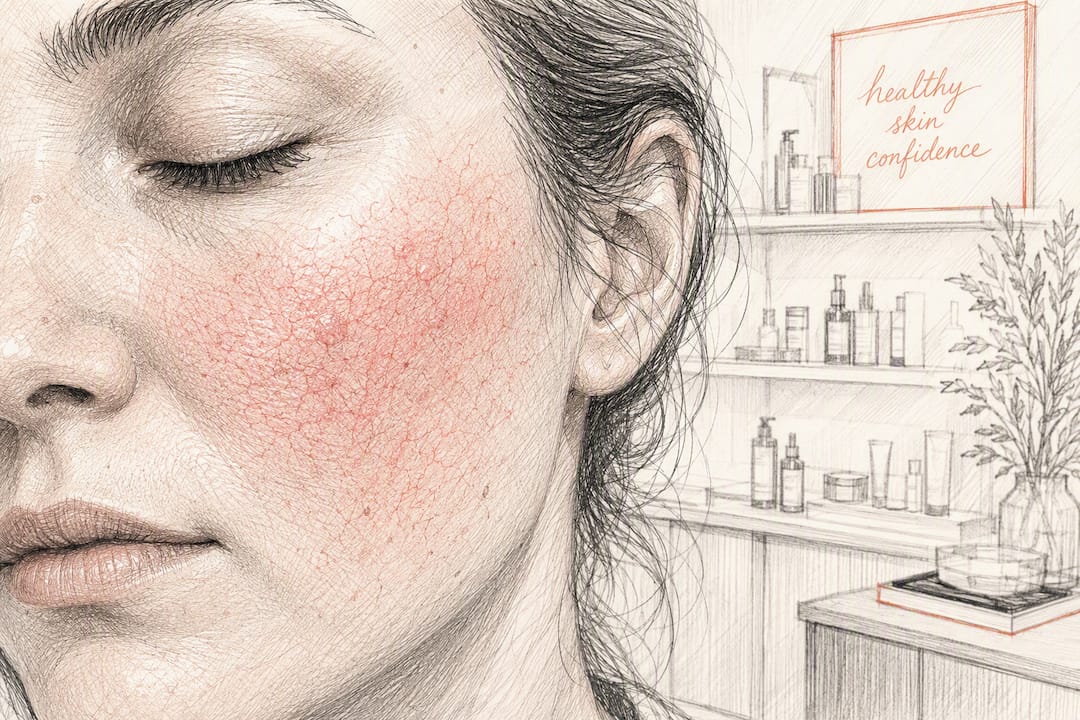
Redness-prone skin means your face reddens easily and often stays that way, whether from flushing, chronic inflammation, or a diagnosed condition like rosacea, which sits at the more persistent end of this spectrum. If the redness fades within an hour and leaves normal-looking skin behind, that’s usually just flushing. If it lingers for an extended period or keeps returning to the same spots, you’re likely dealing with something more chronic.
Three quick cues help you tell the difference:
- Redness that sits centrally on the cheeks, nose, or chin and rarely fully clears
- Small, visible blood vessels (telangiectasia) you can see even when your skin looks “calm”
- Recurrent bumps or pustules that resemble acne but appear without blackheads
Pro Tip: Start a simple trigger diary for two to six weeks. Note what you ate, drank, and applied to your skin each day the redness flared, then strip your routine back to a gentle cleanser and barrier moisturiser while you figure out what’s driving it.
Key Takeaways
Chronic redness usually needs a treatment plan matched to its underlying mechanism, whether vascular, inflammatory, or both, rather than a single “best” product.
| Point | Details |
|---|---|
| Timing tells you the type | Redness gone within an hour is likely flushing; redness persisting for weeks points to rosacea. |
| Match treatment to mechanism | Vascular redness needs vessel-targeting treatments; inflammatory bumps need anti-inflammatory therapy. |
| Improvement takes months | Medical therapy for rosacea often needs three months or longer before visible change appears. |
| Eye symptoms are urgent | Persistent grittiness, redness, or blurred vision warrants prompt ophthalmology referral. |
| Consistency outperforms switching | A sustained, tailored routine works better than frequently changing products. |
Table of Contents
- What does “redness-prone skin” actually cover?
- What are the symptoms of redness-prone skin?
- What causes redness-prone skin and rosacea flares?
- What happens at a dermatology appointment for redness?
- What treatments actually work for redness-prone skin?
- How can you prevent redness flares day to day?
- When do ocular rosacea and rhinophyma need specialist attention?
- Why does facial redness happen beneath the surface?
- An honest read on redness-prone skin
- Frequently asked questions
- Sources
What does “redness-prone skin” actually cover?
The phrase gets used loosely, so it’s worth separating three distinct things. Transient flushing is the sudden, short-lived flush from heat, spicy food, or embarrassment, gone within an hour or two. Sensitive or reactive skin describes a lower tolerance for products and environmental stress, often with stinging or tightness but no persistent visible redness. Rosacea is the chronic inflammatory condition sitting at the far end, where redness, visible vessels, or breakouts persist for weeks to months at a time.
Rosacea itself isn’t one condition but a group of related presentations:
- Erythematotelangiectatic: persistent central redness with visible small vessels, minimal bumps
- Papulopustular: redness plus acne-like papules and pustules, often mistaken for adult acne
- Phymatous: thickened, bumpy skin texture, most commonly affecting the nose
- Ocular: dry, irritated, or bloodshot eyes alongside facial signs
Three signs point towards rosacea rather than simple product sensitivity: the redness has a fixed central-face pattern rather than shifting locations, it persists between flare-ups rather than resolving completely, and it’s frequently accompanied by visible vessels or eye irritation, neither of which typically accompanies straightforward irritant reactions.
What are the symptoms of redness-prone skin?
Beyond colour, redness-prone skin tends to announce itself through a cluster of related signs. Rosacea can make skin flush easily, and over time the redness may persist more consistently.
Run through this checklist:
- Persistent facial redness that doesn’t fully resolve between flares
- Episodic flushing triggered by heat, alcohol, or emotion
- Visible small blood vessels, particularly across the nose and cheeks
- Papules or pustules without the blackheads typical of acne
- Burning, stinging, or a tight, dry sensation
- Eye symptoms: grittiness, redness, or watering
Location matters for diagnosis. Rosacea concentrates on the central face, the nose, cheeks, forehead, and chin, rather than spreading to the jawline or neck the way hormonal acne often does.
Eye pain, sudden vision change, or skin on the nose that’s visibly thickening over weeks rather than months are red flags. These warrant a prompt dermatology or ophthalmology review rather than a wait-and-see approach.
What causes redness-prone skin and rosacea flares?
Two separate categories drive persistent redness, and they respond to different treatments, which is exactly why a one-size-fits-all cream so often disappoints.
Biological drivers:
- Vascular reactivity: blood vessels that dilate more readily and stay dilated longer than average
- Neuro-sensory hypersensitivity: overactive nerve signalling that lowers your threshold for heat, friction, and certain chemicals
- Chronic inflammation: an immune response that keeps low-level redness ticking over even without an obvious trigger
- Demodex mites: naturally present on everyone’s skin, but present in higher numbers on rosacea-prone skin
- Genetics: family history raises your likelihood of developing the condition
External and lifestyle triggers:
- UV exposure and heat
- Alcohol, particularly red wine, and spicy food
- Certain actives: alcohol-based toners, high-strength retinoids, or physical exfoliants
- Stress and intense exercise
A vascular driver responds to treatments that constrict or target blood vessels. An inflammatory driver responds better to anti-inflammatory topicals or oral antibiotics. Confusing the two is why some readers try three different creams and see nothing change.
Pro Tip: Log four things daily for two weeks: what you ate and drank, weather and temperature exposure, products applied, and stress or exercise levels. Cut out alcohol, extreme heat, and any newly introduced active first. Those three are the fastest wins for most people.
What happens at a dermatology appointment for redness?
A dermatologist will typically build a timeline before examining anything: when the redness started, how it’s changed, and what seems to set it off. Expect questions and checks covering:
- Symptom timeline and pattern of flares
- Known or suspected triggers
- Every skincare product used in recent months
- Photographs showing progression, if you have them
- Any eye symptoms
- Current medications, since some can worsen flushing
Rosacea is often mistaken for other conditions, so your clinician will rule out a short list: acne (no blackheads with rosacea), contact dermatitis (a reaction to a specific product or ingredient), seborrhoeic dermatitis (flaking alongside the redness), and rarely, lupus, which typically involves broader systemic symptoms. Because management differs so much between these, getting a proper assessment matters more than guessing.
Bring a photo timeline, your full product list including anything recently discontinued, and a brief symptom diary. If eye symptoms are part of the picture, expect a referral to ophthalmology alongside your dermatology care.
What treatments actually work for redness-prone skin?
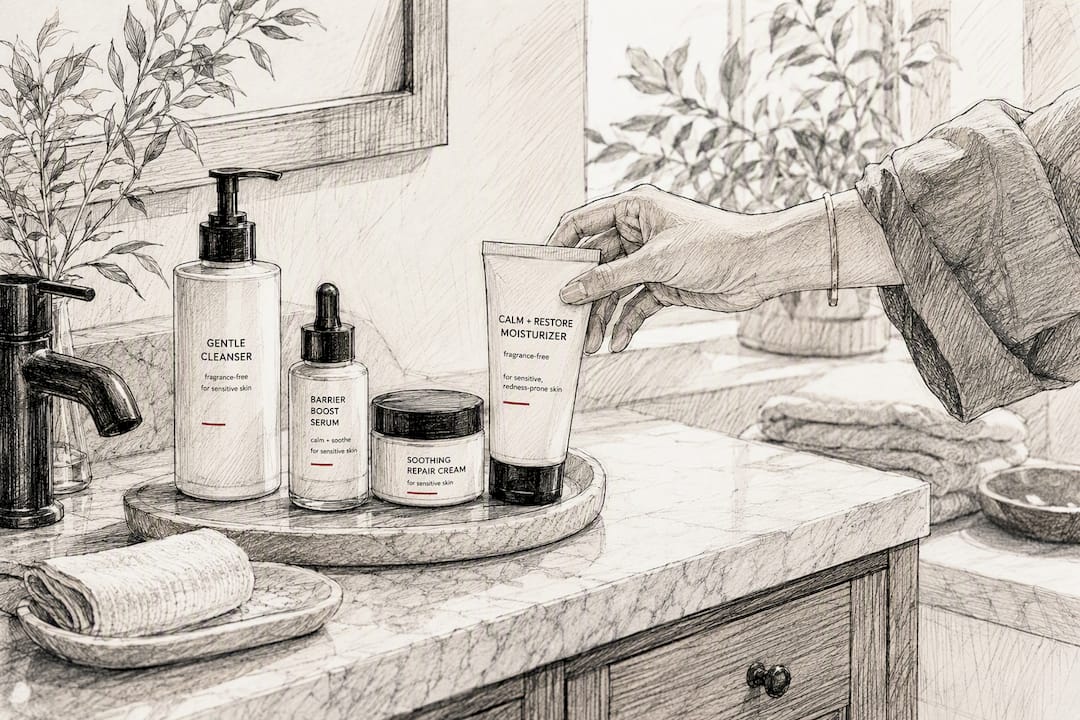
Skincare basics come first, regardless of severity. A gentle, non-soap cleanser, a barrier-supporting moisturiser, and physical (mineral) sunscreen form the baseline. For reactive skin, restraint often beats addition: layering multiple “calming” serums can itself compromise the barrier, so a minimalist routine tends to outperform a crowded one. Our redness relief skincare routine walks through exactly this kind of pared-back approach.
Beyond skincare, treatment splits by mechanism:
- Topical prescriptions: azelaic acid and metronidazole target inflammatory signs; ivermectin addresses Demodex-related bumps; topical vasoconstrictors like brimonidine reduce background redness temporarily
- Oral antibiotics: low-dose doxycycline works anti-inflammatory rather than antibacterial here, and is typically reserved for more inflammatory, papulopustular disease
- Laser and light therapies: target visible vessels directly, work best on skin that isn’t tanned, and often need repeat sessions
- Ocular care: lid hygiene and warm compresses first, with ophthalmology referral if irritation persists
| Sign | Treatment category | Typical timeframe |
|---|---|---|
| Persistent redness | Topical anti-inflammatories, vasoconstrictors | Weeks to see partial effect |
| Visible blood vessels | Laser or light therapy | Improvement over repeat sessions |
| Papules and pustules | Topical or oral anti-inflammatory therapy | Three months or longer for full effect |
| Ocular symptoms | Lid hygiene, warm compresses, specialist review | Days for basic relief, ongoing management |
Consistency beats switching. Dermatology guidance consistently favours a tailored, sustained plan over frequent product-hopping, because most of these treatments need weeks, not days, to show their effect.
A few cautions worth flagging: some topical and oral rosacea treatments carry pregnancy considerations, so check with a prescriber before starting anything if that applies to you. Laser treatments carry higher risk of pigment changes on darker skin tones and need an experienced practitioner. None of these prescription or procedural routes should be self-directed. If you’re weighing up options like azelaic acid or a full rosacea-specific skincare plan, that’s a conversation for a dermatologist, not a comment section.
How can you prevent redness flares day to day?
A workable routine doesn’t need to be complicated. In the morning, cleanse gently, apply a barrier-repair moisturiser, and finish with a mineral or tinted sunscreen. At night, cleanse again and follow with a simple repair moisturiser, skipping active ingredients unless your dermatologist has specifically recommended one.
Lifestyle adjustments carry real weight here:
- Consistent sun protection, since UV is one of the most reliable triggers
- Managing temperature extremes, hot showers, saunas, and cold wind alike
- Moderating alcohol and noting your own food triggers
- Building in stress reduction, since flares often track stress levels closely
For makeup, patch test anything new on your inner arm first, lean on mineral or tinted sunscreens that double as light coverage, and remove products with a gentle balm rather than scrubbing.
Pro Tip: Patch test every new product for three to five days on a small area before applying it to your full face, and introduce one new product at a time so you can actually identify what caused any reaction. A resource like Fierce Nature’s guide to gentle skincare is a useful reference for choosing genuinely low-irritant formulations.
When do ocular rosacea and rhinophyma need specialist attention?
Two presentations deserve their own mention because they’re commonly missed until they’ve progressed.
Ocular rosacea shows up as dry, red, or gritty eyes, sometimes with blurred vision. Left untreated, it can threaten sight, so persistent eye symptoms alongside facial redness deserve an ophthalmology referral, not a wait-and-see approach.
Rhinophyma involves gradual thickening and enlargement of nasal tissue, developing over months to years rather than appearing suddenly.
For ocular symptoms, see a dermatologist first, with ophthalmology involved if things don’t settle with lid hygiene and warm compresses. For suspected rhinophyma, a dermatologist can discuss procedural options, sometimes alongside a plastic surgeon, once tissue changes are established.
Why does facial redness happen beneath the surface?
Redness that won’t shift often has less to do with your skincare shelf than with what’s happening in the blood vessels and nerves underneath it. Vascular reactivity means vessels dilate more readily and stay open longer than average. Neuro-sensory hypersensitivity, involving overactive TRP channel signalling, explains why heat, friction, or a single active ingredient can trigger flushing that feels disproportionate to the trigger itself. Layered on top of both is a chronic inflammatory process that keeps redness simmering even during quiet periods.
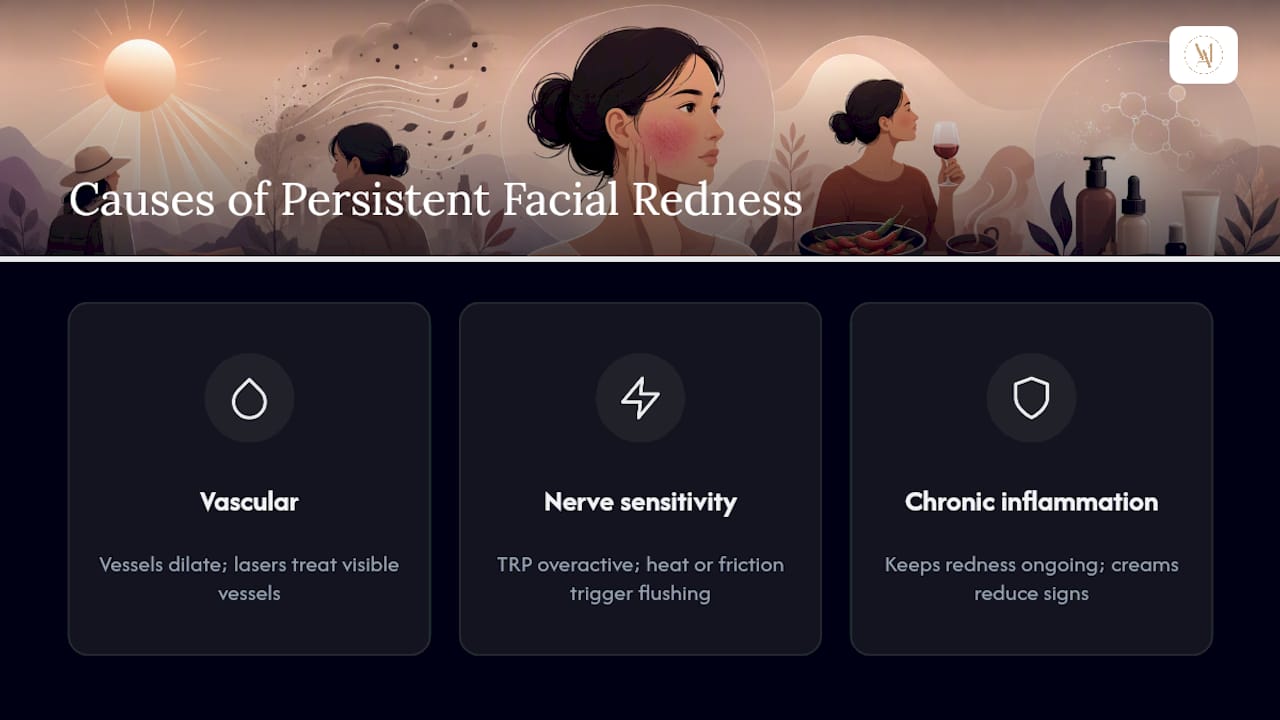
This is why anti-inflammatory creams calm some signs while doing nothing for visible vessels, and why laser treatments fix vessels but leave inflammatory bumps untouched. Two implications follow directly: visible improvement from any single treatment usually takes weeks rather than days, and most people with persistent redness need more than one treatment category working together, not a single “best” product.
An honest read on redness-prone skin
Most advice on redness treats it as one problem with one fix. It isn’t. The gap I keep seeing is between people trying a “calming” serum for two weeks, concluding it doesn’t work, and moving on, when the actual issue was mismatched mechanism, not a weak product.
If your redness is vascular, no amount of anti-inflammatory cream will touch the visible vessels causing it. If it’s inflammatory, a vasoconstricting serum offers only temporary cosmetic cover. The reader who benefits most from this piece is the one who stops shopping for a miracle ingredient and starts keeping a proper trigger diary instead, because that single habit does more diagnostic work than most skincare purchases combined.
The other thing conventional advice underplays is patience. Three months is a genuinely difficult ask when your skin looks worse today than last week. But switching products every fortnight resets that clock every time, which is probably the single most common reason people feel like nothing works for them.
Frequently asked questions
Is redness-prone skin the same as sensitive skin? Not quite. Sensitive skin describes a lower tolerance for products and environmental stress, often with stinging but no persistent visible redness. Redness-prone skin, especially rosacea, involves ongoing colour change and sometimes visible vessels or bumps that sensitive skin alone doesn’t produce.
What is rosacea, exactly? Rosacea is a chronic inflammatory skin condition causing persistent facial redness, visible small blood vessels, and sometimes acne-like bumps, most commonly across the nose and cheeks.
Why treat redness in skin if it’s not causing pain? Beyond comfort, untreated redness can affect emotional wellbeing and self-esteem, and in some subtypes, progress towards thickened skin or eye complications if left unmanaged.
What are the best products for redness-prone skin? Look for gentle, fragrance-free cleansers, barrier-repair moisturisers, and mineral sunscreens. Ingredients like niacinamide and azelaic acid have a reasonable track record, though a dermatologist should guide anything prescription-strength.
How do you soothe redness-prone skin at home? Simplify your routine, avoid known triggers like heat and alcohol, and stick with barrier-supporting basics for several weeks before judging results. Our guide on redness relief covers this in more depth.
If you’d rather skip the trial and error, a virtual consultation with one of Them-ethod’s clinicians can help identify whether your redness fits a rosacea pattern and which treatment category is worth trying first, from prescription topicals to in-clinic laser options available through our London and Athens locations. Explore Them-ethod’s approach to redness to find the right starting point for your skin.
This article is general information, not a substitute for advice from a qualified doctor. Consult a qualified healthcare professional about your own circumstances before acting on anything here.
Sources
- Rosacea | NIAMS
- Rosacea - Diagnosis and treatment | Mayo Clinic
- Rosacea: Symptoms and causes | Mayo Clinic
- Rosacea | Yale Medicine
- Rosacea | Cleveland Clinic
These are clinician- or medically reviewed resources; specialist input remains the right next step for persistent redness.