




Antioxidant protection: how it defends your cells
Antioxidant protection is the body’s system for neutralising unstable molecules called free radicals, stopping the chain reactions that damage cells, accelerate ageing, and contribute to chronic disease. Think of it as a molecular fire brigade: antioxidants intercept reactive species before they can strip electrons from healthy tissue. Three things to keep in mind straight away:
- Food first. A varied, colourful, plant-rich diet delivers antioxidants in the combinations your body actually uses.
- Supplements with caution. Single-agent supplements have repeatedly underperformed in clinical trials and, in some groups, caused harm.
- Seek clinical advice if you are on cancer therapy, anticoagulants, or planning high-dose supplementation.
Key takeaways
Antioxidant protection works best when it comes from a varied, plant-rich diet that delivers multiple antioxidant classes together, not from isolated high-dose supplements.
| Point | Details |
|---|---|
| Definition | Antioxidant protection neutralises free radicals by electron donation, stopping chain reactions that damage cells. |
| Food first | Colourful, plant-rich diets deliver antioxidants in networks that single supplements cannot replicate. |
| Supplement caution | Large clinical trials, including SELECT, found no clear benefit and some harm from isolated antioxidant supplements. |
| Clinician input | Always consult your doctor before supplementing if you are on treatment, pregnant, or managing a chronic condition. |
| Them-ethod | Clinically curated topical antioxidants and virtual skin consultations are available at them-ethod.com. |
Table of Contents
- How antioxidant protection neutralises free radicals
- Common antioxidants and where to find them
- Endogenous versus exogenous antioxidant defences
- What the evidence shows about antioxidant supplements
- Practical, safe ways to boost antioxidant protection
- Antioxidant protection for skin: topical versus systemic
- When should you talk to a clinician about antioxidants?
- The evidence-first case for food over supplements
- Clinically curated antioxidant options from Them-ethod
- Sources
How antioxidant protection neutralises free radicals
Free radicals are molecules with an unpaired electron. They are chemically desperate, snatching electrons from neighbouring molecules, which then become radicals themselves. Left unchecked, this cascade, known as oxidative stress, damages DNA, proteins, and cell membranes.
Antioxidants interrupt that cascade by donating an electron to a free radical without becoming dangerously reactive themselves. This is the defining feature of antioxidant chemistry: stability after donation. Solubility determines where each antioxidant works: water-soluble compounds such as vitamin C (ascorbic acid) operate in blood plasma and cellular fluids, while fat-soluble compounds such as vitamin E (tocopherols) embed in cell membranes, protecting lipid layers from oxidation.
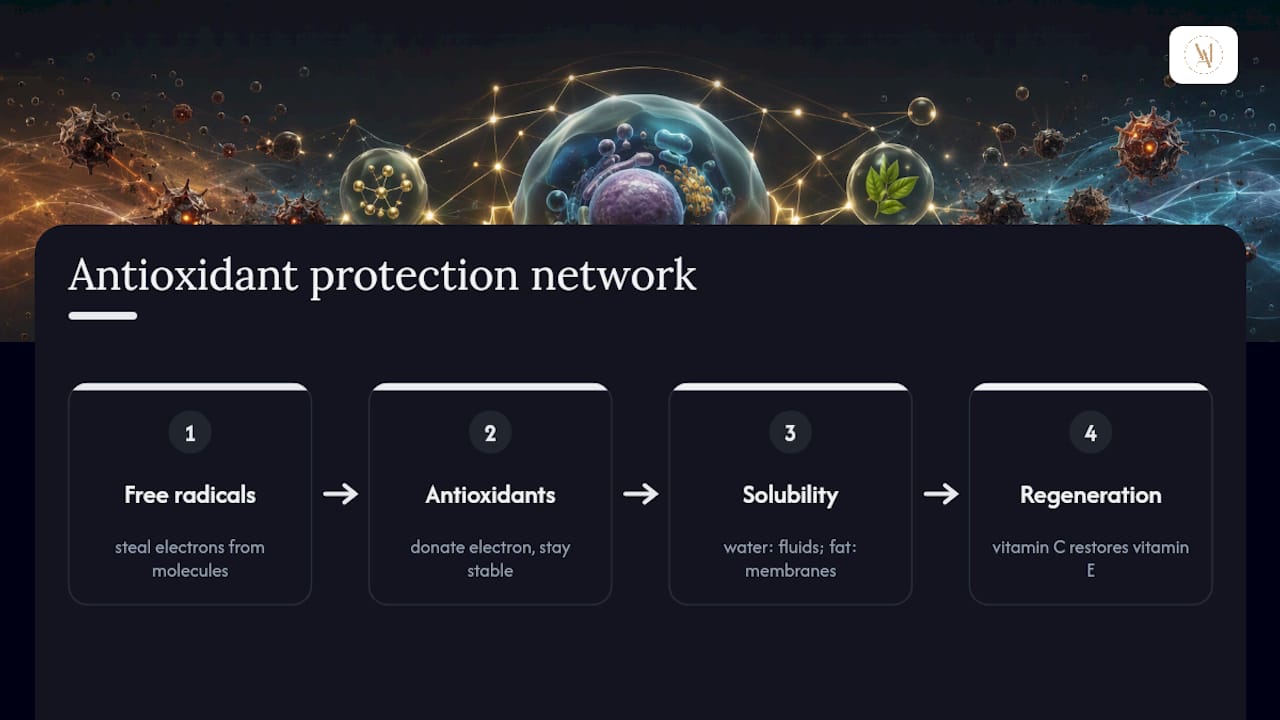
That network matters because antioxidants regenerate one another. Vitamin C, for instance, can restore oxidised vitamin E back to its active form. Disrupting one part of the network by flooding it with a single high-dose supplement can upset the balance rather than strengthen it.
Pro Tip: Take a mixed-source approach to antioxidants. A handful of walnuts alongside a vitamin C-rich pepper salad does more for your cellular defences than any single supplement capsule.
Common antioxidants and where to find them
Plant-based, colourful foods supply most dietary antioxidants, including vitamins C and E, carotenoids, flavonoids, and polyphenols. Here is a practical breakdown by class:
- Vitamin C (ascorbic acid): Citrus fruits, kiwi, red bell peppers, strawberries. Water-soluble; works in fluids.
- Vitamin E (tocopherols): Sunflower seeds, almonds, wheat germ oil, avocado. Fat-soluble; protects membranes.
- Beta-carotene / provitamin A: Carrots, sweet potato, butternut squash, spinach. Fat-soluble; converted to vitamin A in the body.
- Selenium: Brazil nuts, tuna, eggs, brown rice. Mineral cofactor for glutathione peroxidase enzymes.
- Glutathione: Produced endogenously; dietary precursors include sulphur-rich foods (garlic, onions, broccoli).
- Lycopene: Cooked tomatoes, watermelon, pink grapefruit. Fat-soluble carotenoid; absorption increases with gentle heat and a little fat.
- Flavonoids (quercetin): Onions, apples, capers, green tea. Water-soluble; broad anti-inflammatory signalling roles.
- Catechins: Green tea, dark chocolate, red wine. Water-soluble; associated with cardiovascular and metabolic benefits.
- Polyphenols (resveratrol): Red grapes, blueberries, peanuts. Water-soluble; studied for longevity-related pathways.
| Antioxidant class | Solubility / compartment | Common food sources | Typical role |
|---|---|---|---|
| Vitamin C (ascorbic acid) | Water-soluble / fluids | Citrus, red peppers, kiwi | Chain-breaking in plasma and cytosol |
| Vitamin E (tocopherols) | Fat-soluble / membranes | Almonds, sunflower seeds, avocado | Lipid peroxidation chain-breaking |
| Beta-carotene / provitamin A | Fat-soluble / membranes | Carrots, sweet potato, squash | Singlet oxygen quenching |
| Selenium | Mineral / enzyme cofactor | Brazil nuts, tuna, eggs | Cofactor for glutathione peroxidase |
| Glutathione | Water-soluble / intracellular | Precursors: garlic, broccoli | Primary intracellular reducing agent |
| Lycopene | Fat-soluble / membranes | Cooked tomatoes, watermelon | Carotenoid; membrane protection |
| Flavonoids (quercetin) | Water-soluble / fluids | Onions, apples, green tea | Signalling modulation, radical scavenging |
| Catechins | Water-soluble / fluids | Green tea, dark chocolate | Cardiovascular and metabolic support |
| Polyphenols (resveratrol) | Water-soluble / fluids | Red grapes, blueberries | Longevity pathway modulation |
Endogenous versus exogenous antioxidant defences
Your body does not rely solely on diet. It manufactures its own antioxidant defences, a network of enzymes and molecules that form the first line of intracellular protection.
Glutathione is the most abundant intracellular antioxidant. SOD converts superoxide radicals into hydrogen peroxide, which catalase then breaks down to water and oxygen. Dietary selenium is a precursor for selenocysteine, the active site of glutathione peroxidase, meaning some dietary “antioxidants” work indirectly as enzyme cofactors rather than direct radical scavengers.
Exogenous antioxidants from food and supplements plug into this system, extending its reach into compartments or conditions where endogenous production falls short. Lifestyle habits that support endogenous capacity include:
- Regular moderate exercise (upregulates SOD and catalase expression)
- Stable blood glucose control (reduces glycation-driven oxidative load)
- Adequate sleep (supports cellular repair and glutathione recycling)
- Not smoking (removes a major exogenous source of free radicals)
Antioxidants also modulate physiological signalling pathways, and the benefits of exercise and glycaemic control may partly reflect their positive effect on endogenous antioxidant networks, not just reduced oxidative exposure.
What the evidence shows about antioxidant supplements
The observational picture is consistent: dietary patterns rich in antioxidant foods are associated with better long-term health outcomes. The supplement picture is far more complicated.
Randomised clinical trials of antioxidant supplements have not shown clear preventive effects against cancer, and in some cases supplements were associated with worse outcomes. The SELECT trial, which tested vitamin E and selenium supplementation in healthy men, found no reduction in prostate cancer risk. Beta-carotene supplementation in smokers was associated with an increased risk of lung cancer in two large trials (ATBC and CARET). These are not fringe findings; they are among the most replicated results in nutritional science.
Key safety concerns to be aware of:
- Pro-oxidant effects: At high doses, some antioxidants switch from protective to damaging, particularly in the presence of transition metals.
- Interactions with cancer therapy: Antioxidant supplements may interfere with chemotherapy and radiotherapy, which rely partly on oxidative mechanisms to destroy tumour cells.
- Smoking-related risks: Beta-carotene supplements are contraindicated in current and recent smokers.
- Anticoagulant interactions: High-dose vitamin E can potentiate warfarin and other blood thinners.
Not every molecule that acts as an antioxidant in vitro benefits human health; biological context, dose, and the individual’s health status all determine whether a supplement helps or harms. The evidence strongly favours whole foods over isolated supplements for most people.
Practical, safe ways to boost antioxidant protection
The most effective strategy is a varied, colourful, plant-rich diet combined with healthy lifestyle habits. No single food or supplement comes close to matching the breadth of protection a diverse dietary pattern provides.
Food and cooking tips:
- Eat across the colour spectrum daily: deep greens, reds, oranges, purples, and yellows each signal different phytochemical families.
- Gentle cooking methods (steaming, light sautéing) preserve heat-sensitive antioxidants like vitamin C better than boiling.
- Pair fat-soluble carotenoids (carrots, tomatoes) with a small amount of healthy fat to improve absorption.
- Cooked tomatoes release more lycopene than raw ones, making a simple tomato sauce genuinely more protective than a slice of fresh tomato.
- Choose whole grains, legumes, nuts, and seeds as everyday staples rather than occasional additions.
Lifestyle factors matter as much as diet. Stopping smoking removes one of the largest sources of exogenous free radicals. Maintaining a healthy weight reduces chronic low-grade inflammation, which itself generates oxidative stress. Consistent, moderate exercise upregulates the body’s own enzymatic defences over time.
Pro Tip: If you are considering an antioxidant supplement, discuss it with your GP or a registered dietitian first. The dose, form, and your individual health status all affect whether it will help or create new risks.
Antioxidant protection for skin: topical versus systemic
Topical antioxidants protect the skin surface from UV-induced and pollution-driven oxidative damage, complementing systemic protection without replacing it. The skin is uniquely exposed to environmental free radicals, making topical application a clinically meaningful addition to a dietary foundation.
Key actives used in evidence-informed topical formulations include:
- L-ascorbic acid (vitamin C): The most studied topical antioxidant; stimulates collagen synthesis and neutralises UV-generated radicals. Effective at appropriate concentrations and in formulations with suitably low pH for stability.
- Tocopherols (vitamin E): Fat-soluble; works synergistically with vitamin C in the skin’s lipid layers. Often combined in serums to extend the activity of both.
- Topical glutathione derivatives: Used for brightening and antioxidant support; stability in formulation is an ongoing area of clinical development.
- Resveratrol: Polyphenol with demonstrated antioxidant and anti-inflammatory activity in skin; often paired with ferulic acid to improve stability.
- Niacinamide: Supports the skin’s own antioxidant enzyme activity and reduces oxidative pigmentation pathways.
When choosing a topical antioxidant serum, look for formulation stability and appropriate concentration. Vitamin C in particular degrades rapidly when exposed to light and air; opaque, airless packaging is a practical signal of a well-formulated product. Layering a topical antioxidant serum beneath a broad-spectrum SPF is one of the most clinically supported combinations in photoprotection, as sunscreen and antioxidants address UV damage through complementary mechanisms.
For a deeper look at topical vitamin C formulations and what separates a clinically effective serum from a cosmetically elegant but inactive one, Them-ethod’s editorial library covers the evidence in detail.

When should you talk to a clinician about antioxidants?
Dietary antioxidants from food are safe for most people. Supplements are a different matter, and certain circumstances make clinician input non-negotiable.
Seek advice from your doctor or a registered dietitian before starting antioxidant supplements if you:
- Are undergoing or about to start chemotherapy or radiotherapy
- Take anticoagulant medication (warfarin, apixaban, or similar)
- Are pregnant or breastfeeding
- Have a chronic condition such as diabetes, kidney disease, or a cardiovascular condition
- Are planning surgery within the next few weeks
- Smoke or have recently stopped smoking (particularly relevant for beta-carotene)
- Are considering doses significantly above standard dietary reference intakes
Always tell your treating clinician about any supplements you take. Antioxidants can interact with therapies in ways that are not always obvious, and the clinical guidance from the National Cancer Institute is explicit: supplement use during cancer treatment should be discussed with the oncology team before starting.
The evidence-first case for food over supplements
The gap between what antioxidant supplements promise and what large trials actually deliver is one of the most instructive stories in modern nutritional science. We see it repeatedly at Them-ethod: clients arrive having spent considerable sums on high-dose antioxidant capsules, convinced they are doing something meaningful for their health and skin, when the evidence consistently points in a different direction.
What the trials show is not that antioxidants are ineffective. They show that antioxidants work best in context: in the presence of other phytochemicals, fibre, and micronutrients that whole foods provide and that no capsule has yet replicated. A diet built around colourful vegetables, legumes, nuts, and whole grains delivers antioxidant protection in a form the body has evolved to use. A single high-dose supplement delivers a pharmacological dose of one compound, stripped of its natural partners, into a system that did not evolve for that input.
The skin tells a similar story. Topical antioxidants are genuinely useful, but they work best as part of a layered approach: a strong dietary foundation, consistent sun protection, and a well-formulated serum chosen for stability and concentration rather than marketing claims. That combination is where the evidence actually sits.
Clinically curated antioxidant options from Them-ethod
For readers who want clinically supervised topical antioxidant options, Them-ethod’s curated range includes medical-grade antioxidant serums from NeoStrata and other dermatologist-recommended brands, selected for formulation integrity and evidence of efficacy. If you are unsure which topical antioxidant is right for your skin type or concern, a virtual skin consultation with one of Them-ethod’s expert clinicians gives you a personalised, evidence-based recommendation without leaving home. This article provides general educational information and is not a substitute for personalised medical or dermatological advice. Book a consultation at Them-ethod to discuss your individual needs.
Sources
- Add antioxidants to your diet - Mayo Clinic
- Antioxidants and Cancer Prevention - NCI
- Nature Reviews Molecular Cell Biology - antioxidants and signalling
- The importance of antioxidants and place in today’s scientific … - NCBI
- Antioxidants explained in simple terms