




Virtual skin consultation process: your 2026 guide
TL;DR:
- A virtual skin consultation uses photographs or live video to evaluate your skin and create a personalized treatment plan without requiring an in-person visit. Proper preparation, including high-quality images and thorough forms, is essential for accurate assessment, while structured steps ensure effective remote diagnosis and follow-up. These consultations are clinically validated, efficiently handle concerns like acne, pigmentation, and aging, and complement in-person care with ongoing monitoring.
A virtual skin consultation is a remote assessment where a clinician evaluates your skin through submitted photographs and/or live video, then delivers a personalised treatment plan without an in-person visit. This approach, formally known as teledermatology, has made expert skincare advice genuinely accessible for concerns including ageing, acne, and pigmentation. The virtual skin consultation process follows a structured sequence: booking, intake forms, image submission or live video, clinician review, and a written follow-up plan. Teledermatology offers cost savings averaging over US$81 per patient, and it significantly speeds access to specialist care. That figure matters because it confirms remote consultations are not a compromise. They are a clinically sound and cost-effective route to personalised skin health.
What does the virtual skin consultation process involve?
The virtual skin consultation process is a structured, multi-step pathway that mirrors the clinical rigour of an in-person dermatology appointment. Teledermatology uses asynchronous image review or live video to reach a diagnosis and agree on a management plan. The two core methods are store-and-forward (you submit photos for review) and real-time video consultation. A hybrid approach combines both. Them-ethod’s clinicians use all three formats depending on your skin concern and complexity.
Understanding which method applies to your case shapes everything from how you prepare your photos to how quickly you receive your plan. For most acne, pigmentation, and ageing concerns, store-and-forward delivers accurate results. Atypical or rapidly changing lesions typically require live video or an in-person escalation.
How to prepare for a virtual skin consultation
Preparation is the single biggest factor in consultation accuracy. Effective teledermatology requires clinician-grade image quality and informed patient consent for image capture, storage, and use. Poor images directly reduce diagnostic accuracy, so this step deserves real attention.
What you need before your appointment:
- A smartphone, tablet, or computer with a working camera and microphone
- Stable internet connection (Wi-Fi is preferable to mobile data for video calls)
- Natural or bright, even lighting. Avoid flash, which flattens skin texture and distorts colour
- Three photo types: a locator shot showing the affected area in context, a close-up of the concern, and a dermoscopic image if your clinician requests one
- Completed intake and consent forms, submitted before your appointment time
- Your current skincare products and any prescription treatments within reach during the session
Pro Tip: Run a quick tech check 15 minutes before your appointment. Open your camera app, check your microphone, and confirm your internet speed. A 60-second test prevents a wasted consultation slot.
Good preparation includes three photo types: locator, close-up, and dermoscopic where indicated, with clinician review typically occurring within 48–72 hours. That window means your images need to communicate clearly on their own, without you present to explain them verbally.
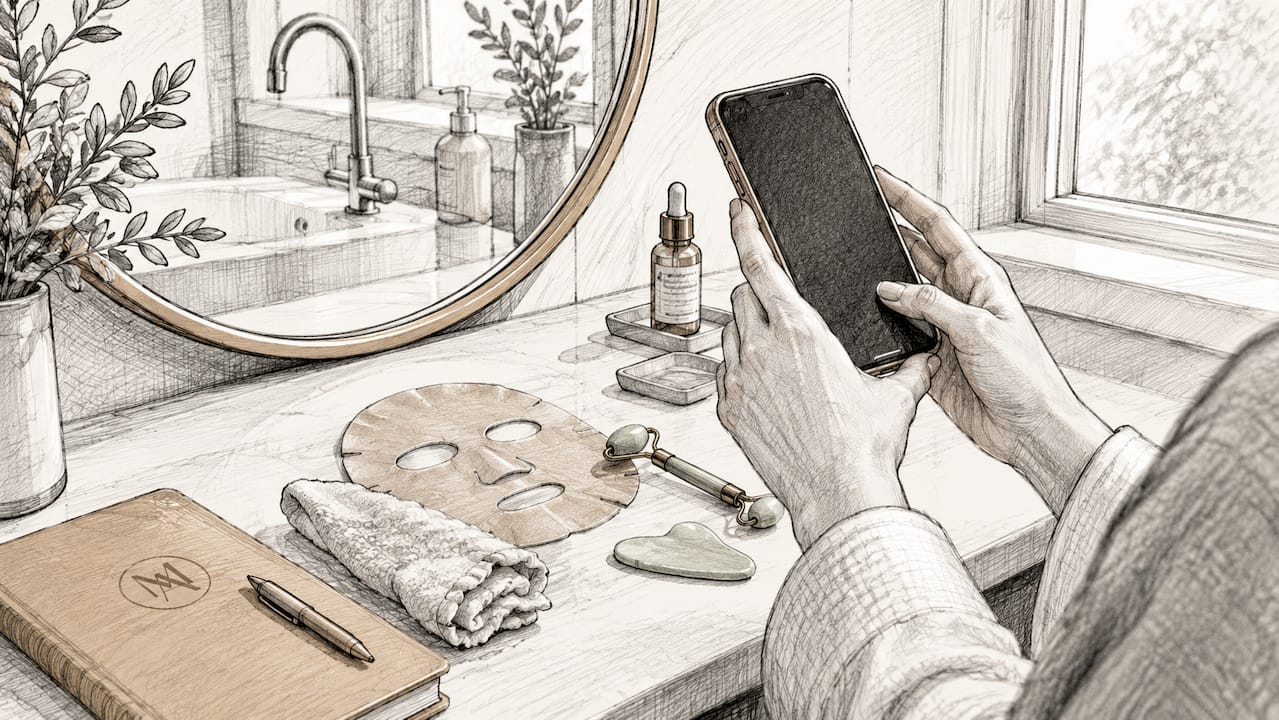
Tele-skin consultations are as much about imaging protocols as dermatology. You must capture both context (the distribution of a concern across your face or body) and detail (texture, colour, and surface quality) in consistent lighting before your call.
Step-by-step workflow for a virtual skin consultation
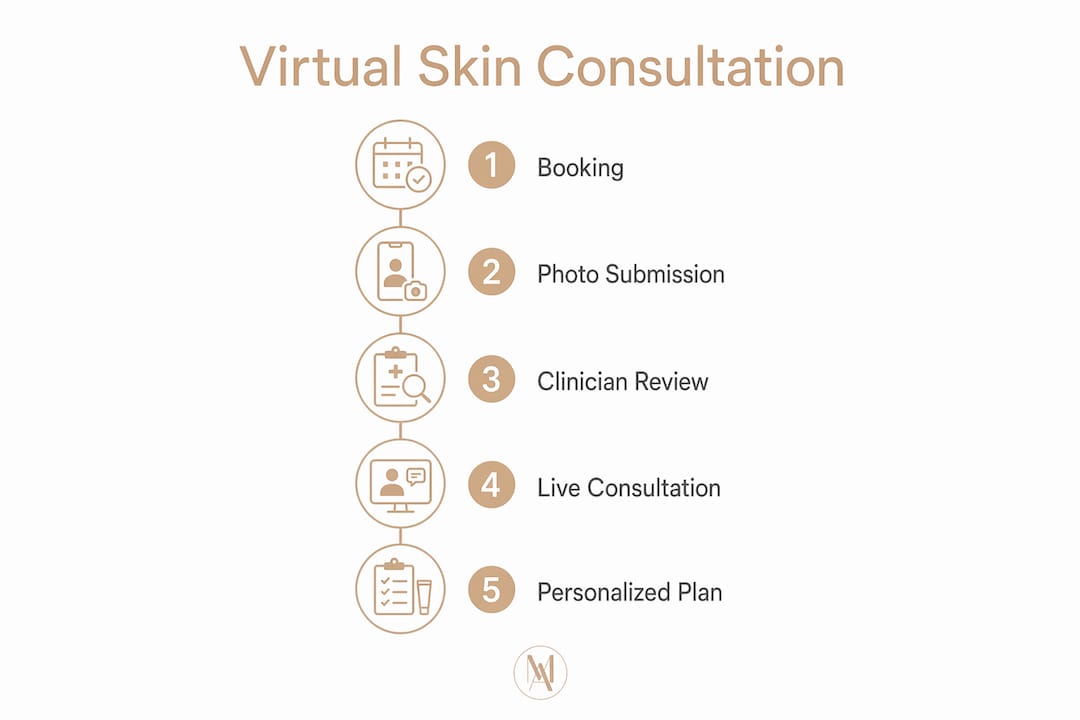
The workflow for a virtual skin consultation follows a logical sequence. Each stage builds on the last, and skipping steps reduces the quality of your outcome.
- Book your appointment. Select a consultation type (store-and-forward, live video, or hybrid) and choose a clinician. Them-ethod offers access to top clinicians specialising in medical-grade skincare.
- Complete intake and consent forms. Provide your skin history, current products, known sensitivities, medications, and the specific concerns you want addressed. Thorough answers here directly improve your plan.
- Submit photographs or join the live video call. For store-and-forward, upload your locator and close-up images via the secure platform. For live video, join at your scheduled time with good lighting and your products nearby.
- Clinician review. Your clinician assesses your images alongside your skin history. They formulate a differential diagnosis and a management plan. For complex or atypical presentations, they may request additional images or escalate to a live video call.
- Receive your written personalised plan. This covers recommended treatments, product protocols, lifestyle advice (including sun protection and diet where relevant), and a follow-up timeline.
- Follow-up and monitoring. Progress reviews are typically scheduled at 6–12 weeks. These can be conducted virtually, allowing your clinician to adjust your plan based on how your skin responds.
| Consultation stage | Typical format | Timeframe |
|---|---|---|
| Booking and intake forms | Online platform | Before appointment |
| Photo submission | Secure upload | Before appointment |
| Clinician image review | Asynchronous | 48–72 hours |
| Live video (if required) | Real-time video call | Scheduled slot |
| Written plan delivery | Secure message or email | Within 72 hours |
| Follow-up review | Virtual or in-person | 6–12 weeks |
Clinicians use a structured approach: initial asynchronous image review to formulate a differential and management plan, then escalation to live video or in-person as needed for atypical or rapidly changing lesions. This triage logic keeps the process safe and efficient.
Common challenges and how to fix them
Most problems in a remote skin assessment are preventable. The majority trace back to image quality or technology issues, both of which you can address before your appointment.
Common issues and solutions:
- Poor image quality. Blurry or dark photos are the most frequent problem. Shoot in natural daylight near a window, hold the camera steady, and take multiple shots to select the sharpest.
- Inconsistent lighting. Overhead artificial light creates shadows that obscure texture. Use diffused natural light or a ring light positioned at face level.
- Unreliable internet. If your connection drops during a live call, switch to a wired connection or move closer to your router. Have your clinician’s contact details ready so you can reschedule quickly.
- Incomplete intake forms. Missing information about medications, allergies, or previous treatments forces your clinician to make assumptions. Fill in every field, even if a question seems irrelevant.
- Re-submission requests. If your clinician asks for new images, treat it as a positive sign. It means they are taking your assessment seriously and need better data before recommending treatment.
Pro Tip: Take your consultation photos at the same time of day you would normally assess your skin, typically morning before applying any products. This gives your clinician the most accurate baseline.
Teledermatology’s effectiveness depends highly on data quality, requiring good imaging devices, reliable internet, and secure records. Privacy matters too. Confirm that your platform uses encrypted storage and that you understand how your images will be used before submitting them.
How virtual consultations address ageing, acne, and pigmentation
Teledermatology remains reliable for rashes, acne variants, and pigmentation using high-quality clinical photos combined with patient history. A 2026 meta-analysis confirmed high diagnostic concordance between teledermatology and face-to-face diagnosis across many skin conditions, even without dermoscopy. That finding significantly broadens the range of concerns a virtual consultation can address confidently.
| Skin concern | What the clinician assesses remotely | When in-person is recommended |
|---|---|---|
| Ageing (fine lines, laxity, volume loss) | Skin texture, collagen quality, photo damage via close-up images | When injectable treatments such as Profhilo or HIFU are planned |
| Acne (comedonal, inflammatory, cystic) | Lesion type, distribution, severity, scarring risk | Severe nodular or cystic acne requiring physical examination |
| Pigmentation (melasma, post-inflammatory, sun damage) | Colour, distribution, depth assessment via photos and history | When dermoscopy is needed to rule out atypical lesions |
| Redness and sensitivity | Pattern, triggers, associated symptoms | When rosacea subtypes require physical examination |
For ageing skin, clinicians assess photo damage, collagen quality, and skin texture through close-up images. They then recommend treatments such as retinoids, peptides, or medical-grade products from brands like Obagi, which Them-ethod carries as a UK Obagi Ambassador Clinic. For acne, the clinician evaluates lesion type, distribution, and severity to determine whether a topical protocol, a product such as PCA Skin Clearskin, or a prescription-strength treatment is appropriate. For pigmentation, photo clarity and a detailed history of sun exposure and previous treatments are critical to accurate assessment.
Virtual consultations accelerate triage and treatment decision-making rather than replacing dermatologists. The NHS teledermatology pathway delivered over 98% of cancer and non-cancer results within 28 days, demonstrating that remote review, when structured correctly, meets and exceeds clinical standards.
Key takeaways
The virtual skin consultation process delivers clinically accurate, personalised skincare plans when preparation, image quality, and structured follow-up are treated as non-negotiable steps.
| Point | Details |
|---|---|
| Preparation determines accuracy | Submit three photo types in good natural light and complete all intake forms before your appointment. |
| Three consultation formats exist | Store-and-forward, live video, and hybrid methods each suit different skin concerns and complexity levels. |
| Teledermatology is clinically validated | A 2026 meta-analysis confirmed high diagnostic concordance with in-person assessment for acne, pigmentation, and ageing. |
| Follow-up is part of the process | Schedule a review at 6–12 weeks so your clinician can adjust your plan based on your skin’s response. |
| In-person escalation has clear triggers | Atypical lesions, injectable treatments, and rapidly changing concerns require a physical appointment. |
Why I think preparation is the part most people underestimate
Most people arrive at their first virtual consultation thinking the clinician will do all the work. That assumption costs them. The clinician can only assess what you show them. If your photos are dark, blurry, or taken at the wrong angle, the plan you receive will be less specific than it could be.
I have seen clients with genuine, treatable pigmentation concerns receive generic advice simply because their images did not show the depth or distribution of the discolouration clearly. When they resubmitted with proper natural light and a locator shot alongside the close-up, the clinical picture changed entirely. The recommendation shifted from a basic brightening serum to a structured protocol involving glycolic acid, a vitamin C derivative, and SPF 50.
The technology itself is not the barrier. A modern smartphone camera is more than capable of capturing clinician-grade images. The barrier is knowing what to capture and how. That is why the expert preparation checklist matters more than the platform you use.
Virtual consultations complement in-person care rather than replacing it. For ongoing monitoring of acne, pigmentation, and ageing, they are genuinely superior in one respect: they create a documented visual record over time. Your clinician can compare images from one review to the next and measure real change. That is something an in-person appointment rarely achieves with the same consistency.
Engage actively. Ask specific questions. Tell your clinician what has not worked before and why. The more you put in, the more precise your plan will be.
— Jess
Personalised skin solutions from Them-ethod
Them-ethod’s virtual skincare consultation connects you directly with expert clinicians who specialise in medical-grade skincare for ageing, acne, and pigmentation. Each consultation follows the structured process outlined here: intake, image review, live interaction where needed, and a written plan with specific product and treatment recommendations. For acne, clinicians frequently recommend targeted solutions such as PCA Skin Clearskin, a prescription-strength acne treatment serum available through Them-ethod. For pigmentation and ageing, the NEOSTRATA collection offers clinically formulated options tailored to your assessment results. Ongoing support and follow-up reviews are built into the process, so your skin plan evolves as your skin does.
FAQ
What is a virtual skin consultation?
A virtual skin consultation is a remote assessment where a clinician evaluates your skin via submitted photographs or live video and provides a personalised treatment plan. It is the consumer-facing term for teledermatology.
How long does a virtual skin consultation take?
A live video consultation typically runs 20–30 minutes. A store-and-forward assessment, where you submit photos for review, returns a written plan within 48–72 hours.
Are virtual skin consultations as accurate as in-person appointments?
A 2026 meta-analysis found high diagnostic concordance between teledermatology and face-to-face diagnosis for many skin conditions, including acne and pigmentation, when high-quality images and a full patient history are provided.
What skin concerns can be assessed virtually?
Acne, pigmentation disorders, ageing concerns, redness, and sensitive skin are all well-suited to remote skin analysis. Rapidly changing or atypical lesions typically require in-person escalation.
What happens after a virtual skin consultation?
You receive a written plan covering treatments, product protocols, lifestyle advice, and a follow-up timeline. A review appointment is typically scheduled at 6–12 weeks to assess your skin’s response and adjust the plan accordingly.