




The role of SPF in your daily skincare routine
TL;DR:
- Most people own sunscreen but often fail to apply it correctly, risking skin damage. Daily SPF use is essential because UV rays cause aging, pigmentation, and skin cancer, requiring proper application, reapplication, and suitable formulations for your skin type. Consistent habits and choosing comfortable, targeted products can significantly improve skin health and pigmentation control over time.
Most people own a sunscreen. Far fewer use it correctly. The role of SPF in daily routine goes well beyond selecting a high number on the label — it concerns how much you apply, when you reapply, and whether your chosen formulation actually suits your skin. Believing that SPF 50 applied once each morning constitutes complete protection is one of the most widespread and costly errors in modern skincare. For those managing pigmentation, melasma, or age-related concerns within a considered routine, understanding these nuances is not optional. It is the difference between results and frustration.
Table of Contents
- Why SPF is essential in a daily skincare routine
- Choosing the right sunscreen type for your skin concerns
- Understanding SPF levels and application for effective protection
- Building a consistent SPF habit within your luxury skincare routine
- The luxury skincare edge: tinted sunscreens and visible light protection
- A fresh perspective on using SPF daily in luxury skincare
- Integrate expert-approved SPF solutions into your luxury routine
- Frequently asked questions
Key Takeaways
| Point | Details |
|---|---|
| SPF is essential daily | Regular use of SPF protects skin from UV damage, ageing, and pigmentation. |
| Correct application matters | Using the right amount and reapplying sunscreen ensures effective protection. |
| Choose SPF type wisely | Select chemical or mineral sunscreens based on skin sensitivity and concerns. |
| Build sunscreen habits | Integrate SPF with your skincare routine to maintain consistent use. |
| Tinted SPF benefits | Iron oxide tints block visible light and help manage pigmentation issues. |
Why SPF is essential in a daily skincare routine
UV radiation reaches your skin every single day, not only on sunny ones. UVA rays, which penetrate cloud cover and glass, are responsible for collagen degradation, pigmentation, and the cumulative skin changes we recognise as premature ageing. UVB rays cause sunburn and directly contribute to skin cancer risk. No prescription retinoid, no vitamin C serum, and no professional treatment will deliver lasting results if UV damage continues unchecked beneath the surface.
The importance of daily SPF is grounded in decades of clinical evidence. Yet common sunscreen mistakes remain strikingly prevalent, with dermatologists consistently highlighting that most people miss areas — particularly around the hairline, ears, and neck — and significantly underapply the product itself. As one review notes, sunscreen use is critical for preventing sun damage, premature ageing, and skin cancer, yet incorrect use renders even the best formulations far less effective.
Understanding the sunscreen benefits for pigmentation adds further weight to the case for daily application. Every UV exposure event triggers melanin production. For those already managing uneven tone or post-inflammatory hyperpigmentation, inconsistent sun protection directly undermines corrective treatments running in parallel.
Key reasons why daily SPF use is non-negotiable:
- UVA and UVB rays cause distinct but equally significant damage to the skin
- Underapplying by even 30% can reduce the effective SPF by more than half
- Reapplication every two hours outdoors is required to maintain the stated protection level
- Supplementary measures including shade, protective clothing, and wide-brimmed hats amplify sunscreen’s effectiveness considerably
“Applying sunscreen once in the morning is not sufficient on its own. Reapplication, correct coverage, and consistent use are what translate SPF values into genuine skin protection.”
Choosing the right sunscreen type for your skin concerns
Not all sunscreens perform the same way on every skin type, and this is particularly relevant for those with sensitive, pigment-prone, or reactive skin. The two primary categories are chemical and mineral sunscreens, each with specific characteristics that make them more or less suitable depending on your skin profile.
Chemical sunscreens absorb UV rays using organic filters such as avobenzone and octocrylene, converting UV energy into heat. They tend to be cosmetically elegant, blending invisibly under foundation or tinted moisturiser. The trade-off is that some filters can irritate sensitised or rosacea-prone skin. Mineral sunscreens, by contrast, use zinc oxide or titanium dioxide to physically deflect UV rays. They are often gentler but may leave a white cast, particularly on deeper skin tones.
| Feature | Chemical sunscreen | Mineral sunscreen |
|---|---|---|
| UV mechanism | Absorbs UV radiation | Reflects UV radiation |
| Skin sensitivity | May irritate reactive skin | Generally gentler |
| Cosmetic finish | Invisible, lightweight | Can leave white cast |
| Best for | Normal to oily skin | Sensitive, inflamed, or darker skin |
| Visible light protection | Limited | Higher with iron oxides added |
For those choosing SPF for pigmentation, tinted mineral formulations that include iron oxides offer an important advantage. Iron oxides block visible light, which plays a measurable role in triggering pigmentation disorders such as melasma, beyond the UV spectrum alone.
Key considerations when selecting your sunscreen:
- Skin sensitivity — opt for zinc oxide-based formulations if you experience reactivity or post-treatment sensitivity
- Skin tone — tinted options address white cast concerns while adding visible light protection
- Cosmetic compatibility — consider whether the texture integrates well with your other morning products
- Pigmentation history — iron oxide-containing tinted SPF provides meaningful additional protection
Pro Tip: If you find yourself consistently skipping sunscreen because of how it feels on the skin, the formulation is wrong, not your habits. Switching to a texture that genuinely suits your skin type is one of the most effective ways to improve daily adherence.
Understanding SPF levels and application for effective protection
The SPF number denotes the proportion of UVB rays blocked under standardised laboratory testing conditions. SPF 30 blocks approximately 97% of UVB rays. SPF 50 blocks around 98%. SPF 100 reaches roughly 99%. The difference between SPF 50 and SPF 100 is clinically marginal for most people. What matters far more is whether the product reaches the skin in adequate amounts and is reapplied at the right intervals.
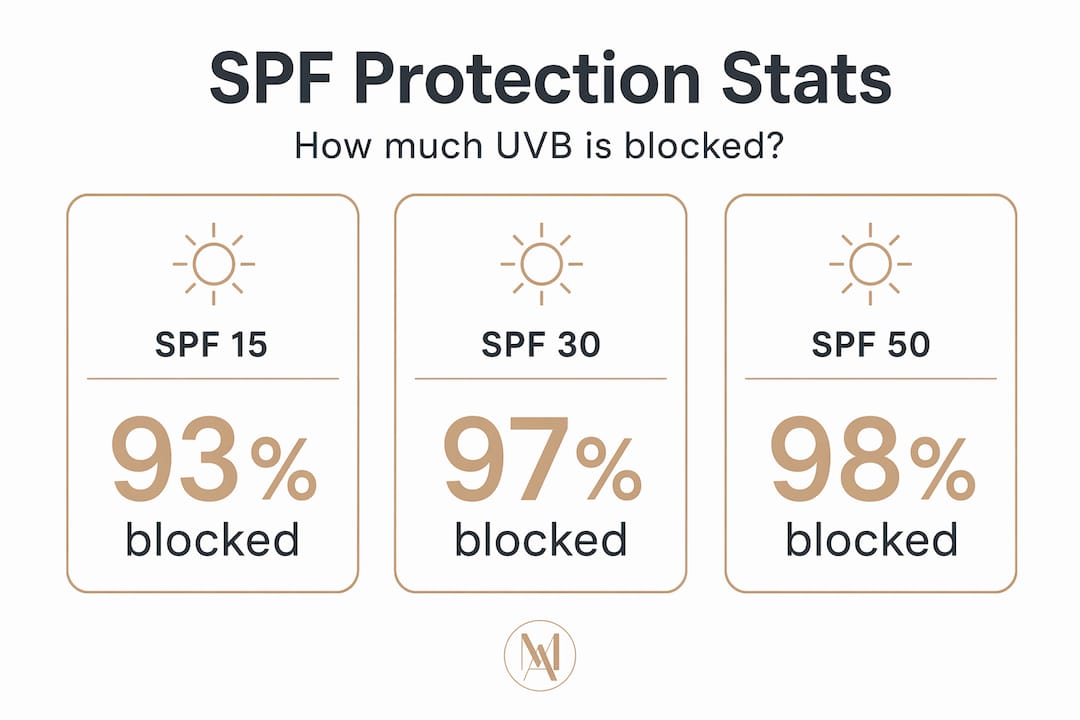
| SPF value | UVB rays blocked | UVB rays that reach skin |
|---|---|---|
| SPF 15 | 93% | 7% |
| SPF 30 | 97% | 3% |
| SPF 50 | 98% | 2% |
| SPF 100 | 99% | 1% |
Correct application quantity is one of the most consistently underestimated variables in sun protection. Most people apply far less sunscreen than the recommended amount, which significantly reduces the actual protection achieved. For the face alone, a generous quarter-teaspoon is the target. For the full body, approximately one ounce is recommended.
To apply SPF effectively and consistently:
- Apply sunscreen as the final step of your morning skincare routine, after moisturiser and before any makeup
- Use a quarter-teaspoon for the face, neck, and décolletage combined
- Do not forget the ears, hairline, and backs of hands
- Reapply every two hours when outdoors, or immediately after swimming or heavy perspiration
- Consider a product designed for layering with SPF 50 to maintain comfort and coverage throughout the day
“The gap between SPF 30 and SPF 50 is less important than the gap between applying the correct amount and not.”
Pro Tip: Decanting a measured amount of sunscreen each morning into a small tin or pump bottle makes it far easier to gauge whether you are applying sufficient product without recalibrating every day.
Building a consistent SPF habit within your luxury skincare routine
Consistency is where most routines break down. The benefits of a sunscreen routine only manifest when the product is applied daily, in the right amount, at the right time. Sporadic use, even of a high-quality SPF 50, offers substantially less protection than daily use of an SPF 30 applied correctly.

Research indicates that only 17% of people place sun care amongst their top personal care priorities. This is a significant disconnect given what we know about UV-driven skin damage accumulating silently over years. Tying SPF application to an established routine step is one of the most effective habit-anchoring techniques available.
Practical strategies to build your daily SPF habit:
- Pair application with moisturiser — completing both in sequence reduces the chance of skipping sunscreen when time is short
- Keep sunscreen visible — placing it next to your moisturiser or in front of your mirror removes the mental barrier of having to search for it
- Choose a formulation you genuinely enjoy — texture, scent, and finish all influence whether you will consistently reach for the product
- Set a midday reminder for reapplication if you spend time outdoors, using a daily SPF cream that works well over makeup
- Use travel-sized formats to maintain protection during commutes, holidays, and business trips without disrupting routine
Why use sunscreen daily? Because UV exposure is cumulative. A day without protection does not erase yesterday’s results, but it slows progress and adds damage that corrective treatments must then address. Over months and years, consistent daily SPF use delivers measurably better outcomes for pigmentation, texture, and skin longevity than even the most sophisticated actives used without sun protection.
Pro Tip: If you wear makeup, keep a setting spray or powder SPF in your bag for midday reapplication. It integrates naturally into a grooming moment rather than requiring a full reapplication.
The luxury skincare edge: tinted sunscreens and visible light protection
Most sunscreen conversations focus exclusively on UV rays. But for those managing melasma, post-inflammatory hyperpigmentation, or hormonally driven pigmentation, the visible light spectrum presents an equally significant challenge. High-energy visible light, particularly the blue-violet wavelengths emitted by screens and indoor lighting, triggers melanin production through pathways independent of UV exposure.
Iron oxide-containing tinted sunscreens offer superior protection against visible-light-induced pigmentation and can improve melasma as early as eight weeks of consistent daily use. This represents a meaningful clinical advantage over untinted SPF formulations for anyone whose primary concern is pigment control.
Iron oxide tinted SPF benefits extend beyond pure protection. Many tinted formulations provide a degree of skin-evening coverage that reduces reliance on foundation, which suits the kind of refined, pared-back routine that premium skincare encourages.
Benefits of tinted sunscreens for pigmentation-focused routines:
- Visible light blocking reduces a key but often overlooked driver of melasma and uneven tone
- Iron oxides are the specific ingredient responsible for this protective effect
- Eight weeks of consistent use can produce noticeable improvements in pigmentation according to clinical studies
- Skin-tone adaptation in modern tinted formulations means far less risk of a grey or ashy finish
| Sunscreen type | UV protection | Visible light protection | Suitable for melasma |
|---|---|---|---|
| Untinted chemical SPF | Yes | No | Partial |
| Untinted mineral SPF | Yes | Minimal | Partial |
| Tinted mineral with iron oxides | Yes | Yes | Yes, strongly |
Pro Tip: For those already using a prescription depigmenting agent such as hydroquinone or azelaic acid, pairing it with a tinted iron oxide SPF amplifies results considerably. The SPF prevents new pigment being triggered while the active works to clear existing discolouration.
A fresh perspective on using SPF daily in luxury skincare
There is a particular kind of SPF anxiety that we see frequently in our community: the relentless pursuit of higher and higher SPF numbers in the belief that product specification alone determines outcome. It does not. The role of SPF in daily routine is far more about behaviour than formulation. A person applying SPF 30 correctly, in adequate quantity, and reapplying through the day will have meaningfully better protection than someone wearing SPF 100 applied thinly once each morning.
We would also challenge the premise that sun protection is a compromise in a luxury routine. The assumption that effective sunscreens are heavy, greasy, or cosmetically disruptive reflects the category as it existed fifteen years ago. The current generation of premium SPF formulations integrates within a considered routine without altering texture, tone, or the performance of other actives. Luxury adherence to sunscreen is as much about pairing application with your routine and lifestyle as it is about product choice itself.
What matters most, in our experience working with clients managing complex skin concerns, is routine design. When sunscreen is positioned correctly, when the formulation genuinely suits the skin, and when the habit is anchored to something already automatic, it stops feeling like an additional step and becomes invisible within the morning ritual. Expert guidance, such as the personalised pigmentation advice we provide, consistently reveals that SPF habits are where outcomes diverge between clients using identical active ingredients.
The truth is uncomfortable for anyone who has invested in an SPF 100. The number is the least important variable. The habit, the quantity, and the skin compatibility are everything.
Integrate expert-approved SPF solutions into your luxury routine
Having understood the essential role of daily SPF and how to apply it effectively, the next step is choosing formulations that genuinely fit your routine. At The M-ethod, we have curated a selection of clinically effective sun care products tailored to specific skin concerns. The Advanced Day Ultimate Protect SPF 50 by Medik8 is designed for seamless layering within a premium morning routine, providing broad-spectrum protection without disrupting texture or finish. For those prioritising overall daily protection with a lighter feel, the Advanced Day Total Protect SPF 30 is an excellent companion. If your concern extends to post-blemish pigmentation, combining SPF with the PCA SKIN Clearskin serum addresses both oil control and pigment prevention simultaneously. Explore the full range of Neostrata skincare products for clinically validated sun care and skin-correcting actives in one curated collection.
Frequently asked questions
How much sunscreen should I apply daily for effective protection?
Apply about one ounce to cover the full body, and a generous quarter-teaspoon for the face and neck alone. Underapplying sunscreen significantly reduces the protection you actually receive, regardless of the SPF number stated on the label.
Is a higher SPF number always better for daily use?
Not significantly. SPF 30 blocks around 97% of UVB rays, and the incremental gain beyond that is small. Correct application quantity and consistent reapplication matter more for daily effectiveness than choosing the highest available SPF.
Can I rely on moisturisers with SPF alone?
Moisturisers containing SPF can contribute to protection, but they are typically applied too thinly to achieve the protection stated. A dedicated sunscreen applied after moisturiser remains the recommended approach for reliable daily cover.
What are the benefits of tinted sunscreens with iron oxides?
Tinted sunscreens containing iron oxides block visible light, which is a significant trigger for melasma and pigmentation disorders. Clinical evidence shows improvements in pigmentation can emerge within eight weeks of daily use, making them a strong choice for pigment-prone skin.
How can I make sunscreen a consistent part of my luxury skincare routine?
Pair sunscreen application with an existing morning step such as moisturiser, keep it visible amongst your other products, and choose a texture and finish that you genuinely enjoy wearing each day.