


The role of hyaluronic acid in skin hydration
TL;DR:
- Hyaluronic acid is a naturally occurring molecule that retains water and supports tissue hydration, skin, joints, and healing. Topical HA primarily hydrates the surface, improving appearance, while oral and injectable forms affect deeper tissues and structural support. Molecular weight and formulation influence HA’s penetration, duration, and effectiveness across skincare and medical applications.
Hyaluronic acid (HA) is defined as a naturally occurring glycosaminoglycan found throughout the body, most abundantly in skin, synovial fluid, and the vitreous humour of the eye. Its primary function is retaining water at a cellular level, with a single molecule capable of holding up to 1,000 times its own weight in moisture. The role of hyaluronic acid extends well beyond a simple moisturiser. It supports skin structure, joint lubrication, and wound healing, making it one of the most clinically studied molecules in both dermatology and orthopaedics. Understanding how it works, and which form suits your needs, is the difference between genuine results and marketing noise.
How does hyaluronic acid hydrate and benefit the skin?
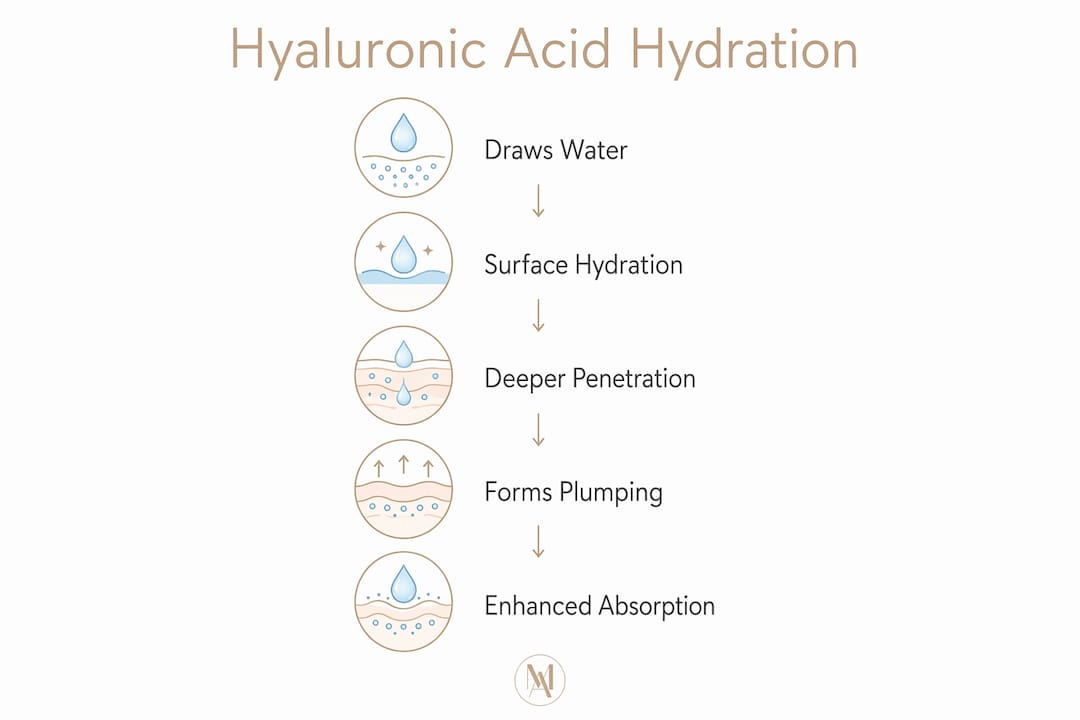
Hyaluronic acid functions as a humectant, drawing water from the environment and deeper skin layers to the surface. This water-binding capacity is what gives skin that immediate plumped, smooth appearance after applying a serum or moisturiser. The effect is visible and real, but it is worth understanding its scope clearly.
Topical HA’s benefits are primarily skin-deep, delivering hydration and plumping at the surface rather than structural anti-ageing change. Dr Purnell, cited in ABC News, notes that topical HA should be regarded as a highly effective hydrator rather than a profound anti-ageing therapy. That is not a criticism. Consistent hydration does reduce the appearance of fine lines caused by dryness, and a well-hydrated skin barrier is more resilient against environmental stressors.
The visible benefits of topical hyaluronic acid in skincare include:
- Immediate plumping of fine lines and surface dehydration
- Smoothing of skin texture through improved moisture retention
- Reduced transepidermal water loss (TEWL), which strengthens the skin barrier
- Improved skin tone through better light reflection from hydrated cells
Pro Tip: Apply your hyaluronic acid serum to slightly damp skin. HA draws moisture from its surroundings, so applying it to dry skin in a low-humidity environment can actually pull water from deeper skin layers instead.
Molecular weight adds another layer of nuance here. Lower molecular weights penetrate deeper into the skin but may provoke a mild inflammatory response in sensitive skin types. Higher molecular weight HA stays at the surface, forming a protective film that locks in moisture without penetrating the dermis. Many well-formulated products, such as the PCA Hyaluronic Acid Boosting Serum, combine multiple molecular weights to address both surface hydration and deeper moisture retention simultaneously.
Topical, oral, or injectable: which form works best?
The three main administration routes for hyaluronic acid each produce distinct effects, and choosing between them depends entirely on your goal.

Topical HA is the most accessible form. It delivers reliable surface hydration and cosmetic plumping, making it ideal for daily skincare maintenance. Its limitation is that it does not meaningfully alter deeper skin physiology.
Oral HA supplementation produces measurably different results. A randomised, double-blind trial in 150 adults found that oral sodium hyaluronate at 120 mg per day improved facial skin hydration, elasticity, reduced TEWL, and decreased wrinkle depth after 12 weeks. The 60 mg per day group also improved, but results were dose-dependent. This means oral HA can influence deeper skin physiology in ways that topical application cannot. If you are exploring oral supplement evidence, the clinical data for HA is among the more robust in the supplements category.
Injectable HA is the gold standard for structural correction. Dermal fillers using cross-linked HA restore volume, define contours, and address deeper folds. Intra-articular HA injections are used clinically to manage osteoarthritis pain and improve joint mobility.
| Administration Route | Primary Benefit | Onset | Clinical Evidence |
|---|---|---|---|
| Topical | Surface hydration and plumping | Immediate | Strong for cosmetic hydration |
| Oral | Skin barrier, elasticity, wrinkle depth | 8–12 weeks | RCT-supported at 120 mg/day |
| Injectable (dermal) | Volume restoration, contouring | Immediate | Extensive clinical use |
| Injectable (intra-articular) | Joint pain relief, mobility | Days to weeks | Established in OA management |
Pro Tip: If you are using topical HA and not seeing the hydration results you expect, consider whether your skin barrier is compromised. A damaged barrier cannot retain moisture effectively, regardless of how much HA you apply.
Why does molecular weight change how hyaluronic acid performs?
Molecular weight is not a marketing detail. It directly determines how HA behaves in the body and in a product. A 2025 review on microbial synthesis confirms that high molecular weight (HMW), low molecular weight (LMW), and oligosaccharide HA each carry distinct biological roles and applications.
Here is how the three categories differ in practice:
- High molecular weight HA (above 1,000 kDa): Stays on the skin surface, forms a moisture-retaining film, has anti-inflammatory properties, and is well tolerated by sensitive skin.
- Low molecular weight HA (below 500 kDa): Penetrates deeper into the epidermis, can stimulate collagen production, but may trigger mild inflammation in reactive skin types.
- Oligosaccharide HA (very low molecular weight): Used in advanced medical and research applications; signals cellular repair processes but is not yet standard in consumer skincare.
Formulation viscosity matters just as much as molecular weight. A phase 3 trial with 292 participants comparing 0.3% HA eye drops found that the low-viscosity formulation achieved equivalent therapeutic benefit for dry eye disease while producing fewer adverse viscosity-related events, including reduced blurred vision. The concentration was identical across both formulations. The difference in user experience came entirely from viscosity. This principle applies directly to skincare: two serums labelled with the same HA percentage can feel and perform very differently depending on their molecular weight and formulation.
| HA Type | Molecular Weight | Skin Penetration | Primary Use |
|---|---|---|---|
| High molecular weight | Above 1,000 kDa | Surface only | Moisturising, sensitive skin |
| Low molecular weight | Below 500 kDa | Deeper epidermal layers | Hydration, collagen support |
| Oligosaccharide | Very low | Cellular level | Medical and advanced research |
What role does hyaluronic acid play in joint health and wound healing?
The importance of hyaluronic acid extends well beyond skincare. HA is a structural component of synovial fluid, the lubricating liquid inside joints. Its viscoelastic properties reduce friction between cartilage surfaces and absorb mechanical shock during movement.
The clinical uses of HA in joint health and tissue repair follow a clear sequence:
- Joint lubrication: HA maintains the viscosity and elasticity of synovial fluid, which is critical for smooth, pain-free movement. Reduced HA concentration in synovial fluid is a feature of osteoarthritis progression.
- Osteoarthritis management: HA injections reduce pain and improve joint function in osteoarthritis patients by temporarily restoring synovial fluid quality and reducing inflammatory mediators.
- Cartilage protection: HA interacts with proteoglycans in cartilage matrix, helping maintain its structural integrity under load.
- Wound healing: HA creates a hydrated scaffold in the extracellular matrix that supports cell migration, proliferation, and tissue regeneration. It also modulates the inflammatory phase of healing, reducing excessive scarring.
- Post-procedure recovery: In aesthetic medicine, HA-based products are used after procedures such as SkinPen microneedling to support tissue repair and maintain moisture in the treated area.
These roles confirm that HA is a structural molecule with systemic relevance, not simply a cosmetic ingredient. Its function in the body is to maintain the hydrated, organised environment that tissues need to function and repair.
Key takeaways
Hyaluronic acid delivers proven hydration benefits across topical, oral, and injectable forms, with molecular weight and formulation determining the depth and nature of its effects.
| Point | Details |
|---|---|
| Topical HA hydrates the surface | Expect immediate plumping and smoothing, not structural anti-ageing change. |
| Oral HA reaches deeper | A 120 mg daily dose improved skin elasticity, barrier function, and wrinkle depth after 12 weeks in clinical trials. |
| Molecular weight shapes performance | High molecular weight HA stays at the surface; low molecular weight penetrates deeper but may irritate sensitive skin. |
| Formulation affects tolerability | Identical HA concentrations can perform differently based on viscosity, as confirmed in a 292-person clinical trial. |
| HA supports joints and healing | Intra-articular HA injections reduce osteoarthritis pain by restoring synovial fluid quality and reducing inflammation. |
What i have learnt from years of recommending hyaluronic acid
The most common mistake I see is treating hyaluronic acid as a single ingredient with a single effect. Clients come in expecting a £15 HA serum to deliver the same result as a clinical Profhilo treatment or a well-formulated oral supplement. The expectation gap is enormous, and it is almost always caused by marketing that conflates the molecule’s name with its outcome.
Topical HA is genuinely excellent at what it does. If your skin feels tight, looks dull, or reacts to richer moisturisers, a well-formulated HA serum is one of the most reliable tools available. The hydration mechanism explained here is real and repeatable. But it will not rebuild collagen, restore lost volume, or reverse photoageing on its own.
Where I see the most meaningful results is in clients who layer their approach. They use topical HA daily for barrier support, consider oral supplementation if their skin barrier is chronically compromised, and use injectable treatments like Profhilo for deeper structural hydration. Profhilo, which uses a high concentration of both HMW and LMW HA without cross-linking, is one of the most clinically elegant uses of the molecule I have encountered. It spreads through tissue rather than filling a specific area, producing a genuine improvement in skin quality rather than volume.
My honest advice: read the formulation, not just the label. A product listing “hyaluronic acid” tells you almost nothing without knowing the molecular weight, concentration, and delivery system. Prioritise brands that publish this information.
— Jess
Discover clinically backed hyaluronic acid products at Them-ethod
At Them-ethod, we curate skincare formulations based on clinical evidence, not ingredient trends. If you are looking for reliable hyaluronic acid skin care, the PCA Clearskin serum combines HA with targeted actives for hydration without congestion, making it particularly effective for oily and acne-prone skin types. For broader skin health and visible anti-ageing support, the NEOSTRATA collection offers scientifically formulated options that address hydration alongside barrier repair and skin renewal. If you are unsure which formulation suits your skin, our virtual consultations connect you directly with expert clinicians who can assess your skin and recommend the right approach.
FAQ
What is hyaluronic acid and where is it found?
Hyaluronic acid is a naturally occurring glycosaminoglycan found in skin, synovial fluid, and the eyes. Its primary function is binding and retaining water to keep tissues hydrated and lubricated.
Does topical hyaluronic acid reduce wrinkles?
Topical HA reduces the appearance of fine lines caused by dehydration but does not structurally reverse ageing. Dr Purnell notes its benefits are primarily cosmetic, delivering visible plumping rather than deep tissue change.
How long does oral hyaluronic acid take to work?
Clinical trial data shows measurable improvements in skin hydration, elasticity, and wrinkle depth after 12 weeks of supplementation at 120 mg per day. Results are dose-dependent and require consistent daily use.
Does molecular weight matter when choosing an HA product?
Yes. Molecular size determines whether HA stays on the skin surface or penetrates deeper layers. Lower molecular weight HA reaches further but may cause mild inflammation in sensitive skin.
Can hyaluronic acid help with joint pain?
HA injections are used clinically to manage osteoarthritis by restoring synovial fluid quality and reducing joint inflammation. They are not a permanent solution but can meaningfully improve mobility and reduce pain in the short to medium term.