



Patch-Test Backed Repair for Retinol Irritation and Safe Restart
Stop applying retinol the moment irritation becomes noticeable. Simplify your routine to a gentle cleanser, a ceramide moisturiser, and a cool compress for burning skin, adding petrolatum overnight if dryness is severe. Blistering, oozing, or spreading redness needs medical attention, not more skincare.
TL;DR:
- Applying retinol to damp skin or using high-strength products before tolerance develops significantly increases the risk of burn and severe irritation.
- The safest approach during irritation is to pause all retinoids, switch to a gentle cleanser, and focus on barrier repair with ceramides, panthenol, and madecassoside.
- Symptoms of retinol burn include spreading redness, blistering, oozing, and severe swelling, which require medical attention rather than continued topical treatment.
- Reintroduction of retinol should only begin after visible improvement, starting at a lower concentration and gradually increasing frequency over several weeks.
- A professional skin consultation is recommended if irritation persists beyond 2 to 4 weeks or worsens, especially in cases of blistering, infection, or severe pain.
Table of Contents
- What does retinol irritation actually look like?
- What causes retinol burn in the first place?
- What to do in the first 24 to 72 hours
- Which barrier-repair ingredients actually work?
- How do you restart retinol without triggering the same reaction?
- When should you see a clinician about retinol irritation?
- Can diet and supplements help your skin heal faster?
- Jess and the M‑ethod clinical perspective
- Get a tailored repair and reintroduction plan from The M-ethod
- Primary studies and trusted clinical resources
- Sources
- FAQ
What does retinol irritation actually look like?
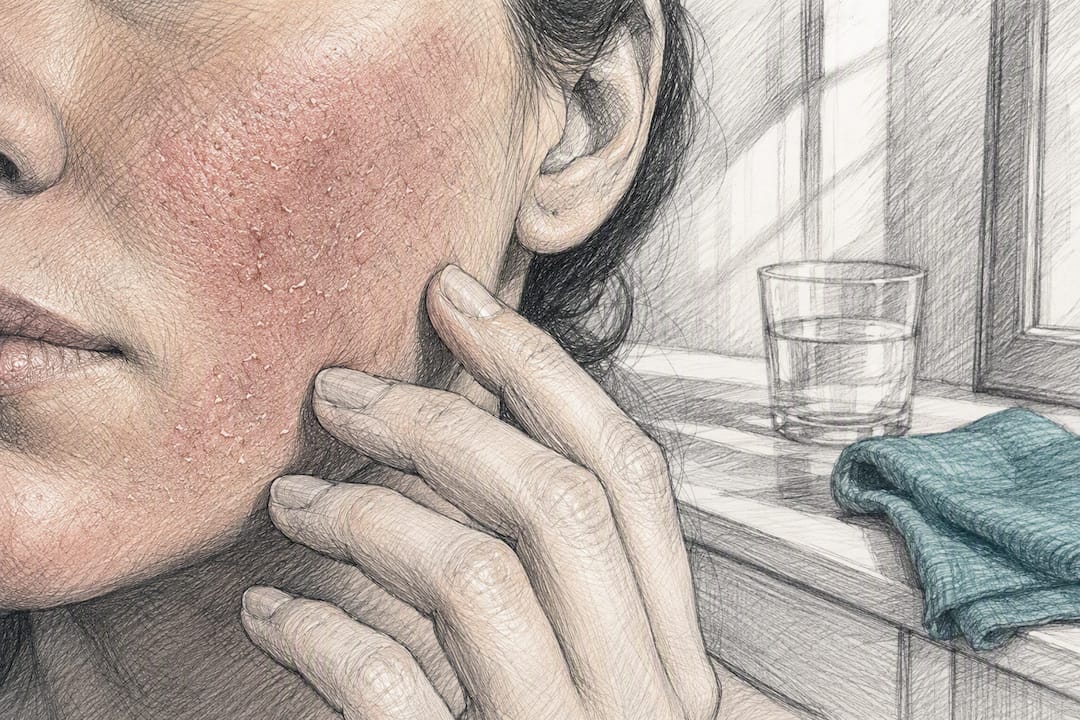
Redness, stinging, flaking, and patchy discolouration are the classic signs, sometimes alongside a short‑lived acne flare as the skin adjusts. These symptoms happen because retinol speeds up cell turnover faster than the skin barrier can keep pacing with, disrupting the lipid layer that normally locks in moisture. The result is transepidermal water loss, which is a clinical way of saying your skin is drying out from the inside as fast as you can moisturise it from the outside.
Normal “retinization” (the adjustment period most retinol users go through) usually settles within two to four weeks: mild flaking and pinkness that fade as tolerance builds. What is not normal is irritation that worsens each night, spreads beyond the application area, or comes with swelling, oozing, or blistering. According to Healthline’s clinical guidance, that pattern points to retinol burn rather than expected adjustment, and it calls for a different response entirely.
What causes retinol burn in the first place?
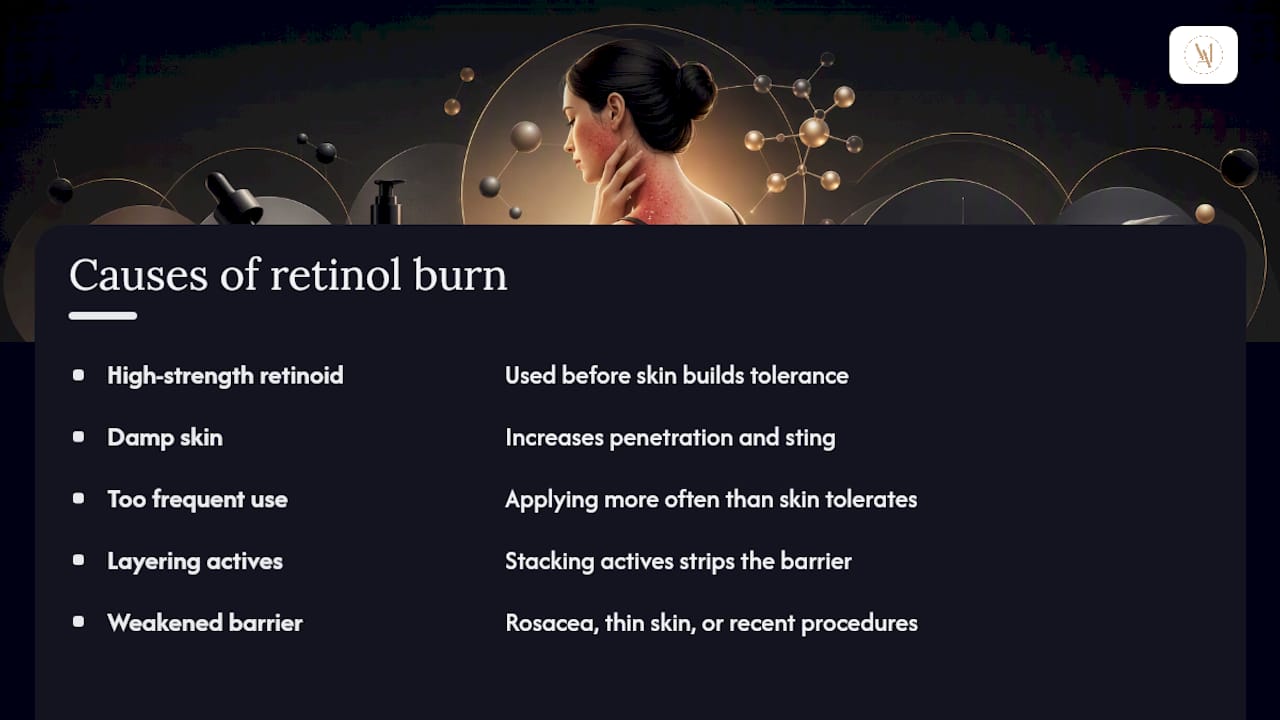
Most retinol burn traces back to one of a handful of avoidable habits. Using a high‑strength product, particularly a prescription‑grade retinoid like tretinoin, before your skin has built tolerance is the most common trigger. Applying retinol to damp skin increases penetration and often intensifies the sting. Using it more often than your skin can handle, sometimes nightly from week one, compounds the problem quickly.
Layering retinol with other actives makes things worse. Combining it with alcohol‑based toners, benzoyl peroxide, high‑strength vitamin C, or physical exfoliants strips the barrier from multiple directions at once, and Healthline notes this kind of stacking is one of the fastest routes to a reaction.
Some skin is simply more vulnerable. If you have rosacea, naturally sensitive skin, or thin skin around the eyes and neck, you’re starting from a weaker barrier. Recent procedures such as a chemical peel or microneedling session leave skin freshly compromised, and adding retinol on top before it has healed is asking for trouble.
What to do in the first 24 to 72 hours
The immediate goal is to calm inflammation and stop further barrier damage, not to keep treating your skin.
- Pause all retinoids and other active ingredients completely; don’t try to “push through” a reaction.
- Switch to a gentle, fragrance‑free cleanser used once daily, morning or evening, not both.
- Apply a cool (never icy) compress to burning areas for 10 to 15 minutes at a time.
- For significant redness or itching, Cleveland Clinic supports a short, sparing course of over‑the‑counter 1% hydrocortisone for up to three days, avoiding the eye area.
- Rehydrate with a ceramide moisturiser and, if skin is very dry, seal it in with petrolatum or squalane at night.
- Skip makeup, physical scrubs, alcohol toners, hot showers, and saunas until the skin has visibly calmed.
Pro Tip: Keep your rescue routine to three products maximum. Every extra step, even a “calming” serum, is another ingredient your compromised barrier has to process.
Which barrier-repair ingredients actually work?
Not every “soothing” product delivers. A 2025 randomised, double‑blind patch test measured how different ingredient combinations performed against 0.1% retinol‑induced irritation over five days, and the results were specific enough to build a routine around.
| Ingredient | Effective concentration | Role in repair |
|---|---|---|
| Ceramides | Barrier‑matching blend | Rebuilds the lipid layer, reduces water loss |
| Panthenol | 2 to 5% | Softens, hydrates, supports healing |
| Madecassoside (Centella fraction) | Roughly 0.2% | Calms inflammation without blunting retinol’s benefits |
| Acetyl glucosamine | 3% | Supports barrier recovery alongside ceramides |
| PLG | 2% | Anti‑irritant, used in the top‑ranked patch‑test blend |
| TECA (Centella asiatica extract) | 0.2 to 0.5% | Reinforces the calming effect of madecassoside |
The combination that performed best in that patch test paired 0.1% retinol with 2% PLG, 5% ceramides, 3% acetyl glucosamine, 2% panthenol, 0.2% TECA, and 0.5% Centella asiatica, producing the lowest cumulative irritation score against a plain vehicle. Separately, a randomised trial on madecassoside found it reduced irritation in patients starting a retinoid without interfering with the retinoid’s effect.
A simple two‑part routine puts this into practice:
- Morning: gentle cleanser, ceramide moisturiser, then broad‑spectrum SPF 30+ (mineral or hybrid). Sunscreen isn’t optional here; retinol‑treated skin is more sun‑reactive, full stop.
- Evening (while paused): gentle cleanser, ceramide moisturiser, a spot application of panthenol or madecassoside on affected areas, and petrolatum over the top if dryness is severe.
Avoid heavily fragranced products and essential‑oil‑based “natural” remedies during this window. They feel soothing on contact but frequently sensitise already‑compromised skin further, which defeats the point entirely. A redness‑relief routine built around these same principles can help you structure the repair phase.
How do you restart retinol without triggering the same reaction?
Wait until you see genuine improvement before reintroducing retinol. Mild irritation typically clears in 7 to 14 days; moderate reactions can take longer, and there’s no benefit in rushing it.
- Drop to a lower concentration than you were using before, even if that means starting over with an over‑the‑counter formula.
- Apply just 2 to 3 nights per week initially, using no more than a pea‑sized amount.
- Try buffering: apply moisturiser first, let it absorb, then apply retinol on top, or use the “sandwich” method of moisturiser, retinol, moisturiser again. RealSelf’s practitioner guidance on buffering and frequency ramping backs this as an effective way to blunt intensity without losing benefit.
- Increase frequency gradually over several weeks, only once your skin tolerates the current step without flaking or stinging.
- Hold off on exfoliating acids, retinol‑adjacent actives, and strong vitamin C for 6 to 8 weeks, and wear SPF daily without exception.
A lower‑strength retinol formula can make this measured reintroduction easier to control than jumping straight back to your original strength.
When should you see a clinician about retinol irritation?
Self‑care has limits. Book a consultation if you notice any of the following:
- Blistering, oozing, or rapidly spreading redness
- Fever or signs of infection around the affected area
- Severe pain rather than mild stinging or tightness
- No improvement in redness or stinging after 2 to 3 weeks of consistent barrier repair
A clinician can prescribe stronger topical repair agents, a short steroid course, or switch you to an alternative retinoid or non‑retinoid active better suited to your skin, as Ubie’s clinical guidance outlines for cases that don’t resolve with home care.
Can diet and supplements help your skin heal faster?
What you put on your skin matters most during a retinol flare, but what you eat plays a supporting role in how quickly your barrier recovers. Skin repair depends on adequate protein intake, since collagen and structural proteins in the epidermis are built from amino acids. Diets consistently short on protein tend to slow wound healing generally, and a compromised barrier is, in effect, a form of micro‑injury.
Omega‑3 fatty acids, found in oily fish, walnuts, and flaxseed, support the skin’s lipid structure, complementing the topical ceramides you’re applying rather than replacing them. Zinc plays a role in skin repair and immune function, and mild deficiency has been linked to slower healing in some populations, though supplementing beyond a normal balanced intake shows no proven extra benefit for retinol‑specific irritation.

Vitamin C from food sources supports collagen synthesis internally, distinct from topical vitamin C serums, which you should avoid applying directly to irritated skin. Staying well hydrated supports overall skin turgor and barrier function, though drinking more water will not substitute for a ceramide moisturiser on already dehydrated, retinol‑stressed skin.
None of this replaces the topical repair routine outlined above. Think of diet as the quiet, slower‑acting half of recovery, working in the background while your topical routine does the immediate work.
Jess and the M‑ethod clinical perspective
Working alongside The M‑ethod’s clinicians, I’ve seen the same pattern repeat: people treat retinol irritation as a product problem when it’s usually a pacing problem. The skin isn’t rejecting retinol; it’s being asked to adapt faster than biology allows.
In clinic, reintroduction plans differ sharply between prescription retinoids and over‑the‑counter formulas, because the concentration jump between them is often bigger than people realise. Product recommendations get tailored the same way: a ceramide moisturiser that works for one person’s barrier may be entirely wrong for another’s rosacea‑prone skin.
If your irritation keeps returning despite following a sensible repair routine, that’s usually a sign the underlying plan needs adjusting, not that retinol isn’t for you. A virtual consultation is worth booking at that point.
— Jess
Get a tailored repair and reintroduction plan from The M-ethod
Generic advice can only take barrier repair so far. Them-ethod’s online skin consultation gives you a plan built around your actual skin, whether you’re recovering from an over‑the‑counter retinol or a prescription‑strength formula, rather than a one‑size‑fits‑all protocol pulled from a forum thread. Our online skin consultation connects you directly with expert clinicians who can assess your specific reaction and map out exactly when and how to restart retinol safely.
While you wait for that plan, or alongside it, our curated collection of medical‑grade moisturisers, ceramide creams, and calming serums gives you barrier‑repair ingredients without guessing which products actually contain effective concentrations. If your irritation followed a recent in‑clinic procedure, our aesthetic treatment consultations can also help. Book your consultation today and get a repair routine built for your skin specifically.
Primary studies and trusted clinical resources
The recommendations above draw on a 2025 patch test ranking soothing ingredient combinations against retinol‑induced irritation, Cleveland Clinic’s patient guidance on managing retinol reactions, Healthline’s overview of causes and prevention, and Ubie’s clinical notes on red flags requiring medical review.
This article is general information, not a substitute for advice from a qualified doctor. Consult a qualified healthcare professional about your own circumstances before acting on anything here.
Sources
- Evaluating the efficacy of soothing agents in mitigating 0.1% retinol‑induced skin irritation: a patch test (PMC)
- Retinol (Cleveland Clinic)
- Retinol burn: Symptoms, causes, treatment, and prevention (Healthline)
- Retinol burn? Why your skin is peeling & medical next steps (Ubie)
FAQ
How do you calm down retinol irritation?
Stop using retinol immediately, switch to a gentle cleanser and ceramide moisturiser, and use cool compresses on burning skin.
When does retinol irritation go away?
Mild irritation from normal retinization typically resolves within two to four weeks as your skin adjusts. A genuine retinol burn, if you pause the product and follow a repair routine, usually improves within 7 to 14 days.
What does a retinol burn look like?
It looks like intense redness, stinging, peeling, or flaking that worsens rather than settles, sometimes with swelling or, in severe cases, blistering and oozing. This is distinct from the mild pinkness and flaking of normal adjustment.
What is the best soothing cream for retinol burn?
Look for a ceramide‑based moisturiser, ideally with panthenol or madecassoside included, since a patch test found these ingredient combinations most effectively reduced retinol‑induced irritation. Petrolatum can be layered on top overnight if dryness is severe.
Should you stop retinol completely if your skin is irritated?
Yes, temporarily. Pause retinol and other active ingredients until visible improvement, then restart at a lower concentration and reduced frequency rather than abandoning it altogether.