





Expert Guide to Sensitive Skin Care for Lasting Comfort
Finding high-end skincare that truly caters to sensitive skin can feel frustrating, especially when even the most luxurious creams and serums sometimes trigger irritation. With sensitive skin syndrome affecting a bold 40 to 50 percent of the population, discerning your own unique triggers becomes essential. This guide empowers you to assess and refine your skincare approach so you can confidently select dermatologist-recommended products while protecting your skin’s integrity and comfort.
Table of Contents
Quick Summary
| Essential Insight | Detailed Explanation |
| 1. Document Your Skin Triggers | Maintain a detailed journal to track irritants and reactions, capturing product use, environment, and lifestyle factors. |
| 2. Implement a Gentle Skincare Routine | Use minimal, fragrance-free products; prioritise a soap-free cleanser and hydrating moisturiser for sensitive skin. |
| 3. Conduct Patch Testing | Always patch test new products before full application to identify potential skin reactions. |
| 4. Introduce New Products Gradually | Introduce one product at a time after a two-week reset, monitoring your skin’s response for any reactions. |
| 5. Continuously Monitor Your Skin | Regularly assess and document your skin’s condition to identify patterns that inform your skincare adjustments. |
Step 1: Assess Your Sensitive Skin Triggers
Understanding your sensitive skin’s unique response mechanisms requires a systematic and thoughtful approach. Sensitive skin syndrome affects 40-50% of the population, making it crucial to identify and manage your specific triggers effectively.
To begin your sensitive skin assessment, start by creating a comprehensive skin trigger journal. This detailed record will help you track potential irritants and your skin’s reactions. Your journal should document:
-
Specific cosmetic and skincare products used
-
Environmental conditions (temperature, humidity)
-
Dietary intake
-
Stress levels
-
Hormonal changes
-
Physical activities
-
Topical product applications
Precision in tracking is key to understanding your skin’s unique reactivity patterns.
Next, follow a strategic elimination and reintroduction process. Neurogenic inflammation contributes to skin sensitivity, so a methodical approach helps identify precise triggers. Begin by discontinuing all current topical products and introducing them gradually, one at a time, with a minimum two-week interval between new product introductions. Observe and document your skin’s response meticulously, noting any redness, itching, burning, or tightness.
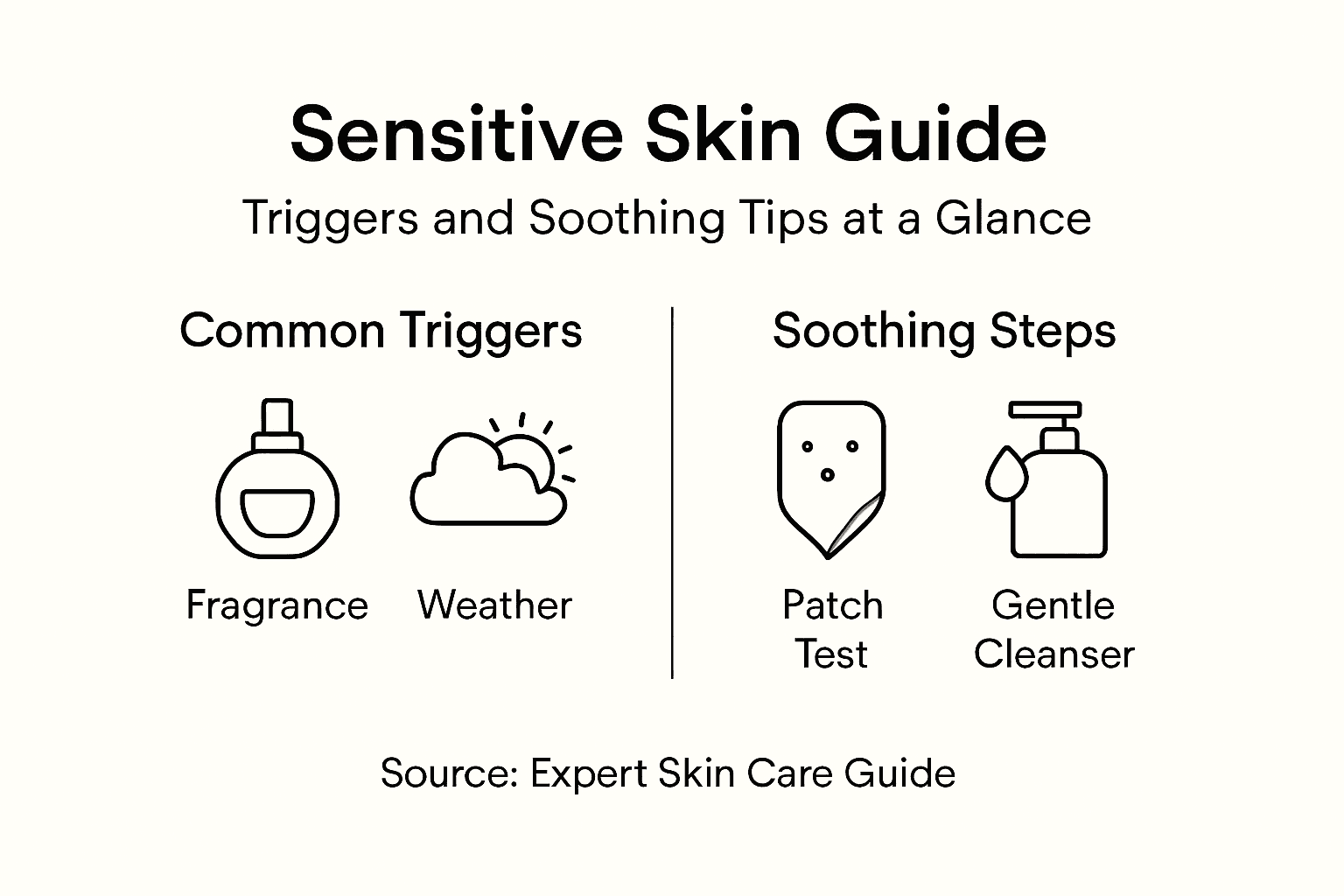
Expert Guidance: Monitor your skin’s reaction closely and consider consulting a dermatologist for professional insights into your specific sensitivity profile.
Here is a quick comparison of sensitive skin triggers and potential management strategies:
| Trigger Type | Example Triggers | Management Approach |
| Environmental | Climate, pollution, pollen | Use barrier creams, avoid exposure |
| Product Ingredient | Fragrances, alcohols | Choose hypoallergenic formulas |
| Lifestyle Factors | Stress, diet, lack of sleep | Practise relaxation, monitor diet |
| Physical Factors | Rubbing, scratching | Gentle cleansing, avoid harsh towels |
Step 2: Curate a Gentle Skincare Routine
Crafting a sensitive skin routine demands precision and care. Dermatologist recommendations emphasise gentle cleansing and protection, ensuring your skin receives minimal stress while maximising its health and resilience.
Begin by selecting minimal, fragrance-free products designed specifically for sensitive skin types. Your core routine should include:
-
Gentle, soap-free cleanser
-
Hydrating, non-comedogenic moisturiser
-
Broad-spectrum sunscreen (SPF 30 or higher)
-
Calming serum with antioxidants
-
Minimal exfoliation products
Simplicity is the ultimate sophistication in sensitive skincare.
When introducing new products, implement a patch testing protocol. Apply a small amount of product to your inner forearm and wait 24-48 hours to assess potential reactions. Introduce only one new product every two weeks, allowing your skin sufficient time to adapt and preventing overwhelming inflammatory responses.

Expert Guidance: Layer skincare products from thinnest to thickest consistency, allowing each product 60 seconds of absorption to maximise efficacy and minimise potential irritation.
The following table summarises the benefits of patch testing versus direct skin application for new skincare products:
| Method | Safety Level | Time Commitment | Likelihood of Reaction Noticed |
| Patch Testing | Very high | 24–48 hours | Early detection |
| Direct Application | Risky for sensitive skin | Immediate | Delayed or severe reaction possible |
Step 3: Select Dermatologist-Recommended Products
Navigating the complex world of skincare products requires strategic selection and expert insight. Dermatologists recommend simplified skincare regimens that prioritise skin health and minimise potential irritation for sensitive skin types.
When selecting products, focus on key therapeutic ingredients that support skin barrier function and reduce inflammation. Your ideal product selection should include:
-
Gentle, pH-balanced cleansers
-
Moisturisers containing ceramides
-
Antioxidant serums with vitamin C
-
Broad-spectrum sunscreens (SPF 30+)
-
Minimal, fragrance-free formulations
Professional expertise transforms skincare from guesswork to precision.
Prioritise products with minimal ingredient lists and scientifically validated compounds. Avoid harsh chemical exfoliants and opt for products specifically designed for sensitive skin. Look for dermatologist-approved brands that offer targeted solutions, paying close attention to individual skin sensitivities and potential reactive ingredients.
Expert Guidance: Conduct thorough patch testing for each new product, applying a small amount to your inner forearm and monitoring for 48 hours to identify potential adverse reactions.
Step 4: Implement a Gradual Introduction Process
Successfully managing sensitive skin requires a meticulous and patient approach to product integration. Sensitive skin care demands strategic product introduction to minimise potential inflammatory responses and identify individual skin triggers.
Implement a systematic product introduction protocol that prioritises skin safety and comprehensive observation. Your gradual introduction strategy should follow these key steps:
-
Discontinue all current skincare products
-
Wait two weeks for skin reset
-
Select one new product to introduce
-
Conduct thorough patch testing
-
Monitor skin response for 7-10 days
-
Document any reactions or changes
-
Wait an additional week before introducing another product
Patience transforms skincare from reactive to proactive.
Minimise potential skin disruption by introducing products incrementally and observing your skin’s unique response. Each new product should be tested individually, allowing sufficient time to understand its impact on your skin’s microbiome and overall health. Pay close attention to subtle changes in skin texture, sensitivity, and potential inflammatory markers.
Expert Guidance: Create a detailed skincare journal documenting each product’s introduction, tracking precise dates, application methods, and your skin’s immediate and delayed reactions.
Step 5: Monitor and Adjust for Optimal Results
Navigating sensitive skin care requires ongoing vigilance and strategic adaptation. Sensitive skin management demands continuous evaluation to maintain skin health and prevent potential inflammatory responses.
Develop a comprehensive skin tracking system that captures multiple dimensions of your skin’s response. Your monitoring protocol should include:
-
Daily symptom documentation
-
Skin barrier condition assessment
-
Environmental factor tracking
-
Product interaction notes
-
Stress and hormonal cycle observations
-
Temperature and humidity records
-
Detailed photographic documentation
Small adjustments create transformative skincare results.
Establish a systematic review process by creating a weekly skin health audit. Analyse your documented observations to identify subtle patterns in skin reactivity, looking for correlations between environmental factors, product interactions, and skin response. This methodical approach allows for precise, personalised skincare adjustments that support your skin’s unique needs.
Expert Guidance: Utilise digital tracking tools or a dedicated journal to record granular details about your skin’s daily condition, enabling more informed and proactive skincare management.
Achieve Lasting Comfort with Expert Sensitive Skin Solutions
Sensitive skin can be challenging to manage, especially when triggers vary from environmental factors to lifestyle influences. The article highlights the importance of a systematic sensitive skin assessment, gentle product selection, and gradual product introduction to prevent irritation and support skin resilience. If you are seeking personalised, clinically effective skincare designed to soothe and protect your sensitive skin, our curated offerings are tailored precisely for your unique needs.

Discover premium, prescription-strength products and bespoke virtual consultations at The M-ethod Skin. Benefit from expert guidance on building a gentle skincare routine that reduces inflammation and protects your skin barrier. Start your journey to lasting comfort today by exploring our range of dermatologist-recommended skincare solutions and advanced treatment protocols at The M-ethod Skin online boutique. Take proactive control now and restore your skin’s natural balance with confidence.
Frequently Asked Questions
How can I identify my sensitive skin triggers?
To identify your sensitive skin triggers, start by keeping a detailed skin trigger journal that records skincare products used, environmental conditions, diet, stress levels, and hormonal changes. Monitor your skin’s reactions to this information for at least two weeks to pinpoint specific irritants.
What should I include in a gentle skincare routine for sensitive skin?
A gentle skincare routine for sensitive skin should include a soap-free cleanser, hydrating moisturiser, broad-spectrum sunscreen (SPF 30 or higher), and calming serums. Aim for fragrance-free products and consider simplifying your routine by using only essential items to avoid overwhelming your skin.
How do I safely introduce new products to my sensitive skin?
Introduce new products to your sensitive skin gradually by implementing a two-week waiting period after discontinuing all current products. After this reset, conduct patch tests on new products and observe your skin’s response over one week, ensuring you introduce only one product at a time.
What should I monitor to ensure my sensitive skin stays healthy?
To maintain healthy skin, monitor daily symptoms, product interactions, and environmental factors that may affect your skin’s condition. Conduct regular assessments and keep a journal to track changes, which can help you make informed adjustments to your skincare routine.
How can I minimise inflammation caused by sensitive skin?
Minimise inflammation by selecting products with minimal ingredients that support skin barrier function, such as ceramides and antioxidants. Implement gradual product reintroduction and avoid harsh chemicals to reduce the likelihood of irritation and achieve better skin comfort over time.
What can I do if my skin reacts negatively to a new product?
If your skin reacts negatively to a new product, discontinue its use immediately and allow your skin time to recover. Document the reaction in your skin trigger journal and avoid using the product in the future to prevent further irritation.