



Article: When Do LED Therapy Results Start to Show?
When Do LED Therapy Results Start to Show?
A well-designed LED device is not a shortcut to a new face by Friday. The most credible LED therapy results are progressive: calmer-looking skin, a more even complexion and, with sustained use, visible refinement in texture and fine lines. For clients investing in advanced skincare, that measured pace is a strength. It reflects a treatment that works with cellular processes rather than aggressively forcing change at the surface.
LED therapy uses specific wavelengths of light to support different skin goals. It is non-invasive, comfortable and generally requires no downtime, which makes it exceptionally useful alongside a considered home regimen. Yet the quality of the device, the wavelength delivered, your concern and your consistency all determine what you will see.
What LED therapy results can realistically deliver
Red and near-infrared light are most often selected for concerns associated with skin ageing, recovery and compromised skin quality. These wavelengths are used to support collagen-producing activity, circulation and the skin’s repair response. Over time, this may translate to skin that appears firmer, more luminous and more resilient, with softening in the look of fine lines.
Blue light is usually chosen for blemish-prone skin because it can help target acne-associated bacteria. It may help reduce active breakouts and inflammation, particularly when used consistently as part of a wider acne plan. It is not, however, a complete answer to acne driven by hormonal shifts, congestion, unsuitable cosmetics or prescription-level needs.
Some devices combine wavelengths. This can be valuable when skin is both reactive and blemish-prone, or when a client wants to address early ageing while maintaining clarity. The right approach is not necessarily the device with the most settings. It is the one with clinically meaningful wavelengths, appropriate irradiance and a protocol you will actually follow.
For pigmentation, expectations need particular care. Red light can support overall skin recovery, but LED alone does not reliably erase established melasma, sun spots or post-inflammatory hyperpigmentation. For deeper skin tones, where inflammation can more readily lead to discolouration, reducing irritation is valuable, but daily broad-spectrum SPF and a pigment-focused regimen remain non-negotiable.
Your LED therapy results timeline
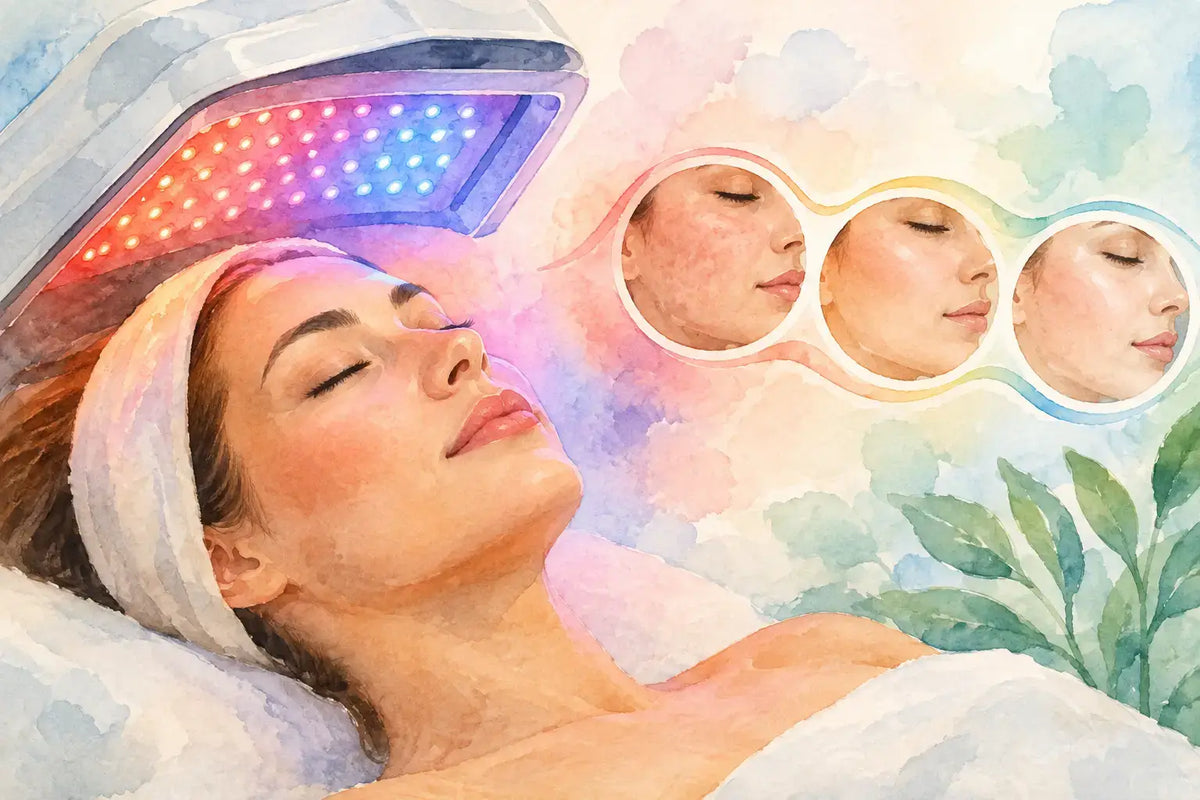
The first change is often comfort rather than a dramatic cosmetic transformation. After several sessions, some people notice that post-breakout redness settles faster or that their skin looks less fatigued. This can happen within two to four weeks, especially when LED is paired with barrier-supportive skincare.
At around six to eight weeks, consistency may begin to show more clearly in photographs and in the mirror: fewer inflammatory blemishes, a more balanced-looking tone or a subtle improvement in glow. These changes can be gradual enough that you notice them when comparing images rather than day to day.
Collagen-related changes require more patience. A meaningful course commonly takes eight to twelve weeks, followed by maintenance. Fine lines do not disappear, and significant laxity will not be corrected by light therapy alone. However, a refined skin surface, improved radiance and modest improvements in firmness can make the complexion look notably fresher.
Clinical treatments may produce a different pace from an at-home mask because professional panels can deliver carefully controlled treatment parameters. At-home devices have a clear place: they make regular use achievable and can be an intelligent investment for maintenance. Do not assume that a short salon-style session or an expensive-looking mask guarantees superior results. Specifications and adherence matter more than novelty.
The factors that determine whether you see a difference
A credible LED device states the wavelengths it uses and provides a clear treatment schedule. Red light is commonly in the mid-600 nm range, while near-infrared light is often in the 800 nm range; blue light commonly sits around the low-400 nm range. Numbers alone are not a shopping strategy, but a brand that provides no meaningful technical information gives you little basis for judging its claims.
Dose matters too. More intensity and longer sessions are not automatically better. Light follows a biphasic response, meaning too little may do very little, while excessive exposure does not necessarily improve the outcome. Follow the device instructions precisely rather than extending sessions in pursuit of faster change.
Your baseline skin health also shapes the outcome. Skin inflamed by over-exfoliation, a poorly tolerated retinoid or a compromised barrier will not behave like calm, well-supported skin. LED can complement recovery, but it cannot compensate for a regimen that repeatedly triggers irritation.
Finally, consistency is decisive. Most home devices are intended for several sessions each week during an initial course. Missing the occasional session is unlikely to undo progress; using the device sporadically for a fortnight, then leaving it in a drawer for two months, will.
How to get better results from an LED device
Use LED on clean, dry skin unless your device specifically permits otherwise. Heavy creams, oils and sunscreen can interfere with comfort or simply make the routine less practical. After treatment, apply your chosen active or recovery products according to tolerance. A hydrating serum, barrier moisturiser and daily SPF are uncomplicated partners for most people.
If pigmentation is a priority, LED should sit behind strict photoprotection and clinically credible brightening ingredients, not replace them. If acne is your concern, pair blue light with a gentle cleanser and an evidence-led acne regimen that suits your skin. Overloading the skin with acids, scrubs and spot treatments because you want a rapid result often prolongs inflammation.
Retinoids can work beautifully within an advanced regimen, but do not treat LED as permission to ignore sensitivity. If your skin is dry, stinging or peeling, simplify your routine and consider reducing the frequency of stronger actives. A personalised consultation is particularly worthwhile if you are managing rosacea, recurrent acne, melasma or persistent barrier disruption.
Take standardised photographs before beginning: the same location, time of day and lighting, with no make-up. Review them at four, eight and twelve weeks. This is a more honest way to assess change than relying on memory, which tends to overestimate a good week and dismiss gradual improvement.
Safety and when to seek expert advice
LED is usually well tolerated, but it is not entirely context-free. Check with your clinician before use if you have a photosensitive condition, take medicines that increase light sensitivity, are receiving treatment for cancer, or have an eye condition requiring specialist guidance. Use the supplied eye protection where directed, especially with blue-light treatments.
Stop and seek advice if you develop persistent irritation, headaches, eye discomfort or an unexpected rash. This is also not the moment to self-manage severe, cystic or scarring acne. Earlier medical intervention can reduce the risk of long-term marks and discolouration.
The most satisfying LED therapy results come from treating light as one precise element of a high-performance skin plan. Choose a credible device, give it a proper twelve-week window and let expert guidance shape the rest of the regimen. Your skin does not need another trend. It needs consistent, intelligent care.