



Article: LED Mask vs Red Light: Which Delivers Results?
LED Mask vs Red Light: Which Delivers Results?
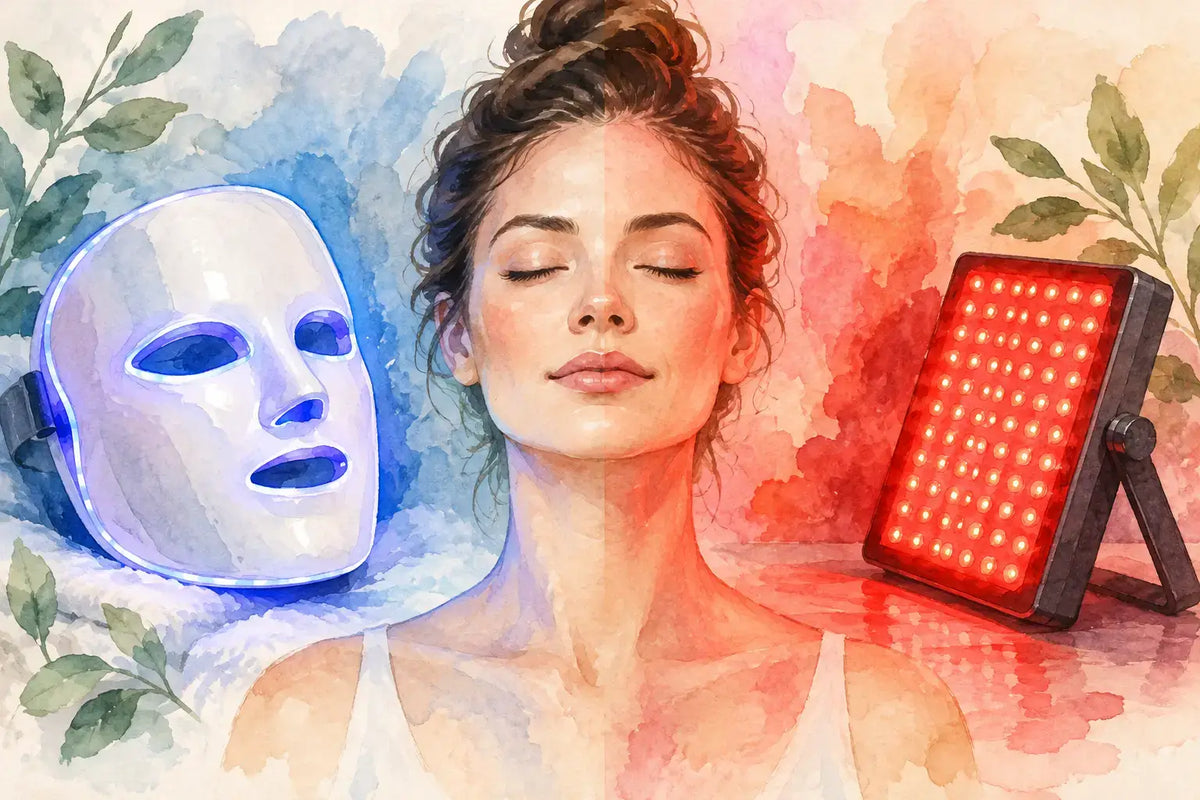
A considered LED mask vs red light comparison starts with one essential clarification: an LED mask is not the opposite of red light therapy. It is one delivery format for it. The real decision is whether a face-shaped, hands-free device or a panel, handheld tool or clinic-grade system best suits your skin concern, routine and expectations.
For pigmentation, persistent redness, inflammatory breakouts or visible signs of ageing, device design matters. Yet the wavelength, dose, consistency and quality of the device matter more than the format alone. Premium light therapy should earn its place in your regimen through measured specifications and a realistic, clinically informed protocol - not through impressive-looking hardware.
LED mask vs red light: the key difference
An LED mask sits directly over the face and contains light-emitting diodes positioned to treat the skin at a close, fixed distance. Depending on its design, it may offer red light, near-infrared light, blue light or a combination of wavelengths. It is designed for facial use, convenience and even coverage while you rest, read or continue with a quiet moment at home.
“Red light”, meanwhile, describes a wavelength range rather than a single device type. Red-light therapy may be delivered through an LED face mask, a flexible panel, a tabletop panel, a handheld device or a professional machine. Some devices pair visible red light with near-infrared light, which is invisible and intended to reach deeper tissue. Others offer red light only.
This distinction prevents a common purchasing error: assuming every red-light device has the same capability, or that every LED mask is built around red light. A mask may include multiple colours, while a panel may offer a more powerful red and near-infrared treatment for the face, neck, chest or body.
What red and near-infrared light can support
Photobiomodulation is the clinical term often used for therapeutic red and near-infrared light exposure. At appropriate wavelengths and doses, light energy is absorbed by cellular structures, supporting processes associated with tissue repair, inflammation modulation and collagen-related activity. In aesthetic skincare, it is most often used to support a calmer, more luminous and resilient-looking complexion over time.
Red light commonly falls around 630 to 660 nanometres. It is generally selected for more superficial skin-focused goals, including the appearance of fine lines, redness and uneven tone. Near-infrared light, often around 810 to 850 nanometres, travels deeper and may complement red light in protocols focused on skin recovery, inflammation and overall rejuvenation.
The results are cumulative rather than instant. You may notice a healthy glow or temporary reduction in visible redness after a session, but collagen remodelling and more balanced-looking skin require regular use over weeks. LED therapy is not a substitute for daily broad-spectrum SPF, prescription acne care, pigment-suppressing skincare or professional treatment where these are indicated.
Why an LED mask may be the right choice
For a facial skincare routine, a well-designed LED mask is exceptionally practical. The close fit keeps the light source at a consistent distance, which helps make treatments repeatable. Most users are also more likely to stay consistent with a device that is hands-free, timed and easy to use three to five times weekly.
A mask is particularly compelling when your priority is facial rejuvenation: softening the appearance of fine lines, supporting post-treatment recovery, addressing mild inflammatory redness or maintaining a brighter, healthier-looking complexion alongside active skincare. It can also be an elegant addition for those who want advanced at-home care without rearranging their bathroom routine around a larger device.
There are trade-offs. Even excellent masks vary in fit, and a rigid design can leave the jawline, hairline or sides of the face less evenly exposed. Masks also concentrate on the face. If your concern extends to the neck, décolletage, back, body or scalp, a panel or targeted device may offer more versatility.
When a red-light panel or handheld device is better
A quality red-light panel is often the more flexible option. It can treat larger areas and may be useful for the neck and chest, where sun exposure frequently reveals itself through uneven tone and crepiness. It may also be a better investment for anyone seeking light therapy beyond facial skincare, provided the device is used according to its specific instructions.
However, a panel requires more thought. Distance from the skin changes the intensity reaching the treatment area, so positioning must be consistent. It takes space, and the temptation to extend treatment time can be counterproductive. More intensity is not automatically better: the biological response to light is dose-dependent, and excessive exposure may not improve results.
Handheld devices occupy the middle ground. They can be valuable for a specific area, such as a localised blemish-prone zone or the eye contour, but they demand more time and precision. They are less suitable for someone who wants full-face treatment in a few effortless minutes.
Do not compare devices by colour alone
A visible red glow does not tell you whether a device is effective. When assessing an LED mask or red-light device, look beyond colour claims and consider the specifications that determine treatment quality.
Wavelength should be stated clearly in nanometres, rather than described vaguely as “red” or “infrared”. Irradiance, usually measured in milliwatts per square centimetre, indicates the power reaching the skin at a stated distance. Fluence, measured in joules per square centimetre, reflects the energy dose over a treatment session. These figures need context: a reputable brand should explain the recommended distance, session length and frequency rather than relying on headline numbers alone.
Clinical testing, eye protection and electrical safety are equally important. A serious device will provide transparent instructions and contraindications. Be wary of exaggerated claims that imply an at-home mask can replicate injectables, erase deep wrinkles or treat medical conditions without professional assessment.
Match the format to your skin concern
For ageing concerns, red and near-infrared light can complement a sophisticated regimen built around daytime sun protection, antioxidant support, retinoid use where appropriate and barrier-conscious moisturisation. A mask is usually the most convenient choice for consistent full-face treatment, while a panel can make sense if you also want to include the neck and chest.
For acne, the answer is more nuanced. Blue light may be relevant for certain acne-causing bacteria, while red light may help calm the inflammatory component. But acne can be hormonal, comedonal, inflammatory or medication-related, and light therapy alone is rarely a complete strategy. Active acne paired with post-inflammatory hyperpigmentation needs particular care, especially in deeper skin tones where irritation can prolong discolouration.
For melasma and pigmentation, proceed selectively. Heat and inflammation can aggravate melasma, so a high-heat device or an overly aggressive routine is not automatically beneficial. Red light may have a place in a carefully managed, barrier-supportive plan, but it should not replace rigorous visible-light-conscious sun protection, pigment-targeting treatment and professional guidance.
For rosacea-prone or sensitised skin, a gentle red-light protocol can be appealing, but tolerance varies. Begin with shorter sessions and avoid introducing an LED device during an active flare or alongside multiple new exfoliating products. Comfort and reduced reactivity are more meaningful markers of progress than chasing a dramatic immediate change.
How to use light therapy without compromising your regimen
Use your device on clean, dry skin unless its manufacturer explicitly advises otherwise. Heavy creams, oils and SPF can interfere with fit, feel or light distribution, and photosensitising products should be assessed carefully. After treatment, continue with your chosen serum and moisturiser, then use broad-spectrum SPF every morning without exception.
Avoid treating LED therapy as a reason to intensify every other active. A disciplined routine will usually outperform an overloaded one. If you use prescription retinoids, take photosensitising medicines, have a light-sensitive condition, are pregnant, or are managing an eye condition, seek advice from your prescribing clinician or skincare professional before starting.
Consistency is the luxury here. Choose the device you will genuinely use correctly, then give it a fair trial period while keeping the rest of your routine stable enough to judge change.
The most intelligent purchase is not necessarily the mask with the most LEDs or the panel with the strongest claim. It is the clinically credible device that fits your concern, your anatomy and your real routine - then becomes a reliable part of the care you give your skin.