




How to address acne at home: your practical guide
TL;DR:
- A consistent skincare routine with proven ingredients can effectively manage acne at home in 8 to 12 weeks. Properly introducing active ingredients and maintaining simplicity are essential to avoid irritation and promote genuine improvement. Long-term adherence and lifestyle habits support skin health and ensure routine success.
Effective acne management at home is achievable with a consistent, evidence-based skincare routine built around a small number of clinically proven ingredients. The standard dermatological approach to treating acne, known as acne vulgaris management, centres on four steps: cleansing, targeted treatment, moisturising, and daily sun protection. Ingredients such as benzoyl peroxide, adapalene (a retinoid), and salicylic acid form the backbone of any credible home treatment plan. Knowing how to address acne at home means understanding not just which products to use, but in what order, at what concentration, and with how much patience. Results typically require 8–12 weeks of consistent use before visible improvement appears.
How to build a daily acne skincare routine at home
A structured four-step routine is the most reliable foundation for managing acne at home. Each step serves a distinct purpose, and skipping any one of them reduces the overall effectiveness of the others.
Step 1: Cleanse
Start with a gentle, pH-balanced cleanser that does not strip the skin. Non-comedogenic formulas are essential because they clean without blocking pores. Avoid foaming cleansers with sulphates, which disrupt the skin’s acid mantle and worsen inflammation. Cleanse twice daily, morning and evening, using lukewarm water and light pressure.
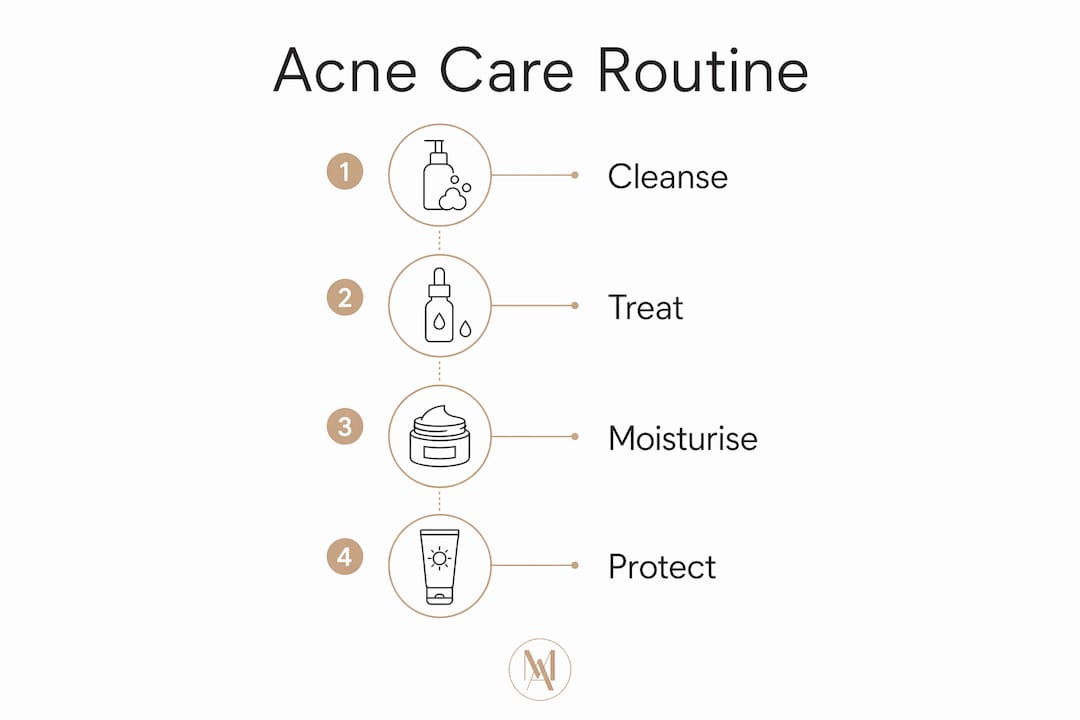
Step 2: Treat
This is where the active ingredients do the work. The three most clinically supported options for home acne care are:
- Benzoyl peroxide: Kills acne-causing bacteria directly on the skin. 2.5% benzoyl peroxide is as effective as 10% formulations with significantly less irritation. Apply it in the morning.
- Adapalene 0.1%: The strongest evidence-based over-the-counter retinoid available. Adapalene regulates skin cell turnover and reduces inflammation. Apply it at night only.
- Salicylic acid: A beta-hydroxy acid that dissolves debris inside pores. Useful for blackheads and mild breakouts. Typically found in cleansers or toners at concentrations of 0.5%–2%.
Applying benzoyl peroxide in the morning and retinoids at night is standard clinical protocol. This separation prevents chemical degradation and protects the efficacy of both ingredients.
Step 3: Moisturise
Oily and acne-prone skin still needs moisture. Skipping this step causes the skin to overproduce sebum, which worsens breakouts. Choose a lightweight, non-comedogenic moisturiser with ingredients such as niacinamide or hyaluronic acid. For guidance on selecting the right formula, the Them-ethod guide on acne-safe moisturisers is a practical starting point.
Step 4: Protect
Apply a broad-spectrum SPF 30 or higher every morning. Many acne treatments increase photosensitivity, and unprotected sun exposure leads to post-inflammatory hyperpigmentation, the dark marks left after spots heal. A mineral sunscreen with zinc oxide suits sensitive and acne-prone skin particularly well.
How to introduce acne treatment actives safely
The most common reason home acne treatments fail is not the wrong product. It is the wrong approach to introducing products. Layering benzoyl peroxide, retinoids, and AHAs or BHAs all at once causes barrier damage and worsens acne. The skin needs time to adapt to each active ingredient individually.
Introduce one new product at a time, waiting at least two weeks before adding another. Begin with the lowest available concentration and increase only if the skin tolerates it well. This approach, often called “start low and go slow,” is the clinical standard for minimising irritation while still achieving results.
When you first start adapalene, expect a period of purging. Initial worsening when starting retinoids is temporary and signals the treatment is working. Skin cell turnover accelerates, bringing congestion to the surface faster than usual. This phase typically lasts two to four weeks. Do not stop the product during this period unless you experience genuine irritation such as burning, peeling, or persistent redness.
Pro Tip: Apply a thin layer of moisturiser before your retinoid during the first few weeks. This “buffering” technique reduces irritation without significantly reducing efficacy, and it makes the adjustment period far more manageable.
Signs that you need to adjust your routine include stinging on application, visible flaking that does not resolve, and increased sensitivity to water or other products. If these appear, reduce application frequency to every other night and rebuild tolerance gradually. For more detail on managing this phase, the Them-ethod article on calming retinoid irritation covers the practical steps clearly.
Long-term adherence without switching treatments prematurely is critical to avoiding irritation and seeing results. Changing products every few weeks resets the skin’s adaptation process and prevents any single ingredient from working as intended.
Are natural acne remedies actually effective?
Natural acne remedies are popular, but the clinical evidence behind most of them is limited. Tea tree oil and herbal extracts lack the robust clinical evidence that supports standard acne treatments. This does not mean they are entirely without merit, but it does mean they should not replace evidence-based ingredients for moderate to severe acne.
The risks associated with natural remedies are often underestimated:
- Irritation and allergic reactions: Essential oils, including tea tree oil, are potent and can cause contact dermatitis, particularly on inflamed skin.
- Delayed treatment: Relying on unproven remedies while acne progresses can lead to scarring that is far harder to address than the original breakouts.
- Inconsistent formulations: Natural products lack standardised concentrations, so the amount of active compound varies widely between products.
- Aggravation from physical exfoliants: Scrubs, walnut shells, and similar physical exfoliants cause micro-tears in the skin and worsen active acne.
Over-washing is another common mistake. Cleansing more than twice daily strips the skin barrier and triggers a rebound in oil production. Picking or squeezing spots introduces bacteria deeper into the follicle and significantly increases the risk of scarring. If home treatments with proven ingredients have not produced results after 12 weeks, a dermatologist consultation is the appropriate next step. Prescription-strength options, including topical antibiotics and stronger retinoids, are available and effective.
What lifestyle habits support acne care at home?
Lifestyle choices directly affect how well your skincare routine performs. The products you apply matter, but so does the environment your skin lives in between applications.
Non-comedogenic products across your entire routine, not just your moisturiser, reduce the risk of pore congestion. This includes makeup, sunscreen, and hair products. Silicones, heavy oils, and certain waxes in hair products transfer to the forehead and jawline and contribute to breakouts in those areas.
Pro Tip: Change your pillowcase at least twice a week. Pillowcases accumulate sebum, dead skin cells, and bacteria overnight. A clean cotton or silk pillowcase reduces the bacterial load your skin contacts for several hours each night.
Several other habits make a measurable difference:
- Avoid touching your face. Hands carry bacteria and oils that transfer directly to pores.
- Clean your phone screen daily. The screen presses against the cheek and jaw during calls and deposits bacteria onto the skin.
- Manage stress actively. Cortisol, the stress hormone, increases sebum production. Regular sleep and stress management support skin health from the inside.
- Stay consistent with gentle cleansing. pH-balanced cleansing with a moisturiser reduces irritation and supports the skin barrier, which in turn improves tolerance to active ingredients.
The skin barrier is the foundation of any acne routine. When it is compromised, even gentle actives cause irritation, and the skin becomes more reactive overall. Protecting it through consistent moisturising and avoiding harsh products is not optional. It is what allows the treatment ingredients to do their job. For a broader overview of products and habits that work, the Them-ethod guide on managing acne-prone skin is worth reading alongside this article.
Key takeaways
A consistent, minimalist routine built around proven ingredients is the most effective way to manage acne at home, with results typically visible after 8–12 weeks of uninterrupted use.
| Point | Details |
|---|---|
| Use proven actives | Benzoyl peroxide, adapalene 0.1%, and salicylic acid are the most clinically supported home treatment ingredients. |
| Separate your actives | Apply benzoyl peroxide in the morning and retinoids at night to prevent degradation and reduce irritation. |
| Introduce products gradually | Add one new product every two weeks to allow the skin to adapt without barrier damage. |
| Moisturise and protect daily | Non-comedogenic moisturiser and SPF 30+ are non-negotiable steps, even for oily skin. |
| Allow adequate time | Expect 8–12 weeks before significant improvement; switching products early resets progress. |
Why simplicity is the hardest part of treating acne
I have spoken with many people who arrive at a consultation having already tried eight or nine products simultaneously, convinced that more is better. The skin does not work that way. Avoiding product overload and keeping the routine simple and consistent is what actually produces results. That insight sounds obvious, but it runs counter to everything the skincare market encourages you to do.
The failures I see most often come from two places: impatience and over-treating. Someone starts adapalene, experiences purging after two weeks, and immediately stops. Or they layer three actives at once, develop irritation, and conclude that their skin “cannot tolerate” retinoids. In both cases, the product was not the problem.
What I tell people is this: pick your three steps, commit to them for twelve weeks, and do not change anything unless you have a genuine reaction. The skin needs time to adapt, and that adaptation is where the results live. If you are still not seeing improvement after three months of consistent use, that is the moment to seek professional advice, not before.
Acne is a medical condition, not a hygiene failure. Treating it with the same patience and structure you would apply to any other health concern changes the outcome entirely.
— Jess
Clinical-grade acne care, available at home
Managing acne at home becomes significantly more effective when the products you use are formulated to clinical standards. The PCA Clearskin Acne Treatment Serum available through Them-ethod is designed specifically for acne-prone skin, with a formulation that targets breakouts without compromising the skin barrier. Them-ethod curates only dermatologist-recommended products, so you are not navigating an overwhelming catalogue of unverified options. If you want to build a routine around ingredients that are backed by evidence and selected by clinicians, the Them-ethod acne management resource is a strong place to start.
FAQ
What is the best concentration of benzoyl peroxide for acne?
Benzoyl peroxide at 2.5%–4% is as effective as higher concentrations and causes significantly less irritation. Starting at 2.5% is the recommended approach for most people new to the ingredient.
How long does it take for a home acne routine to work?
Most people see meaningful improvement after 8–12 weeks of consistent use. Changing products before this window closes prevents any single ingredient from completing its work.
Is purging from retinoids normal?
Yes. Initial worsening when starting adapalene or other retinoids is a recognised and temporary phase. It occurs because cell turnover accelerates, bringing existing congestion to the surface faster than usual.
Can I use salicylic acid and benzoyl peroxide together?
Using both in the same routine is possible, but apply them at different times of day. Salicylic acid works well in a morning cleanser, while benzoyl peroxide can follow as a leave-on treatment, with retinoids reserved for the evening.
When should I see a dermatologist about my acne?
Consult a dermatologist if over-the-counter treatments have produced no improvement after 12 weeks, if acne is severe or cystic, or if you are developing scarring. Prescription options offer stronger and faster results in these cases.