



Άρθρο: Your step-by-step anti-aging guide for 2026
Your step-by-step anti-aging guide for 2026
TL;DR:
- Consistent use of SPF, vitamin C, and retinoids builds a scientifically supported anti-aging routine that shows results in 8 to 12 weeks. Morning protection focuses on barrier shielding, free radical neutralization, and moisture locking, while nighttime routines promote cellular repair and collagen formation. Lifestyle habits like adequate sleep, a nutrient-rich diet, and regular exercise amplify topical benefits and slow skin aging processes.
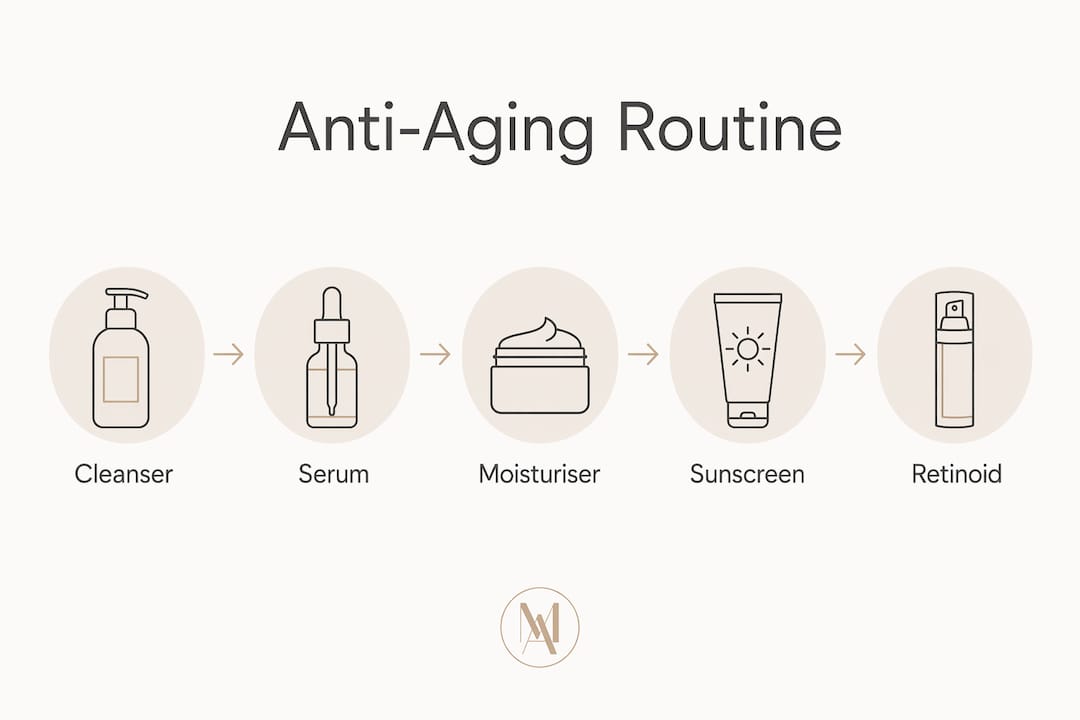
A step-by-step anti-aging guide is a structured daily routine that protects skin from environmental damage in the morning and repairs it at night, using evidence-backed ingredients to maintain collagen, hydration, and a youthful appearance. Known clinically as a photoageing prevention and skin rejuvenation protocol, this approach works because consistency matters far more than complexity. The core of any effective anti-aging skincare routine rests on four ingredients: a gentle cleanser, a vitamin C serum, a broad-spectrum SPF 30+ sunscreen, and a retinoid. Get these right, and you have the foundation of a complete anti-aging regimen that genuinely delivers results.
What are the essential morning steps in an anti-aging skincare routine?
The AM protection framework is built around one principle: defend the skin before the day begins. Morning is not the time for heavy actives. It is the time to shield your barrier, neutralise free radicals, and lock in moisture before UV exposure begins.
Follow these four steps every morning:
- Cleanse gently. Use a low-pH, non-stripping cleanser to remove overnight sebum and product residue without disrupting your acid mantle. Avoid foaming cleansers with sulphates if your skin is dry or sensitive.
- Apply a vitamin C serum. L-ascorbic acid at 10 to 20% concentration neutralises free radicals generated by UV and pollution. It also brightens uneven tone and supports collagen synthesis. Apply to clean, slightly damp skin for better absorption.
- Moisturise. Choose a moisturiser with ceramides, hyaluronic acid, or niacinamide to reinforce the skin barrier and maintain hydration throughout the day. This step also creates a smooth base for sunscreen.
- Apply broad-spectrum sunscreen. SPF 30+ is the non-negotiable final step. Sun exposure is the primary cause of visible skin ageing, breaking down collagen and elastin and triggering DNA damage. Apply generously to face, neck, and décolletage, even on overcast days.
Pro Tip: Apply sunscreen as the very last step in your morning routine, after moisturiser has fully absorbed. Mixing it with other products dilutes the SPF factor and reduces protection.
Sunscreen is the single most impactful step in any youthful skin guide. Studies confirm that daily SPF 30+ prevents photoageing more effectively than any serum or treatment. No retinoid or antioxidant can undo the cumulative damage from unprotected UV exposure.

How to build an effective anti-aging night routine step by step
Night is when the skin shifts into repair mode. Cellular turnover accelerates, collagen synthesis increases, and the barrier recovers from daily stressors. Your evening routine should support all three processes without overloading the skin.
Follow this stepwise skin rejuvenation sequence at night:
- Double cleanse if you wore sunscreen or makeup. An oil-based cleanser or micellar water removes SPF and cosmetic residue first. A water-based cleanser follows to clear the skin fully. Double cleansing improves retinoid absorption and reduces the risk of irritation from residual product.
- Apply a retinoid or chemical exfoliant. Not both on the same night. Retinoids, including retinol, retinaldehyde, and prescription tretinoin, are the most clinically validated anti-aging ingredients available. Introduce retinoids gradually, starting two to three nights per week, to build tolerance and avoid dryness and flaking.
- Apply a peptide serum. On nights when you are not using a retinoid, a peptide serum supports collagen and elastin production without the irritation risk. Peptides like Matrixyl 3000 and Argireline signal the skin to produce structural proteins.
- Seal with a rich moisturiser. A barrier-repair moisturiser containing shea butter, squalane, or ceramides locks in actives and prevents transepidermal water loss overnight.
On nights when you use a chemical exfoliant such as glycolic acid or lactic acid, limit exfoliation to once or twice per week. This frequency improves cell turnover and skin freshness without compromising the barrier.
Key principles for your night routine:
- Never use a retinoid and an AHA or BHA on the same evening.
- Apply retinoids to fully dry skin to reduce irritation intensity.
- Use a gentle, fragrance-free moisturiser on retinoid nights to buffer sensitivity.
- Expect an adjustment period of two to four weeks when starting retinoids.
Pro Tip: If retinoids cause persistent redness or peeling, try the “sandwich method”: apply moisturiser first, then retinoid, then moisturiser again. This slows absorption slightly and significantly reduces irritation for beginners.
You can read more about safe retinoid use for ageing skin in our dedicated guide.
What lifestyle habits complement and enhance anti-aging skin care?
Topical routines address the surface. Lifestyle habits address the biology underneath. The most effective complete anti-aging regimen combines both, because no serum compensates for chronic sleep deprivation or a diet high in refined sugar.
The habits that make a measurable difference include:
- Sleep. Skin repairs itself primarily during deep sleep. Consistent sleep of seven to nine hours per night supports cortisol regulation, which directly affects collagen breakdown. Poor sleep accelerates skin ageing at a cellular level.
- Exercise. Strength training and daily walking improve circulation, which delivers oxygen and nutrients to skin cells. Regular exercise also supports mitochondrial health, which influences how quickly cells age. Aim for at least 150 minutes of moderate activity per week.
- Diet. A diet rich in antioxidants from berries, leafy greens, and oily fish provides the raw materials for collagen synthesis and free radical defence. Vitamin C from food sources supports the same pathways as topical ascorbic acid. Adequate hydration, around 1.5 to 2 litres of water daily, maintains skin plumpness and elasticity.
- Avoiding smoking and excess alcohol. Smoking accelerates collagen degradation and restricts blood flow to the skin. Alcohol dehydrates the skin and disrupts sleep architecture, compounding ageing effects over time.
- Stress management. Chronic stress elevates cortisol, which breaks down collagen and triggers inflammation. Practices like breathwork, yoga, or even consistent outdoor walks reduce cortisol levels and support skin health indirectly.
These habits are not optional extras. They are the biological foundation on which your topical routine performs.
Common mistakes and troubleshooting in anti-aging skincare routines
Even the best anti-aging tips for beginners cannot prevent every misstep. These are the errors we see most often, and how to correct them.
- Over-exfoliating. Overuse of exfoliants and retinoids together causes barrier damage, redness, and sensitivity. Limit chemical exfoliation to twice weekly and never combine it with retinoids on the same night.
- Layering too many actives. More products do not mean better results. Using fewer high-potency actives consistently outperforms a ten-step routine with incompatible ingredients. Vitamin C in the morning and a retinoid at night is a clinically sound and sufficient active pairing.
- Skipping sunscreen. Inconsistent SPF use is the fastest way to undermine every other step in your routine. Apply it every single morning, regardless of season or weather.
- Expecting instant results. Visible changes from anti-aging routines typically require 8 to 12 weeks, with vitamin C effects appearing in 4 to 8 weeks and retinoid results around 8 to 12 weeks. Abandoning a routine at week four is one of the most common reasons people fail to see progress.
- Not removing sunscreen before your night routine. Sunscreen residue left on skin reduces retinoid absorption and increases the chance of congestion and irritation. Double cleansing solves this entirely.
“The most common mistake is not a wrong product choice. It is impatience. Give your routine 12 weeks before drawing conclusions.”
How to adapt and personalise your anti-aging routine
A structured routine is a starting point, not a fixed prescription. Skin type, age, and tolerance all determine how you adapt the best anti-aging practices to your specific needs.
| Skin type | Cleanser | Moisturiser | Retinoid approach |
|---|---|---|---|
| Dry or mature | Cream or oil cleanser | Rich, occlusive formula with ceramides | Start at retinol 0.025%, use twice weekly |
| Oily or combination | Gel or foam cleanser | Lightweight, oil-free gel moisturiser | Tolerate retinol faster; begin three times weekly |
| Sensitive or rosacea-prone | Micellar water or gentle milk cleanser | Fragrance-free, barrier-focused formula | Use retinaldehyde instead of retinol; build very slowly |
| Normal | Low-pH gel or cream cleanser | Balanced moisturiser with hyaluronic acid | Standard introduction: two to three nights weekly |
Layering order matters for absorption. Apply products from thinnest to thickest consistency: serum before moisturiser, moisturiser before SPF. If you notice persistent redness, tightness, or flaking after introducing a new active, reduce frequency before increasing it again.
When topical routines reach their ceiling, professional treatments extend results. Them-ethod offers FDA-approved SkinPen microneedling, Profhilo, polynucleotide injectables, and HIFU in London and Athens, all of which address collagen loss and skin laxity at a structural level that no cream can replicate. Knowing when to step up to in-clinic care is part of a well-rounded anti-ageing regimen.
Key takeaways
A consistent anti-aging routine built on SPF, vitamin C, and retinoids, supported by sleep, diet, and exercise, delivers measurably younger-looking skin within 8 to 12 weeks.
| Point | Details |
|---|---|
| SPF is non-negotiable | Apply broad-spectrum SPF 30+ every morning to prevent collagen breakdown from UV exposure. |
| AM protects, PM repairs | Use antioxidants and sunscreen in the morning; retinoids and peptides at night. |
| Introduce retinoids gradually | Start two to three nights per week to build tolerance and avoid barrier damage. |
| Lifestyle amplifies results | Sleep, exercise, and a diet rich in antioxidants directly support skin health and collagen production. |
| Patience is part of the protocol | Allow 8 to 12 weeks before assessing results; abandoning routines early is the most common mistake. |
Why simplicity is the most underrated anti-aging strategy
By Jess
After years of working with clients across a wide range of skin concerns, the pattern I see most consistently is this: the people who see the best results are not using the most products. They are using the right ones, reliably.
There is a tendency, especially among those new to skincare, to treat complexity as a proxy for effectiveness. A ten-step routine feels more serious than a four-step one. But the skin does not reward effort. It rewards consistency and compatibility. A vitamin C serum applied every morning for six months will outperform a rotating cast of serums used sporadically.
The part of this guide I feel most strongly about is the timeline. Eight to twelve weeks is not a long time in the context of skin biology, but it feels like an eternity when you are waiting for results. I have seen clients abandon genuinely effective routines at week five because they expected faster change. The retinoid was working. The collagen was rebuilding. They just could not see it yet.
My honest recommendation: build the simplest version of this routine first. Cleanser, vitamin C, SPF in the morning. Cleanser, retinoid, moisturiser at night. Live with that for three months. Then, and only then, consider adding anything else. You will likely find you do not need to.
— Jess
Explore Them-ethod’s anti-aging collection
At Them-ethod, we curate only formulations that are clinically validated and dermatologist-recommended. For those looking to address active breakouts alongside ageing concerns, the PCA Clearskin serum targets congestion and uneven tone without compromising the skin barrier, making it well-suited to adult skin managing both acne and fine lines. For broader anti-aging support, the NEOSTRATA collection delivers science-backed formulations targeting visible signs of ageing, from glycolic acid treatments to barrier-repair moisturisers. Every product we stock meets the standard we hold for our own clinical clients.
FAQ
What is the most important step in an anti-aging routine?
Daily broad-spectrum sunscreen with SPF 30 or higher is the single most impactful step, as UV exposure is the primary driver of visible skin ageing, including wrinkles, pigmentation, and loss of elasticity.
How long does it take to see results from an anti-aging skincare routine?
Visible improvements typically appear within 8 to 12 weeks of consistent use. Vitamin C effects on brightness and tone may appear in 4 to 8 weeks, while retinoid results on fine lines and texture generally take 8 to 12 weeks.
Can I use retinoids and exfoliants together?
No. Using retinoids and chemical exfoliants such as AHAs or BHAs on the same night risks barrier damage and irritation. Alternate them on separate evenings and limit exfoliation to once or twice per week.
What is double cleansing and why does it matter at night?
Double cleansing involves using an oil-based cleanser followed by a water-based cleanser to fully remove sunscreen and makeup. This improves retinoid absorption and reduces the risk of irritation from residual product on the skin.
When should I consider professional anti-aging treatments?
When topical routines plateau, in-clinic treatments such as microneedling, Profhilo, or HIFU address structural collagen loss that creams cannot reach. A virtual consultation with a clinician at Them-ethod can help determine the right next step for your skin.