

Άρθρο: Why less is more skincare: the science-backed truth

Why less is more skincare: the science-backed truth
TL;DR:
- A minimalist skincare routine with three to four essential products outperforms complex regimens for skin health and adherence. Applying a gentle cleanser, moisturizer, and SPF daily is sufficient, with targeted actives added gradually based on skin concerns. Consistency and patience are key, as skin takes six to eight weeks to respond, and layering too many products can damage the skin barrier.
A minimalist skincare routine, defined as a focused regimen of three to four well-chosen products, consistently outperforms complex, multi-step approaches for skin health and long-term adherence. The principle behind why less is more skincare is not a trend. It is grounded in dermatology, barrier science, and the straightforward reality that skin responds better to consistency than to volume. Experts recommend a foundation of only three to four essential products, noting that overly complex routines often collapse under their own weight. Fewer products mean fewer variables, less risk of irritation, and a routine you will actually maintain.
Why less is more skincare: what the evidence says
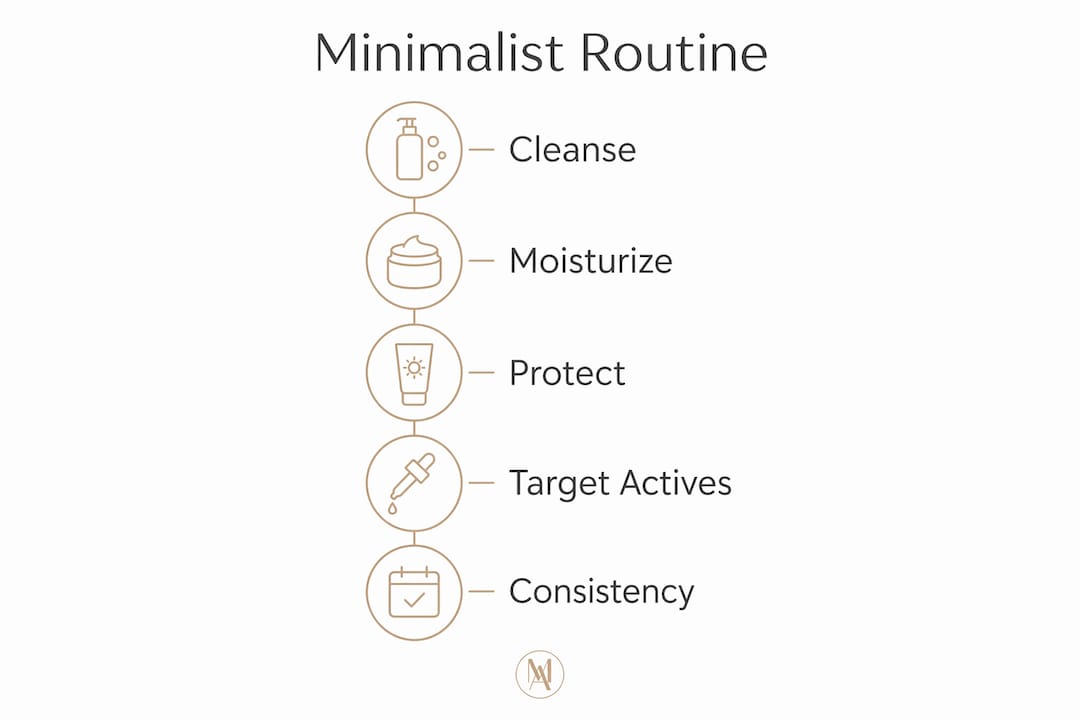
The core of a minimalist skincare approach rests on three products: a gentle cleanser, a barrier-supporting moisturiser, and a reliable sunscreen. A basic minimalist routine built on these three steps covers the vast majority of what healthy skin actually needs day to day. Multi-tasking formulas, such as a tinted moisturiser with SPF, can reduce the total number of steps without sacrificing effectiveness.
The minimalist skincare benefits extend well beyond convenience. Simplified routines reduce time demands, cost, risk of irritation, and improve decision-making and sustainability in skincare habits. That last point matters more than most people realise. A routine you complete every morning and evening is worth far more than a ten-step regimen you abandon by week three.
Sunscreen deserves particular emphasis. Up to 90% of visible skin ageing relates to UV exposure, making daily SPF the single most evidence-backed step in any routine. Skipping it, even occasionally, undermines every other product you apply.
The role of each essential step
- Gentle cleanser: Removes surface debris without stripping the skin’s natural lipid barrier. Avoid foaming cleansers with sulphates if your skin is dry or reactive.
- Moisturiser: Repairs and seals the barrier, locking in hydration and reducing transepidermal water loss. Look for ingredients such as ceramides, hyaluronic acid, or niacinamide.
- Sunscreen: Non-negotiable daily protection against UVA and UVB radiation. Broad-spectrum SPF 30 or higher is the clinical standard.
Pro Tip: If you want to reduce your routine further, choose a moisturiser with SPF. One fewer product, same level of protection, and your barrier stays intact.
How does using too many skincare products harm your skin?
The misconception that more ingredients equal more efficacy is one of the most damaging ideas in modern skincare. Many active ingredients become unstable when layered, causing ingredient overload, which is a leading cause of skin sensitivity today. The skin’s natural lipid barrier gets depleted when too many overlapping actives compete for absorption.

The specific culprits are well documented. Overuse of products containing exfoliating acids, retinoids, vitamin C, and niacinamide without structure often leads to redness, breakouts, and dullness from barrier disruption. Dermatologists note that barrier dysfunction is common and frequently caused by frequent product switching and over-exfoliation. The irony is that the very products people use to improve their skin are often the ones causing the problem.
When the barrier breaks down, the consequences compound. Skin becomes more reactive to ingredients it previously tolerated. Redness, tightness, and breakouts appear. People then add more products to address those new symptoms, deepening the cycle of irritation. Understanding this pattern is the first step to breaking it.
The clinical response is clear:
- Stop adding products. Resist the urge to treat new symptoms with new purchases.
- Revert to basics. Return to a gentle cleanser, a plain moisturiser, and SPF only.
- Hold the baseline for four weeks. Give the barrier time to stabilise before reintroducing anything.
- Reintroduce one product at a time. Targeted treatments should be reintroduced one at a time after barrier stabilisation to monitor sensitivity.
“Patients often mistake barrier issues for needing new products while actually requiring restoration. Focus on sealing and repairing the skin barrier with high-quality emollients rather than adding more solutions to an overwhelmed routine.” — Dr. Danny Guo, evidence-based skincare practice
For a detailed breakdown of which ingredients actively support barrier repair, the barrier repair ingredients guide at Them-ethod covers the clinical evidence in full.
Why consistency and patience matter more than product switching
Skin does not respond to products overnight. The skin requires 4–8 weeks to complete a full cell turnover cycle, so consistent use of any new product for at least this duration is required to assess its true impact. This single fact changes how you should think about your routine entirely.
Frequent product switching prevents the skin from adapting and may worsen barrier function. When you swap products every two to three weeks because you are not seeing results, you are not giving your skin the time it needs. You are also making it impossible to identify which product is helping and which is causing a reaction.
The practical implications of this are significant:
- Commit to a new product for a minimum of six weeks before judging it.
- Change only one product at a time so you can isolate variables.
- Keep a simple log of what you are using and any changes in your skin’s behaviour.
- Introduce active ingredients such as retinol or vitamin C only after your barrier is stable and your baseline routine is established.
Pro Tip: Photograph your skin in the same lighting every two weeks. Progress in skincare is gradual and easy to miss without a visual reference.
Consistency also supports adherence. A simple skincare routine with three products takes under three minutes. That ease removes every excuse for skipping it. Over months and years, that regularity compounds into genuinely better skin.
How do you personalise a minimalist routine for your skin concerns?
The foundation never changes: cleanser, moisturiser, sunscreen. What varies is the one or two targeted actives you add based on your specific concern. Investing in fewer, high-quality products outperforms buying many cheap ones and improves skincare results. That principle applies whether you are addressing acne, pigmentation, or the early signs of ageing.
The table below maps common skin concerns to the most appropriate targeted active, and the mistakes to avoid when adding it.
| Skin concern | Targeted active to add | Common mistake to avoid |
|---|---|---|
| Acne and congestion | Salicylic acid or benzoyl peroxide | Over-exfoliating, which strips the barrier and worsens breakouts |
| Pigmentation and uneven tone | Vitamin C (L-ascorbic acid) or azelaic acid | Layering with retinol before the skin has adapted |
| Ageing and fine lines | Retinol or prescription retinoid | Starting at too high a concentration too quickly |
| Dryness and sensitivity | Ceramide-rich moisturiser or hyaluronic acid serum | Skipping SPF, which accelerates the ageing that dryness makes visible |
| Redness and rosacea | Niacinamide or azelaic acid | Using fragrance-heavy products that trigger flares |
Introduce your chosen active gradually. Start with two to three applications per week, then increase frequency as your skin adapts. Monitor for redness, tightness, or new breakouts. If any of those appear, reduce frequency before removing the product entirely.
Working with a skincare expert significantly improves outcomes at this stage. Expert guidance improves adherence to simple and effective routines, helping you select the right active for your concern without unnecessary trial and error. Them-ethod offers virtual skin consultations with top clinicians who can assess your skin and recommend a targeted, minimal protocol built around your specific needs.
Key takeaways
A minimalist skincare routine built on a gentle cleanser, a barrier-supporting moisturiser, and daily SPF is the most evidence-backed approach to consistent, healthy skin.
| Point | Details |
|---|---|
| Three products are enough | A gentle cleanser, moisturiser, and SPF cover the vast majority of daily skin health needs. |
| Ingredient overload damages the barrier | Layering too many actives depletes the skin’s lipid barrier and causes sensitivity and breakouts. |
| Skin needs 4–8 weeks to respond | Commit to any new product for at least six weeks before assessing its effectiveness. |
| Add targeted actives one at a time | Introduce treatments for acne, pigmentation, or ageing only after the baseline routine is stable. |
| Quality outperforms quantity | Fewer, well-formulated products deliver better results than a large collection of mediocre ones. |
Why I believe less is genuinely more for your skin
I have worked with enough clients to see the same pattern repeat itself. Someone arrives with a shelf full of products, a complicated layering sequence, and skin that is angrier than when they started. The instinct to add more, to fix a problem with a new purchase, is deeply human. But skin does not work that way.
What I have observed consistently is that the clients who see the most dramatic improvements are the ones willing to strip back. Not because minimalism is fashionable, but because it removes the noise. When you are using three products, you know exactly what is working. When you are using fifteen, you know nothing.
The mindset shift from quantity to quality is the hardest part. We are conditioned to believe that a longer ingredient list signals a better product. The science says otherwise. A single, well-formulated ceramide moisturiser does more for a compromised barrier than five serums stacked on top of each other.
Lifestyle factors matter here too. Sleep, hydration, and diet all influence skin health in ways that no product can replicate. A simple routine frees up the mental space to attend to those fundamentals. Sustainable habits, not seasonal trends, are what produce lasting results.
If you are unsure where to begin, consult a clinician before buying anything new. The right guidance at the start saves months of frustration and unnecessary expense.
— Jess
Them-ethod’s edit for a simpler, more effective routine
At Them-ethod, we curate products that earn their place in a minimal routine. Every formula we recommend is chosen for clinical efficacy, not marketing appeal. For those managing acne or congestion, the PCA Clearskin Acne Treatment Serum is a focused, well-tolerated treatment that works as a single targeted active without requiring additional products around it. For barrier support and overall skin tone, the Neostrata collection offers scientifically formulated options that complement a three-step foundation. Both ranges reflect the less is more philosophy: fewer products, clear purpose, and results you can actually see.
FAQ
What is a minimalist skincare routine?
A minimalist skincare routine uses three to four core products: a gentle cleanser, a moisturiser, and a daily sunscreen, with one or two targeted actives added only when needed. The goal is consistency and barrier health over product volume.
How many skincare products should I use daily?
Dermatologists recommend starting with three to four products. Adding more increases the risk of ingredient conflict, barrier disruption, and irritation without improving outcomes.
Can a simple skincare routine really address acne or ageing?
A simple routine can address both concerns effectively by adding one targeted active, such as salicylic acid for acne or retinol for ageing, to a stable three-step base. Introducing actives one at a time prevents sensitivity and makes it easier to assess results.
How long before I see results from a minimalist routine?
Skin completes a full cell turnover cycle in 4–8 weeks, so allow at least six weeks of consistent use before evaluating any product’s effectiveness.
Is it worth spending more on fewer products?
Fewer, high-quality products consistently outperform a larger collection of cheaper alternatives. Quality formulations support the skin barrier more effectively and reduce the risk of irritation from low-grade ingredients.