



Άρθρο: Skin Consultations vs Quizzes: Which Is Better?
Skin Consultations vs Quizzes: Which Is Better?
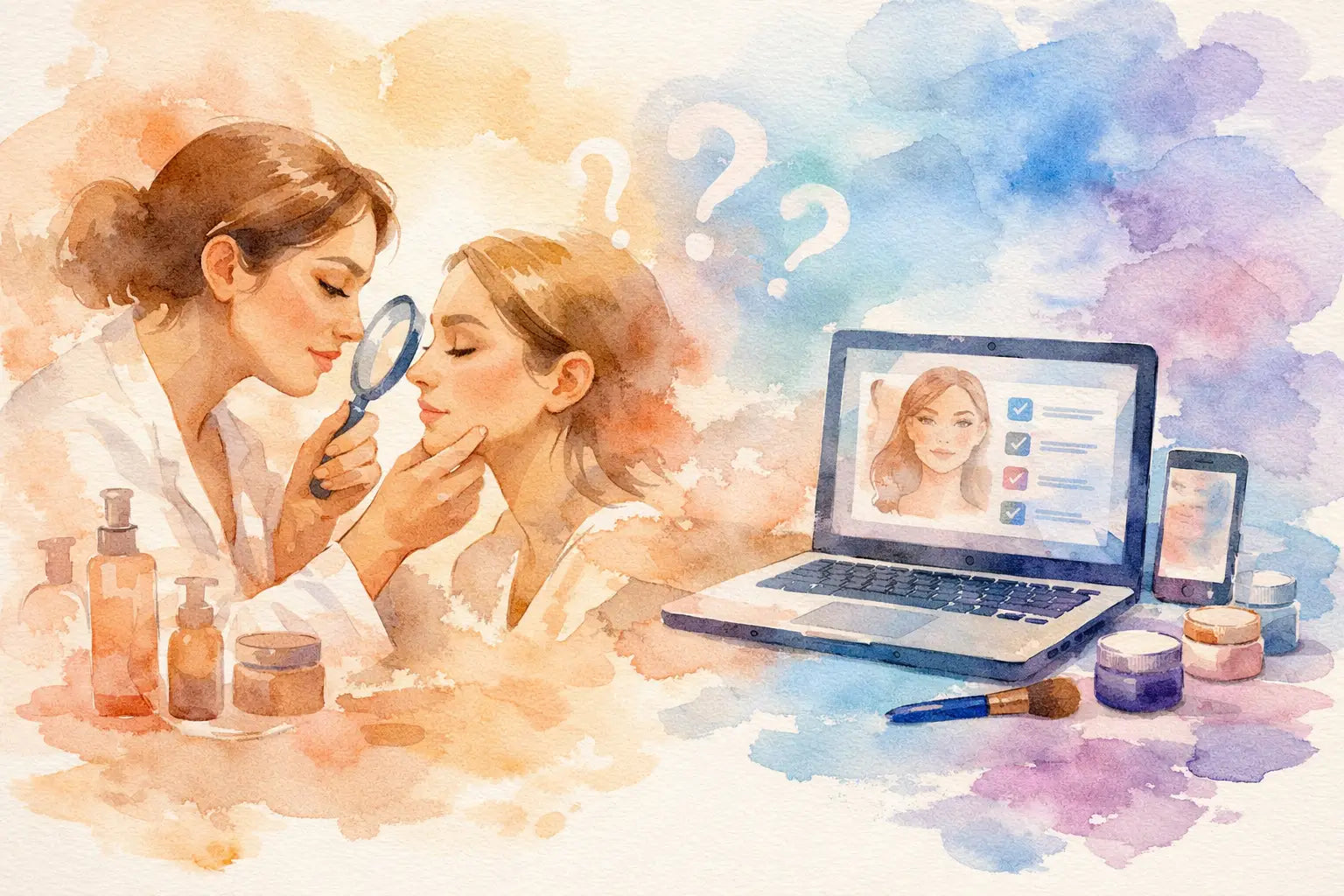
A complexion can look dehydrated, congested and uneven all at once. A well-designed routine must account for all three - without over-exfoliating, irritating the barrier or worsening pigmentation. That is the real distinction in skin consultations vs quizzes: one offers a fast route to product discovery, while the other can interpret the details that change an outcome.
For high-performance skincare, choosing between the two is not simply a question of convenience. It is about the complexity of your concern, the strength of the formulas you are considering and how much confidence you need before investing in a regimen.
Skin Consultations vs Quizzes: The Core Difference
A skincare quiz uses a fixed set of questions to sort you into broad recommendations. It may ask about skin type, concerns, sensitivity, current products and lifestyle factors. This can be useful when you are new to a category, replacing a staple or looking for a simple starting point.
A skin consultation is a more considered assessment led by a trained professional. Rather than matching answers to a pre-set pathway alone, it explores the pattern behind your skin: when breakouts began, whether pigmentation follows inflammation, how your skin behaves around your cycle, which active ingredients you tolerate, and what treatments or medications may be relevant. It also considers what you are realistically willing to use consistently.
The distinction matters because skincare concerns rarely arrive in neat, single categories. Acne can coexist with dehydration. Rosacea-prone skin can also show sun damage and loss of firmness. Melasma may deepen with heat, visible light, hormonal shifts or an overly aggressive routine. A quiz can identify the headline concern. A consultation can help establish the order in which to treat it.
When a Quiz Is the Right Place to Start
A quiz is not inherently superficial. A thoughtful one can make premium skincare less intimidating and prevent the common mistake of buying according to social-media popularity rather than skin need. For straightforward goals, it can be an efficient first filter.
It is particularly useful if your skin is generally stable and you want to refine a basic regimen. Perhaps you need a daily SPF that suits your preferred finish, a cleanser that does not leave skin tight, or a moisturiser better aligned with seasonal dryness. In these situations, a quiz can narrow a substantial edit into sensible options without demanding a lengthy decision process.
Quizzes also work well for shoppers who already understand their skin and want to browse with direction. If you know you tolerate retinoids, use sunscreen daily and are seeking a targeted antioxidant serum, guided product discovery can save time.
The limitation is that a quiz only knows what it has been designed to ask. It cannot see the distribution of redness, assess the nuance of post-inflammatory hyperpigmentation or question an answer that does not quite fit the full story. Its recommendation is only as precise as the information entered and the rules behind it.
The risk of treating every concern at once
An automated result may recommend products for texture, pores, dark marks and fine lines because all are relevant to your answers. Used indiscriminately, however, several exfoliating or corrective formulas can leave skin reactive and less able to tolerate the very ingredients intended to improve it.
More products do not necessarily mean a more advanced routine. The best regimen is often the one with a clear priority, an appropriate pace of introduction and enough consistency to judge results.
When a Skin Consultation Is Worth It
A consultation becomes especially valuable when the stakes are higher: persistent acne, redness, melasma, pronounced pigmentation, barrier disruption, sensitivity, post-procedure care, premature ageing concerns or thinning hair. These concerns often need more than a product category recommendation. They need sequencing.
For example, someone with acne and brown marks may be tempted to begin with strong acids. Yet if their skin is already inflamed or dehydrated, strengthening the barrier and controlling active breakouts may be the more intelligent first move. Once skin is calmer, pigment-focused treatment can be introduced with greater precision and less risk of irritation.
This is also where inclusive expertise matters. Pigmentation behaves differently across skin tones, and inflammation can leave more persistent visible marks in deeper complexions. A generic approach that prioritises rapid exfoliation may not be appropriate. A tailored consultation can balance correction with pigment safety, helping protect the progress you are trying to create.
A professional assessment is equally helpful when you have tried excellent products with disappointing results. The issue may not be product quality. It may be conflicting actives, inconsistent use, insufficient photoprotection, a formula mismatch or expectations that do not reflect the time skin biology requires. Clinical skincare is powerful, but it is not instant.
At The M-ethod Aesthetics, this expert-led approach is designed to move beyond a shopping basket and towards a regimen with purpose: clinically proven formulas selected for your concerns, tolerance and desired outcome.
What a Meaningful Consultation Should Cover
A high-quality consultation should feel specific, not scripted. It should ask about your current routine in detail, including how often you use each active and what changes you noticed after introducing it. It should explore your history of sensitivity, breakouts, eczema, rosacea or pigmentation, alongside relevant lifestyle factors such as sun exposure and recent aesthetic treatments.
It should also set a realistic treatment hierarchy. If skin is burning, flaking or suddenly reactive, repairing comfort and function may take priority over brightening or resurfacing. If the main concern is melasma, diligent daily sunscreen use and strategies that minimise irritation are foundational, not optional additions.
Most importantly, a consultation should be honest about the boundary between cosmetic guidance and medical care. Persistent, painful or scarring acne, unexplained rashes, rapidly changing pigmentation, suspected allergy and significant hair loss warrant assessment by an appropriate medical professional. Skincare advice can support skin health, but it should not substitute diagnosis.
The Trade-Off: Speed Versus Precision
The appeal of quizzes is obvious. They are immediate, private and easy to complete from your phone. They reduce choice fatigue and can introduce you to a curated collection without the pressure of a consultation.
Consultations require more engagement. You may need to share clear photographs, list your existing products and answer questions that feel more detailed than a quick online form. Yet that added context is often what prevents expensive duplication, unnecessary irritation and a shelf full of half-used serums.
There is no universal winner. A quiz may be enough for a well-informed shopper looking for a new cleanser or daily moisturiser. A consultation is usually the better investment when building a complete routine, introducing potent actives or addressing a concern that affects confidence and has not responded to trial and error.
How to Use Both Without Overcomplicating Your Routine
The strongest approach is often to treat a quiz as a discovery tool and a consultation as the decision point for complexity. Use the quiz to identify relevant categories, textures and ingredients. Then seek tailored guidance before committing to a multi-step corrective programme or combining treatment-level products.
When your recommendations arrive, resist the urge to start everything on the same evening. Introduce one new active at a time, particularly retinoids, exfoliating acids and pigment-correcting formulas. This makes it easier to identify what is helping, what is irritating and whether your skin needs a slower schedule.
Take baseline photographs in consistent natural light and give your routine enough time. Hydration may improve quickly; acne, texture and pigmentation generally require longer-term consistency. If your skin becomes increasingly sore, persistently red or unusually dry, do not interpret discomfort as proof that a product is working. Reassess the routine.
Your skincare should not feel like a gamble disguised as self-care. Let a quiz make the first choice easier, but choose expert consultation when your skin is asking for more than a standard answer. The right recommendation is not always the most elaborate one - it is the one that gives your skin the best conditions to become clearer, stronger and more radiant over time.