




Άρθρο: Sensitive skin management: expert solutions for calmer skin

Sensitive skin management: expert solutions for calmer skin
Sensitive skin affects a significant portion of the population, yet it remains one of the most misunderstood conditions in skincare. Many people dismiss it as mere fussiness or a preference for gentle products, when in reality it is a recognised medical syndrome with measurable physical symptoms and real psychological consequences. The conflicting advice online, the overwhelming product choices, and the trial-and-error frustration can leave you feeling defeated before you have even started. This guide cuts through the noise, offering a clear, science-backed pathway from confusion to calm, so you can finally manage your skin with confidence.
Table of Contents
- What is sensitive skin? The science and real symptoms
- The spectrum: Types and triggers of sensitive skin
- Stepwise management strategies: What actually works
- Pro tips, pitfalls and expert advice for lasting results
- How The M-ethod Skin can support your sensitive skin journey
- Frequently asked questions
Key Takeaways
| Point | Details |
|---|---|
| Syndrome not skin type | Sensitive skin is a medical issue needing tailored strategies, not just a cosmetic concern. |
| Stepwise routines are crucial | Simplifying, repairing, and slowly reintroducing actives is safest for sensitive skin management. |
| There are many triggers | Triggers include not just products but also weather, stress, and internal health. |
| Barrier repair takes patience | A full repair process may require three to six months for lasting results. |
| When in doubt, seek expert help | For unresolved or worsening sensitive skin, a dermatologist’s guidance is best. |
What is sensitive skin? The science and real symptoms
Sensitive skin is not simply a skin type sitting alongside dry, oily, or combination. It is a syndrome, meaning it is defined by a cluster of symptoms rather than a single cause. According to the medical understanding of sensitive skin, it is characterised by heightened reactivity to stimuli that would not normally provoke a response, with symptoms including stinging, burning, redness, and dryness.
At the biological level, three mechanisms are usually at play. First, an impaired skin barrier allows irritants and allergens to penetrate more easily. Second, chronic low-grade inflammation keeps the skin in a state of alert. Third, nerve overactivity means the skin’s sensory receptors fire more readily, amplifying discomfort even from mild triggers.
What makes this particularly complex is that triggers are highly individual. Weather changes, synthetic fragrances, alcohol-based products, stress, hormonal shifts, and even certain foods can provoke a reaction. Reviewing our sensitive skin essentials is a useful starting point for identifying which products are genuinely safe for reactive skin.
Sensitive skin is not a cosmetic inconvenience. It is a physiological condition that deserves the same evidence-based attention as any other skin concern.
Key symptoms to recognise include:
- Stinging or burning after applying products
- Persistent redness or flushing
- Itching without an obvious cause
- Tightness, flaking, or scaling
- Visible capillaries or blotchiness
If you experience three or more of these regularly, your skin is likely in the sensitive spectrum and will benefit from a structured management approach.
The spectrum: Types and triggers of sensitive skin
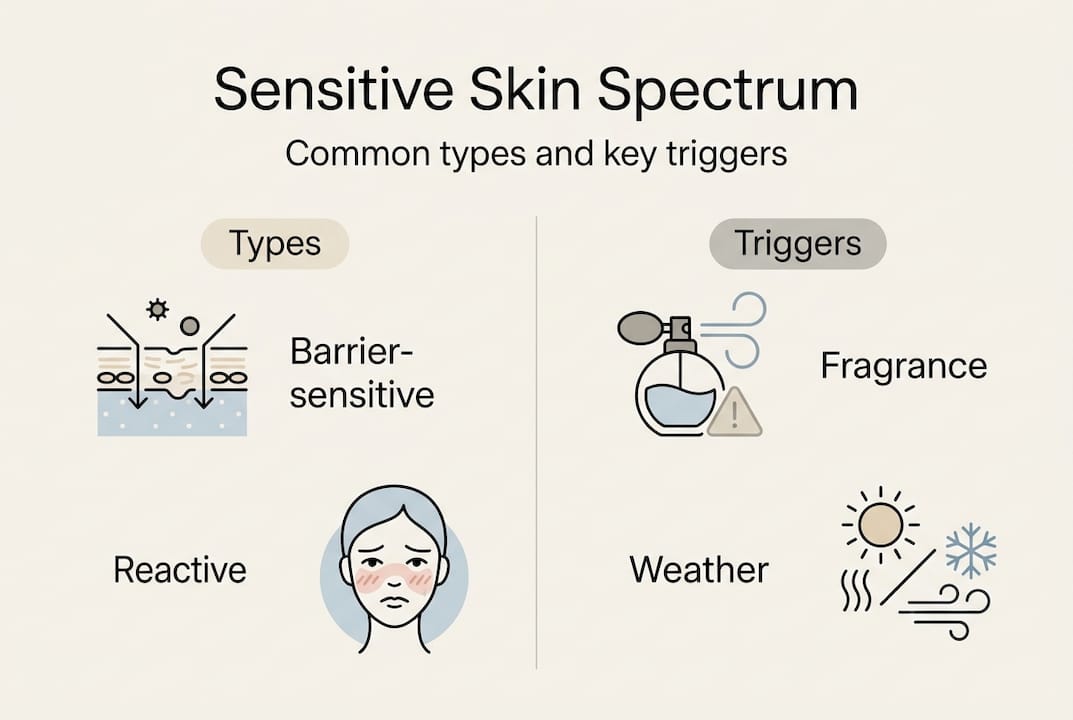
Not all sensitive skin behaves the same way, and this is where many management plans fall short. Research published in Nature Scientific Reports identifies three distinct subtypes: barrier-sensitive, neurosensitive, and inflammatory-sensitive, each with different underlying mechanisms and therefore different treatment priorities.

| Subtype | Primary mechanism | Common presentation |
|---|---|---|
| Barrier-sensitive | Impaired skin barrier | Dryness, flaking, stinging from products |
| Neurosensitive | Nerve overactivity | Burning, tingling, discomfort without visible signs |
| Inflammatory-sensitive | Immune dysregulation | Redness, swelling, reactive flares |
One of the most common misconceptions is that sensitive skin is always dry. In fact, oily sensitive skin is extremely prevalent. People with oily skin often over-cleanse or use harsh mattifying products, which strips the barrier and creates secondary sensitivity. This is acquired sensitivity, as opposed to genetic or primary sensitivity, which is innate and present from birth.
Key triggers worth monitoring include:
- pH imbalance: Products with a pH too far from the skin’s natural 4.5 to 5.5 range disrupt the acid mantle
- Environmental stressors: Cold wind, UV exposure, and pollution all compromise barrier integrity
- Stress and cortisol: Elevated cortisol increases skin permeability and inflammatory signalling
- Synthetic chemicals: Preservatives, fragrances, and certain emulsifiers are frequent culprits
- Overuse of actives: Retinoids, AHAs, and BHAs used too frequently or at high concentrations damage the barrier
Understanding your subtype is the foundation of effective management. Our sensitive skin best practices guide explores how to tailor your routine based on which subtype resonates most with your experience.
Stepwise management strategies: What actually works
Managing sensitive skin is not about finding one miracle product. It is a process, and it requires patience. A stepwise management approach is the most clinically supported method, moving through distinct phases rather than attempting everything at once.
- Simplify immediately. During a flare, strip your routine back to three products: a gentle, fragrance-free cleanser, a barrier-supporting moisturiser, and a mineral SPF. Nothing else.
- Repair the barrier. Focus on ingredients that rebuild the skin’s protective layer. Ceramides, niacinamide, hyaluronic acid, and colloidal oat are your allies here. Expect this phase to last three to six months for meaningful, lasting repair.
- Reintroduce actives slowly. Once the barrier is stable, you can begin adding gentle actives. Bakuchiol, a plant-derived retinol alternative, is an excellent first choice. Introduce one new ingredient at a time, waiting at least two weeks between additions.
- Customise for your skin type. If your sensitive skin is oily, opt for lightweight, gel-based moisturisers. If it is dry, richer creams with occlusive ingredients like shea butter or squalane will serve you better.
- Seek professional guidance when needed. If symptoms persist beyond six weeks of consistent gentle care, or if you suspect rosacea, eczema, or contact dermatitis, a dermatologist consultation is essential.
Our stepwise sensitive skin care guide provides a more detailed breakdown of each phase, including specific product recommendations for each step.
Pro Tip: Patch testing is non-negotiable. Apply any new product to the inner forearm for five to seven days before introducing it to your face. This simple step can prevent weeks of unnecessary irritation.
Pro tips, pitfalls and expert advice for lasting results
Even with the best intentions, sensitive skin management is full of traps. One of the most counterintuitive findings in recent research is that many people who believe they have inherently sensitive skin are actually experiencing barrier damage caused by their own routine. Overuse of exfoliants, layering too many actives, or using products with a high fragrance load are the most common culprits.
Sunscreen choice matters more than most people realise. Mineral sunscreen is recommended over chemical filters for sensitive skin, as zinc oxide and titanium dioxide sit on the skin’s surface rather than being absorbed, significantly reducing the risk of irritation and inflammatory reactions.
The skin is not just a barrier to the outside world. It is a dynamic organ influenced by everything from your sleep quality to your gut health. Managing sensitive skin means managing the whole picture.
Internal factors are frequently overlooked. Stress elevates cortisol, which increases skin permeability and amplifies inflammatory responses. Histamine intolerance, gut dysbiosis, and nutritional deficiencies can all manifest as skin sensitivity. Addressing these alongside your topical routine often produces results that products alone cannot achieve.
Key pitfalls to avoid:
- Switching products too frequently: Give each routine at least four to six weeks before judging its effectiveness
- Assuming ‘natural’ means safe: Many natural ingredients, including essential oils and citrus extracts, are potent irritants
- Neglecting SPF: UV exposure is one of the most significant drivers of barrier degradation and inflammation
- Skipping moisturiser on oily skin: Even oily sensitive skin needs hydration to maintain barrier function
For those managing persistent dryness and reactivity, our hydration boost protocols offer clinically informed prescription-level strategies to restore comfort and resilience.
Pro Tip: Keep a simple skin diary for four weeks. Note products used, diet, stress levels, and sleep. Patterns often emerge that reveal your most significant personal triggers, making management far more targeted and effective.
How The M-ethod Skin can support your sensitive skin journey
At The M-ethod Skin, we understand that sensitive skin is not a one-size-fits-all challenge. Our curated selection of dermatologist-recommended and prescription-strength products is specifically chosen to support reactive, barrier-compromised skin at every stage of the management process. From gentle cleansers and ceramide-rich moisturisers to mineral SPFs and clinically validated actives, every product in our range is selected with sensitivity in mind. We also offer virtual skin consultations with experienced clinicians who can assess your specific subtype, identify your triggers, and build a personalised protocol that genuinely works. Whether you are in the acute flare phase or ready to reintroduce actives, we are here to guide you with precision and care. Explore our full sensitive skin range and book your consultation at them-ethod.com.
Frequently asked questions
How long does it take to repair a damaged skin barrier in sensitive skin?
Most people notice meaningful improvement within four to six weeks of a simplified, barrier-focused routine. Full repair, however, can take up to three to six months depending on the degree of damage and consistency of care.
Is sensitive skin a permanent condition?
Not necessarily. While genetic sensitivity tends to be more persistent, many cases are often reversible with the right management approach, particularly when the root cause is barrier damage from incorrect product use.
What ingredients should be avoided with sensitive skin?
Fragrance, high-concentration acids, alcohol, and most chemical sunscreen filters are the most common irritants. Opting for fragrance-free, hypoallergenic formulations and mineral over chemical sunscreen significantly reduces the risk of reactions.
Can stress really affect sensitive skin flare-ups?
Absolutely. Stress and histamine are directly linked to increased skin permeability and inflammatory activity, meaning emotional and physiological stress can trigger or worsen flares even when your topical routine is sound.
When should you see a dermatologist for sensitive skin?
If symptoms persist after six weeks of consistent gentle care, or if you suspect an underlying condition such as rosacea or eczema, it is time to seek professional advice. A dermatologist can also prescribe targeted topicals that are not available over the counter.


