



Άρθρο: Your complete rosacea management guide for the UK
Your complete rosacea management guide for the UK
Rosacea is a chronic inflammatory skin condition, and the most effective way to manage it combines three things: identifying your personal triggers, following a gentle daily skincare routine, and matching your treatment to your specific phenotype. Most people can achieve meaningful symptom control with this approach, though rosacea rarely disappears entirely. The key is consistent management rather than a cure.
Start today with these steps:
- Apply a broad-spectrum mineral SPF 30+ (zinc oxide or titanium dioxide) every morning, even indoors near windows.
- Switch to a fragrance-free, non-foaming cleanser if you haven’t already.
- Swap your morning coffee or tea for something cooler, or let hot drinks cool before drinking.
- Begin a simple trigger log: note what you ate, drank, did, and how your skin responded each day.
- Book a GP appointment if you have persistent papules, pustules, or any eye irritation that hasn’t resolved within a week or two.
Pro Tip: Topical vasoconstrictors such as brimonidine or oxymetazoline can reduce redness within an hour and last up to around 12 hours — making them useful for events or important occasions. Use them intermittently rather than daily; chronic overuse can trigger rebound flushing that leaves skin redder than before.
Key takeaways
Effective rosacea management combines trigger avoidance, consistent gentle skincare with daily SPF, phenotype-matched topical or oral treatment, and procedural options for persistent erythema or telangiectasia.
| Point | Details |
|---|---|
| Match treatment to phenotype | Papulopustular disease responds to metronidazole, azelaic acid, or ivermectin; telangiectasia needs laser or IPL. |
| Maintain therapy long-term | Stopping topicals after improvement typically leads to relapse; maintenance is ongoing, not a fixed course. |
| Track triggers for 2–6 weeks | A daily log of food, weather, activity, and skin response reveals personal patterns that generic lists cannot. |
| Seek GP care for persistent disease | Persistent papules, ocular symptoms, or no improvement after 12 weeks of topicals warrants a GP or dermatology review. |
| Them-ethod offers clinical support | Virtual consultations, prescription facilitation, and in-clinic laser treatments in London are available through Them-ethod. |
Table of Contents
- What is rosacea, and why does your phenotype determine your treatment?
- How do you identify and reduce your personal rosacea triggers?
- What does a daily skincare routine for rosacea-prone skin look like?
- Which topical prescription treatments work for rosacea?
- When are oral treatments used, and what should you know about safety?
- What can laser and light-based therapies do for persistent redness and vessels?
- How do you recognise ocular rosacea, and when should you seek NHS care?
- How do you manage a flare, and what about the psychological side of rosacea?
- Our perspective on what rosacea management actually requires
- Them-ethod’s clinical rosacea support
- Sources
What is rosacea, and why does your phenotype determine your treatment?
Rosacea is a chronic inflammatory condition of the facial skin characterised by variable signs: persistent central facial redness (erythema), episodic flushing, papules and pustules that resemble acne, visible blood vessels (telangiectasia), tissue overgrowth around the nose or chin (phymatous change), and in some cases, eye involvement. It tends to follow a relapsing and remitting course, with flares triggered by identifiable external or internal factors.
The shift towards phenotype-based management is one of the most clinically significant advances in rosacea care. Rather than applying a single treatment protocol to everyone, clinicians now match therapy to the signs actually present. This matters because metronidazole gel will do little for persistent erythema caused by dilated vessels, just as a vascular laser is unnecessary for someone whose main problem is inflammatory papules.
The main phenotypes and their typical first-line approaches:
- Persistent erythema and flushing: Topical brimonidine or oxymetazoline for temporary relief; low-dose oral propranolol for frequent flushing; vascular laser or IPL for longer-term reduction.
- Papulopustular inflammation: Topical metronidazole, azelaic acid, or ivermectin; oral low-dose doxycycline for moderate-to-severe disease.
- Telangiectasia (visible vessels): Laser or light-based therapies (IPL, pulsed-dye, KTP) are the most effective option; topicals have limited impact on established vessels.
- Phymatous change (tissue thickening): Oral isotretinoin for early-stage; surgical or ablative laser for established rhinophyma.
- Ocular rosacea: Warm compresses, eyelid hygiene, topical or oral antibiotics; ophthalmology referral if vision is affected.
Many people present with overlapping phenotypes, which is why a stepwise, algorithmic approach often combines two or more treatment modalities simultaneously.
How do you identify and reduce your personal rosacea triggers?
Triggers vary considerably between individuals, which is why a personal trigger log is more useful than any generic list. That said, certain factors consistently appear across clinical and patient-reported data. Sun exposure and heat are among the most common, followed by hot drinks, alcohol (particularly red wine), spicy food, vigorous exercise, emotional stress, cold wind, certain cosmetics (especially those containing alcohol, fragrance, or menthol), and some medications including vasodilators and topical steroids.

The NHS recommends avoiding known triggers as a core part of self-management alongside gentle skin care and GP-prescribed treatment.
Simple trigger-tracking template (copy and use for 2–6 weeks):
- Date and time of flare
- Weather and temperature (hot, cold, windy, sunny)
- Food and drink consumed (note alcohol, caffeine, spicy items)
- Physical activity (type and intensity)
- Emotional state (stressed, anxious, calm)
- Skincare products used (new or existing)
- Medications taken
- Severity of redness/papules (rate 1–5)
After two to four weeks, patterns usually become visible. You might find that a morning run in warm weather consistently triggers a flare, or that red wine is a reliable culprit while white wine is not. That specificity is what makes the log worth keeping.
Practical reduction strategies:
- Wear a wide-brimmed hat and apply SPF before outdoor activity; seek shade between 11am and 3pm.
- Use a cooling facial mist or cold flannel after exercise to bring skin temperature down quickly.
- Let hot drinks cool to below 60°C before drinking, or switch to iced versions.
- Avoid saunas, steam rooms, and very hot baths during active flare periods.
- Introduce new skincare products one at a time, with at least a week between additions.
Hormonal fluctuations, particularly around the menstrual cycle or menopause, can worsen flushing and erythema in some people. If you suspect a hormonal or medication-related trigger, raise it with your GP rather than adjusting prescriptions independently.
Pro Tip: If stress is a consistent trigger for you, brief daily breathwork or a short mindfulness practice can reduce sympathetic nervous system activity and, with it, the frequency of stress-induced flushing. This isn’t a replacement for topical treatment, but it’s a low-cost adjunct that some people find genuinely useful.
What does a daily skincare routine for rosacea-prone skin look like?
The goal of a rosacea skincare routine is to protect and restore the skin barrier without provoking inflammation. Fewer, gentler products consistently outperform complex multi-step routines for most people with rosacea. Our rosacea skincare routine guide covers this in detail, but the core daily structure is straightforward.
Morning routine:
- Rinse with cool or lukewarm water, or use a gentle, fragrance-free, non-foaming cleanser (micellar water or a low-pH cream cleanser).
- Apply a lightweight, barrier-supporting moisturiser containing ceramides, niacinamide, or hyaluronic acid.
- Apply a broad-spectrum mineral sunscreen SPF 30+ with zinc oxide or titanium dioxide as the active ingredient. Physical sunscreens are preferred over chemical filters, which can irritate sensitised skin.
Evening routine:
- Double-cleanse if you’ve worn sunscreen or makeup; otherwise a single gentle cleanse is sufficient.
- Apply any prescribed topical treatment (metronidazole, azelaic acid, or ivermectin) as directed.
- Finish with your barrier moisturiser.
During a flare, simplify further: drop all actives, use only the cleanser and moisturiser, and reintroduce products one at a time once the flare settles.
Ingredients to avoid vs. ingredients with evidence of benefit:
| Avoid | Reason | Consider instead |
|---|---|---|
| Alcohol (denat.), witch hazel | Strips barrier, triggers flushing | Ceramide-based moisturisers |
| Fragrance and parfum | Common irritant and sensitiser | Fragrance-free formulations |
| Menthol, eucalyptus, peppermint | Vasodilatory, can worsen redness | Niacinamide (anti-inflammatory) |
| Sodium lauryl sulphate (SLS) | Disrupts skin barrier | Gentle surfactants (glucosides) |
| High-concentration AHAs/BHAs | Acid-induced irritation | Low-concentration lactic acid if tolerated |
| Benzoyl peroxide (OTC high-dose) | Can cause significant irritation | Azelaic acid (gentler alternative) |
Pro Tip: Patch-test every new product on the inner arm for 48 hours before applying it to your face. Rosacea-prone skin can react to ingredients that are widely considered “gentle” — your skin’s response is the only reliable test.
For curated moisturiser options for rosacea-prone skin, look for products that prioritise ceramides and avoid the irritants listed above.
Which topical prescription treatments work for rosacea?
Topical prescription treatments are the backbone of rosacea management for most people with papulopustular or erythematous disease. Each agent works differently, and realistic expectations about onset are important for adherence. The NICE CKS guidance outlines UK-specific first-line choices and maintenance principles clearly.
Metronidazole (0.75% gel or cream, 1% gel) An antiprotozoal and anti-inflammatory agent; the most widely prescribed topical for rosacea in the UK. Applied once or twice daily, most people see a reduction in papules and pustules within 4–8 weeks. It has minimal skin irritation and is suitable for long-term maintenance use.
Azelaic acid (15% gel or 20% cream) Works via anti-inflammatory and mild antimicrobial pathways; also reduces post-inflammatory redness. Applied twice daily; onset is typically 4–8 weeks for papulopustular disease, though some people experience mild stinging or tingling initially, which usually settles. Useful for people who also have pigmentation concerns.
Topical ivermectin (1% cream) An antiparasitic agent targeting Demodex mites, which are found in higher density on rosacea-affected skin. Applied once daily; clinical improvement in papules and pustules is usually visible by 8–12 weeks. Clinical reviews suggest ivermectin 1% cream may produce slightly better papule reduction than metronidazole 0.75% over 16 weeks, though both remain first-line options.
Topical alpha-adrenergic agonists (brimonidine 0.33% gel, oxymetazoline 1% cream) These vasoconstrictors work by narrowing superficial blood vessels, reducing visible redness within 30–60 minutes. Effects last several hours. They do not treat underlying inflammation or papules. NICE CKS recommends brimonidine as an option for temporary relief of persistent erythema, with clear cautions about rebound flushing on discontinuation.
Onset timeline at a glance:
- Weeks 2–4: Some reduction in papule count with metronidazole or azelaic acid; vasoconstrictors work within an hour.
- Weeks 4–8: Meaningful improvement in inflammatory lesions with metronidazole or azelaic acid; erythema reduction begins.
- Weeks 8–12: Full anti-inflammatory effect of ivermectin; continued improvement with other topicals.
- Week 12+: Reassess with your clinician. If there is less than 50% improvement, escalation to oral therapy or a different topical is appropriate.
- Long-term: Maintenance therapy with topicals is usually continued to prevent relapse, even after symptoms are well controlled.
Side-effect notes: metronidazole and ivermectin are generally well tolerated. Azelaic acid can cause transient stinging, particularly in the first two weeks. Brimonidine occasionally causes paradoxical worsening of flushing in some individuals; if this happens, discontinue and discuss alternatives with your clinician.
When you speak to your GP or dermatologist, bring your trigger log, a note of any products you’ve already tried (including OTC options), and a description of your skin’s sensitivity. This significantly speeds up the prescribing process.
When are oral treatments used, and what should you know about safety?
Oral treatments are introduced when topical therapy alone is insufficient: typically for moderate-to-severe papulopustular disease, significant ocular involvement, or cases where topicals have been tried for 12 weeks without adequate response. The North and East Devon Formulary, representative of UK local formularies, lists modified-release low-dose doxycycline as the preferred oral option for inflammatory rosacea.
Subantimicrobial doxycycline (40 mg modified-release) This is the most commonly prescribed oral agent for rosacea in the UK. At this dose, it works primarily via anti-inflammatory pathways rather than as a true antibiotic, which reduces concerns about antimicrobial resistance. Taken once daily, usually for 12–16 weeks, with maintenance at the clinician’s discretion.
Standard doxycycline (100 mg) and minocycline Used when the modified-release formulation is unavailable or when a full antimicrobial effect is clinically indicated. Minocycline carries a slightly higher risk of side effects including dizziness and, rarely, drug-induced lupus with prolonged use.
Isotretinoin (oral) Reserved for refractory or phymatous disease that has not responded to multiple topical and oral courses. It is highly effective for severe papulopustular rosacea and for arresting early phymatous change. The Merck Manual confirms isotretinoin and procedural options are reserved for refractory or phymatous presentations.
Key safety and monitoring points:
- Doxycycline: take with food to reduce gastrointestinal side effects; avoid in pregnancy; use sun protection (photosensitivity risk); complete the prescribed course.
- Minocycline: requires monitoring for hepatic function with prolonged use; not recommended in pregnancy.
- Isotretinoin: teratogenic — a Pregnancy Prevention Programme (PPP) is mandatory in the UK for all people of childbearing potential. Monthly monitoring of liver function and lipids is required. Prescribing is initiated and supervised by a dermatologist.
- Antibiotic stewardship: oral antibiotics for rosacea should be used for defined courses rather than indefinitely; topical maintenance therapy should be continued alongside and after oral courses to reduce relapse.
When to ask for a specialist referral:
- No meaningful improvement after two adequate courses of topical therapy.
- Moderate-to-severe papulopustular disease requiring isotretinoin.
- Suspected or confirmed rhinophyma progression.
- Significant ocular signs (see Section 8).
- Intolerance or contraindication to first-line topical or oral options.
What can laser and light-based therapies do for persistent redness and vessels?
For persistent erythema and established telangiectasia, laser and light-based therapies frequently outperform topical agents. Mayo Clinic’s clinical guidance notes that these modalities are often more effective than topical creams for visible blood vessels and long-standing redness. The PMC clinical review reinforces that device choice and settings must be tailored to the patient’s Fitzpatrick skin type to avoid pigmentary complications.
Which devices treat which features:
- IPL (Intense Pulsed Light): Broad-spectrum light targeting haemoglobin; effective for diffuse erythema and mild telangiectasia. Best suited to Fitzpatrick skin types I–III.
- Pulsed-dye laser (PDL, 585/595 nm): Targets oxyhaemoglobin selectively; strong evidence for telangiectasia and persistent erythema. Generally safe for types I–IV with appropriate settings.
- KTP laser (532 nm): Effective for fine facial vessels and diffuse redness; similar skin-type profile to PDL.
- Nd:YAG laser (1064 nm): Deeper penetration makes it more suitable for larger vessels and darker skin types (IV–VI), with a lower risk of pigmentary change than shorter-wavelength devices.
Typical sessions and downtime:
| Device | Typical sessions | Downtime |
|---|---|---|
| IPL | 3–5 sessions, 4 weeks apart | Mild redness 24–48 hours |
| Pulsed-dye laser | 2–4 sessions, 4–6 weeks apart | Bruising possible, 5–10 days |
| KTP laser | 2–4 sessions, 4 weeks apart | Mild redness 1–3 days |
| Nd:YAG laser | 2–4 sessions, 4–6 weeks apart | Mild swelling 1–3 days |
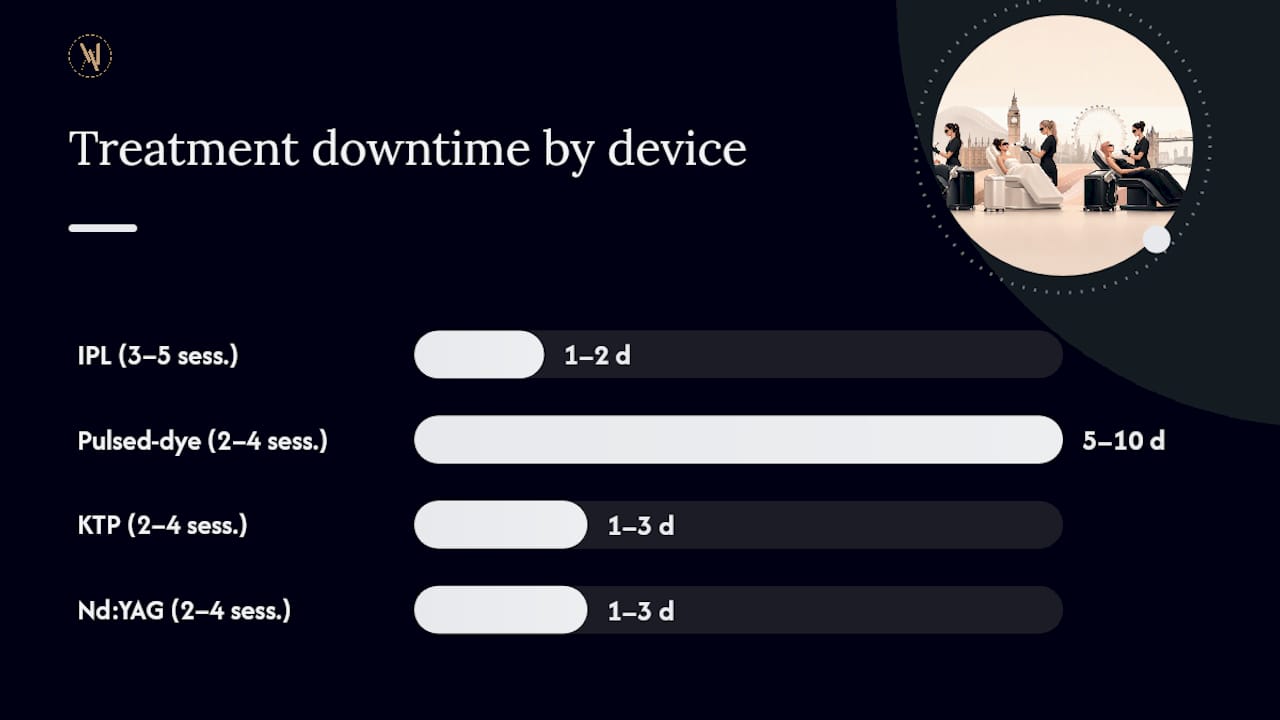
Results are not permanent. Most people require maintenance sessions every 12–24 months as new vessels can form over time.
Skin-tone safety callout: People with Fitzpatrick types IV–VI face a higher risk of post-inflammatory hyperpigmentation or hypopigmentation with IPL and shorter-wavelength lasers. Nd:YAG is generally the safer choice for darker phototypes, but only when operated by a clinician with specific experience treating darker skin. Always ask about the practitioner’s experience and request to see before-and-after images from patients with a similar skin tone.
Pro Tip: In the UK, laser and light-based treatments for rosacea are available both on the NHS (via dermatology referral for significant disease) and privately. Private clinics vary considerably in device quality and clinician expertise. Prioritise clinics where a qualified dermatologist or trained medical professional performs or directly supervises the treatment.
How do you recognise ocular rosacea, and when should you seek NHS care?
Ocular rosacea affects a significant proportion of people with cutaneous rosacea, yet it is frequently underdiagnosed because patients and clinicians focus on skin symptoms. The eyes and eyelids can be involved even when facial skin disease is mild.
Key ocular signs to watch for:
- Persistent gritty, burning, or stinging sensation in the eyes
- Redness or swelling of the eyelid margins (blepharitis)
- Dry, irritated eyes that don’t respond to standard lubricating drops
- Crusting or scaling at the base of the eyelashes
- Blurred vision (a red-flag symptom requiring urgent review)
- Recurrent styes or chalazia (blocked eyelid glands)
Initial home care: Warm compresses applied to closed eyelids for 5–10 minutes twice daily, followed by gentle eyelid margin cleaning with a diluted baby shampoo or proprietary eyelid wipe, can significantly reduce blepharitis symptoms. AFP guidance supports warm compresses and lid hygiene as first-line home management, with escalation if symptoms persist.
UK referral pathway:
- Start with your GP if ocular symptoms are mild and have been present for more than two weeks without improvement from home care.
- Your GP may prescribe topical or oral antibiotics (typically doxycycline) for ocular rosacea and refer to ophthalmology if symptoms are moderate or persistent.
- Ophthalmology referral is appropriate for: confirmed corneal involvement, vision change, failure to respond to antibiotic therapy, or diagnostic uncertainty.
- Dermatology referral may run concurrently if cutaneous disease also requires specialist management.
Appointment checklist — bring to every consultation:
- A written symptom log with dates, severity scores, and any identified triggers
- Photographs of skin and eye symptoms taken during a flare
- A list of all medications, including OTC products and supplements
- A record of all skincare products currently in use
- Details of any prior treatments tried, including duration and response
Urgent ophthalmology review is needed if you experience: sudden vision change, severe eye pain, photophobia, or corneal opacity. These are red-flag signs that require same-day or next-day assessment, not a routine GP appointment.
How do you manage a flare, and what about the psychological side of rosacea?
Flares are an expected part of living with rosacea, not a sign that your management plan has failed. Having a clear action plan reduces the anxiety they cause and shortens their duration.
Step-by-step flare management:
- Remove all potential irritants immediately: stop actives, exfoliants, and any new products introduced in the past two weeks.
- Cool the skin: a cool (not cold) damp cloth held gently against the face for a few minutes reduces heat-driven vasodilation.
- Use only your gentle cleanser and barrier moisturiser until the flare settles.
- If you have prescribed brimonidine or oxymetazoline, use it as directed for temporary redness relief.
- Contact your GP or clinician if the flare involves new pustules, significant swelling, pain, or signs of infection (warmth, crusting, fever).
Camouflage and makeup during flares:
Mineral-based, fragrance-free foundations and concealers with green-tinted primers can neutralise redness effectively without aggravating sensitised skin. Look for products labelled non-comedogenic and tested on sensitive skin. Apply with clean fingers or a soft brush rather than a sponge, which can drag inflamed skin. Our guide to skincare for rosacea redness covers product selection in more detail.
Patch-test any new makeup product on the inner arm before applying it to your face, particularly during an active flare when the skin barrier is compromised.
The psychological impact of rosacea is real and clinically recognised. Visible facial redness and papules affect self-confidence, social engagement, and professional interactions for many people. Studies consistently link rosacea to higher rates of anxiety, depression, and social withdrawal. This is not a minor side effect of the condition; it is a core part of the clinical picture.
Practical coping strategies include:
- Connecting with peer support communities (the Rosacea Support Group and similar online forums offer a space to share experiences without judgement).
- Discussing psychological impact openly with your GP, who can refer to NHS Talking Therapies (formerly IAPT) if anxiety or low mood is significant.
- Cognitive behavioural therapy (CBT) has evidence for managing the psychological burden of chronic skin conditions and is available through NHS referral or privately.
- Keeping a flare diary can reduce anxiety by replacing uncertainty with data: knowing your triggers gives you a degree of control.
Our perspective on what rosacea management actually requires
Most rosacea content focuses on what to use. The more useful question is what to stop expecting.
Rosacea is not a condition you cure. The clinical literature is consistent on this: even the most effective treatments, whether topical ivermectin, low-dose doxycycline, or a well-executed IPL course, achieve control rather than resolution. The moment people understand this, their relationship with their skin changes. They stop cycling through new products looking for the one that will finally fix it, and they start building a consistent routine that keeps symptoms manageable.
The second thing that gets underestimated is the role of maintenance. A common pattern we see is someone completing a 12-week course of doxycycline, seeing significant improvement, stopping everything, and then watching the papules return within two months. That is not treatment failure. That is rosacea behaving exactly as it should when maintenance topical therapy is not continued. The NICE CKS guidance is explicit about this: combining self-care, maintenance topical therapy, and targeted procedural options is the model, not a single course of treatment.
The third overlooked point is the skin-tone gap in procedural guidance. Most published rosacea treatment algorithms were developed in populations with lighter Fitzpatrick skin types. People with types IV–VI are not well represented in the clinical evidence base, and the risk of pigmentary complications from IPL and PDL is genuinely higher for them. This does not mean procedures are off the table; it means the choice of device and the experience of the practitioner matter more, not less. Nd:YAG remains the better-evidenced option for darker phototypes, and anyone offering IPL to a patient with type IV+ skin without acknowledging this gap is not giving them the full picture.
Finally, the psychological dimension of rosacea is consistently undertreated. Clinicians focus on lesion counts and erythema scores. Patients are often more concerned about whether they can attend a meeting without their face being the first thing people notice. Both matter, and a management plan that addresses only the physical signs while ignoring the social and emotional impact is incomplete.
Them-ethod’s clinical rosacea support
Managing rosacea well requires more than a good moisturiser and a list of triggers to avoid. It requires access to clinicians who understand the condition’s complexity, prescription pathways that move quickly, and products that are genuinely matched to your skin’s needs.
At Them-ethod, we offer virtual skin consultations with expert clinicians who can assess your phenotype, review your current routine, and facilitate prescription topicals including metronidazole, azelaic acid, and ivermectin where clinically appropriate. For those seeking procedural options, our London clinic offers laser and light-based treatments for persistent erythema and telangiectasia, delivered by experienced practitioners. The Calecim Professional Serum is one of the professional-grade adjuncts we recommend for barrier repair and post-procedure recovery.
Book a virtual consultation at Them-ethod to get a personalised rosacea management plan from a clinician who knows the difference between a phenotype and a product recommendation.
Sources
The following sources informed this guide and are worth consulting directly for clinical detail, prescribing guidance, and patient information.
- Rosacea: Practical guidance and challenges for clinical management — PMC
- NHS — Rosacea
- Mayo Clinic — Rosacea: Diagnosis and treatment
- Rosacea
This article provides general information and is not a substitute for professional medical advice. Consult your GP or a qualified dermatologist to confirm the most appropriate treatment for your individual circumstances.