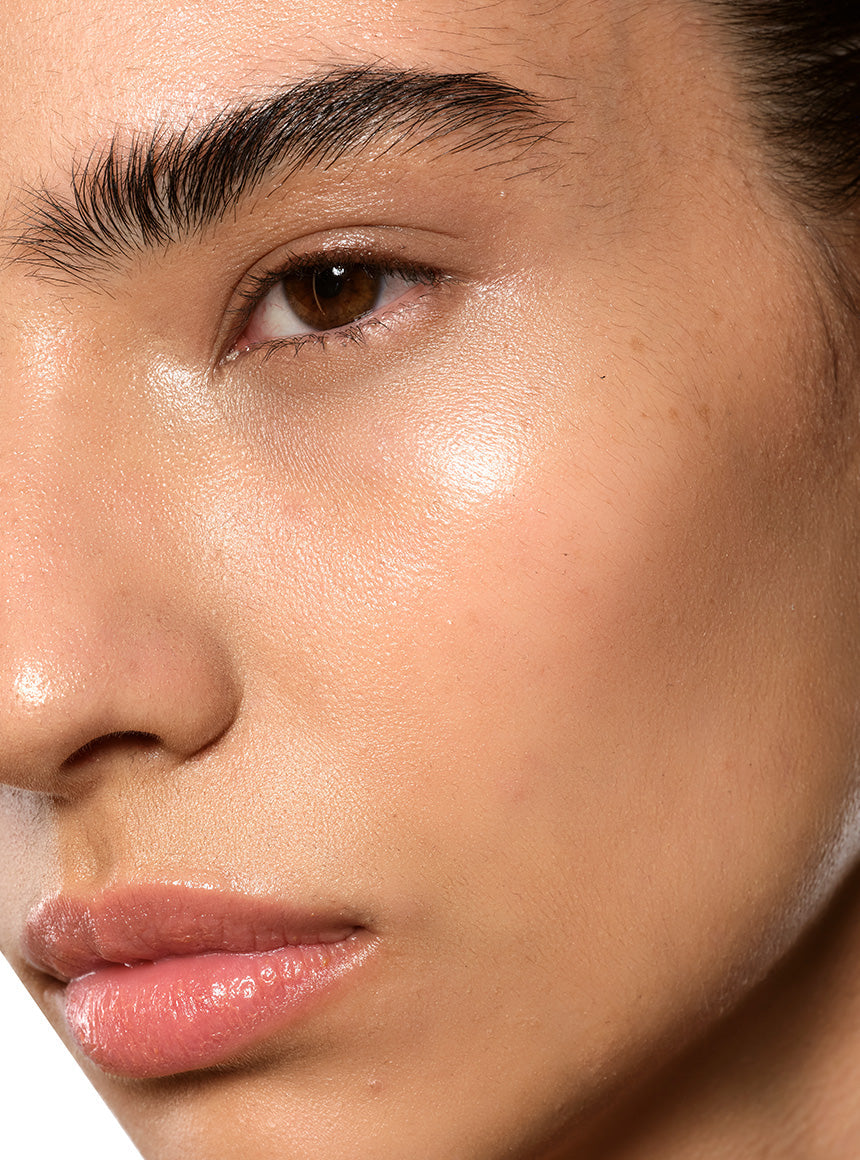




Άρθρο: Oily Skin Routine: Morning and Night Steps That Work

Oily Skin Routine: Morning and Night Steps That Work
The best oily skin routine is a short one: a gentle cleanser, an oil-free moisturiser and broad-spectrum sunscreen in the morning, then a gentle cleanse, a treatment such as a retinoid and light hydration at night. Oily skin is driven mostly by genes and hormones, so the aim is to manage shine without stripping the skin, because harsh handling can make oil production worse. Below you will find each step, the ingredients worth knowing, the habits that backfire and the point at which a dermatologist can do more than a shelf of products.
TL;DR
- Cleanse up to twice a day with a gentle foaming cleanser, and again after sweating. Do not scrub.
- Moisturise every day with an oil-free, noncomedogenic formula, and finish the morning with broad-spectrum SPF 30 or higher.
- At night, add one active at a time (a retinoid, salicylic acid or benzoyl peroxide, depending on your concerns) and build up slowly.
- Judge any new routine at around one and three months before changing it.
- If acne has not improved after six weeks of over-the-counter care, or it is painful or scarring, see a dermatologist.
Table of Contents
- What makes skin oily, and how to tell if yours is
- The morning routine for oily skin
- The evening routine for oily skin
- Morning and evening at a glance
- Ingredients that help, and how to use them
- Habits that make oily skin worse
- Adapting the routine when you also have acne
- Our perspective
- When to see a dermatologist
- Support from our clinicians
- FAQ
- Sources
What makes skin oily, and how to tell if yours is
Oily skin comes from sebaceous glands producing more sebum than your skin needs. According to MedlinePlus, genes and hormones are major contributors, while diet probably has little effect. The same source notes that oily skin may contribute to acne.
That matters for how you plan a routine. You cannot scrub, dry out or diet your way to a permanently matte face. What you can do is choose products that keep pores clear, support the skin barrier and reduce visible shine through the day.
Signs your skin is oily rather than combination or dry:
- A shine across the forehead, nose, cheeks and chin within a few hours of cleansing.
- Makeup that slides or breaks up by midday.
- Enlarged-looking pores and a tendency towards blackheads or breakouts.
- Skin that feels greasy rather than tight when you wake up.
If your cheeks feel tight but your T-zone shines, you are probably combination. The routine below still applies, with a slightly richer moisturiser on drier areas.
The morning routine for oily skin
Morning care should be quick and protective. The American Academy of Dermatology’s guidance on controlling oily skin points to a gentle foaming cleanser, an oil-free noncomedogenic moisturiser and broad-spectrum sunscreen.
Step 1: Cleanse gently
Use a gentle foaming cleanser with lukewarm water and your fingertips. Keep it to under a minute. The AAD recommends cleansing up to twice daily and after sweating, without scrubbing, and warns that harsh cleansing can irritate skin and trigger more oil. If your skin is also prone to breakouts and sensitivity, our guide to the best cleansers for sensitive, acne-prone skin explains what to look for.
Step 2: Apply a treatment if you use one
If you are managing breakouts, the morning is a sensible time for benzoyl peroxide or sulfur. Healthline notes that these may help acne-prone oily skin during the day, and that benzoyl peroxide and salicylic acid can cause irritation, so they should be used as instructed. Start with a few days a week if your skin is new to them.
Step 3: Moisturise with something light
Oily skin still needs water. Skipping moisturiser can leave the barrier compromised and the skin uncomfortable. Pick an oil-free, noncomedogenic, water-based formula. NewBeauty’s dermatologist guidance suggests lightweight hydration, and says hyaluronic acid and ceramides can support the barrier and help skin tolerate anti-oil treatments that might otherwise irritate.
If you also have sensitive skin, a microbiome-focused option such as the Esse Hydro Moisturiser is the kind of lightweight hydration we look at for skin that reacts easily.
Step 4: Finish with sunscreen
Sunscreen is the one step you should not drop. Use broad-spectrum SPF 30 or higher every day. For people worried about breakouts, the AAD recommends sunscreens containing zinc oxide or titanium dioxide, and advises avoiding products with fragrance or oils where possible. Many oily-skin sunscreens are labelled oil-free, gel or fluid, which tends to feel lighter on the skin.
Step 5: Makeup and midday shine
If you wear makeup, the AAD says oil-free, water-based and matte products may reduce visible shine. During the day, press blotting papers on shiny areas rather than rubbing, which keeps makeup in place and avoids irritation.

The evening routine for oily skin
Night is when your skin does most of its repair work, and it is the best time for actives. According to Dermatology Times, evening care means a thorough cleanse with a gentle cleanser, a topical retinoid, then an oil-free moisturiser if you need extra hydration.

Step 1: Remove makeup and sunscreen
Makeup should be removed before sleep, as the AAD advises. If you wore sunscreen or makeup, a first cleanse followed by a second one makes sure pores are clear. Choose products that are oil-free or labelled noncomedogenic, and avoid alcohol-based cleansers, which the AAD says to skip.
Step 2: Use one treatment
This is where your routine becomes personal. Options include:
- A retinoid. Dermatology Times includes topical retinoids in evening care, and Healthline notes retinol may help keep pores clear. Introduce it gradually. Our guide on starting tretinoin at night explains building from every second or third night up to daily, and our piece on layering retinol safely covers how to combine it with the rest of your routine.
- Salicylic acid. The AAD says salicylic, glycolic or lactic acids may reduce oiliness but can be too harsh. Use them less often, or stop, if irritation develops.
- Sulfur. NewBeauty’s dermatologists list sulfur, retinoids and salicylic acid as ingredients for regulating oil.
Do not stack all of them on the same night. One active, used consistently, beats three used erratically.
Step 3: Moisturise if needed
Apply an oil-free moisturiser. On nights when you use a retinoid, a ceramide-containing lotion can make the process much more comfortable. If your skin feels fine and balanced, a thin layer is enough.
Morning and evening at a glance
| Step | Morning | Evening |
|---|---|---|
| Cleanse | Gentle foaming cleanser | Gentle cleanser, double cleanse if wearing makeup or sunscreen |
| Treat | Benzoyl peroxide or sulfur if acne-prone | Retinoid, or salicylic acid on alternate nights |
| Hydrate | Oil-free, noncomedogenic moisturiser | Oil-free moisturiser if needed |
| Protect | Broad-spectrum SPF 30 or higher | Not needed |
| Extras | Oil-free makeup, blotting papers | Remove all makeup |
Ingredients that help, and how to use them
The research from dermatologists points to a small group of ingredients:
- Salicylic acid is oil-soluble, so it works inside pores. It may be effective in cleansers for acne if tolerated.
- Benzoyl peroxide is useful for inflamed breakouts. Start low and go slowly.
- Retinoids help keep pores clear and are a mainstay for oily, acne-prone skin.
- Sulfur is a gentler option some people prefer during the day.
- Hyaluronic acid and ceramides add hydration and support the barrier without heaviness.
The NewBeauty guidance also says oily skin can skip surface exfoliation. In practice, that means you do not need a physical scrub. If you want exfoliation, a chemical acid used once or twice a week is plenty, and the AAD’s note applies: pull back at the first sign of irritation.
For product-by-product ideas on managing breakouts and shine, see our journal article on acne and oily-prone skin.
Habits that make oily skin worse
Most routine problems come from doing too much. Watch for these:
- Over-cleansing. More than twice a day, plus sweating, is the limit the AAD describes. Extra washing can trigger extra oil.
- Scrubbing. Rubbing with a brush or granular scrub irritates skin and does not remove oil permanently.
- Alcohol-based or oil-based cleansers. The AAD recommends avoiding both for oily skin.
- Fragrance, dyes and essential oils. Dermatology Times advises avoiding them when they irritate, and choosing oil-free or noncomedogenic products.
- Changing products every week. Dermatology Times favours a “less is more” regimen and suggests reassessing around one and three months, recognising that the first treatment may not be the best one.
- Sleeping in makeup. It sits in pores overnight.
Adapting the routine when you also have acne
Oily skin and acne often travel together. For acne, Dermatology Times says to use a gentle cleanser morning and evening, a daily oil-free SPF 30 or higher and, if needed, an oil-free moisturiser. Salicylic acid or benzoyl peroxide cleansers may be effective if tolerated. Topical antibiotics and retinoids may also be used, which is where a professional can help.
A practical way to build up:
- Weeks 1 to 2: cleanser, moisturiser and sunscreen only. Let the skin settle.
- Weeks 3 to 4: add one active, three nights a week.
- Weeks 5 to 8: increase frequency if there is no stinging, peeling or redness.
- Around one and three months: reassess. If nothing has changed, change the plan, not the whole shelf.
If your skin is also red or reactive, our guide to cleansing rosacea-prone skin shows how to keep the cleanse gentle.
Our perspective
Oily skin is one of the most over-treated skin types we see. People arrive with six actives, a foaming wash used four times a day and skin that is both shiny and sore. The fix is nearly always to simplify.
We believe in a clinical, personalised approach: a gentle base routine, then one well-chosen active at the right strength. That is why we offer one-to-one guidance and medical-grade skincare, including prescription options such as tretinoin where appropriate, rather than a generic list of bestsellers.
Your skin changes with hormones, seasons and stress, so the routine should too. A consultation lets a clinician look at your skin, your history and what you have already tried, then set a plan you can follow for months, not days.
Jess
When to see a dermatologist
Over-the-counter products have limits, and knowing when to move on saves months of frustration. WebMD’s guidance says to seek advice if over-the-counter treatment has not improved acne after six weeks, if acne is stubborn or severe, or if pimples are sore or leave scars. It also recommends professional evaluation for painful nodules or cystic acne, and for breakouts that cause embarrassment, distress or social withdrawal.
A dermatologist may prescribe topical retinoids or oral therapies, including isotretinoin. Healthline stresses that oral isotretinoin should only be taken on a dermatologist’s advice. Do not use anyone else’s prescription, and do not start a prescription retinoid or hydroquinone without a clinician who has reviewed your skin and medical history. If you are pregnant or planning a pregnancy, tell your clinician before starting any retinoid or acne treatment.
Support from our clinicians
If you would like a routine built around your skin rather than the average one, you can book an online skin consultation with Dr Mandy. It suits anyone who wants clear steps for oil, breakouts or pigmentation, including international clients, since we ship worldwide and handle customs. You can also browse our medical-grade cleansers, moisturisers, serums and sunscreens once you know which steps you need.
For clients who are in London or Athens, our in-clinic treatments, including SkinPen microneedling, are performed by a UK-trained doctor and can complement a home routine.
FAQ
How many steps does an oily skin routine need?
Three in the morning (cleanse, moisturise, sunscreen) and three at night (cleanse, treat, moisturise if needed) is enough for most people. Dermatology Times favours a “less is more” approach. Add extra steps only for a specific concern.
Should I skip moisturiser if my skin is oily?
No. Oily skin still needs hydration, and a compromised barrier can leave it irritated. Choose an oil-free, noncomedogenic, lightweight formula, ideally with hyaluronic acid or ceramides.
Can I wash my face more often to control oil?
Cleansing up to twice a day and after sweating is the AAD’s guidance. Washing more often, or scrubbing, can irritate skin and trigger even more oil production.
How long before I see results from a new routine?
Give it time. Dermatology Times suggests reassessing effectiveness at around one and three months. If you have used over-the-counter acne treatment for six weeks without improvement, speak to a dermatologist.
Do I need sunscreen if my skin is already shiny?
Yes. Use broad-spectrum SPF 30 or higher daily. Look for oil-free formulas, and consider zinc oxide or titanium dioxide if you are prone to breakouts, as the AAD suggests.
Sources
- Oily skin: MedlinePlus Medical Encyclopedia
- How to control oily skin, American Academy of Dermatology
- Recommendations for Treating Oily and Acne-Prone Skin, Dermatology Times
- Essential Tips for Managing Oily Skin from Dermatologists, NewBeauty
- Skin Care Routine for Oily Skin: Key Steps for Healthy Skin, Healthline
- Acne: When to See a Doctor, WebMD