



Άρθρο: Fade Dark Skin Hyperpigmentation in 6–12 Months with Clinician Care
Fade Dark Skin Hyperpigmentation in 6–12 Months with Clinician Care
The most effective approach to hyperpigmentation on darker skin combines medical-grade topical therapy with strict daily photoprotection, including tinted, iron-oxide sunscreen. Procedures such as peels or lasers can help stubborn cases but carry a real risk of worsening pigmentation in richly pigmented skin unless a specialist customises and primes them carefully. Expect gradual fading over months, not days, and treat prevention as part of the treatment itself.
TL;DR:
- Hyperpigmentation in darker skin often involves deeper dermal pigment, making treatments like topicals less effective and requiring a customized approach.
- Proper diagnosis using Wood’s lamp and history is crucial to distinguish epidermal from dermal pigment, influencing treatment choices.
- Long-term, structured topical therapy combined with daily photoprotection, especially tinted iron-oxide sunscreens, is key to managing dark marks.
- In-clinic procedures such as carefully controlled peels or low-fluence lasers can accelerate fading but demand priming and cautious post-treatment care to prevent worsening PIH.
- Patience is essential, as visible improvement typically takes six to twelve months, and active trigger management significantly affects long-term results.
Table of Contents
- What hyperpigmentation is and why it behaves differently in dark skin
- How do dermatologists diagnose hyperpigmentation?
- Topical treatments: hydroquinone and evidence-based alternatives
- Photoprotection for dark skin: why tinted sunscreen matters
- Are peels, microneedling and lasers safe for darker skin?
- Practical daily routine and a realistic timeline for fading
- When personalised clinical care makes the difference
- Why treating the trigger matters as much as treating the mark
- Do diet and lifestyle affect hyperpigmentation?
- The emotional toll of hyperpigmentation and how to manage it
- Using hydroquinone safely: duration, concentration and monitoring
- What happens at the cellular level in darker skin
- A clinician-led view on treating dark marks with patience
- Getting a treatment plan built around your skin, not a general one
- Sources
What hyperpigmentation is and why it behaves differently in dark skin
Hyperpigmentation happens when melanocytes, the pigment-producing cells in your skin, go into overdrive and deposit excess melanin. In darker skin, those melanocytes are naturally more reactive to triggers like inflammation, friction, and ultraviolet light, which is why a minor blemish or scrape can leave a mark that lingers for months after the original irritation has healed.
The depth of that pigment matters more than most people realise. Epidermal pigment sits near the surface and tends to respond well to topical treatment within a reasonable timeframe. Dermal pigment sits deeper, having been carried down by immune cells during the inflammatory process, and it resists treatment far more stubbornly. Darker skin tends to produce more melanin per melanocyte and distributes it more readily into that deeper layer, which is the biological reason dark marks on richly pigmented skin often look darker and last longer than the equivalent mark would on lighter skin.
Not all dark marks are the same condition, even though they can look similar at a glance. Recognising which type you’re dealing with changes the treatment plan considerably.
- Post-inflammatory hyperpigmentation (PIH): flat, brown to grey-brown patches that appear exactly where skin was inflamed, whether from acne, eczema, a cut, or a burn. It follows the shape of the original injury.
- Melasma: symmetrical, blotchy patches typically across the cheeks, forehead, and upper lip, strongly linked to hormones (pregnancy, contraceptive pill) and worsened dramatically by sun and visible light.
- Solar lentigines: flat, well-defined brown spots that build up gradually from cumulative sun exposure, usually on the face, hands, and forearms, and tend to appear later in life.
- Maturational hyperpigmentation: a gradual, diffuse darkening and dulling of the skin that develops with age in richly pigmented skin, often mistaken for melasma but without the sharp, symmetrical borders.
A useful visual clue: marks that are uniformly brown, blend a little at the edges, and sit flush with the skin are usually epidermal and more treatable. Marks with a blue-grey or slate cast, especially under a Wood’s lamp, point to dermal pigment and a longer road ahead. This distinction is central to why generic advice (“just use vitamin C”) so often disappoints people with skin of colour. It isn’t that the product fails; it’s that nobody diagnosed which layer the pigment is actually sitting in.
How do dermatologists diagnose hyperpigmentation?
A proper diagnosis takes more than a glance in good lighting, and it shapes everything that follows in treatment. Clinicians typically work through a structured process:
- A detailed history. When did the mark appear, was there a preceding injury, breakout, or waxing session, and has it changed shape or colour since? Medication history matters too, since certain antibiotics, antimalarials, and hormonal treatments can trigger pigment changes.
- A visual and tactile exam. Border shape, distribution pattern, and texture help distinguish PIH from melasma or a pigmented lesion that needs closer attention.
- Wood’s lamp examination. This ultraviolet light tool helps separate epidermal from dermal pigment; epidermal marks tend to fluoresce and appear more pronounced under the lamp, while dermal pigment shows little change, giving a quick read on how deep the problem sits.
- Blood tests or biopsy where indicated. These are reserved for atypical presentations, sudden onset without an obvious trigger, or marks that don’t fit a standard pattern.
- Referral to a specialist for anything that looks irregular, changes rapidly, bleeds, or comes with itching, pain, or systemic symptoms like fatigue or joint pain, which can point to an underlying condition rather than simple PIH.
Sudden spread across large areas, a lesion with an unusual border or multiple colours within it, or any mark accompanied by systemic symptoms are red flags that warrant a same-week dermatologist visit rather than a wait-and-see approach.
Topical treatments: hydroquinone and evidence-based alternatives
Hydroquinone remains the gold-standard first-line topical therapy for facial hyperpigmentation in skin of colour, and it has earned that reputation over decades of clinical use. It works by inhibiting tyrosinase, the enzyme melanocytes rely on to produce melanin, which slows new pigment formation while existing pigment gradually clears. The caveat that matters just as much as the benefit: hydroquinone needs medical supervision, because unsupervised long-term use carries genuine safety concerns, including a rare but serious condition called ochronosis, which paradoxically darkens skin permanently. Prescription-strength formulations and structured hydroquinone treatment plans are typically used in cycles rather than indefinitely.
Several other actives have solid evidence behind them and often work well alongside or instead of hydroquinone, depending on skin sensitivity and the type of pigmentation involved.
- Azelaic acid targets both pigment and inflammation, making it a strong option for anyone whose hyperpigmentation stems from acne, since it treats the breakout and the resulting mark simultaneously.
- Topical retinoids (tretinoin, adapalene) speed up cell turnover, helping push pigmented cells to the surface faster and improving penetration of other actives.
- Vitamin C works as an antioxidant and mild tyrosinase inhibitor, useful as a daily maintenance step rather than a primary treatment for stubborn marks.
- Niacinamide calms inflammation and interrupts the transfer of pigment from melanocytes to surrounding skin cells, making it a gentle option for sensitive or reactive skin.
- Kojic acid offers another route to tyrosinase inhibition for people who can’t tolerate hydroquinone.
- Tranexamic acid, used topically or orally under supervision, has shown particular promise for melasma, working through a different pathway that reduces the vascular and inflammatory triggers behind that condition.
Combination therapy, rather than a single hero ingredient, tends to produce the best outcomes. A typical sequence pairs a lightening agent with a retinoid and locks in daily sunscreen, since fading pigment while continuing to expose skin to UV is largely wasted effort. Introduce new actives one at a time, roughly a week or two apart, and always patch-test on a small area first. This matters more for darker skin than almost any other rule in this guide: irritation itself triggers inflammation, and inflammation is precisely what causes new PIH. A routine that’s too aggressive can end up creating the very problem it was meant to solve.
Pro Tip: If a new active causes stinging, redness, or flaking, drop back to alternate nights immediately rather than pushing through. The itch to see faster results is exactly what causes setbacks in skin of colour.
Photoprotection for dark skin: why tinted sunscreen matters
Sunscreen isn’t just prevention here; it’s an active part of treatment. Every gain made with topical lighteners can be undone by unprotected sun exposure, since UV rays worsen existing dark spots and trigger new ones in skin that’s already prone to overproducing melanin.
What often gets missed is that ultraviolet light isn’t the only culprit. Visible light, the kind that reaches your skin on a cloudy day or through a window, can also deepen pigment in melanin-rich skin. Standard chemical sunscreens filter UV effectively but do little against visible light, which is why tinted sunscreens containing iron oxide have become such a specific recommendation for people managing melasma or PIH. Iron oxide pigments physically block visible light in a way plain mineral or chemical filters don’t.
Pro Tip: If your sunscreen leaves a grey or ashy cast, look for a tinted, iron-oxide formulation matched closer to your undertone rather than abandoning sunscreen altogether. The right shade exists; it just takes a bit more searching than the drugstore shelf usually offers.
A daily photoprotection routine that actually holds up needs a few non-negotiables:
- Broad-spectrum SPF 30 or higher, applied every single morning regardless of weather or indoor plans.
- Reapplication roughly every two hours if you’re outdoors, more often if swimming or sweating.
- A water-resistant, blendable formula that doesn’t require you to choose between protection and a wearable finish.
- Tinted, iron-oxide-containing options prioritised if you have melasma or active PIH.
- Physical backup: a wide-brimmed hat, UPF clothing, and simply avoiding peak midday sun where possible.
Skipping sunscreen because “dark skin doesn’t burn” is one of the most common and costly misconceptions in this entire field. You may not burn, but you absolutely still pigment, and that pigmenting response is the whole problem you’re trying to solve.
Are peels, microneedling and lasers safe for darker skin?
In-clinic procedures can genuinely accelerate results where topical therapy has plateaued, but they come with a sharper double edge in richly pigmented skin than most marketing admits.
- Chemical peels (glycolic, salicylic, mandelic, and lower-strength TCA) exfoliate the surface layer and can speed epidermal pigment clearance.
- Microneedling creates controlled micro-injury to stimulate collagen and improve product penetration, sometimes used alongside tranexamic acid or vitamin C.
- Q-switched or Nd:YAG lasers target pigment directly and, at appropriately low fluences in experienced hands, can be a safer option for treating pigment in darker skin than more aggressive fractional or ablative devices.
- Fractional resurfacing devices address texture and deeper pigment but demand the most conservative settings of the group in skin of colour.
The core risk with all of these is that the very inflammation a procedure creates can trigger a fresh, sometimes worse, round of PIH. Peer-reviewed guidance on procedural safety in skin of colour consistently points to priming as the difference between a good outcome and a frustrating one: weeks of topical tyrosinase inhibitors like hydroquinone or azelaic acid before the procedure, conservative energy settings during it, a test patch on inconspicuous skin first, and rigorous sun avoidance afterwards. Even Q-switched lasers, generally the gentler pigment-specific option, still require staged, cautious treatment rather than a single aggressive session.
Pro Tip: If a clinic offers you the same laser settings “used on everyone,” that’s a signal to ask more questions. Darker skin needs its own protocol, not a one-size-fits-all setting dial.
Procedures make the most sense when pigment sits deep in the dermis and topical therapy alone has stalled for several months, or when the area is small enough to treat with real precision and follow-up.
Practical daily routine and a realistic timeline for fading
A workable routine has to be simple enough to stick to every day, because consistency matters more here than any single star ingredient.
- Morning: cleanse gently, apply an antioxidant serum if your skin tolerates it, follow with a light moisturiser, then finish with a tinted, broad-spectrum sunscreen. This last step is non-negotiable, not optional.
- Evening: cleanse again, apply your prescribed or over-the-counter lightening agent (hydroquinone, azelaic acid, or similar), and layer a retinoid on alternate nights once your skin has adjusted, finishing with a barrier-repairing moisturiser.
- Introduce one new product at a time, waiting one to two weeks before adding the next, and patch-test anything new on the inner forearm first.
- Track progress with monthly photographs taken in the same lighting and position, since day-to-day changes are often too subtle to judge in the mirror but become obvious over four to eight weeks.
On timelines: many epidermal marks show visible improvement within six to twelve months of consistent treatment, though the first noticeable change often shows up around the eight-week mark once cell turnover catches up. Deeper, dermal pigment moves far more slowly and, in some cases, never fully clears. That isn’t a reason to stop treatment; it’s a reason to set expectations that match biology rather than a skincare advert. A practical, product-led routine for deeper complexions can help translate this structure into specific formulations suited to your skin.
When personalised clinical care makes the difference
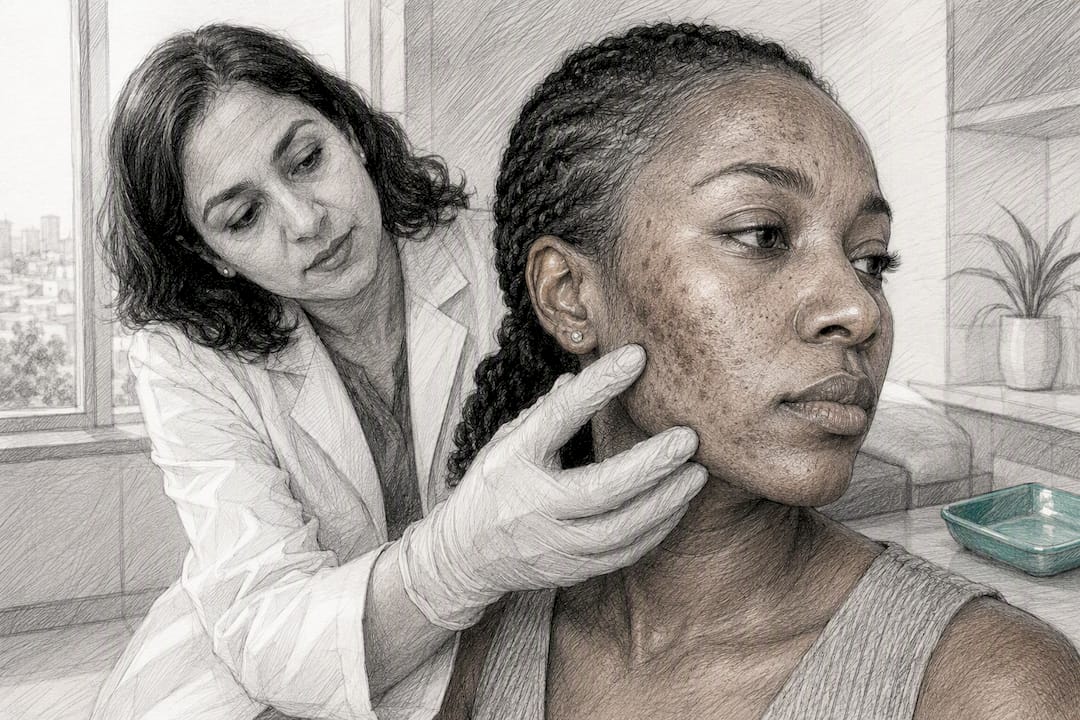
A virtual consultation lets a clinician actually see what’s going on before prescribing anything, which matters enormously given how easily PIH, melasma, and lentigines get confused by eye alone. They’ll assess pigment depth, review your trigger history, and check what you’ve already tried, then build a regimen that avoids stacking irritants that could provoke fresh PIH.
Clinician-managed strategies often include a structured priming period before any procedure, a prescription-strength hydroquinone sequence with defined start and stop dates, and supervised peels dosed specifically for your skin’s reactivity rather than a generic protocol. Virtual skin consultations can connect you with clinicians experienced in treating pigmentation across a full range of skin tones, with access to prescription-strength options and curated medical-grade lines that aren’t available over the counter.
Why treating the trigger matters as much as treating the mark
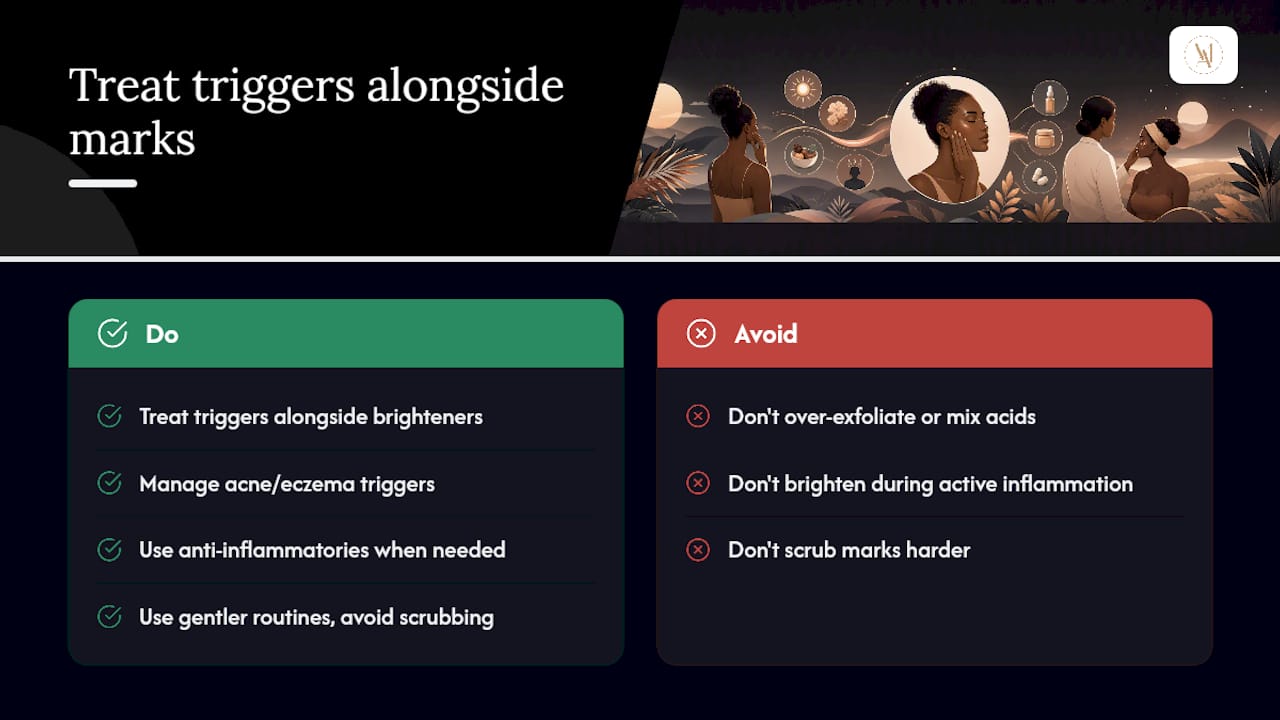
Every dark mark has a cause, and if that cause is still active, no amount of lightening cream will outpace it. Acne is the clearest example: a single inflamed spot can leave behind a mark that outlasts the breakout by months, and if breakouts keep recurring, you’re essentially refilling the same tank you’re trying to drain. Managing the underlying trigger, whether acne, eczema, or another inflammatory condition, has to run alongside any pigment-focused routine, not after it.
Eczema and other inflammatory skin conditions work the same way. Chronic scratching, flaring, and healing cycles keep melanocytes in a constant state of reactivity, and treating the eczema itself, through appropriate moisturisers, anti-inflammatories, or trigger avoidance, does more for long-term pigment control than any brightening serum applied on top of active inflammation.
There’s a subtler version of this that catches people off guard: over-exfoliation and harsh, friction-heavy routines create their own low-grade inflammation, even without a diagnosed skin condition. Scrubbing a dark mark harder, using multiple acids at once, or over-using a facial brush can quietly extend the very problem you’re trying to fix. A gentler approach to treating existing marks generally outperforms an aggressive one in darker skin, because calming inflammation is often step one, not an afterthought.
Do diet and lifestyle affect hyperpigmentation?
Diet doesn’t cause hyperpigmentation directly, but several everyday habits shift how visible and persistent it becomes. Chronic sleep deprivation and prolonged stress raise cortisol, which can worsen hormonally driven melasma in particular, and stress-related habits like picking at skin or over-touching a breakout are a direct route to fresh PIH.
Certain medications and supplements deserve a mention too, since photosensitising drugs (some antibiotics, retinoid supplements, and hormonal treatments) can make skin more reactive to sun exposure and more prone to pigmenting. If you’re on any of these, that’s worth flagging in a consultation rather than assuming your skincare routine alone is failing.
On the nutrition side, a diet with adequate antioxidants (vitamins C and E, polyphenols from fruit and vegetables) supports overall skin resilience, though no food or supplement substitutes for sunscreen or targeted treatment. Alcohol and dehydration can leave skin’s barrier weaker and more reactive to irritants, indirectly raising the risk of triggering new marks. None of this replaces the fundamentals covered earlier, but it explains why two people on an identical skincare routine sometimes see different results.
The emotional toll of hyperpigmentation and how to manage it
Hyperpigmentation is consistently ranked among the top dermatological concerns for people with darker skin, and it’s rarely just a cosmetic issue. Visible marks on the face can affect confidence, social comfort, and how people present themselves at work or in photographs, and that weight shouldn’t be minimised or brushed aside with “it’s just skin.”
Frustration tends to peak around the three-month mark, when a routine feels like it should be working but visible change is still subtle. That’s often the exact point people abandon a treatment that would have worked, simply because the timeline didn’t match expectations set by adverts promising overnight results. Knowing in advance that meaningful change typically takes months, not weeks, can be the difference between sticking with an effective plan and giving up on one prematurely.
If hyperpigmentation is affecting your mood, self-esteem, or willingness to socialise, that’s worth naming to a clinician alongside the physical treatment plan. Camouflage makeup formulated for deeper tones can offer interim relief while medical treatment does its slower work underneath, and a realistic, staged plan from a dermatologist tends to ease the psychological burden simply by giving you a concrete timeline to hold onto.
Using hydroquinone safely: duration, concentration and monitoring
Hydroquinone works best, and most safely, in defined cycles rather than as an indefinite daily habit. Over-the-counter formulations are typically capped at low concentrations, while prescription-strength versions used under clinical supervision go higher but come with closer monitoring.
The main long-term risk is exogenous ochronosis, a rare condition where the skin paradoxically darkens and takes on a blue-grey, ashy appearance after prolonged, high-concentration, unsupervised use. It’s more likely with continuous use over many months or years without a break, which is exactly why supervised, cycled protocols exist: a period of active use, followed by a rest period, then reassessment.
Signs that treatment needs a pause include unexpected darkening rather than lightening, a blue-grey tint developing in the treated area, or any new irritation that doesn’t settle. A clinician reviewing your skin periodically during treatment, rather than a one-off prescription with no follow-up, is what separates safe hydroquinone use from the cases that end up in dermatology case reports. This is precisely the kind of monitoring a structured hydroquinone protocol is designed to provide.
What happens at the cellular level in darker skin
Melanocytes in darker skin aren’t more numerous than in lighter skin; they’re more active, producing more melanin per cell and packaging it into larger, more stable granules called melanosomes. When inflammation strikes, whether from a spot, a scrape, or a sunburn, immune signalling molecules stimulate these melanocytes to ramp up melanin production as part of the skin’s natural defence and repair response.
In lighter skin, that melanin often stays confined to the epidermis and sheds relatively quickly as skin cells turn over. In darker skin, a larger share of that melanin gets transferred deeper, into the dermis, where it’s picked up by immune cells called melanophages and effectively gets locked in place. Those dermal melanophages don’t shed with the skin’s natural cycle the way epidermal pigment does, which is the direct cellular reason dermal PIH in richly pigmented skin can persist for years rather than months.
This is also why anti-inflammatory strategy matters as much as pigment-targeting strategy. Every fresh bout of inflammation is another signal telling melanocytes to ramp up production, so the fewer inflammatory events your skin experiences, the less raw material there is for new pigment to form in the first place.
A clinician-led view on treating dark marks with patience
The biggest mistake I see people make isn’t choosing the wrong product; it’s expecting the wrong timeline and giving up right before a routine starts working. Hyperpigmentation on darker skin responds well to the right combination of treatment, but it rewards patience and punishes impatience harshly, since every irritated shortcut risks creating a new mark on top of the old one.
What gets underestimated most is prevention’s role as active treatment, not an afterthought tacked onto the end of a routine. A tinted sunscreen applied properly every morning does more heavy lifting than most people credit it for. And the emotional weight of visible marks deserves to be taken seriously rather than dismissed as vanity. For anything persistent, unusual, or resistant to a sensible topical routine, a proper clinical assessment beats another six months of guesswork.
— Jess
Getting a treatment plan built around your skin, not a general one
There is a need for regimens calibrated to specific pigment behaviour rather than a routine copied from someone with a different skin tone entirely. Through a virtual skin consultation, a clinician can review your specific pigmentation pattern, trigger history, and prior treatments before recommending anything, which is how supervised hydroquinone cycles and priming protocols actually get built safely rather than guessed at.
For anyone dealing with acne-related marks, the PCA Clearskin Acne Treatment Serum targets the breakout and the resulting pigment together, while the NeoStrata collection offers clinically backed options for renewing tone across a range of skin depths. Book a consultation to get a regimen matched to your pigment depth and skin history, rather than another product bought on a guess.
This article is general information, not a substitute for advice from a qualified doctor. Consult a qualified healthcare professional about your own circumstances before acting on anything here.
Sources
- Dermatology: how to manage facial hyperpigmentation in skin of colour
- How to fade dark spots in darker skin tones
- Demystifying hyperpigmentation: Causes, types, and effective treatments - Harvard Health