



Άρθρο: Hydroquinone Rebound: Avoid Abrupt Stops With Supervised Pulsed Care

Hydroquinone Rebound: Avoid Abrupt Stops With Supervised Pulsed Care
Yes, hydroquinone can cause rebound hyperpigmentation in certain situations, usually when it is stopped abruptly, used at high strength for too long, or combined with irritating products and poor sun protection. If you notice renewed or darker patches, stop irritants, reinforce daily broad-spectrum sun protection, and arrange a clinician review. With a supervised pulsed approach and a proper maintenance plan, rebound is usually preventable and reversible.
TL;DR:
- Prescription labeling for 4% hydroquinone directs twice daily use and discontinuation without improvement after 2 to 3 months, partly to limit rebound and ochronosis.
- Clinicians commonly limit continuous treatment to four to five months, then pause hydroquinone for 2 to 3 months while using gentler maintenance agents.
- Use broad spectrum sunscreen daily, choose tinted formulas with iron oxides for visible light, and reapply every few hours during daylight.
- A controlled study found postinflammatory pigmentation in 19% after laser treatment with 4% hydroquinone, particularly among phototypes IV and V, so procedures need clinician oversight.
- When pigment flares, clinicians usually stop irritants, use gentler agents such as azelaic acid or niacinamide, and consider lower strength treatment after inflammation settles.
Table of Contents
- What rebound hyperpigmentation is and why it happens
- How hydroquinone contributes to rebound: mechanism, dosing and risk factors
- How to prevent rebound while you are using hydroquinone
- How clinicians treat and reverse rebound hyperpigmentation
- Clinical protocol and pulsed hydroquinone therapy
- Realistic expectations and preparing for a consultation
- Clinician consultations and supervised treatment options at the M-ethod Skin
- FAQ
- Sources
What rebound hyperpigmentation is and why it happens
Rebound hyperpigmentation describes new or worsened dark patches that appear after a period of improvement, typically once treatment is stopped or changed. It differs from simple relapse or treatment failure, where pigment was never fully controlled in the first place: rebound implies the skin actively overcorrects, producing more pigment than existed before treatment began.
The biological picture involves melanocytes, the pigment-producing cells, swinging from suppressed activity back into overdrive. Inflammation plays a central role: anything that irritates the skin, be it a harsh active ingredient, a procedure, or sun exposure, can trigger a burst of melanin production as part of the skin’s repair response. Visible light, not just UV, is increasingly recognised as a trigger for this kind of melanocyte activation, which is why pigmentary conditions like melasma are so sensitive to everyday light exposure, indoors and out.
Several everyday scenarios tend to precede a rebound flare:
- Stopping hydroquinone suddenly after a long, uninterrupted course rather than tapering off.
- Layering hydroquinone with strong acids, retinoids, or unstable formulations that irritate the skin barrier.
- Using concentrations higher than those prescribed, or compounded products without clinical oversight.
- Skipping sunscreen reapplication or relying on SPF alone without visible-light protection.
Rebound most often surfaces within weeks of a treatment change, whether that is cessation, a dose increase, or a new co-treatment. Recognising this timeline matters: pigment that reappears shortly after stopping treatment points to rebound, while pigment that never improved in the first place suggests the original regimen simply was not working.
How hydroquinone contributes to rebound: mechanism, dosing and risk factors
Hydroquinone works by inhibiting tyrosinase, the enzyme melanocytes need to produce melanin. When that inhibition is removed abruptly, particularly after prolonged use, some melanocytes appear to respond with a compensatory surge in activity, which can present as rebound pigmentation rather than a simple return to baseline.
Prescription labelling for 4% hydroquinone creams reflects this sensitivity: the United States prescription label specifies twice-daily application and instructs discontinuation if no improvement appears within 2 to 3 months, specifically to avoid adverse effects including rebound pigmentation and ochronosis, a bluish-grey discolouration linked to long-term unsupervised use. Clinical practice generally reserves 4% for an active treatment phase, with 2% used for maintenance once pigment has lightened, a pattern our guide to hydroquinone treatment for melasma sets out in more detail.
Rebound risk climbs with:
- Continuous, unsupervised use well beyond the 2 to 3 month label guidance.
- Compounded formulations at concentrations higher than the standard 4%.
- Co-treatment with irritating actives, peels, or aggressive procedures.
- Darker skin phototypes, which carry a higher baseline tendency toward post-inflammatory pigment changes.
- Pregnancy, where hydroquinone use is generally avoided.
Darker phototypes face a measurable procedural risk: a controlled study combining laser treatment with 4% hydroquinone found that 19% of patients developed postinflammatory hyperpigmentation on the laser-treated side, with rebound reported particularly among phototypes IV to V. That figure underlines why monitoring and clinician oversight matter more as skin tone darkens and treatment intensity increases.
How to prevent rebound while you are using hydroquinone
Preventing rebound is largely about pacing and protection rather than avoiding hydroquinone altogether. A few consistent habits make the difference between a controlled course and a flare.
- Follow a pulsed structure. Clinical commentary on hydroquinone therapy recommends limiting continuous courses to four to five months, followed by a 2 to 3 month break on non-hydroquinone maintenance agents before resuming if needed.
- Protect against visible light, not just UV. Daily broad-spectrum sunscreen is non-negotiable, and tinted formulas containing iron oxides add protection against visible light, a known trigger for melanocyte activation; our breakdown of how to choose tinted sunscreen covers what to look for.
- Reapply consistently. A single morning application rarely lasts through a full day of light exposure, so reapplication every few hours during daylight matters as much as the initial application.
- Avoid stacking irritants. Strong acids, unstable vitamin C formats, and aggressive exfoliation alongside hydroquinone raise inflammation, which is precisely the trigger rebound thrives on. Introduce new actives one at a time and watch for redness or stinging.
- Watch for warning signs. New darkening, persistent irritation, or no visible improvement after the expected window are all reasons to request a clinician review rather than pushing on alone.
Pro Tip: Keep a simple photo diary every two weeks under the same lighting; subtle pigment shifts are far easier to catch in photos than in the mirror.
How clinicians treat and reverse rebound hyperpigmentation
When rebound does appear, the clinical approach is typically staged rather than aggressive, starting conservative and escalating only if needed.
- The first step is almost always to stop whatever is irritating the skin, whether that is the hydroquinone itself, a co-treatment, or inconsistent sun protection.
- Gentler maintenance agents then take over: azelaic acid, niacinamide, and topical tranexamic acid are commonly used because they calm pigment production without the inflammatory load that can worsen rebound.
- Once inflammation has settled, clinicians may cautiously reintroduce a depigmenting agent, usually at a lower concentration and with closer monitoring than before.
- Procedural adjuncts such as chemical peels, microneedling, or laser treatment can help in resistant cases, but they carry their own inflammatory risk. International consensus guidance on melasma management positions these procedures as options for refractory cases rather than a first-line response, with particular caution recommended for darker phototypes.
Improvement timelines vary, but most supervised plans show visible change within 6 to 8 weeks of restarting a calmer regimen; full stabilisation can take several months. Readers interested in how light-based adjuncts are evaluated more broadly may find background in resources on photobiomodulation and light therapy, though any procedural decision for pigmentation should sit with a qualified clinician. Cases involving suspected ochronosis, or pigment that appears deep within the dermis rather than the surface layers, warrant referral to a specialist rather than continued self-management; our piece on whether hydroquinone is safe long term covers these red flags in more depth.
Clinical protocol and pulsed hydroquinone therapy
Supervised pulsed therapy follows a pattern that clinical commentary has long supported: an active phase of roughly four to five months at standard concentration, followed by a 2 to 3 month break during which melanocyte activity is given time to settle before any further hydroquinone exposure. This structure reduces the odds of the melanocyte overactivity that drives rebound.
During each break, clinicians commonly move patients onto maintenance agents that are less likely to provoke inflammation:
- Azelaic acid, which addresses pigment and mild inflammation together.
- Niacinamide, well tolerated and suited to long-term daily use.
- Topical tranexamic acid, used selectively where appropriate.
- Strict photoprotection, maintained continuously regardless of which active phase a patient is in.
A monitoring checklist during reviews typically covers: the degree of pigment response against a baseline photo, any signs of irritation or barrier disruption, early markers of ochronosis such as unusual blue-grey tone, and a clear decision point for stopping if improvement stalls, consistent with the discontinuation guidance on the product label.
Pro Tip: A rebound flare is rarely a sign to abandon hydroquinone altogether; it is usually a sign the pacing or protection around it needs adjusting.
We review a reader’s current routine, pigment history, and photoprotection habits before recommending a tailored pulsed plan, with prescription-strength options issued under supervision where appropriate.

Realistic expectations and preparing for a consultation

Rebound pigmentation feels discouraging, but it is rarely a dead end. Most cases respond well once a measured, staged plan replaces guesswork.
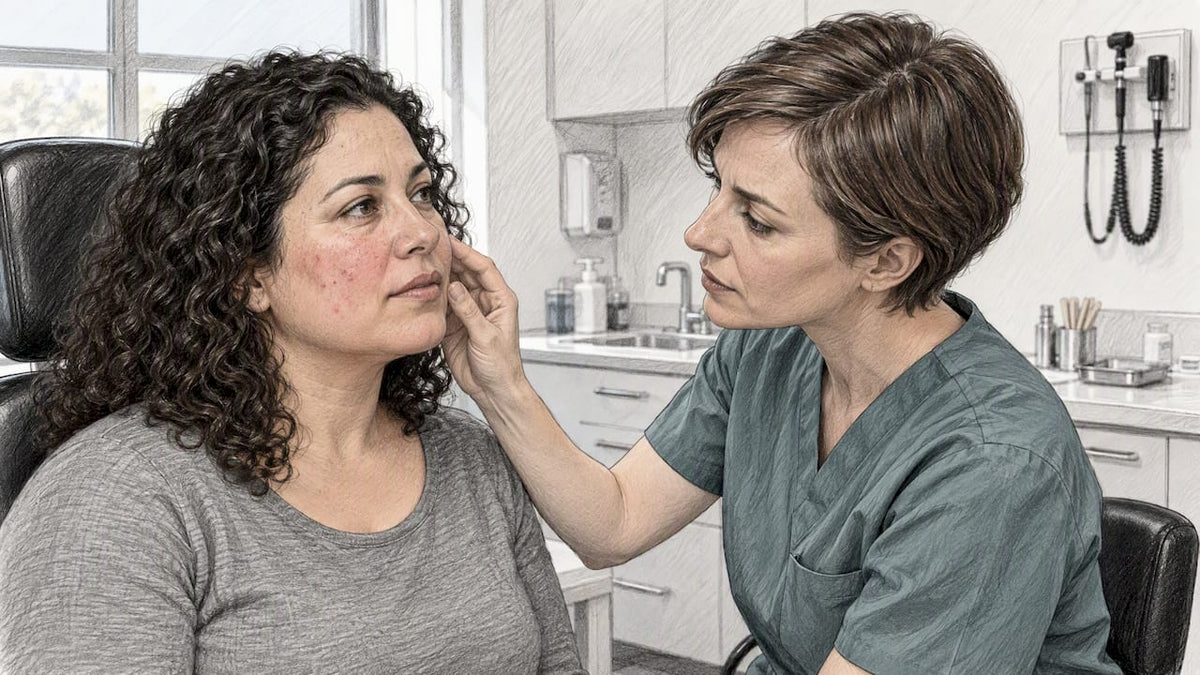
Before a consultation, gather a list of every product used in the past six months, photos taken in consistent lighting over time, and a rough timeline of when pigment changes started. This context lets a clinician distinguish rebound from a new trigger far faster than a single in-person look can. Patience with a staged plan, paired with unwavering sun protection, tends to matter more than any single ingredient.
— Jess
Clinician consultations and supervised treatment options at the M-ethod Skin
If rebound pigmentation has left you unsure what to use or when, a tailored plan removes the guesswork far better than adjusting products alone. Online skin consultations provide access to prescription-strength, clinician-supervised regimens tailored to your skin’s actual response rather than a generic timeline.
A typical consultation covers:
- A full review of your current routine, including any products that may be contributing to irritation or rebound.
- A tailored pulsed protocol, with active and maintenance phases set to your pigment history and phototype.
- Prescription-strength treatment where clinically appropriate, issued under proper supervision.
- Access to in-clinic adjuncts such as some aesthetic treatments where a procedural step is warranted.
You can book an online skin consultation directly, or browse our curated skincare categories for the maintenance products your clinician may recommend between active phases.
This article is general information, not a substitute for advice from a qualified doctor. Consult a qualified healthcare professional about your own circumstances before acting on anything here.
FAQ
How to stop rebound pigmentation from hydroquinone?
Stop any irritating co-products, reinforce daily broad-spectrum and tinted sunscreen use, and switch to a gentler maintenance agent such as azelaic acid or niacinamide while pigment settles. A clinician review helps confirm whether hydroquinone should pause, continue at a lower strength, or restart later under a pulsed schedule.
Does hydroquinone stop working after a while?
Hydroquinone can lose effectiveness or trigger adverse effects with prolonged, unsupervised use, which is why prescription labelling recommends discontinuing it if no improvement appears within 2 to 3 months. Pulsed therapy, with scheduled breaks on maintenance agents, is the standard way to sustain results over time.
Why is hydroquinone banned in Europe?
Regulatory restrictions on over-the-counter hydroquinone in some regions stem from concerns over unsupervised, prolonged use leading to adverse effects such as ochronosis and rebound pigmentation. Where available, hydroquinone is generally reserved for prescription or clinician-supervised use rather than open retail sale.
Is it okay to take a break from hydroquinone?
Yes, scheduled breaks are a core part of safe hydroquinone use. Clinical guidance on pulsed therapy recommends limiting active courses to around four to five months before a 2 to 3 month break on gentler maintenance ingredients.
Sources
- Hydroquinone topical product labelling (DailyMed)
- Taking the pulse of hydroquinone therapy: a plea for caution (Practical Dermatology)
- Detection of hydroquinone by Raman spectroscopy in patients with melasma before and after treatment (PubMed)
- Delphi consensus on melasma management by international experts and Pigmentary Disorders Society