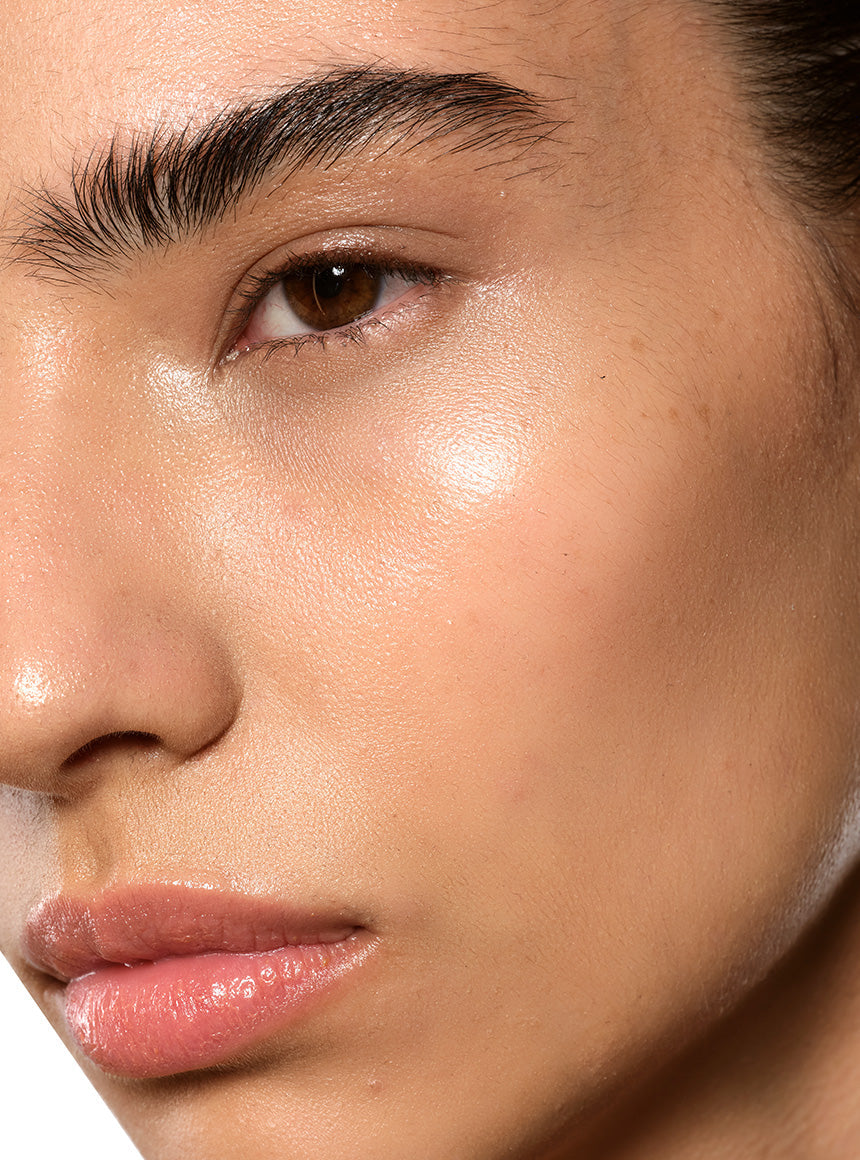




Άρθρο: Best Exfoliants for Congested Pores

Best Exfoliants for Congested Pores
If your skin looks smooth from a distance but feels uneven up close, congested pores are usually the reason. The best exfoliants for congested pores do more than buff away surface dullness - they help loosen the mix of oil, dead skin and debris that becomes trapped inside the pore, often before it turns into a visible breakout.
This is where many routines go wrong. People reach for harsh scrubs, overuse acids, or combine too many active ingredients in the hope of a faster result. Congestion rarely responds well to force. It responds to precision, consistency and the right active for your skin type, tone and barrier status.
What congested pores actually need
Congested pores are not simply a surface issue. They form when sebum, keratin and environmental residue accumulate within the follicle opening. In some skins, that debris oxidises and appears as blackheads. In others, it stays trapped as tiny flesh-coloured bumps, rough texture or persistent under-the-skin congestion around the chin, nose and forehead.
That matters because the most effective exfoliant depends on where the problem sits. If congestion is oil-led and sitting inside the pore, a lipid-soluble exfoliant will usually outperform a grainy face polish. If the skin is dry, dull and compacted at the surface, a gentle acid or enzyme may be enough to restore clarity without triggering irritation.
The goal is not to exfoliate as much as possible. The goal is to normalise cell turnover, reduce blockage and maintain a calm, functioning barrier.
Best exfoliants for congested pores by ingredient type
Salicylic acid for oily and breakout-prone congestion
If there is one ingredient most consistently associated with clogged pores, it is salicylic acid. As a beta hydroxy acid, it is oil-soluble, which means it can move into the pore lining and help dissolve the material contributing to congestion. That makes it especially effective for blackheads, enlarged-looking pores and skin that feels slick by midday.
Well-formulated salicylic acid can also reduce the look of inflammation around breakouts, which is why it remains a cornerstone in clinically proven acne routines. The trade-off is tolerance. Used too often, especially in high strengths or alongside retinoids, it can leave skin tight, flaky or reactive.
For most people, two to four evenings a week is enough to see improvement. More is not necessarily better.
Mandelic acid for deeper skin tones and sensitive congestion
Mandelic acid deserves more attention than it gets. Its larger molecular size means it penetrates more slowly than glycolic acid, making it a strong choice for sensitive skin, mixed skin, and patients concerned about post-inflammatory hyperpigmentation.
This is particularly relevant for deeper skin tones, where aggressive exfoliation can create as many problems as it solves. Mandelic acid offers a more measured route to refining texture and reducing pore blockage, while being less likely to provoke visible irritation.
It is not always the fastest option, but it is often one of the smartest.
Lactic acid for dry, congested skin
Not all congestion happens in oily skin. Dry or dehydrated complexions can also develop blocked pores, especially when dead skin cells are not shedding efficiently. Lactic acid is useful here because it exfoliates while supporting hydration, leaving skin clearer without that stripped, over-processed feel.
If your skin is dull, rough and prone to congestion rather than overtly greasy, lactic acid can be a more elegant choice than salicylic acid. It tends to pair well with moisturising routines and is often better tolerated during colder months, when barrier stress is more common.
Glycolic acid for stubborn surface build-up
Glycolic acid is powerful, but it is not universally appropriate. Because it has a small molecular size, it penetrates efficiently and can improve rough texture, uneven tone and lingering congestion at the skin’s surface. It can be excellent for resilient skin that has become thickened, lacklustre or chronically rough.
However, faster penetration also means a higher chance of irritation. For reactive skin, rosacea-prone skin or anyone already using prescription-strength actives, glycolic acid may be too much. In those cases, a gentler acid often delivers a better long-term result.
Polyhydroxy acids for compromised barriers
When pores are congested but the skin barrier is already fragile, polyhydroxy acids such as gluconolactone can be a useful compromise. They exfoliate more gently, attract water, and are generally better tolerated by sensitised skin.
You would not usually choose a PHA if significant blackheads are your main concern. But if your skin is dehydrated, easily flushed or struggling after overuse of active ingredients, it can help restore smoothness without escalating inflammation.
Retinoids for chronic congestion and sluggish turnover
Strictly speaking, retinoids are not classic exfoliants. But for persistent congestion, they are often among the most effective options available. They work by increasing cell turnover and helping prevent the dead skin build-up that contributes to clogged pores in the first place.
This makes them particularly valuable for adults dealing with both congestion and early signs of ageing. If your skin concern is not just blocked pores but also uneven tone, post-acne marks and fine lines, a retinoid can address multiple issues at once.
The caution is familiar but important: retinoids require gradual introduction, barrier support and daily SPF. Used carelessly, they can destabilise the skin enough to worsen irritation and rebound congestion.
How to choose the best exfoliant for congested pores
The best choice depends less on trend and more on diagnosis. Oily, blackhead-prone skin usually responds best to salicylic acid. Dry but congested skin often does better with lactic acid. Sensitive or melanin-rich skin may benefit from mandelic acid. Chronic, recurrent congestion with signs of ageing may call for a retinoid-led approach.
Texture also matters. Leave-on formulas usually outperform wash-off exfoliants because they have longer contact time with the skin. Pads, serums and treatment lotions can be highly effective when well balanced, while abrasive scrubs tend to offer immediate smoothness without meaningfully clearing the pore.
This is also where quality matters. In premium skincare, formulation is not a detail - it is the difference between an active ingredient that performs and one that simply irritates. The right vehicle, pH and supporting ingredients all affect results.
What not to do when pores are congested
Over-exfoliation is one of the most common reasons congestion becomes harder to manage. Skin that is repeatedly stripped can produce more oil, develop micro-inflammation and become less tolerant of the very actives meant to improve it.
Be especially careful with combinations. A salicylic acid cleanser, acid toner, retinoid and exfoliating mask in the same routine may sound thorough, but for most skins it is excessive. Congestion improves through rhythm, not aggression.
Physical scrubs are another common misstep. A finely milled polish can have a place in some routines, but gritty exfoliants are rarely the best answer for blocked pores, especially if breakouts or sensitivity are already present. They polish the surface while leaving the actual blockage largely untouched.
Building a routine around exfoliation
Exfoliation works best when the rest of the routine supports it. A gentle cleanser, a well-chosen treatment step, a non-comedogenic moisturiser and broad-spectrum SPF are the essentials. Without that support, even the best exfoliant can leave skin vulnerable rather than clear.
A useful starting point is to exfoliate two or three nights per week and assess the skin after a fortnight. If texture is improving and irritation is absent, frequency can sometimes be increased. If the skin becomes shiny, tight or unexpectedly spotty, that is often a sign to scale back rather than push forward.
Professional guidance is worth considering if congestion is persistent, if breakouts are inflammatory, or if pigmentation is part of the picture. This is particularly true for those investing in physician-dispensed skincare, where product strength and regimen design need to work together. At The M-ethod Aesthetics, this is where curation matters - not just choosing a good formula, but choosing the right one for the skin in front of you.
Best exfoliants for congested pores are rarely one-size-fits-all
The most effective exfoliant is not always the strongest, nor the one with the highest percentage on the label. It is the one your skin can use consistently enough to keep pores clear without compromising barrier health.
For some, that will be salicylic acid used with restraint. For others, it will be mandelic acid, lactic acid or a carefully introduced retinoid. Better skin usually comes from a more intelligent routine, not a harsher one. If your pores are congested, treat the cause with precision and your skin will look more refined, calmer and visibly clearer over time.
Clearer pores are rarely the result of a single heroic product. They come from choosing actives with intent, respecting your skin’s limits and giving a well-built routine enough time to do its work.