



Article: Melasma in Pregnancy: Safe Treatments and What to Avoid
Melasma in Pregnancy: Safe Treatments and What to Avoid
The safest melasma care in pregnancy is simple: strict daily sun protection, with azelaic acid as the main active ingredient if you want to treat the patches. Hydroquinone, retinoids such as tretinoin, and oral tranexamic acid should wait until after pregnancy. Most pregnancy melasma fades on its own after birth, so the aim now is to stop it deepening, not to clear it completely.
Below, we explain why melasma appears in pregnancy, what is considered safe, what to avoid, and how to plan treatment once your baby arrives.
TL;DR
- Melasma affects up to 75% of pregnant patients, driven by hormones and extra melanin, and it is not a sign that anything is wrong with you or your baby.
- Daily broad-spectrum sunscreen, ideally tinted with iron oxide, is the most effective prevention and the foundation of any routine.
- Azelaic acid is the topical most often named as a safe active in pregnancy. Glycolic acid peels are also described as safe by the Merck Manual.
- Avoid hydroquinone, tretinoin and other retinoids, oral tranexamic acid and trichloroacetic acid peels until you have finished pregnancy and, where relevant, breastfeeding.
- Melasma resolves after delivery in around 90% of cases, but some patches persist. A dermatologist can build a postpartum plan.
Table of Contents
- Why pregnancy triggers melasma
- Do you need to treat it during pregnancy?
- Sun protection: the step that matters most
- Topical treatments considered safe in pregnancy
- What to avoid until after pregnancy
- Will pregnancy melasma go away?
- After birth: planning your next steps
- Our perspective
- Get personal advice from home
- When to see a doctor
- FAQ
- Sources
Why pregnancy triggers melasma
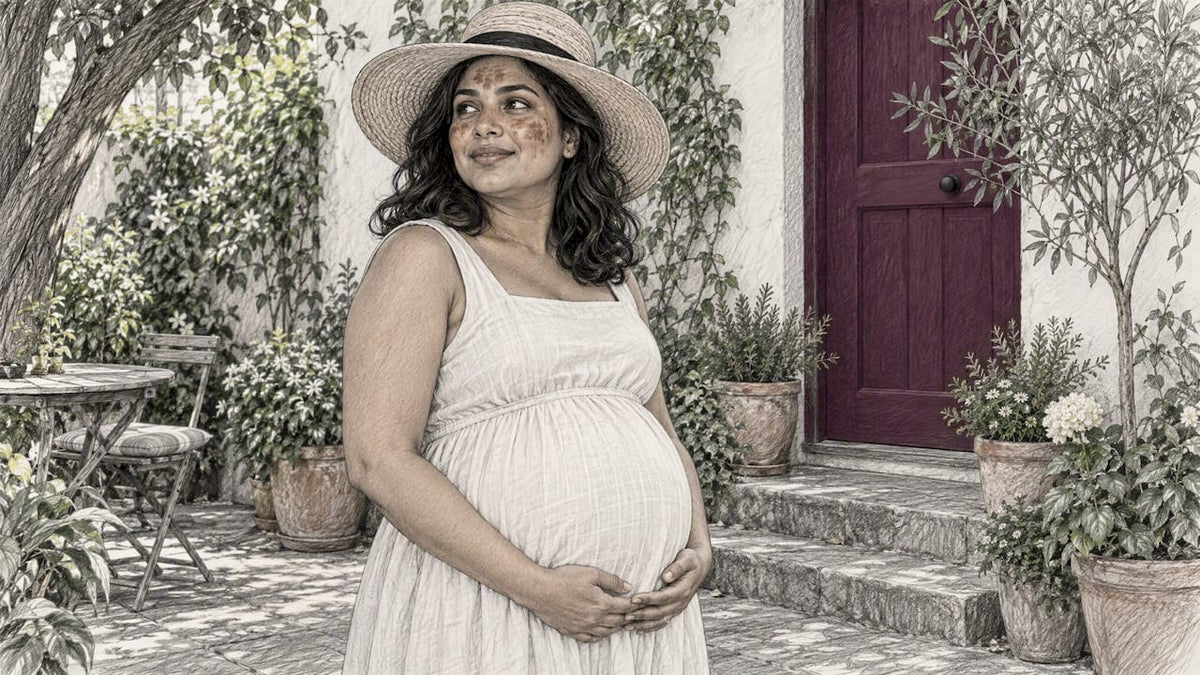
Melasma is an irregular darkening of the central face, and the American Academy of Family Physicians reports it in up to 75% of pregnant patients. It typically shows as tan or brown patches on the cheeks, forehead, upper lip and nose. Many people call it the mask of pregnancy.
The mechanism is an increase in the body’s melanin. ACOG explains that dark spots and patches in pregnancy come from this melanin increase. The American Academy of Dermatology adds that rising hormone levels are believed to trigger melasma in some people, that sunlight and some medications can set it off, and that having a blood relative with melasma raises your risk.
In practice, three things stack up:
- Hormones. Pregnancy changes the signals that tell pigment cells how much melanin to make.
- Light. Ultraviolet light is the best-known trigger, and visible light matters too, which is why the type of sunscreen counts.
- Heritage. A mother, sister or aunt with melasma makes it more likely you will develop it.
If you want a deeper look at triggers beyond pregnancy, our guide to melasma triggers and control covers heat, medication and hormonal factors.
Do you need to treat it during pregnancy?
Often the honest answer is: gently, or not at all. A review in the academic literature notes that, following the principle of “cause no harm”, treatment of melasma is not recommended during pregnancy in most cases. The reasoning is practical. Many of the most effective melasma treatments have no safety data in pregnancy, and a large share of cases improve after delivery anyway.
That does not mean you have to watch the patches darken. A short, pregnancy-safe routine can limit new pigment and take the edge off existing patches. The rest of this guide separates what is reasonable from what should wait.
Sun protection: the step that matters most
If you do only one thing, do this. The 2024 review in the academic literature identifies photoprotection as the most important and effective measure to prevent melasma in early pregnancy: sunscreen, hats, shade and avoiding peak sun. The same review cites a study showing that consistent broad-spectrum sunscreen from the first trimester could cut pregnancy-related melasma by more than 90%.
Choose the right sunscreen
- Physical (mineral) filters. The review recommends a broad-spectrum physical sunscreen with a high SPF.
- Tint. A tinted sunscreen containing iron oxide and titanium dioxide protects against both UV and visible light, which plain white sunscreens do not.
- SPF 50 or higher. The Merck Manual advises SPF 50 or higher and UPF 50 clothing for best results.
- Reapplication. Apply generously every morning and top up if you are outdoors for long. Even a few hours of sun can bring pigment back in treated areas, according to the same Merck guidance.
We go further into why tint matters in our article on melasma versus hyperpigmentation and tinted SPF50.
Other habits that help
Wear a wide-brimmed hat, sit in shade, and avoid the middle of the day. Heat is an often-overlooked trigger, so hot yoga, saunas and very hot baths are worth limiting (the last is also general pregnancy advice, so check with your obstetric clinician). Be consistent: one day of lapses can undo weeks of effort.
Topical treatments considered safe in pregnancy
Azelaic acid
Azelaic acid is the standout. Harvard Health describes it as a safe choice during pregnancy, and the Merck Manual also lists azelaic acid cream as a safe option for melasma in pregnancy. It is anti-inflammatory and helps even out melanin production, which makes it suitable for both melasma and the breakouts some people get while pregnant.
Two practical points:
- Start slowly. Use it once daily for the first week or two, then move to twice daily if your skin tolerates it. Mild tingling is common at first.
- Be patient. Visible change usually takes weeks to months, and it will not erase deep, long-standing pigment.
We have written a dedicated explainer on azelaic acid in pregnancy, including absorption and clinical guidance if you want the detail.
Glycolic acid peels
The Merck Manual states that chemical peels using glycolic acid are considered a safe procedure for treating melasma in pregnancy. Because pregnant skin can be more reactive and prone to post-inflammatory darkening, we would only suggest a superficial peel, given by a clinician who knows you are pregnant, and never a strong one. Over-treating melasma can make it worse.
Gentle supporting ingredients
Many pregnancy routines also include niacinamide and a simple, fragrance-free moisturiser to protect the skin barrier. These sit alongside sunscreen and azelaic acid rather than replacing them. Our guides to clinician-approved pregnancy skincare and pregnancy-safe pigmentation skincare show how to layer them.
What to avoid until after pregnancy
An academic review of melasma treatment advises that pregnant people avoid hydroquinone, retinoids such as tretinoin, and oral medications like tranexamic acid. The Merck Manual also does not consider trichloroacetic acid peels safe in pregnancy.
| Treatment | During pregnancy | Notes |
|---|---|---|
| Broad-spectrum tinted SPF 50 | Recommended | Foundation of every plan |
| Azelaic acid | Considered safe | Introduce gradually |
| Glycolic acid superficial peel | Considered safe by the Merck Manual | Light peel, by a clinician who knows you are pregnant |
| Hydroquinone | Avoid | Resume only on medical advice after pregnancy |
| Tretinoin and other retinoids | Avoid | Applies to prescription and many over-the-counter products |
| Oral tranexamic acid | Avoid | Prescription medicine |
| Trichloroacetic acid peels | Avoid | Not considered safe in pregnancy |
We would add one caution on devices and injectables. Treatments such as microneedling, HIFU and injectables are not melasma treatments for pregnancy, and we do not offer them to pregnant patients. Aggressive lasers and energy devices can also provoke rebound pigment in melasma-prone skin. If someone offers you a quick fix while you are pregnant, ask what the evidence is.
Labels are tricky too. Some “brightening” products hide retinoids or similar actives under unfamiliar names. Check ingredient lists, and bring anything you are unsure about to your obstetric clinician or dermatologist.
Will pregnancy melasma go away?
Usually, yes, at least in part. The AFP review reports that melasma resolves after delivery in about 90% of cases, though it can return with future pregnancies or with oral contraceptives. ACOG says these dark spots usually fade on their own after birth but may last for years.
The longer-term picture is less tidy. The 2024 review notes that pregnancy melasma may regress within a year of delivery, but up to 30% of cases persist even after 10 years, and recurrence is common in later pregnancies. A Latin American consensus describes melasma as a chronic, often treatment-resistant condition that calls for long-term relapse management rather than a one-off cure. That is why daily sunscreen remains a habit for life, not a phase.

After birth: planning your next steps
Once pregnancy is over, the options widen. The AFP review lists topical tretinoin, hydroquinone and corticosteroids among postpartum treatments. Do not rush back to them, though. If you are breastfeeding, ask your clinician what is appropriate for you, and give your hormones a few months to settle, as some patches fade without any active treatment.
A sensible sequence looks like this:
- Keep up tinted SPF 50 and azelaic acid.
- Wait and watch for several months to see how much fades naturally.
- If pigment remains, book a skin assessment to discuss prescription options and in-clinic care.
- Maintain results with sun protection, because relapse is common.
New parents often have little time for appointments, so practical support helps. This guide to postpartum beauty care at home looks at how to ease back into skincare and which treatments can resume after delivery. For a full picture of what we do for stubborn pigment, read our BRIGHT SKY protocol for pigmentation and melasma and our guide to the best skincare for melasma.
Our perspective

We see the same pattern again and again. Expectant mothers arrive worried that they have damaged their skin, and are tempted by internet advice to try everything at once. Our view is calmer. In pregnancy, the best melasma plan is the smallest effective one: a tinted SPF 50 you actually enjoy wearing, azelaic acid if your clinician is happy, and a gentle routine around them. Nothing more is usually needed.
We also believe the postpartum phase deserves as much planning as pregnancy. That is when prescription-strength care, such as tretinoin or hydroquinone under clinical supervision, can be introduced safely and in the right order. Done well, it avoids irritation and the rebound pigment that comes from rushing. As a UK-based Obagi Ambassador Clinic with a UK-trained doctor, we favour a personal assessment over a generic product list, because melasma differs from person to person and so does the history behind it.
— Jess
Get personal advice from home
If you would like a routine built around your skin, pregnancy stage and any breastfeeding plans, our online skin consultation with Dr Mandy is available internationally, so you can speak to a UK-trained doctor from the US. You can also browse our medical-grade serums, sunscreens and moisturisers to find products suited to pregnancy and beyond. When you are ready for in-clinic care after birth, our London and Athens clinic treatments are listed on our clinic collection page.
When to see a doctor
Melasma itself is harmless, but see a clinician if:
- The patches are rapidly changing in colour, border or texture, are raised, bleeding or painful. These need examination, as they may not be melasma.
- You are unsure whether a product is safe in pregnancy. Ask your obstetric clinician before you use it.
- Your melasma has not improved well after delivery. ACOG advises talking to a dermatologist about treatment if it does not go away.
FAQ
Is azelaic acid really safe during pregnancy?
Harvard Health and the Merck Manual both describe azelaic acid cream as a safe option for melasma in pregnancy. Evidence is still limited compared with long-established medicines, so tell your obstetric clinician or dermatologist what you are using. Start gradually and stop if you develop significant irritation.
Can I use vitamin C or niacinamide while pregnant?
Both are widely used in pregnancy routines and are generally considered gentle, but we have not relied on a formal guideline for them here. Introduce one new product at a time and check with your clinician. Neither replaces daily sunscreen, which has the strongest evidence.
Can pregnancy melasma go away on its own?
Often it does. Around 90% of cases resolve after delivery, according to the AFP review, although some persist for years and it can return in later pregnancies. Sun protection is the best way to help it fade and to stop it coming back.
Can I have laser treatment or a peel for melasma while pregnant?
A superficial glycolic acid peel is described as safe by the Merck Manual, but trichloroacetic acid peels are not. Most clinicians prefer to postpone lasers and energy devices, as melasma can worsen with heat and inflammation. Wait until after pregnancy and discuss a plan with a dermatologist.
Sources
- Skin Conditions During Pregnancy, ACOG
- Melasma: Causes, American Academy of Dermatology
- Common Skin Conditions During Pregnancy, American Family Physician
- Melasma: What are the best treatments? Harvard Health
- Prevention of Melasma During Pregnancy: Risk Factors and Prevention, PMC
- Melasma, Merck Manual Consumer Version
- Update on Melasma, Part II: Treatment, PMC
- Latin American consensus on the treatment of melasma, PMC