



Cosmeceutical skincare: evidence, benefits, and how to choose
TL;DR:
- The term “cosmeceutical” describes products between cosmetics and drugs, often lacking regulatory clarity and scientific backing. Many claims about these products are marketing-driven, with effectiveness depending on ingredient concentration, stability, and clinical evidence. Consumers should prioritize transparency, robust studies, and professional guidance rather than branding or price when choosing skincare.
The word “cosmeceutical” appears on everything from serums to cleansers, yet most consumers genuinely do not know what it means in a regulatory sense. It sits somewhere between cosmetics and pharmaceuticals, at least in marketing terms, and it carries an implicit promise of clinical-grade results. That promise is worth scrutinising. Understanding what this category actually is, how active ingredients are tested, and what distinguishes evidence-backed formulations from premium branding will fundamentally change how you shop for skincare targeting concerns like ageing, pigmentation, and acne.
Table of Contents
- What does ‘cosmeceutical’ really mean?
- How cosmeceutical actives work on skin concerns
- How strong is the clinical evidence behind cosmeceuticals?
- Navigating the blurred line: premium branding vs proven benefit
- How to choose a cosmeceutical product that works for you
- Why understanding cosmeceutical evidence matters more than ever
- Explore evidence-based skincare for your unique needs
- Frequently asked questions
Key Takeaways
| Point | Details |
|---|---|
| Cosmeceutical is not regulated | The term cosmeceutical is a marketing label without a unique regulatory category in the UK or US. |
| Clinical evidence varies widely | Some cosmeceutical actives are supported by strong trials, while others rely on marketing more than science. |
| Premium pricing isn’t proof | Expensive cosmeceutical products may not have better results than mid-range options with stronger clinical evidence. |
| Choose by evidence and needs | Prioritise products with clear ingredients, concentration, proven clinical outcomes, and relevance to your skin goals. |
What does ‘cosmeceutical’ really mean?
The term “cosmeceutical” was coined by dermatologist Dr Albert Kligman in the 1980s to describe products that sit between a cosmetic and a drug. The idea was that certain topical products deliver physiological changes beyond surface-level beautification, yet stop short of the clinical threshold required to be classified as a medicine. It sounds logical. In practice, though, it creates significant consumer confusion.
Here is the regulatory reality: cosmeceutical is not FDA-recognised as a regulatory category in the US. Products are either cosmetics or drugs, depending on their intended use and the claims made about them. The same principle applies under UK and EU cosmetics law. A product that claims to “moisturise skin” is a cosmetic. A product that claims to “treat acne” or “stimulate collagen production” edges into drug territory, requiring a much higher level of safety and efficacy evidence.
The result is a grey zone where formulators and brands use the word “cosmeceutical” freely as a marketing label, without any formal potency guarantee attached to it.
Common claims you will find on cosmeceutical-labelled products include:
- “Reduces the appearance of fine lines and wrinkles”
- “Visibly fades dark spots and uneven skin tone”
- “Supports natural collagen synthesis”
- “Minimises pores and reduces acne-causing bacteria”
- “Improves skin texture and radiance over time”
| Category | Typical claims | Evidence required | Regulatory status |
|---|---|---|---|
| Cosmetic | Moisturises, cleanses, perfumes | Safety only | Regulated (cosmetics law) |
| Cosmeceutical | Anti-ageing, pigment reduction, acne support | Variable, often brand-funded | Not a legal category |
| Drug/medicine | Treats, cures, prevents disease | Rigorous clinical trials | Strictly regulated |
Worth noting: The same ingredient can sit in completely different regulatory categories depending on the claim made about it. Niacinamide sold as a “brightening moisturiser” is a cosmetic. If labelled as a treatment that reduces acne lesions, it may be scrutinised as a drug. The ingredient has not changed. Only the marketing has.
How cosmeceutical actives work on skin concerns
Now that you know what distinguishes a cosmeceutical in name, let us look closely at how key active ingredients actually interact with your skin. The science here is genuinely compelling, but the details matter.
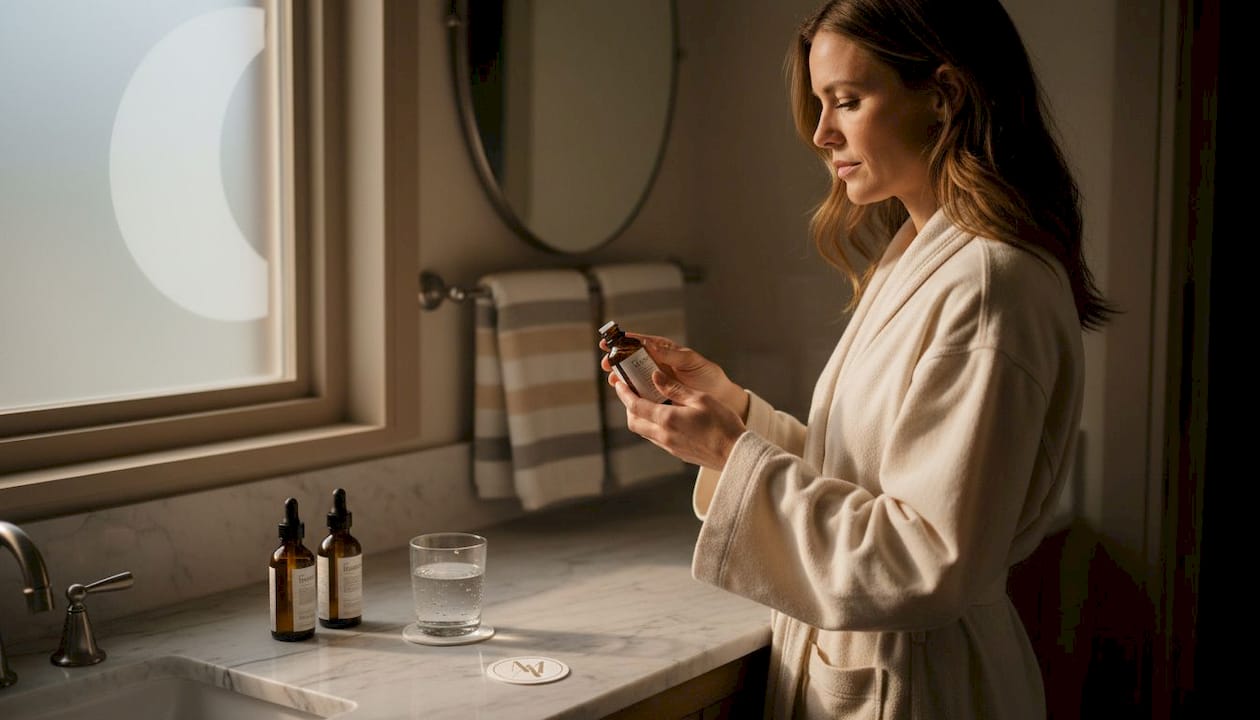
Most cosmeceutical-style actives work by targeting specific biological pathways in the skin. For pigmentation concerns, topicals primarily work by targeting tyrosinase inhibition and disrupting melanosome transfer from melanocytes to surrounding keratinocytes. Interrupting one or more steps in this melanin production cascade is how ingredients like kojic acid, arbutin, azelaic acid, vitamin C, and niacinamide reduce the appearance of hyperpigmentation.
The three concerns cosmeceutical products most commonly address are:
- Pigmentation: Ingredients such as kojic acid, arbutin, and tranexamic acid inhibit melanin synthesis. Vitamin C (ascorbic acid) also acts as an antioxidant that quenches free radicals responsible for UV-induced pigmentation. Niacinamide works downstream, blocking the transfer of melanosomes to skin cells.
- Ageing: Retinoids (vitamin A derivatives) remain the gold standard, increasing cellular turnover, stimulating fibroblast activity, and boosting collagen production. Peptides and growth factors aim to signal skin cells to behave more youthfully, though evidence varies considerably by specific molecule.
- Acne: Azelaic acid offers dual benefit, inhibiting the proliferation of Cutibacterium acnes while simultaneously reducing post-inflammatory pigmentation. Salicylic acid (a beta-hydroxy acid) clears pore congestion and has anti-inflammatory properties. Niacinamide reduces sebum production and calms visible redness.
| Active ingredient | Purported action | Clinical support level | Primary concern |
|---|---|---|---|
| Retinoids | Collagen stimulation, cell turnover | Strong | Ageing |
| Vitamin C (L-ascorbic acid) | Antioxidant, tyrosinase inhibition | Moderate to strong | Pigmentation, ageing |
| Niacinamide | Melanosome transfer inhibition, sebum regulation | Moderate | Pigmentation, acne |
| Kojic acid | Tyrosinase inhibition | Moderate | Pigmentation |
| Azelaic acid | Antimicrobial, anti-inflammatory | Moderate to strong | Acne, pigmentation |
| AHAs (glycolic, lactic) | Exfoliation, collagen support | Moderate | Ageing, texture |
Delivery systems are just as critical as the ingredient itself. An unstable vitamin C formulation will oxidise before it reaches the deeper layers where it does its best work. Encapsulated retinol, liposomal delivery, and time-released systems are all attempts to improve bioavailability and tolerability. This is one reason dermatologist approved skincare often performs noticeably better than its high-street counterparts, even when the ingredient list appears similar.
Pro Tip: Do not be swayed by an impressive ingredient list alone. Concentration, formulation stability, and delivery technology determine real-world outcomes. A 0.1% vitamin C serum will not perform like a well-formulated 15% L-ascorbic acid product, regardless of how similar they sound on paper.
How strong is the clinical evidence behind cosmeceuticals?
Even when ingredients and mechanisms sound convincing, not every cosmeceutical on the shelf is created equal. Evaluating the evidence behind a product requires more than reading a brand’s website.
Study quality varies considerably across the cosmeceutical space. Some actives have been tested in well-designed randomised controlled trials (RCTs) with validated outcome measures. Others rely on small open-label studies, subjective patient assessments, or in vitro (lab dish) data that does not necessarily translate to real skin outcomes.
A strong clinical study for skincare typically includes:
- Randomisation: Participants are randomly assigned to active treatment or control groups
- Blinding: Neither the participant nor the assessor knows who received the active product
- Vehicle control: The comparison group uses the base formula without the active ingredient
- Validated outcome measures: Pigmentation scores, standardised photography, or instrumental measurements rather than subjective “looks better”
- Adequate duration and sample size: Twelve weeks or more, with enough participants to draw statistical conclusions
One vivid example of strong evidence comes from thiamidol, a relatively new depigmenting agent. In clinical testing, thiamidol achieved a 36.1% reduction in mMASI (modified Melasma Area and Severity Index) versus 16.1% for the vehicle control at twelve weeks. That is a clinically meaningful and statistically robust result. It is also the kind of data that is rare to find for most cosmeceutical ingredients.
Consumers should prioritise products where clear ingredient concentrations are stated, clinical studies are referenced with accessible methodology, and outcomes are measured using objective tools. This standard is not met by the majority of products described as “cosmeceutical” on the market today.
Pro Tip: Ordinary pigmentation spots such as freckles and solar lentigines may respond less dramatically to cosmeceutical actives than melasma does, because their underlying biology differs. Managing expectations based on your specific concern and skin type is important, and professional advice helps enormously here. Reviewing the broader landscape of skincare trends for 2026 also highlights how evidence standards are rising, which is good news for consumers.
It is also worth checking pregnancy-friendly actives evidence if your circumstances require reformulating your routine, since safety profiles differ across active classes.
Navigating the blurred line: premium branding vs proven benefit
Bringing together what we know about evidence and actives, the next step is developing the practical skills to choose genuinely effective cosmeceutical skincare in a market crowded with bold claims.
Luxury branding is not always synonymous with superior evidence. Premium positioning does not equal proven efficacy, and many trials supporting premium products are short, small, or only compared against placebo rather than the market’s leading actives. A beautifully packaged product with an exotic extract and a high price point may deliver far less than a clinical-grade formulation with established ingredients.
The actives with the most robust clinical backing for ageing and pigmentation include retinoids, vitamin C (as L-ascorbic acid), and alpha-hydroxy acids (AHAs) such as glycolic acid. These have decades of peer-reviewed research behind them. Newer bioactives, including certain peptides, plant stem cells, and exotic ferments, may show promise but often lack the weight of evidence that these established ingredients carry.
What should savvy consumers look for when evaluating products?
- Stated ingredient concentration: If the percentage is hidden or vague, that is a red flag
- Referenced clinical studies: Not just “clinically tested” (which means almost nothing) but actual study citations
- Formulation transparency: Stable, well-tolerated base formulas that support the active ingredient
- Regulatory clarity: Understanding whether the product is sold as a cosmetic or a medicinal product
- Realistic outcome language: Claims aligned with what the evidence supports, not “reverses ageing”
- Independent versus brand-funded data: Third-party research carries more credibility
Because the same ingredient can be regulated differently based solely on how its claims are framed, the label itself tells you less than you might assume. Context, transparency, and honest evidence communication are the real markers of a trustworthy product.
Pro Tip: Ignore the price tag as your primary quality indicator. Spend your time researching the evidence behind the specific active ingredients, not the visual language or influencer endorsement attached to the packaging.
How to choose a cosmeceutical product that works for you
With insight into what sets proven cosmeceuticals apart, you now have the tools to make this knowledge actionable when evaluating your next purchase.
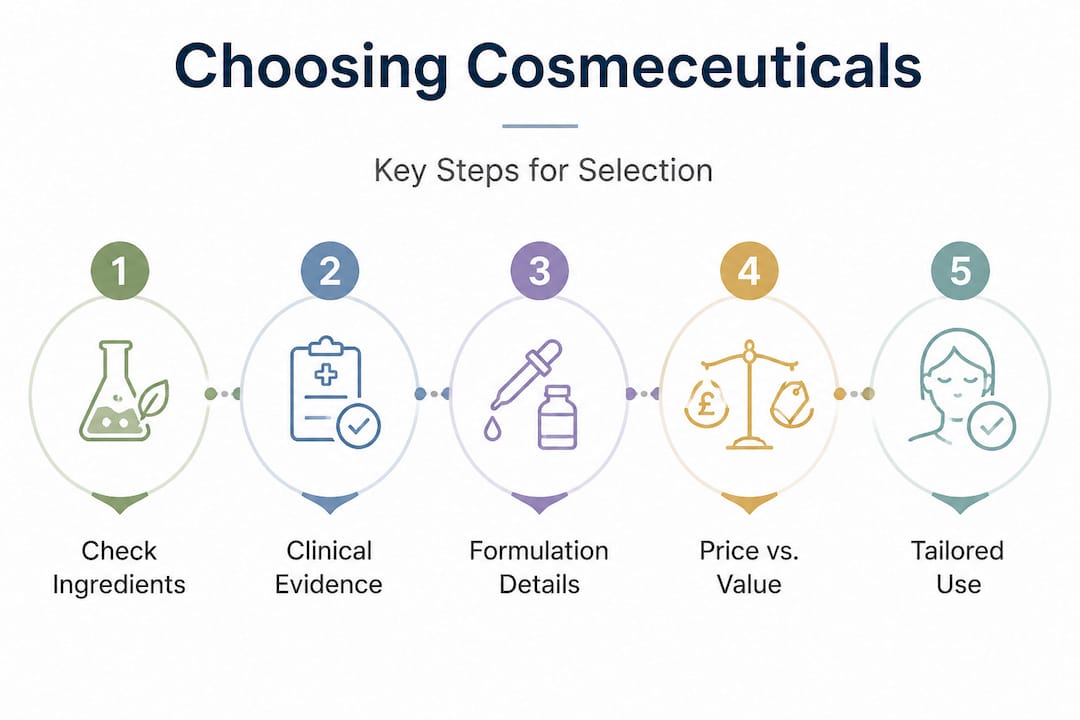
Follow this checklist before committing to any cosmeceutical product:
- Identify your primary concern clearly. Ageing, pigmentation, and acne each require different actives. Multi-claim products often dilute efficacy.
- Research the key active ingredient. Search for peer-reviewed clinical studies, not just brand-published white papers. Note how the study was designed.
- Check the concentration. For vitamin C, effective concentrations typically start at 10%. For retinol, clinical benefits are seen from 0.3% upwards. Anything significantly lower may not deliver results.
- Assess the delivery system. Is the active encapsulated, time-released, or in a stable base? For sensitive skin, gentler delivery can improve tolerability without sacrificing results.
- Review tolerability data. Some actives (especially AHAs and retinoids) require careful introduction. Look for guidance on frequency, sun protection requirements, and layering compatibility.
- Consider your skin type and lifestyle. Evidence for cosmeceutical actives on non-clinical populations can be less dramatic than trial data suggests, particularly where sun exposure, stress, and diet play roles.
- Seek professional input. A virtual or in-person consultation with a trained clinician connects evidence with your individual skin profile in a way that no product page can replicate.
For acne and ageing-related concerns in particular, it is important to note that cosmeceutical concepts rely on multi-target actives but evidence and bioavailability can be limiting for certain ingredients, especially newer ones that have not yet accumulated robust independent clinical data. Keeping pace with 2026 skincare trends also means staying alert to which emerging actives are accumulating genuine evidence versus riding a wave of social media enthusiasm.
Why understanding cosmeceutical evidence matters more than ever
We see it constantly: consumers investing significantly in skincare and not getting the results they hoped for, not because the category is ineffective, but because they were guided by packaging, price, and promise rather than evidence. That gap is not incidental. It is partly structural, because the regulatory language around cosmeceuticals allows ambitious claims to coexist with modest (or absent) evidence.
Our perspective, grounded in years of working with clinicians and evidence-focused brands, is that the single most empowering shift a skincare consumer can make is moving from passive trust to active inquiry. Ask where the study was published. Ask what concentration was tested. Ask whether the trial was vehicle-controlled. These are not unreasonable questions. They are the questions that separate genuinely effective skincare from expensive moisturiser.
True innovation in skincare does not always appear in the most expensive or visually striking products. It lives at the intersection of clinical rigour, formulator transparency, and honest communication about what an ingredient can realistically do. The brands and practitioners leading the charge in 2026 are the ones willing to show their working, not just their results photography.
We also believe the market is shifting in a positive direction. Evidence-focused consumers are demanding more, and some premium brands are rising to meet that standard. Following an expert-approved ingredient guide is a practical starting point for anyone who wants to shortcut the confusion and focus on what is genuinely proven. Influencer culture and aspirational branding will always exist. But the most consistent skin improvements we see come from those who prioritise clinical evidence and professional personalisation over aesthetic appeal.
Explore evidence-based skincare for your unique needs
At The M-ethod Skin, every product in our curated edit is selected because it meets a clinical standard, not just a luxury one. For acne-prone skin, PCA Clearskin serum offers a multi-active approach combining ingredient transparency with proven tolerability. Those focused on ageing will find PCA Retinol Night a well-formulated introduction to pure retinol with a stabilised delivery system. For comprehensive clinical-grade skincare across concerns, the NEOSTRATA collection brings decades of AHA research into modern formulations. Browse these with the evidence lens this guide has given you.
Frequently asked questions
Are cosmeceuticals regulated differently from regular cosmetics in the UK?
No. “Cosmeceutical” is a marketing term and products are regulated as either cosmetics or medicines based on their intended use and claims. There is no recognised cosmeceutical category in UK or US law.
Does a higher price guarantee better results from a cosmeceutical product?
No. Premium positioning is not the same as proven efficacy, and many trials supporting premium products are short or small. Clinical evidence and ingredient transparency are more reliable indicators of performance than price.
Which cosmeceutical ingredients have the strongest scientific backing?
Retinoids, vitamin C, and AHAs generally hold the most robust clinical support for ageing and pigmentation. Evidence varies significantly by ingredient class, with newer bioactives often lacking the depth of peer-reviewed data these established actives have accumulated.
Can cosmeceutical actives effectively treat acne?
Many are formulated for acne, including azelaic acid, salicylic acid, and niacinamide, but evidence strength varies widely by ingredient, concentration, and study design. Professional guidance helps match the right active to your specific acne type.
How can I tell if a cosmeceutical product is genuinely effective?
Look for products with clearly stated ingredient concentrations, referenced clinical studies, and objective outcome measures. Prioritise clinical evidence and study quality over brand claims, and consider a consultation with a dermatologist or trained clinician.