





Advanced skincare technology: innovations for visible results
TL;DR:
- Advanced skincare combines evidence-based devices and actives overseen by clinicians for structural skin improvement.
- Device modalities like radiofrequency, laser, and microneedling target collagen, laxity, and scarring over weeks to months.
- True clinical results require personalized protocols, medical guidance, and consistent treatment, not just product use.
The gap between what most skincare promises and what it actually delivers has never been wider. Shelves are filled with products making bold claims, yet for those dealing with persistent pigmentation, deep-set scarring, or significant laxity, standard formulations rarely move the needle. Advanced skincare technology changes this equation entirely. It brings together evidence-based devices, prescription-strength actives, and regenerative treatments that are backed by clinical data and guided by expert practitioners. This article breaks down the technologies that genuinely matter, what the science says, and how you can access clinical-level results safely.
Table of Contents
- Defining advanced skincare technology
- The leading device-based technologies
- Regenerative advances: polynucleotides, hyaluronic acid and more
- Prescription-strength actives for clinical change
- Personalisation, nanotechnology and the future
- A critical perspective: what most “advanced” skincare misses
- Discover clinically proven solutions at The M-ethod
- Frequently asked questions
Key Takeaways
| Point | Details |
|---|---|
| Evidence-based transformation | True advanced skincare involves devices and actives with proven clinical results, not just over-the-counter creams. |
| Personalisation is key | Tailored treatment plans and prescription actives boost effectiveness, though true customisation has limits. |
| Regenerative techniques excel | Injectables like polynucleotides and hyaluronic acid can remodel skin dramatically, especially for scars or ageing. |
| Safety and expert guidance | Advanced options require professional advice to maximise results and minimise risks. |
| Next-gen innovation | AI-personalisation and nanotechnology offer promise but must clear hurdles on safety, validation, and inclusivity. |
Defining advanced skincare technology
With the confusion cleared, let us define exactly what sets advanced skincare apart from the products lining pharmacy shelves.
Advanced skincare technology refers to a distinct category of evidence-based interventions. These include medical-grade devices, prescription-strength topical actives, and regenerative treatments, all validated through clinical research and typically administered or prescribed by trained clinicians. The distinction is important. Supermarket moisturisers and even many premium counter brands rely on surface-level humectants, emollients, and low-concentration actives. Advanced technology works at the structural level of the skin, targeting collagen networks, melanin pathways, and cellular regeneration.
What makes a technology genuinely “advanced”?
- Multimodal action: It affects more than one mechanism simultaneously. For example, microneedling stimulates collagen whilst creating channels for topical actives to penetrate more deeply.
- Measurable, documented results: Clinical trials with standardised measurement tools, not just before-and-after photographs.
- Physician or clinician oversight: These treatments carry a degree of biological activity that requires professional guidance for safety and efficacy.
- Precision targeting: Addressing specific concerns such as pigment dispersion, dermal laxity, or cystic acne at their root cause.
Device-based technologies include radiofrequency such as XERF for tightening, LED and red light therapy, fractional lasers, and microneedling. These represent the backbone of energy-based treatments now available across clinical settings worldwide.
“Advanced skincare is not a luxury upgrade to your routine. It is a fundamentally different approach to skin health, one grounded in biology rather than marketing.”
Understanding personalised skincare explained is central to making the right technology choices, because no single device or active works identically across all skin types, tones, or concerns. Those who benefit most are individuals with persistent, treatment-resistant concerns: acne with post-inflammatory scarring, photodamage and pigmentation, significant skin laxity, or compromised barrier function that has not responded to conventional approaches.
The leading device-based technologies
Having defined the category, we can now break down the major device advances that are actively changing how skincare is delivered, and who stands to benefit most from each.
The four core device modalities currently leading clinical practice are radiofrequency, LED and red light therapy, fractional lasers, and microneedling. Each operates through a different biological mechanism, which is why many practitioners recommend combination protocols rather than a single device approach.
| Device | Mechanism | Primary concern | Typical timeline |
|---|---|---|---|
| Radiofrequency (e.g., XERF) | Thermal collagen stimulation | Laxity, fine lines | 3 to 6 months |
| LED red light (630 to 650nm) | Mitochondrial activation | Inflammation, early ageing | 4 to 8 weeks |
| Fractional laser | Controlled micro-injury | Scarring, texture, pigmentation | 1 to 3 months |
| Microneedling (SkinPen) | Collagen induction | Scarring, pore size, firmness | 6 to 12 weeks |
Radiofrequency for tightening, LED red light at 630 to 650nm for collagen stimulation, and fractional laser all induce visible improvements across a timescale of weeks to months, depending on treatment intensity and individual response.
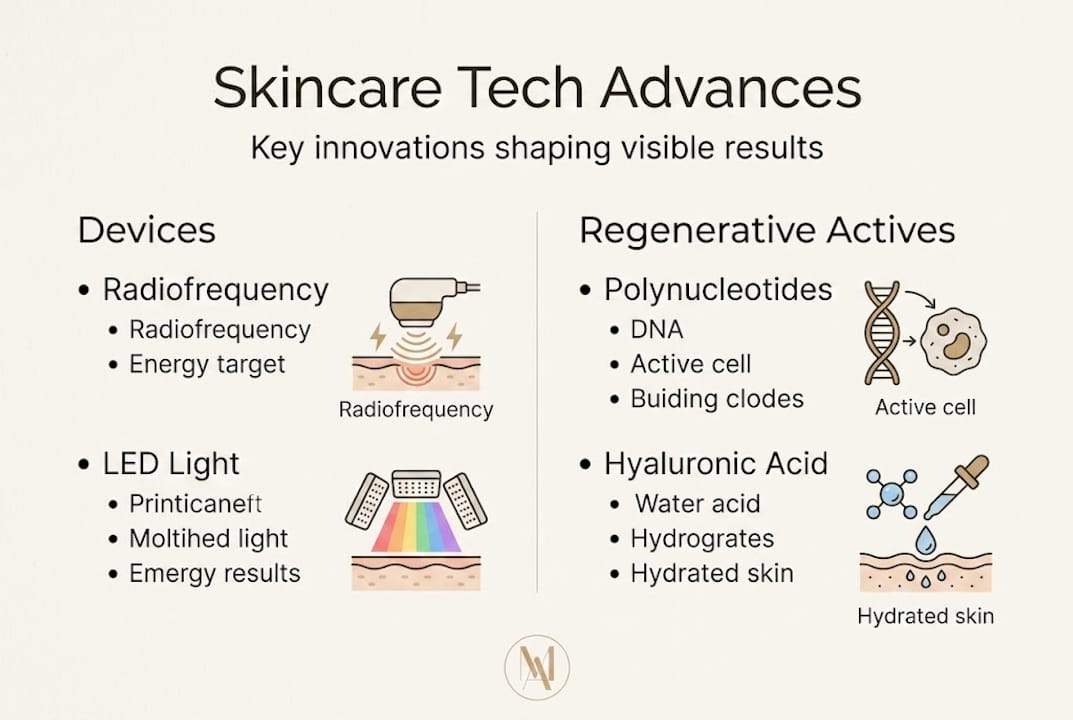
Radiofrequency works by delivering controlled thermal energy into the dermis. This heat denatures existing collagen fibres, which triggers a wound-healing response and the subsequent production of new, organised collagen. XERF, one of the home and clinical radiofrequency devices receiving significant attention, targets superficial to mid-dermal depth, making it suitable for early-stage laxity around the jawline, brow, and neck.
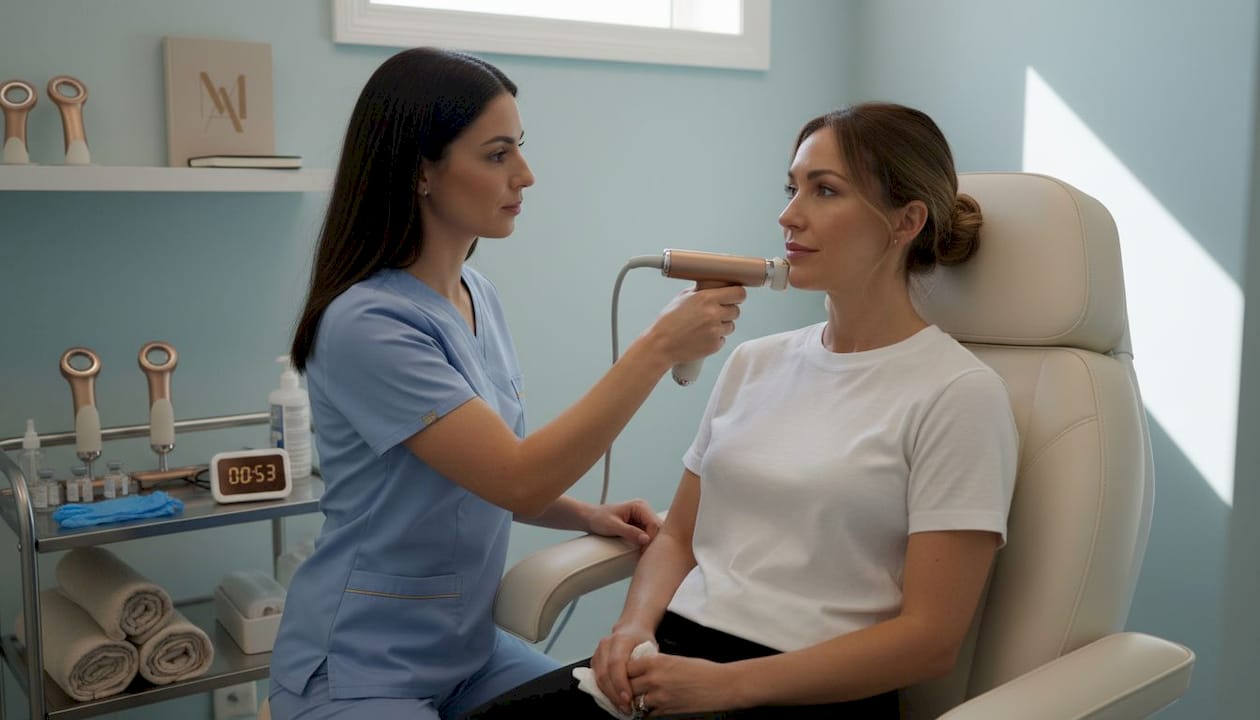
LED red light therapy operates via photobiomodulation. At wavelengths of 630 to 650 nanometres, photons interact with mitochondrial cytochrome c oxidase, increasing ATP (adenosine triphosphate, the cell’s energy currency) production. This accelerates cellular repair, reduces inflammatory mediators, and supports dermal fibroblast activity. The results are gentle and cumulative, making LED ideal for sensitive skin or as an adjunct to more intensive treatments.
Pro Tip: If you are recovering from fractional laser or microneedling, LED red light sessions in the 72 hours post-treatment can meaningfully reduce redness and accelerate the healing window.
- Fractional lasers resurface a fraction of the skin at a time, leaving surrounding tissue intact to accelerate recovery.
- Microneedling creates controlled micro-channels that stimulate collagen induction therapy (CIT) with far less thermal risk than laser.
- Both are suitable for darker skin tones when performed by experienced clinicians using appropriate settings.
Pairing devices with topical support is equally critical. Products such as collagen boosting moisturisers help maintain the dermal environment between sessions. For those curious about one of the most clinically validated options in this category, microneedling insights explain exactly what to expect from SkinPen treatments, from the initial consultation through to recovery and results.
Regenerative advances: polynucleotides, hyaluronic acid and more
Devices are just part of the picture. Regenerative injectables and actives are a fast-rising force within advanced skincare, offering tissue-level renewal that topical products cannot replicate.
Polynucleotides (PNs) are fragments of purified DNA derived from salmon sperm, a detail that surprises many first-time patients but is clinically well-established. When injected intradermally, PNs act as biostimulators. They attract fibroblasts, the cells responsible for producing collagen and elastin, and support angiogenesis, the formation of new blood vessels that improve tissue oxygenation. The result is genuine dermal regeneration rather than temporary volumisation.
| Treatment | Mechanism | Best for | Longevity |
|---|---|---|---|
| Polynucleotides (PN HPT™) | Fibroblast stimulation, tissue regeneration | Scarring, thinning skin, ageing | 9 to 12 months |
| Hyaluronic acid (HA) fillers | Volume replacement, hydration | Volume loss, deep lines | 9 to 18 months |
| Profhilo | HA bioremodelling, collagen stimulation | Skin quality, laxity | 6 to 9 months |
| Energy devices | Thermal/mechanical collagen induction | Laxity, texture, pigment | Ongoing with sessions |
The clinical data behind polynucleotides is compelling. Regenerative treatment with PN HPT™ combined with hyaluronic acid showed a 46.8% reduction in ASAS (Acne Scar Assessment Scale) scores at three months in a clinical study, demonstrating genuine structural improvement in acne scarring rather than cosmetic masking. This level of measurable change is rarely seen with topical treatment alone.
Hyaluronic acid, when used in the context of bioremodelling products such as Profhilo rather than traditional filler, supports deeper dermal remodelling. It stimulates fibroblasts through mechanical stretching, while its hygroscopic (water-attracting) properties improve skin hydration from within. The distinction between using HA as a filler versus a biostimulator is significant and often misunderstood.
For a science-focused breakdown, science-backed skin rejuvenation provides an excellent starting point, whilst the clinical rejuvenation guide covers the treatment protocols in more practical detail.
Who should consider regenerative approaches? Individuals with visible acne scarring, textural irregularity, signs of intrinsic ageing such as skin thinning and laxity, or compromised barrier repair stand to gain the most. These are not “refresh” treatments. They are structural interventions.
Prescription-strength actives for clinical change
Devices and injectables are powerful, but prescription-strength actives remain at the heart of clinical homecare. The right molecules, in the right formulations, make the difference between surface-level maintenance and meaningful biochemical change.
Trifarotene is a fourth-generation retinoid, highly selective for RAR-γ (retinoic acid receptor gamma), which is the dominant receptor in the skin. This selectivity means it delivers strong retinoid activity with a more targeted side-effect profile than older retinoids like tretinoin. Trifarotene is particularly effective for truncal acne and post-inflammatory hyperpigmentation, as well as facial texture irregularity. It regulates keratinocyte differentiation, reduces comedone formation, and accelerates epidermal turnover.
Clascoterone is the first topical androgen receptor blocker approved for acne treatment. By competing directly with dihydrotestosterone (DHT) at the receptor level in the sebaceous gland, it reduces sebum production without the systemic effects associated with oral anti-androgen therapies. Clinical studies show IGA (Investigator’s Global Assessment) success rates of 16 to 23%, with improved moisturisation outcomes and no significant barrier damage observed throughout treatment. This makes it particularly suitable for those who cannot tolerate systemic therapy.
- Trifarotene: Best for acne, post-inflammatory pigmentation, and texture irregularity; requires gradual introduction.
- Clascoterone: Targeted for androgen-driven acne; combines well with other topicals without barrier compromise.
- Thiamidol: A powerful tyrosinase inhibitor for hyperpigmentation. Clinical evaluations of thiamidol demonstrate consistent reduction in melanin expression across multiple skin tones.
These actives require expert guidance not because they are inherently dangerous, but because cosmeceuticals safety and tolerability profiles differ significantly between individuals. Prescription-strength formulations must be matched to your skin type, current regimen, and treatment goals to avoid unnecessary irritation or under-dosing.
Pro Tip: Prescription actives deliver their greatest benefit when combined with a stable skincare foundation, including broad-spectrum SPF, a barrier-supporting moisturiser, and a consistent application schedule. Inconsistency is the primary reason clinical actives underperform.
The long-term benefit of prescription actives often exceeds that of repeated injectables for certain concerns, particularly acne and pigmentation. A well-managed topical protocol can deliver sustained, progressive improvement over months and years, rather than the maintenance cycles that injectables typically require.
Personalisation, nanotechnology and the future
With the current landscape covered, it is worth asking what the cutting edge holds for the next significant step forward in skincare results.
Two areas dominate the near-future conversation: AI-driven personalisation and nanotechnology-enhanced delivery systems. Both carry genuine promise. Both also carry risks of overstating what is currently possible.
AI and genomics are increasingly being used to create bespoke skincare programmes. By analysing genetic markers associated with collagen degradation, melanin regulation, and inflammatory response, platforms can theoretically match individuals to the formulations and treatment protocols most likely to produce a response. Hybrid AI-genomics personalisation is genuinely exciting in its potential, but it requires significant further diversity validation before it can be considered reliably applicable across global populations.
Nanotechnology enhances penetration of active ingredients through the skin barrier, but raises safety concerns around long-term transdermal absorption that are not yet fully resolved. Nano-encapsulated retinoids, for example, reach deeper dermal layers than conventional formulations, theoretically improving efficacy. However, the same penetration enhancement that makes them effective also raises questions about systemic uptake that regulators and researchers are still evaluating.
“The promise of nanotechnology in skincare is real—but the evidence base for safety and long-term outcomes needs to catch up with the enthusiasm.”
Current limitations to be aware of:
- Dataset diversity: Most AI-driven personalisation tools have been trained predominantly on data from lighter skin tones and Western populations, limiting accuracy for those with Fitzpatrick skin types IV to VI or non-Western genetic profiles.
- Geographic access: Prescription-strength products and advanced devices are not equally available globally, creating disparities in who benefits from these advances.
- Regulatory variation: What is approved for clinical use varies significantly between the UK, EU, USA, and other markets.
Before adopting any “next generation” solution, ask your clinician three questions. First, what is the evidence level for this technology? Second, has it been tested in populations similar to yours? Third, what is the protocol if the treatment does not work as expected?
Understanding personalised skincare approaches and why dermatologists personalise treatments are two essential reads before committing to any AI or nanotech-driven protocol. Additionally, cosmeceutical innovation provides a useful regulatory framework for evaluating emerging ingredient claims.
A critical perspective: what most “advanced” skincare misses
Now that you understand the landscape, it is worth cutting through the noise to focus on what actually delivers sustainable change, because the skincare industry is remarkably skilled at packaging ordinary ingredients in extraordinary language.
The uncomfortable reality is that much of what is marketed as “advanced” is not. True clinical transformation requires three things that cannot be purchased off a shelf: medical guidance, ongoing evaluation, and a genuinely combined approach. A radiofrequency device used incorrectly, or at insufficient energy levels by an under-trained operator, will produce negligible results. A retinoid abandoned after two weeks of irritation will not have time to work.
Device efficacy is heavily dependent on clinical operator skill and post-care compliance. Patients who follow prescribed recovery protocols, use appropriate SPF, and attend follow-up appointments consistently see meaningfully better outcomes than those who treat advanced procedures like a one-time fix.
We are also frank about personalisation: it is not yet perfect. Personalisation in context matters enormously, but genetic and AI-based tools are still developing the breadth of population data needed to be universally reliable. The most robust personalisation still comes from an experienced clinician who evaluates your skin directly, understands your history, and adjusts your protocol over time based on observed response.
Pro Tip: Always seek providers who individualise both the treatment selection and the follow-up, not just the product or the device. Personalisation is a process, not a purchase.
Discover clinically proven solutions at The M-ethod
If you are ready to move beyond standard skincare and invest in treatments with genuine clinical backing, we are here to guide that journey precisely. At The M-ethod, we curate prescription-strength, evidence-based skincare and device protocols, matched to your specific skin concerns through expert consultation. Whether you are addressing acne and breakout-prone skin with a targeted acne treatment serum or exploring the full breadth of clinical science through the NEOSTRATA science collection, every product and recommendation we offer is backed by data and selected with your long-term results in mind. Book a virtual skin consultation today and take the first step towards a truly personalised, clinically informed skincare programme.
Frequently asked questions
What are the most effective advanced skincare devices for ageing?
Fractional lasers and radiofrequency deliver collagen remodelling and improved skin quality, making them among the most clinically validated options for wrinkles and laxity. Microneedling is also highly effective, particularly for textural concerns and early-stage laxity.
Is nanotechnology in skincare products safe?
Nanotechnology enhances penetration but raises concerns about long-term transdermal absorption, and current research has not fully resolved the safety profile for all nano-encapsulated ingredients.
How do polynucleotide and hyaluronic acid treatments work in skin rejuvenation?
Polynucleotide PN HPT™ with hyaluronic acid promotes dermal remodelling by stimulating fibroblasts, with clinical data showing a 46.8% ASAS score reduction for acne scars at three months.
Are prescription-strength skincare ingredients better than over-the-counter options?
Prescription-strength actives like trifarotene and clascoterone are clinically effective with established tolerability, offering measurable improvement that over-the-counter formulations cannot replicate for defined skin conditions.


