

Why patch testing matters for your skin and treatments
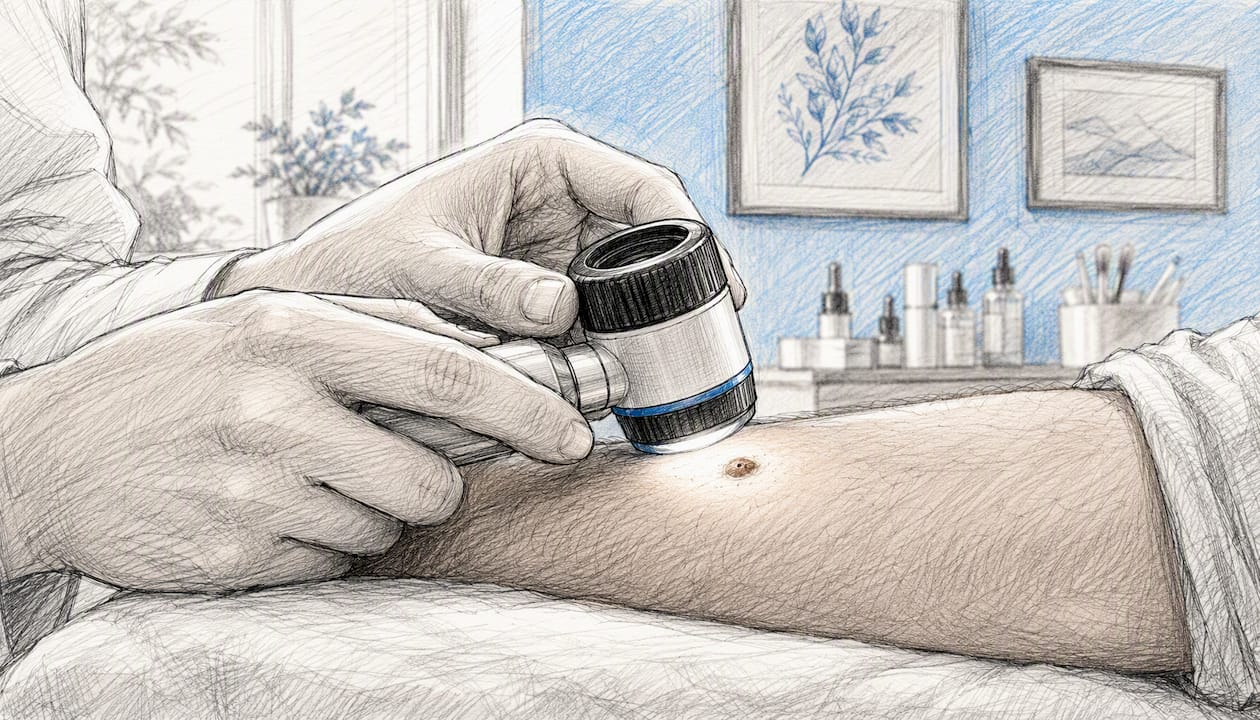
Patch testing, in the context of skincare and professional treatments, means applying a small amount of a product to a limited area of skin to check your tolerance before using it more widely. It is the single most reliable step you can take to avoid a full-face or treatment-area adverse reaction to a potent active or clinical procedure.
Before you apply a new prescription retinoid, book a chemical peel, or start a medical-grade acid, do a spot test first:
- Reduces the risk of irritant or allergic reactions spreading across the face or treatment zone
- Protects your skin barrier from breakdown caused by concentrated actives
- Prevents costly complications after professional procedures such as microneedling or resurfacing
- Avoids wasting money on prescription products that your skin cannot currently tolerate
Your immediate next step: apply a small amount to your inner forearm or behind one ear, leave it for 24–48 hours, and observe. For a more reliable result with potent actives, use a repeat open application test (ROAT) over 7–10 days. If you are unsure, book a clinician spot test before proceeding.
Key takeaways
Patch testing before using any medical-grade active or booking a professional treatment is the most reliable way to prevent a full-face adverse reaction and protect your skin barrier.
| Point | Details |
|---|---|
| Test before every new active | Apply to inner forearm or behind ear; observe for a minimum of 48 hours before wider use. |
| Irritation is the most common risk | Irritant contact dermatitis accounts for roughly 80% of contact dermatitis cases, not allergy. |
| ROAT for daily-use products | Twice-daily application for 7–10 days gives a more reliable result for products used regularly. |
| Labels are not guarantees | “Hypoallergenic” and “natural” carry no standardised legal definition; always test regardless. |
| Them-ethod offers clinical triage | Virtual and in-clinic consultations include structured tolerance assessment before any prescription product or procedure. |
Table of Contents
- Why patch testing is important: what your skin is actually reacting to
- Who should always prioritise patch testing?
- Which products and treatments should you test first?
- How to patch test at home, step by step
- How long should you wait before trusting a result?
- How to read your results and when to get help
- What at-home testing cannot tell you
- Practical tips for safer testing and purchasing
- A clinician’s perspective on why we never skip this step
- Them-ethod’s consultation services for safer skincare
- Sources
Why patch testing is important: what your skin is actually reacting to
Two distinct reactions make spot testing clinically relevant. An irritant reaction occurs when a product directly damages the skin barrier, causing redness, stinging, or peeling without any immune involvement. A delayed sensitisation reaction is an immune-mediated response that can take 24–48 hours or longer to appear, according to DermNet NZ.
Research published on PubMed shows that irritant contact dermatitis accounts for roughly 80% of all contact dermatitis cases. That figure matters because most people assume they are only testing for allergy, when irritation is far more common and equally disruptive to a clinical skincare routine.
Statistic: DermNet NZ estimates that the average adult uses several cosmetic products daily, and approximately 10% of patients who undergo formal patch testing show a cosmetic allergy.
A small-area test maps directly to avoiding bigger consequences: barrier breakdown that prolongs recovery after a clinic treatment, or the need to abandon a costly prescription product mid-course. Catching a reaction on a 2cm patch of forearm skin is far preferable to discovering it across your entire face.
| Reaction type | Onset | Common signs | Clinical significance |
|---|---|---|---|
| Irritant contact dermatitis | Minutes to hours | Redness, stinging, peeling | Most common; barrier disruption |
| Delayed sensitisation | 24–48 hours or longer | Itching, swelling, vesicles | Immune-mediated; can worsen with re-exposure |
Who should always prioritise patch testing?
Some people face a meaningfully higher risk of adverse reactions and should treat spot testing as non-negotiable rather than optional.
- History of atopic dermatitis or eczema: a compromised barrier is more permeable to irritants and sensitisers
- Known sensitive or reactive skin: baseline reactivity increases the likelihood of both irritant and delayed responses
- Recent skin procedures: post-peel, post-microneedling, or post-laser skin is temporarily more vulnerable to actives
- Starting prescription retinoids or high-strength acids: these are among the most potent topical compounds available
- Multiple active layers in your current routine: stacking exfoliants, vitamin C, and retinoids raises cumulative irritation risk
- Use of topical steroids or immunomodulators: these alter the skin’s normal inflammatory response, making reactions less predictable
- Thin-skin areas: the neck, décolletage, and eye area absorb actives more readily than the cheeks
WebMD reinforces that even commonly used products can trigger reactions in susceptible individuals, particularly when the skin barrier is already compromised. For broader sensitive skin protocols, building patch testing into every new product introduction is part of a sound routine.
Pro Tip: Clinics often ask one triage question before a treatment: “Have you ever reacted to a skincare product or cosmetic?” A “yes” answer, or uncertainty, is the clearest signal that a clinician-led spot test should precede any procedure.
Which products and treatments should you test first?
Not every product carries equal risk. Prioritise testing for the following categories before applying them to a larger area.
High-risk actives to test first:
- Prescription tretinoin and retinoid formulations
- Exfoliating acids: AHAs (glycolic, lactic) and BHAs (salicylic acid) at clinical concentrations
- Concentrated vitamin C serums (above 10–15%)
- High-strength chemical exfoliants and enzyme peels
- Pre-procedure topical preparations prescribed before microneedling or resurfacing
Professional treatments requiring pre-treatment spot testing:
- Chemical peels (superficial, medium, and deep)
- Microneedling with topical serums applied during the procedure
- Aggressive resurfacing treatments
“Hypoallergenic” and “dermatologist tested” are marketing terms, not regulatory guarantees. WebMD notes that these labels carry no standardised legal definition in the UK, meaning a product bearing them still requires a spot test. “Natural” ingredients, including essential oils and botanical extracts, are among the most common sensitisers in cosmetic formulations.
Pro Tip: For wash-off products such as cleansers or masks, leave the product on the test site for the same duration you would use it normally, for example five minutes for a cleanser, to simulate real-world exposure accurately.
How to patch test at home, step by step
Medical News Today recommends a clear at-home method for assessing tolerance before full use. Follow these steps precisely.
- Choose your test site. Use the inner forearm or the skin behind one ear. Both areas are sensitive enough to reflect facial reactivity.
- Apply a small amount. A pea-sized amount is sufficient. Do not rub it in aggressively.
- Leave it undisturbed. For leave-on products, keep the area uncovered and avoid washing it for 24 hours. For wash-off products, leave it on for the product’s intended contact time, then rinse.
- Observe at 24 hours. Check for redness, itching, swelling, or any change in texture.
- Observe again at 48 hours. Delayed reactions are common with sensitisers; a clear result at 24 hours is not a final verdict.
- Record your findings. Note the product name, batch number, date, and any symptoms, even mild ones.
For potent actives: use a ROAT. The repeat open application test involves applying the product to the same small area twice daily for 7–10 days, as recommended by DermNet NZ. This simulates cumulative exposure and is more reliable than a single 48-hour test for products you will use regularly.
Statistic: Everyday Health notes that dermatologists warn delayed reactions can appear even after an initial clear result, which is why a multi-day ROAT is recommended for actives used repeatedly.
If you notice redness or itching within the first few hours, rinse the area with cool water, stop the test, and do not proceed to wider application. That early signal is meaningful.
How long should you wait before trusting a result?
Timing is where many people cut corners, and it is where reactions get missed.
- Immediate reactions (minutes to 1 hour): usually irritant in nature; redness, stinging, or burning that appears quickly
- Short-delayed reactions (6–24 hours): often irritant but can indicate early sensitisation
- True delayed reactions (24–48 hours or longer): the window most relevant to sensitisation; DermNet NZ’s patch testing guidance specifically highlights this range
- Cumulative reactions (7–10 days of ROAT): the most reliable signal for products used daily
Medical News Today notes that clinician-led testing uses a 48-hour occlusive application with a read at 72–96 hours, which is why the at-home minimum of 48 hours is the floor, not the ceiling.
Wait a minimum of 48 hours after a clear single test, or complete the full 7–10 day ROAT, before applying a product across your face or attending a clinic treatment.
Pro Tip: If you experience a minor reaction that resolves fully within 48 hours, re-test after two weeks with a smaller amount or lower-frequency application. Document the result and bring it to your next consultation.
How to read your results and when to get help
Knowing the difference between a manageable irritant response and a reaction requiring clinical attention is critical.
Mild, expected irritation:
- Slight redness or pinkness at the test site
- Mild itching or tingling that fades within a few hours
- Small, transient bumps that resolve without intervention
Signs that require stopping immediately and contacting a clinician:
- Intense swelling, blistering, or ulceration at the test site
- Spreading redness beyond the test area
- Systemic signs: hives, facial swelling, difficulty breathing
If you experience facial swelling, throat tightness, or difficulty breathing after applying any product, stop use immediately, rinse the area, and call 999 or go to A&E. These are signs of angioedema or anaphylaxis and require emergency care.
For any reaction beyond mild transient redness, record the following before contacting a clinician: time of exposure, full product name, batch number, a photograph of the reaction, and the complete ingredient list. This information significantly speeds up clinical assessment.
What at-home testing cannot tell you
A spot test on your forearm tells you whether this product causes a visible reaction on this area of skin. It does not identify which specific ingredient is responsible, and it cannot replicate the controlled conditions of a formal clinical assessment.
Byrdie notes that at-home ROAT is less precise than clinic-based testing, which can expose skin to multiple allergens simultaneously under controlled conditions. The gap matters in specific situations.
Book a clinician-led assessment when:
- You have had a prior severe or systemic reaction to a cosmetic or topical product
- Your at-home results are unclear or inconsistent
- You are planning an aggressive professional treatment such as a medium-depth peel or SkinPen microneedling
- You need ingredient-level answers to identify a specific sensitiser
- You are on prescription medications that alter immune or inflammatory responses
Verywell Health recommends seeing a dermatologist for severe or unclear reactions, where formal testing can assess 20–30 allergens systematically. A skin consultation with a qualified clinician provides the ingredient-level clarity that no at-home test can replicate.
At-home patch testing is a useful first filter, not a diagnostic tool. If a reaction is severe, recurrent, or unexplained, a clinician-led assessment is the appropriate next step.
Practical tips for safer testing and purchasing
A few habits at the point of purchase reduce your risk considerably before you even open the product.
- Test one new product at a time; introducing multiple actives simultaneously makes it impossible to identify which caused a reaction
- Use the full formulation for your test, not a single ingredient, because reactions often arise from preservatives, emulsifiers, or fragrance rather than the headline active
- Request sample sachets or travel sizes before committing to a full-size prescription product
- Keep the receipt and note the batch number in case you need to report a reaction
- Read the ingredient list for common sensitisers: fragrance, methylisothiazolinone, formaldehyde-releasing preservatives, and certain botanical extracts
Before any clinic appointment, disclose all current skincare products, recent treatments, and medications to your clinician. A product that interacts with a pre-procedure preparation can cause a reaction that neither the product nor the treatment would cause alone.
For those managing sensitive skin or building a new routine around prescription actives, understanding shave irritation and ingredient triggers in adjacent personal care products is equally relevant, since the same sensitisers appear across product categories.
Pro Tip: When travelling or preparing for a clinic visit abroad, bring a written list of your regular products with their full ingredient lists. Clinicians in London and Athens can cross-reference these against planned treatment preparations to prevent interactions.
A clinician’s perspective on why we never skip this step
Patch testing is not a formality at Them-ethod. It is the first clinical decision in any new product or treatment protocol. Adverse reactions to prescription actives and professional treatments are almost always preventable, and the ones that reach us as complications share a common factor: the spot test was skipped.

Working with clients across virtual consultations and in-clinic appointments in London and Athens, we see the same pattern repeatedly. A client starts a potent retinoid or books a peel without testing, experiences a significant barrier reaction, and then needs weeks of recovery before the original treatment goal can even be addressed. The patch test is not a delay; it is what makes the treatment possible.
At Them-ethod, our virtual triage process includes a structured tolerance assessment before any prescription product is dispensed or any in-clinic procedure is confirmed. For uncertain cases, we offer clinician-led spot tests as part of the consultation workflow.
Them-ethod’s consultation services for safer skincare
Choosing a prescription product or booking a professional treatment without clinical guidance carries real risk. Them-ethod offers virtual skin consultations with expert clinicians who assess your skin history, current routine, and treatment goals before recommending any potent active or procedure. For clients in London and Athens, in-clinic spot tests and pre-treatment triage are available as part of the booking process.
Whether you are starting prescription tretinoin, considering a SkinPen microneedling course, or building a medical-grade routine from scratch, a consultation ensures your protocol is matched to your skin’s current tolerance. Book your virtual or in-person consultation directly through Them-ethod to receive a bespoke plan that accounts for your full skin history.
Sources
The following sources informed this guide and are recommended for further reading.
- PubMed: irritant contact dermatitis prevalence (study)
- DermNet NZ: Contact reactions to cosmetics
- Medical News Today: Patch test skincare
- Everyday Health: How to patch test your skin‑care products
- Byrdie: What is patch testing? Dermatologists explain how to try it
- WebMD: Cosmetics skin allergy triggers, treatments and prevention
For uncertain or severe reactions, a clinical consultation is always the appropriate next step. Them-ethod’s clinicians are available for virtual and in-person assessments in London and Athens.