


Get Tretinoin Legally in the US Without Leaving Home
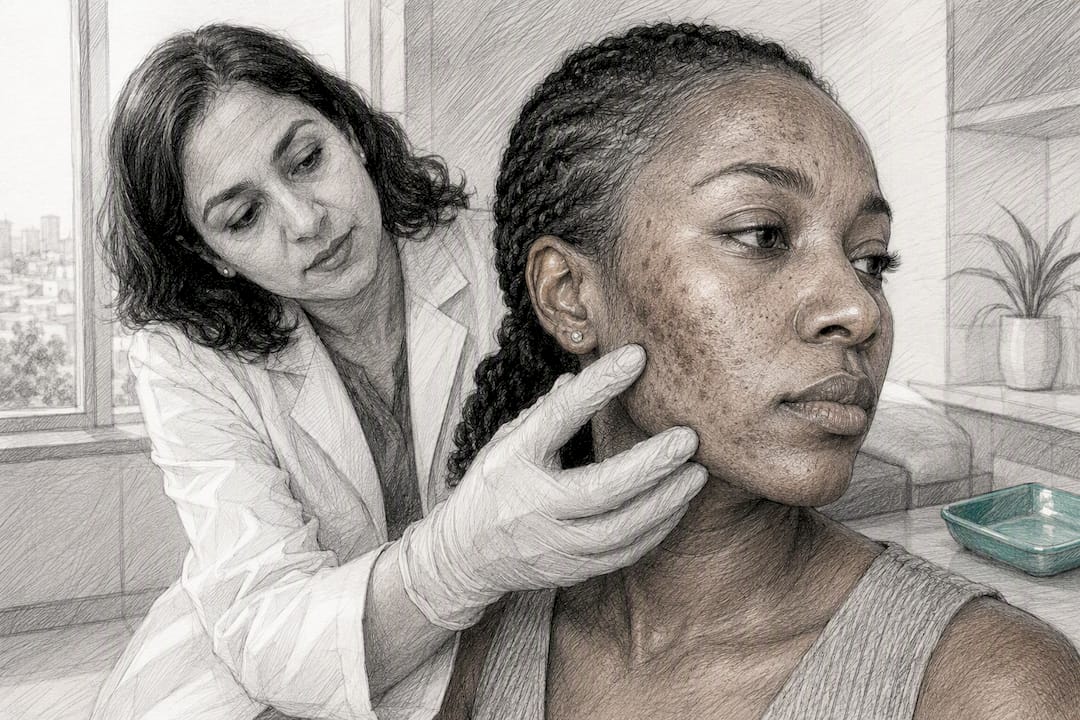
Tretinoin is not available over the counter in the United States. It is classified as a prescription-only medication under FDA labelling, which means you need a licensed clinician to prescribe it. The good news is that legitimate routes to get it, from teledermatology to in-person visits, are more accessible than ever, and several OTC retinoids can bridge the gap in the meantime.
TL;DR:
- Most people need a dermatologist or primary care provider for prescribing tretinoin, especially for complex skin conditions or pregnancy considerations.
- OTC retinoids like retinal or adapalene can serve as effective, lower-risk alternatives for those not yet ready for prescription-strength tretinoin.
- Proper storage, gentle initiation, and consistent use over several months are crucial to achieving visible skin improvements with tretinoin.
- Avoid combining tretinoin with benzoyl peroxide or exfoliating acids simultaneously to prevent unnecessary irritation.
- Prescription tretinoin can be obtained safely through licensed telehealth services, clinics, or pharmacies with proper medical oversight.
Table of Contents
- Is tretinoin over the counter in the USA? Why not
- Over-the-counter alternatives and how they compare with tretinoin
- How to get a legal tretinoin prescription in the United States
- Safety, side effects and how to start tretinoin safely
- Where to buy tretinoin legally once you have a prescription
- Cost and insurance: what you might pay and how to save
- Perspective from The M-ethod Skin and author expertise
- Expected timeline for visible results and skin improvement
- Interactions with other skincare products and medications
- Storage and shelf life of tretinoin products
- What most advice on tretinoin gets backwards
- [If you’d rather skip the trial-and-error of unsupervised retinoids, a clinician-led route can start with a virtual consultation, move to a tailored recommendation, whether that’s a referral toward prescription tretinoin or a prescription-strength alternative, and continue with follow-up rather than a one-off sale. Products like PCA Clearskin Acne Treatment Serum sit at the more accessible end of that spectrum, while the NEOSTRATA collection covers medical-grade options for pigmentation, texture, and ageing concerns.](#if-youd-rather-skip-the-trial-and-error-of-unsupervised-retinoids-a-clinician-led-route-can-start-with-a-virtual-consultation-move-to-a-tailored-recommendation-whether-thats-a-referral-toward-prescription-tretinoin-or-a-prescription-strength-alternative-and-continue-with-follow-up-rather-than-a-one-off-sale-products-like-pca-clearskin-acne-treatment-serum-sit-at-the-more-accessible-end-of-that-spectrum-while-the-neostrata-collectionhttpsthem-ethodcomcollectionsneostrata-covers-medical-grade-options-for-pigmentation-texture-and-ageing-concerns)
- Sources
Is tretinoin over the counter in the USA? Why not
Tretinoin sits in a different regulatory category to the retinol serums lining drugstore shelves. The FDA’s prescribing information classifies it as a prescription drug because of its potency and the range of side effects it can trigger, from severe irritation to photosensitivity. Unlike cosmetic retinol, tretinoin is converted directly into active retinoic acid, which binds to skin cell receptors far more efficiently. That efficiency is exactly why it needs oversight.
Dermatologists point to the same rationale: tretinoin’s strength profile demands clinical judgement, not guesswork. A commentary on the prescription rationale notes that clinicians weigh individual skin tolerance, medical history, and monitoring needs before recommending a concentration or frequency. This isn’t red tape for its own sake. Tretinoin’s side-effect profile, and its known risks in pregnancy, mean a proper assessment protects you before you ever apply the first dose.
When you see a prescriber for tretinoin, whether in person or through telehealth, they’re typically evaluating:
- Pregnancy status and plans. Tretinoin carries a pregnancy category warning, so this is usually the first question asked.
- Current medications. Certain oral acne treatments, antibiotics, and other topical actives can compound irritation or interact poorly.
- Skin type and sensitivity history. Someone with a history of eczema or rosacea needs a different starting concentration than someone with resilient, oil-prone skin.
- The specific concern being treated. Acne, photoaging, and hyperpigmentation often call for different strengths and application patterns.
This assessment is also why Mayo Clinic’s guidance stresses clinician involvement throughout treatment, not just at the first prescription. Tretinoin’s effects shift over weeks and months, and a prescriber adjusts the plan as your skin responds.
Over-the-counter alternatives and how they compare with tretinoin
If you’re not ready to see a clinician, or you’re simply testing the waters, several OTC retinoids give you a legitimate starting point. None match tretinoin’s raw potency, but the right one can deliver real results while you decide on next steps.
- Retinal (retinaldehyde). This sits closest to tretinoin in effectiveness because it needs only one conversion step to become active retinoic acid, compared with the two steps retinol requires, according to clinical literature on retinoid conversion. It tends to work faster than retinol with a milder irritation curve than prescription tretinoin.
- Retinol. The gentlest, slowest-acting option and a sensible starting point if you’ve never used a retinoid before. Results take longer to show, but so does the irritation.
- Adapalene 0.1% (Differin). The only OTC retinoid the FDA has approved specifically for acne, and it’s more stable and predictable in formulation than most OTC retinol products. If breakouts are your main concern rather than fine lines, this is arguably the strongest OTC option available without a prescription.
- Azelaic acid. Useful for redness, mild acne, and pigmentation, and considered safe during pregnancy when other retinoids are off the table.
- Bakuchiol. A plant-derived alternative marketed as a retinol substitute for people with reactive or sensitive skin, though the evidence base is thinner than for retinoids.
Match the choice to your goal. Acne concerns lean toward adapalene; anti-ageing and texture concerns often respond better to retinal or a well-formulated retinol. For a deeper breakdown of how to choose between them, see how retinal or retinol beginners should start.
Pro Tip: If you’re switching from an OTC retinoid to prescription tretinoin later, don’t layer them during the transition. Give your skin a few nights of rest between products so you can tell which one is actually causing any irritation.
How to get a legal tretinoin prescription in the United States
Getting a legitimate prescription is more straightforward than most people expect, and you have several routes depending on how complex your skin concern is.
- Start with a dermatologist for anything beyond mild acne or early fine lines. Complex pigmentation, cystic acne, or skin that’s reacted badly to actives in the past all warrant a specialist’s eye.
- See a primary care provider for straightforward requests. Many GPs will prescribe a low-strength tretinoin for mild acne without a dermatology referral, particularly if you have no complicating history.
- Try teledermatology if convenience matters most. Services like the virtual consultation model Walgreens offers typically ask for photos of your skin, a medical history questionnaire, and consent forms. If the clinician deems it appropriate, they issue an electronic prescription straight to a pharmacy of your choice.
- Consider compounded tretinoin for combination formulations. Some prescribers pair tretinoin with niacinamide or clindamycin in a single compounded cream. If you go this route, verify the pharmacy holds a valid state licence and check reviews independently rather than trusting claims on the seller’s own site.
- Watch for red flags. Any site promising tretinoin “with no prescription required,” or shipping from outside the US without a licensed pharmacist involved, is operating outside the law and outside any safety oversight. Walk away.
Safety, side effects and how to start tretinoin safely
Expect some irritation. Redness, dryness, flaking, and a phase some people call “purging,” where breakouts temporarily worsen before they improve, are common in the first two to six weeks of treatment. This isn’t a sign the product is wrong for you. It’s usually a sign your skin is adjusting to increased cell turnover, and clinical guidance on retinoid initiation treats this as an expected phase rather than a red flag on its own.
Reduce the discomfort with a sensible start:
- Begin with the lowest concentration your prescriber offers, typically a low starting dose.
- Apply every other night for the first two to four weeks rather than nightly.
- Buffer irritation by moisturising 20 to 30 minutes before or after application, not underneath a wet layer of tretinoin.
- Wear sunscreen daily. Tretinoin increases photosensitivity, and Mayo Clinic’s guidance is explicit that sun protection is non-negotiable during treatment.
- Confirm reliable contraception before starting, given tretinoin’s pregnancy warnings.
Contact your prescriber if you notice severe blistering, swelling, or irritation that doesn’t ease after a few weeks of consistent, correctly buffered use. That’s beyond normal adjustment and needs a look. If irritation flares faster than expected, a guide on calming retinoid irritation quickly covers practical fixes you can try before calling your prescriber.
Where to buy tretinoin legally once you have a prescription
Once you have a prescription in hand, fulfilment is simple. Most major retail chains and independent pharmacies accept electronic prescriptions sent directly from your prescriber, whether that’s a dermatologist’s office or a telehealth platform.
- Retail pharmacy chains and independent pharmacies fill tretinoin prescriptions the same way they fill any other medication, with your insurance applied at the counter if you have coverage.
- US-licensed online pharmacies dispense from the same regulatory framework as brick-and-mortar stores, provided they require a valid prescription before shipping.
- Compounding pharmacies are worth verifying independently. Check that the pharmacy is state-licensed and, ideally, accredited, particularly if your prescription combines tretinoin with other active ingredients.
- Avoid international sites and “prescription-free” sellers. Beyond the legal risk, you have no guarantee of correct concentration, sterile manufacturing, or genuine active ingredient. That’s a real safety gamble, not a shortcut worth taking.
Cost and insurance: what you might pay and how to save
Generic tretinoin is considerably cheaper than brand-name versions, and most insurance plans cover it when prescribed for an approved use like acne. Out-of-pocket costs vary widely depending on your pharmacy benefit manager, your plan’s formulary, and whether you’re buying generic or brand.
A few ways to keep costs down:
- Ask your pharmacist for the generic formulation before filling a brand-name prescription.
- Compare prices using a discount card, since cash prices between pharmacies can differ substantially for the same generic.
- Check if a community health clinic offers lower-cost dermatology visits if you’re uninsured.
- Ask your telehealth provider whether their bundled consultation and prescription fee works out cheaper than separate visits and pharmacy costs.
Perspective from The M-ethod Skin and author expertise
This approach to tretinoin involves a virtual consultation first, a tailored prescription-strength recommendation second, and clinical follow-up built in rather than treated as optional. That structure exists because unsupervised use of a potent retinoid, without anyone checking how your skin is actually responding, is where most bad outcomes originate.
Clinic oversight isn’t about gatekeeping access to effective skincare. It’s about catching irritation, interactions, or the wrong concentration before they become a setback that sets your skin back months instead of forward.
Jess writes on prescription-strength skincare and dermatological treatment access for Them-ethod, drawing on clinical research and direct engagement with dermatology-led protocols to translate regulatory and clinical detail into practical guidance readers can actually use.
Expected timeline for visible results and skin improvement
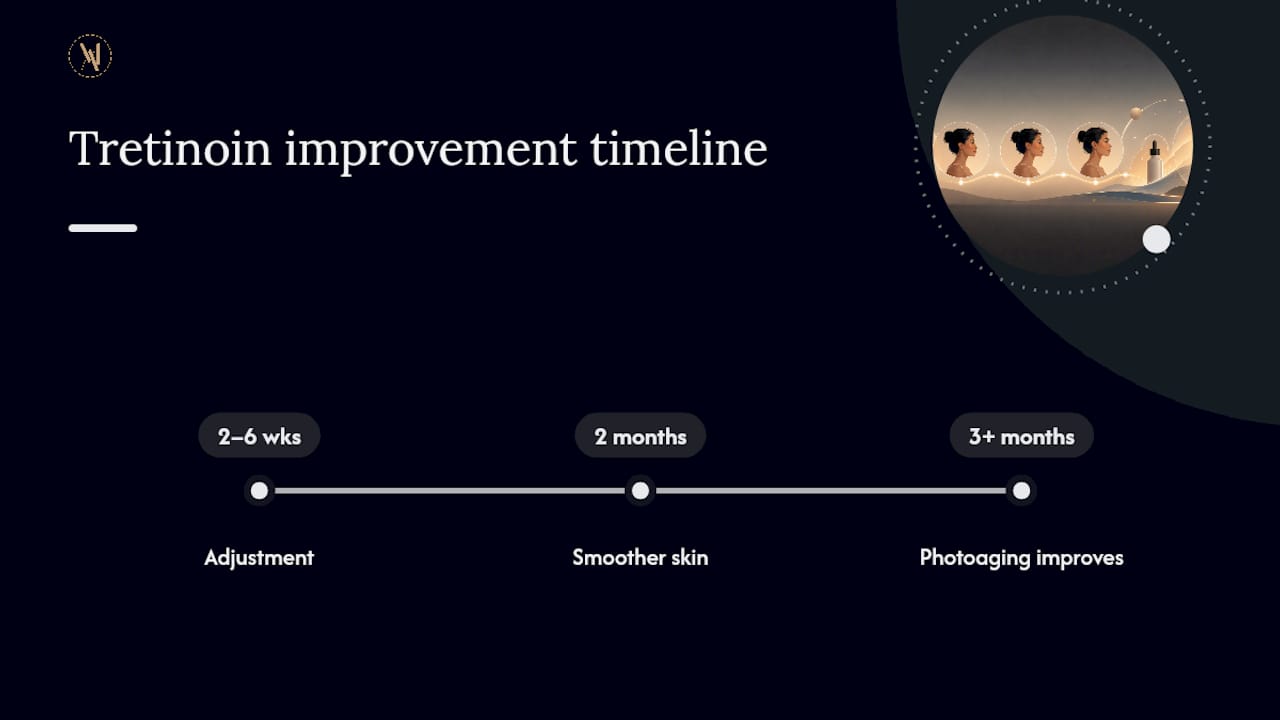
Patience matters more with tretinoin than with almost any other skincare active. The first two to six weeks are typically about adjustment, not improvement, as your skin adapts to faster cell turnover and you manage the irritation that comes with it.
Most people start noticing genuine changes, smoother texture, fewer active breakouts, after a couple of months. Fine lines and pigmentation take longer still. Collagen remodelling is a slow biological process, so meaningful improvement in photoaging signs often takes several months of consistent use and continues to build over time.
The mistake people make most often is quitting during the purging phase because they assume the product isn’t working, or worse, is making things worse. If your prescriber has confirmed you’re using the right concentration and frequency, stick with it through that early rough patch. Switching products every few weeks resets the adjustment clock and delays the results you’re actually after. Consistency, not intensity, is what gets you there.
Interactions with other skincare products and medications
Tretinoin doesn’t play well with everything in your routine, and knowing what to avoid stacking saves you weeks of unnecessary irritation. Benzoyl peroxide can oxidise and deactivate tretinoin when applied at the same time, so most prescribers recommend using them at different times of day rather than layering them together. Other exfoliating acids, glycolic, salicylic, or lactic, compound tretinoin’s own exfoliating effect and can push mild irritation into genuinely uncomfortable territory if used on the same nights.
Vitamin C serums are generally fine to use, but many people find mornings work better for vitamin C and nights better for tretinoin, simply to reduce the chance of any reaction between the two. If you’re on oral acne medications like isotretinoin, tell your prescriber before adding tretinoin. The combined drying effect can be more than your skin barrier can comfortably handle.
Always disclose your full medication list, including anything from a primary care provider unrelated to skincare, before starting tretinoin. Certain photosensitising medications can amplify tretinoin’s sun sensitivity, and your prescriber needs the full picture to advise you properly on timing and sun protection. For a practical walkthrough on introducing new actives without derailing your routine, see how to layer retinol safely without irritation.
Storage and shelf life of tretinoin products
Tretinoin degrades faster than most skincare actives, and how you store it directly affects how well it works. Light and heat both break down the active compound, which is why tretinoin is packaged in opaque tubes rather than clear jars. Keep it in a cool, dark place, a bathroom cabinet away from a steamy shower is usually fine, rather than on an open shelf catching daylight.
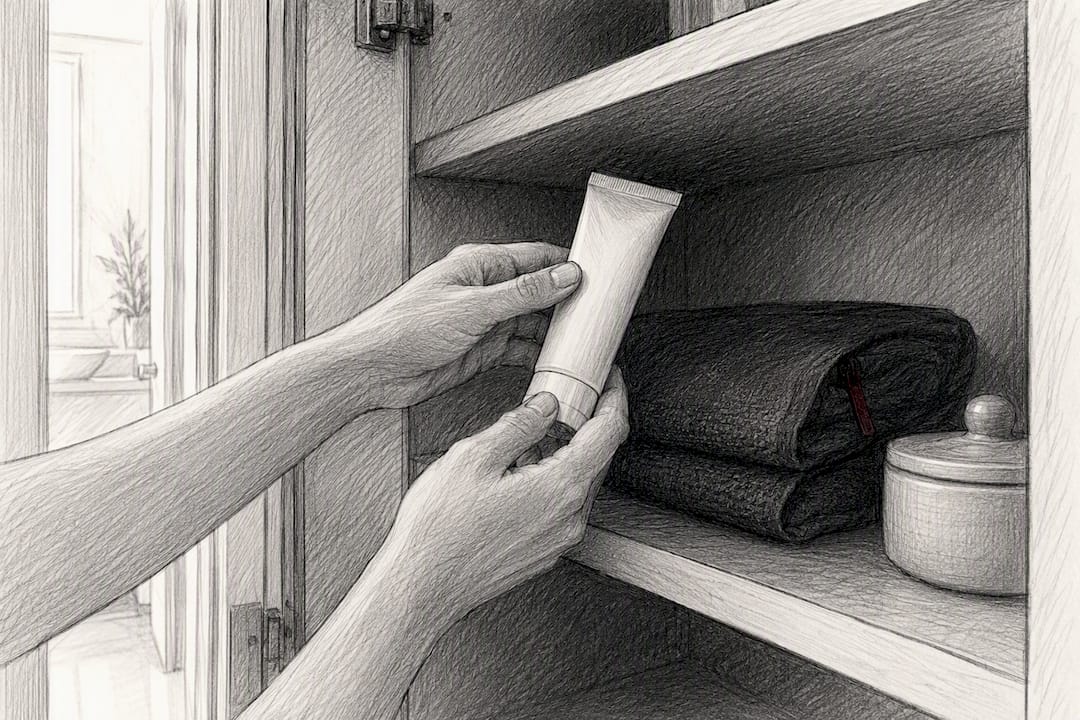
Most tretinoin products carry a shelf life of around one year once opened, though unopened tubes stored properly can last longer. If your cream has changed colour, developed an odd smell, or separated in texture, it’s likely degraded and won’t deliver the strength your prescription intended. Using degraded product isn’t dangerous so much as pointless. You get the irritation without the corresponding benefit, because the active ingredient has broken down.
Avoid storing tretinoin in a car, a sunny windowsill, or anywhere temperatures fluctuate widely. If you travel, a simple opaque toiletries bag protects it well enough for most trips. When in doubt about a tube’s potency, particularly one that’s sat unused for over a year, it’s worth asking your pharmacist rather than assuming it still works at full strength.
What most advice on tretinoin gets backwards
Most guidance on this topic treats the prescription requirement as an obstacle to route around, when it’s actually the part doing the most work for your skin. The conventional advice pushes people toward OTC retinol as a consolation prize, then treats teledermatology as an afterthought buried at the bottom of the article. We’d flip that order entirely.
The real priority should be getting a proper assessment first, whether that’s a fifteen-minute telehealth visit or a dermatologist appointment, because that single step determines whether you start at the right strength for your actual skin, not a generic default. People who skip straight to the strongest retinoid they can buy tend to quit within a month from irritation that a tailored starting protocol would have avoided. The prescription requirement isn’t the barrier. Rushing past proper guidance is.
— Jess
If you’d rather skip the trial-and-error of unsupervised retinoids, a clinician-led route can start with a virtual consultation, move to a tailored recommendation, whether that’s a referral toward prescription tretinoin or a prescription-strength alternative, and continue with follow-up rather than a one-off sale. Products like PCA Clearskin Acne Treatment Serum sit at the more accessible end of that spectrum, while the NEOSTRATA collection covers medical-grade options for pigmentation, texture, and ageing concerns.
Your first contact is a straightforward skin consultation, confidential and reviewed by a qualified clinician, who assesses your skin history and goals before recommending a path forward. This suits you if you want a properly assessed starting point rather than guessing your way through OTC shelves. Book a virtual consultation with The M-ethod Skin to find the right prescription-strength route for your skin.
Sources
The regulatory backbone of this article comes from the FDA’s tretinoin prescribing information, which confirms prescription-only status and dosage guidance. Mayo Clinic and the American Academy of Dermatology both provide patient-facing safety and usage guidance. For OTC alternatives, DailyMed’s adapalene listing confirms its FDA-approved OTC status, and a peer-reviewed clinical overview covers retinoid mechanisms in depth.
This article is general information, not a substitute for advice from a qualified doctor. Consult a qualified healthcare professional about your own circumstances before acting on anything here.
- Tretinoin topical route — Mayo Clinic
- DailyMed / FDA-adjacent listing for adapalene (Differin) OTC product
- Walgreens — online topical tretinoin prescription / telehealth example