

Skincare Trends in 2026: Science Meets Luxury
Finding skin solutions that truly last can feel elusive for British, European, and American skincare enthusiasts who seek meaningful rejuvenation. The focus is shifting from quick fixes to sustained skin health, with 2026 innovations set to prioritise deeper biological resilience over fleeting results. This new standard values evidence-driven routines that address ageing at its cellular root, offering precise, personalised pathways to radiant longevity for those ready to invest beyond hype.
Table of Contents
- Skin Longevity And Its New Priorities
- Regenerative Actives And Advanced Ingredients
- AI-Led Personalisation And Bespoke Routines
- Barrier Repair And Pigmentation Solutions
- Clinical Treatments And At-Home Innovations
Key Takeaways
| Point | Details |
|---|---|
| Focus on Skin Longevity | Consumers prioritise sustained skin health over immediate anti-wrinkle results, shifting to preventive treatments that enhance skin function. |
| Multi-Pathway Ingredients | The trend moves towards multi-pathway actives that target ageing at its biological roots, rather than relying on single-mechanism solutions. |
| AI Personalisation | Advanced AI diagnostics provide bespoke skincare regimens that adapt to individual biology, ensuring tailored approaches to skin health. |
| Home And Clinic Combination | Effective skincare now synergises professional treatments with sophisticated at-home devices, optimising results through strategic layering and timing. |
Skin Longevity And Its New Priorities
The skincare conversation is fundamentally shifting. Rather than chasing immediate anti-wrinkle results, affluent consumers now prioritise sustained skin health that compounds over years. This represents a wholesale rethinking of what “looking younger” actually means.
Traditional anti-ageing focused on cosmetic corrections: filling lines, brightening spots, tightening texture. The longevity model inverts this logic entirely. Instead, it asks: how do we preserve the skin’s capacity to repair itself? How do we slow cumulative cellular damage before it becomes visible?
Skin longevity shifts from correcting damage to preventing it—optimising how your skin functions rather than how it looks right now.
This distinction matters because it changes which ingredients, devices, and protocols deliver real results. Skin longevity dominates 2026 trends with a focus on sustaining skin function longer, supporting barrier integrity, steady renewal, and reducing cumulative damage from stress, pollution, and inflammation.
Your skin’s longevity depends on three biological pillars:
-
Mitochondrial health: These cellular powerhouses determine how efficiently your skin repairs itself. Damaged mitochondria means slower collagen production and weaker barrier function.
-
Cellular renewal cycles: As we age, skin cell turnover slows. Optimising this process prevents dullness, texture changes, and uneven pigmentation before they compound.
-
Barrier integrity: A compromised skin barrier accelerates visible ageing through chronic inflammation. Protecting it is foundational.
What makes 2026 different is the molecular precision. Treatments now target sirtuins—proteins that regulate cellular longevity—and mitochondrial dynamics. This moves beyond surface-level hydration into systemic skin health.

Consumers increasingly reject hype-driven trends in favour of evidence-driven routines that work year after year. Quick fixes feel risky. A customised protocol factoring your genetics, lifestyle, hormones, and nutrition feels intelligent.
At The M-ethod, this philosophy underpins everything. Virtual consultations with clinicians assess your unique longevity markers—not just current concerns. Your prescription-strength regimen then addresses the root biological drivers of ageing, not just symptoms.
The luxury element here is subtler than before. It’s not flashy packaging or celebrity endorsements. It’s access to protocols previously available only to dermatologists themselves, now personalised to your biology.
Pro tip: Start documenting your baseline skin function now—barrier health, texture consistency, recovery time from inflammation—so you can measure longevity gains over 12–24 months rather than chasing visible changes month-to-month.
Here’s how skin longevity and traditional anti-ageing approaches differ fundamentally:
| Aspect | Skin Longevity Approach | Traditional Anti-Ageing Approach |
|---|---|---|
| Main Objective | Preserve long-term skin function | Correct visible signs of ageing |
| Treatment Focus | Prevent cumulative cellular damage | Address wrinkles, spots, texture |
| Ingredient Selection | Evidence-backed, multi-pathway actives | Hype-driven, single-mechanism actives |
| Consumer Mindset | Prioritises sustained improvements | Seeks rapid, visible results |
Regenerative Actives And Advanced Ingredients
The ingredient hierarchy in luxury skincare is changing fundamentally. Rather than relying on single-mechanism actives—think retinol, vitamin C, niacinamide—2026 prioritises multi-pathway ingredients that address ageing at its biological root. These aren’t cosmetic band-aids. They’re cellular regeneration tools.
Your skin ages through interconnected mechanisms: cellular senescence (zombie cells that inflame tissue), weakening mitochondria (reduced energy for repair), and declining protein quality (collagen breakdown). Modern actives target these simultaneously rather than in isolation.
The most effective 2026 ingredients work across multiple biological pathways, not just surface-level hydration or pigmentation correction.
This explains why skincare ingredients prioritise longevity pathways such as senescence, mitochondrial efficiency, and proteostasis. The cosmetic-safe actives making waves include:
-
Polyphenol complexes: These botanical antioxidants buffer epigenetic changes—the environmental damage that accumulates over decades. They’re not just antioxidants; they signal your cells to activate repair mechanisms.
-
Peptides supporting autophagy: Think of autophagy as cellular housekeeping. These peptides tell your skin to clean out damaged proteins, keeping collagen production efficient and inflammation low.
-
Coenzyme Q10 for mitochondrial health: Your cells’ energy factories deteriorate with age. CoQ10 directly supports mitochondrial function, meaning better collagen synthesis and barrier repair.
-
Retinoids (intelligent delivery): The gold standard remains retinol, but 2026 iterations use stabilised, bioavailable formulations that minimise irritation whilst maximising cellular turnover and collagen remodelling.
What separates serious actives from hype is scientific validation. Claims must stand up to assays like transepidermal water loss measurements and corneometry (skin firmness quantification). At The M-ethod, every prescription-strength product in your regimen carries published data backing its efficacy.
Dosage matters profoundly. A 0.5% retinol concentration differs vastly from 2% in real outcomes. Higher isn’t always better—bioavailability and skin tolerance are equally critical. Clinician consultations ensure you receive concentrations matched to your skin’s maturity and resilience.
The luxury positioning here is precision. Affluent consumers reject one-size-fits-all serums. They expect actives calibrated to their unique biology: genetics, current barrier health, lifestyle stressors, hormonal phase.
Pro tip: Introduce regenerative actives progressively—start with lower concentrations two to three times weekly, then increase frequency over four to six weeks, allowing your skin to build tolerance whilst maximising mitochondrial upregulation without triggering inflammation.
AI-Led Personalisation And Bespoke Routines
One-size-fits-all skincare is dead. In 2026, artificial intelligence transforms how clinicians diagnose skin and prescribe treatments. This isn’t gimmickry—it’s precision medicine applied to luxury skincare.
Traditional consultations rely on visual assessment and educated guesswork. AI changes this entirely. Machine learning algorithms analyse layers of skin data invisible to the human eye: sub-surface UV damage, pore congestion, elasticity variations, even bacterial microbiome composition.
AI personalisation removes guesswork, delivering bespoke routines that adapt as your skin changes seasonally, hormonally, or environmentally.
AI personalisation in skincare uses computer vision and machine learning to analyse individual skin metrics, allowing hyper-personalised product recommendations that adjust dynamically to environmental stressors, hormonal fluctuations, or lifestyle changes. This approach ensures every product in your regimen addresses your specific biology rather than assumed averages.
Here’s what AI analysis captures that manual assessment cannot:
-
Sub-surface damage mapping: Thermal and spectroscopy imaging reveals cumulative UV damage decades before visible pigmentation emerges. Prevention becomes possible before correction becomes necessary.
-
Elasticity quantification: Rather than subjective “firmness” judgements, AI measures collagen density and elastin resilience at multiple facial zones, identifying where ageing is accelerating.
-
Barrier microclimate analysis: Transepidermal water loss varies dramatically across your face. AI identifies compromised zones requiring barrier-focused actives versus others tolerating stronger penetration.
-
Microbiome profiling: Skin bacteria influence inflammation, sensitivity, and acne risk. AI testing reveals dysbiosis before it manifests as visible congestion.
At The M-ethod, virtual consultations now incorporate AI-assisted diagnostics. A clinician reviews algorithmic insights alongside your medical history, lifestyle, and aesthetic goals. Your prescribed regimen emerges from integrated human expertise and machine precision.
The adaptation element matters profoundly. Your ideal routine in January differs from July. Stress spikes, hormonal shifts, and environmental changes trigger skin responses. AI-enabled protocols adjust product sequencing, concentrations, and frequency automatically rather than requiring you to guess whether your routine still serves you.
This personalisation level justifies the premium positioning. Affluent consumers increasingly reject generic serums. They expect diagnostics matching their private medical care—comprehensive, longitudinal, adapted to their unique biology.
Pro tip: Request baseline AI skin mapping during your initial consultation, then schedule quarterly reassessments to track how your skin responds to your bespoke regimen, ensuring continuous optimisation rather than static routines.
Barrier Repair And Pigmentation Solutions
Your skin barrier is your first line of defence. Compromise it, and every other skincare investment fails. Yet 2026 treatments go further—simultaneously repairing barrier function whilst addressing the pigmentation damage that accumulates beneath a weakened barrier.
These aren’t separate concerns. A damaged barrier allows UV penetration, inflammation, and oxidative stress to trigger melanin overproduction. Fix the barrier first, and pigmentation becomes manageable. Ignore it, and even potent brightening actives underperform.
A compromised barrier accelerates ageing through chronic inflammation. Barrier repair must precede aggressive pigmentation treatments.
Modern formulations blend structural repair with brightening sophistication. Barrier repair in 2026 includes exosome-based actives, ceramides, panthenol, and madecassoside to strengthen skin integrity amid environmental stress. Brightening leverages tranexamic acid, alpha arbutin, and glutathione to address hyperpigmentation without triggering irritation.
Here’s what makes this combination powerful:
-
Ceramides and exosomes: These rebuild your skin’s lipid matrix—the molecular mortar binding skin cells. Without this foundation, actives penetrate erratically, causing inflammation rather than results.
-
Niacinamide for dual action: Niacinamide clinically inhibits melanosome transfer whilst reducing pro-inflammatory cytokines and enhancing epidermal lipids. It’s simultaneously addressing pigmentation and barrier dysfunction—rare efficiency.
-
Tranexamic acid for targeted brightening: Unlike hydroquinone, tranexamic acid works by stabilising barrier function whilst reducing melanin synthesis. Lower irritation, sustainable results, safe for long-term use.
-
Madecassoside for calming: This botanical extract reduces inflammation that perpetuates pigmentation whilst strengthening capillary resilience. Your skin becomes visibly calmer within weeks.
At The M-ethod, prescription protocols sequence these strategically. Early steps restore barrier integrity using ceramide-rich serums and exosome formulations. Once barrier function stabilises—typically four to six weeks—brightening actives penetrate effectively without triggering sensitivity.
This sequencing matters profoundly. Aggressive brightening on a compromised barrier causes reactive inflammation, darkening pigmentation rather than fading it. Patience yields superior outcomes.
Melasma and post-inflammatory hyperpigmentation require particularly nuanced approaches. Your clinician assesses depth and distribution to customise concentration ratios and application frequency. One-size-fits-all brightening fails here.
Pro tip: Start barrier repair alone for six to eight weeks before introducing brightening actives; this foundation prevents the reactive inflammation that derails pigmentation correction and ensures your brightening investment actually works.
Clinical Treatments And At-Home Innovations
The skincare landscape is bifurcating. Affluent consumers no longer choose between professional treatments and home routines—they stack them strategically. 2026 marks a fascinating shift: clinic-led procedures becoming gentler whilst at-home devices become increasingly sophisticated.
This isn’t about choosing one over the other. It’s about timing, layering, and knowing which tool solves which problem. Professional treatments set the trajectory; home devices maintain momentum between appointments.
Professional treatments provide transformative results; at-home innovations sustain them cost-effectively and conveniently.
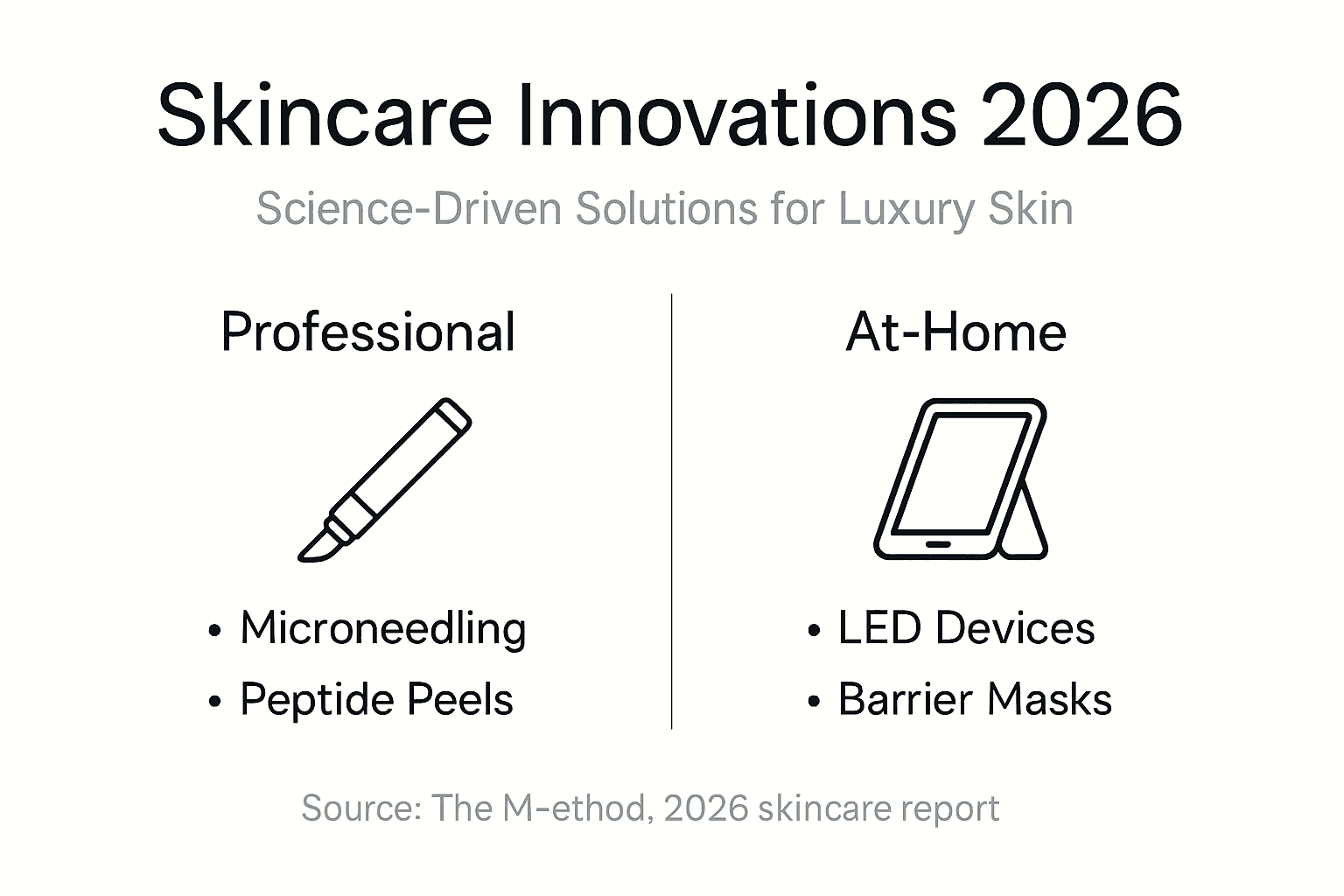
2026 marks a shift from aggressive at-home treatments back to professional clinic-led skincare, prioritising safe, guided procedures with regenerative stimulation. Biomodulation microneedling and liquid needling deliver collagen remodelling benefits without tissue trauma. Hybrid facials combining light therapies show measurable promise for skin rejuvenation and texture refinement.
Here’s what makes clinical treatments essential right now:
-
Biomodulation microneedling: Creates controlled micro-injuries that trigger collagen synthesis without aggressive downtime. Results compound over three to four sessions, yielding visible firmness by month three.
-
Liquid needling: Uses pressurised serums to penetrate without physical puncture. Gentler than traditional microneedling, ideal for sensitive or compromised barriers requiring rebuilding.
-
Hybrid light therapies: Red light stimulates fibroblasts; blue light targets bacteria. Combining them in clinical settings yields superior results to single-wavelength masks used at home.
At The M-ethod clinic in London, these procedures are sequenced carefully. A microneedling session might precede a three-week home protocol using peptides and growth factors to capitalise on enhanced penetration. Results compound dramatically.
At-home technology has matured substantially. At-home beauty devices enable consumers to perform collagen boosting treatments and skin toning affordably between clinic visits. Red-light therapy masks, facial wands, and handheld microneedling devices now deliver clinically measurable results previously requiring professional equipment.
The market growth reflects this reality. Forecast growth through 2031 indicates consumers understand that home devices supplement rather than replace professional care. A clinical SkinPen procedure accelerates collagen remodelling; a home LED mask sustains it weekly.
Your ideal 2026 protocol combines both strategically. Quarterly professional treatments address ageing architecture whilst monthly at-home routines prevent cumulative damage. This cadence optimises both efficacy and cost-effectiveness for results that compound year after year.
Pro tip: Schedule professional treatments at strategic points—typically quarterly—then use home devices on alternating weeks; this prevents over-stimulation whilst maintaining continuous collagen-building momentum between clinic sessions.
Below is a quick reference of 2026’s most impactful skincare innovations:
| Innovation Type | Key Benefit | Distinguishing Feature |
|---|---|---|
| AI Diagnostics | Personalised regimen adaptation | Analyses unseen skin layers |
| Regenerative Ingredients | Target root ageing mechanisms | Influence cellular repair and turnover |
| Advanced Barrier Repair | Strengthens skin’s defences | Combines ceramides, exosomes, actives |
| Hybrid Home-Clinic Care | Continuous skin improvement | Strategic sequencing and maintenance |
Elevate Your Skincare Journey with Science and Luxury
As the article highlights, the future of skincare lies in sustained skin longevity rather than short-term fixes. Challenges like maintaining mitochondrial health, optimising cellular renewal, and repairing your skin barrier require precision, personalised solutions that go beyond conventional anti-ageing. If you seek to protect your skin’s long-term function while addressing pigmentation, inflammation, and cumulative damage with clinically proven actives this is the moment to embrace a truly bespoke approach.
At The M-ethod, we specialise in prescription-strength and dermatologist-recommended skincare tailored exactly to your unique biology. Our virtual skin consultations connect you with top clinicians who design regimens targeting the root causes of skin ageing. Combining advanced diagnostics similar to AI-powered analysis with exclusive regenerative ingredients and professional-grade treatments such as FDA-approved SkinPen microneedling you benefit from a comprehensive solution crafted for lasting results.
Discover how luxury meets scientific precision at The M-ethod. Take control of your skin’s future today and experience a personalised protocol built to sustain your skin health now and for years ahead.
Frequently Asked Questions
What is the difference between skin longevity and traditional anti-ageing approaches?
Skin longevity focuses on preserving long-term skin function by preventing cumulative cellular damage, while traditional anti-ageing approaches aim to correct visible signs of ageing such as wrinkles and spots.
How do multi-pathway ingredients benefit my skincare routine?
Multi-pathway ingredients target various interconnected mechanisms of skin ageing simultaneously, improving overall skin health rather than just addressing superficial issues, helping you achieve more sustainable results.
Why is barrier repair important in my skincare regimen?
A healthy skin barrier protects against environmental stressors and inflammation, which can accelerate ageing and pigmentation issues. Repairing the barrier allows other treatments to work more effectively without causing irritation.
How can AI personalisation enhance my skincare routine?
AI personalisation analyses detailed skin metrics and adapts product recommendations based on your unique biology and changing skin conditions, ensuring a highly tailored approach that optimises the efficacy of your regimen.
Recommended
- Top Skincare Trends 2025: Medical Aesthetics & Science-Driven Innovations
- Top Skincare Trends 2025: Medical Aesthetics & Science-Driven Innovations
- Top Skincare Trends 2025: Medical Aesthetics & Science-Driven Innovations
- Summer Skincare Trends 2025. Medical-Grade Products for Glowing, Protected Skin