


Skincare for Rosacea Redness That Calms
Rosacea rarely responds well to enthusiasm. The more aggressively you try to scrub, peel or treat the redness away, the more reactive skin tends to become. Effective skincare for rosacea redness is usually quieter than most people expect - less about chasing quick results, and more about building a complexion that feels consistently calmer, stronger and less unpredictable.
For a customer already investing in clinical skincare, that can be frustrating. You may be used to active-led routines, visible turnover and high-performance formulas. Rosacea changes the rules. Skin that flushes easily, stings on contact or remains persistently pink needs precision, not pressure.
What rosacea redness actually needs
Rosacea is not simply "sensitive skin" with a little extra flushing. It is a chronic inflammatory condition, and that matters because inflamed skin does not tolerate the same inputs as resilient skin. Heat, UV exposure, alcohol, spicy food, stress, over-cleansing and potent topicals can all contribute, but the skin itself is often part of the problem. When the barrier is impaired, nerve endings are more reactive, water loss increases and even well-formulated products can start to sting.
That is why the best skincare for rosacea redness usually focuses on three priorities at once: reducing irritation, supporting the barrier and lowering daily inflammatory load. Brightening, resurfacing and anti-ageing goals do not disappear, but they need to be introduced with more discipline.
There is also nuance within rosacea. Some people mainly flush. Others experience persistent diffuse redness, visible capillaries or acne-like bumps and pustules. If your symptoms are worsening, becoming uncomfortable or affecting the eye area, medical assessment matters. Skincare can support rosacea beautifully, but it should not replace diagnosis.
The barrier-first approach to skincare for rosacea redness
A strong barrier is not a trend phrase. In rosacea-prone skin, it is often the difference between products that perform and products that provoke. When the barrier is compromised, even basics such as cleansing and SPF can feel challenging.
Start with a cleanser that removes debris, sunscreen and excess oil without leaving the skin tight. Cream, milk and gentle gel textures are usually preferable to foaming formulas with a squeaky-clean finish. Skin should feel comfortable after cleansing, not stripped. If your face is dry and hot after washing, your cleanser is too harsh, your water is too warm, or both.
Hydration should come next, but not every hydrating product is automatically suitable. Rosacea-prone skin often does best with formulas built around glycerin, hyaluronic acid, panthenol, ceramides, squalane and soothing thermal water-style complexes. These ingredients help reduce transepidermal water loss and support recovery without pushing the skin too hard.
Moisturiser is where many routines either stabilise or unravel. Lightweight gel creams can work for oilier rosacea-prone skin, but many clients need a moisturiser with more substance - enough to cushion the skin and reduce day-to-day reactivity. Rich does not have to mean greasy. The right formula should soften and protect, not trap heat.
Ingredients that can help calm visible redness
Rosacea does not reward ingredient maximalism. A shorter, more strategic routine often outperforms a shelf full of strong actives.
Niacinamide can be excellent, particularly for barrier support and visible redness, but concentration matters. Some rosacea-prone skins tolerate low to moderate percentages beautifully and become irritated by higher strengths. If niacinamide has never suited you, that does not necessarily mean you must avoid it forever - only that the vehicle or dose may have been wrong.
Azelaic acid is one of the most credible ingredients for rosacea-prone skin. It helps with visible redness, uneven texture and blemish-like breakouts, while generally being better tolerated than many exfoliating acids. Even so, not every formula feels elegant on compromised skin. The texture, supporting ingredients and frequency of use all matter.
Colloidal oatmeal, allantoin, ectoin, green tea extract and madecassoside can also be useful in a calming regimen. They are not miracle ingredients, but they can reduce background irritation and improve comfort over time.
Sulphur occasionally helps in rosacea with breakout-type lesions, though it can be drying. This is a good example of the trade-off that often defines rosacea care: an ingredient may improve one symptom while worsening barrier disruption if overused.
What often makes rosacea redness worse
The obvious triggers are not the only ones. Fragrance-heavy formulas, aggressive exfoliants, harsh cleansing brushes and strong retinoid routines are common issues, but irritation can also come from less expected places.
High percentages of glycolic acid, frequent salicylic acid use and multi-acid pads can be too stimulating, especially if redness is active. Physical scrubs are rarely a good idea. Essential oils, menthol and products designed to create a tingling or cooling sensation also tend to be poorly tolerated.
Retinoids are more complicated. They are exceptional ingredients, but rosacea-prone skin does not always welcome them immediately. Some clients can use a retinal or prescription retinoid successfully once the barrier is stable. Others need to avoid them altogether or use them sparingly, buffered with moisturiser. Clinical skincare should always be customised to the skin in front of you, not to a trend.
Even application style matters. Rubbing in products vigorously, layering too many formulas at once and changing routines every week can keep rosacea in a constant state of low-grade stress.
A refined routine for calmer skin
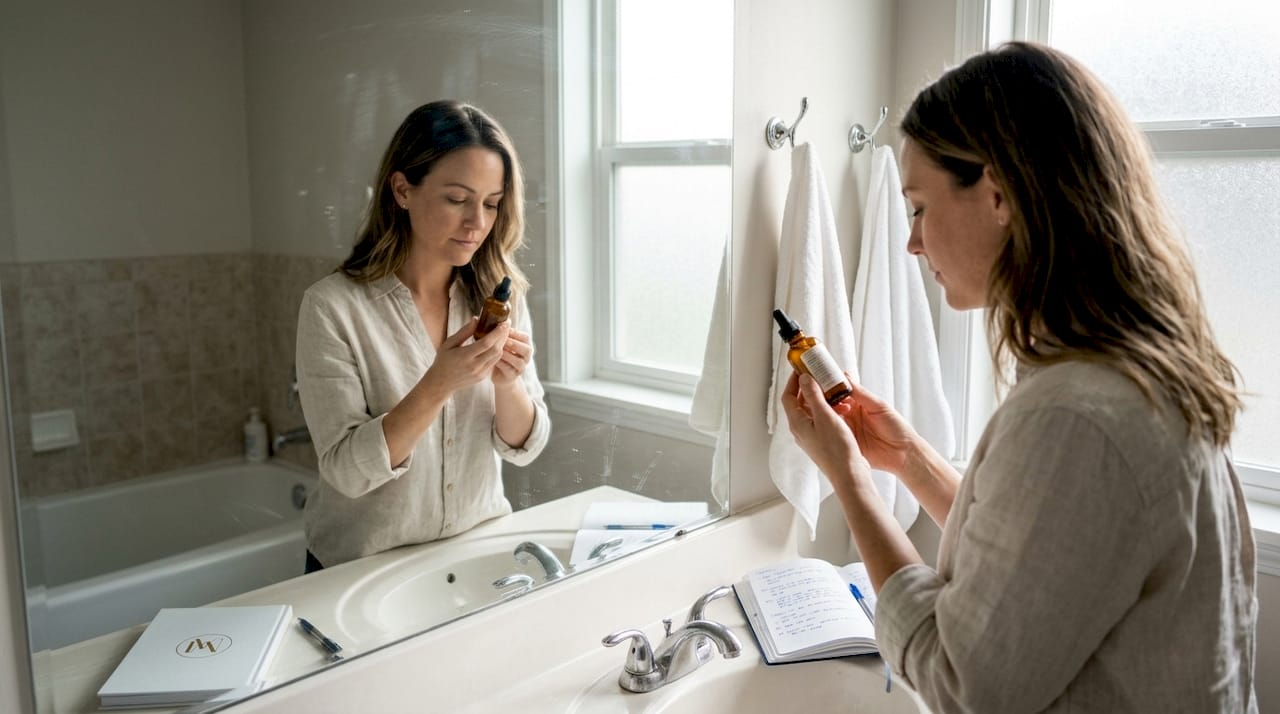
Morning should be restrained. Cleanse lightly if needed, or simply rinse with tepid water if your skin is dry and comfortable on waking. Follow with a hydrating serum or calming essence, then a moisturiser suited to your barrier needs.
The non-negotiable final step is broad-spectrum SPF. UV exposure is one of the most consistent rosacea triggers, and daily protection is essential if you want to reduce visible redness long term. Mineral sunscreens are often recommended for reactive skin, but this is not absolute. Some elegant chemical or hybrid sunscreens are tolerated very well. The best option is the one you will wear generously every day without stinging.
In the evening, remove sunscreen thoroughly but gently. Use one cleanser, or a careful double cleanse if you wear heavier makeup, provided your skin tolerates it. Then apply your calming or treatment step. For some, that may be azelaic acid. For others, it may simply be a reparative serum and moisturiser until the skin has settled.
If you want to introduce stronger actives, do it one at a time and not during a flare. Trial them slowly - perhaps two nights a week to begin with. Rosacea management is less about ambition and more about control.
When luxury skincare should become simpler
Premium skincare can be transformative, but rosacea often improves when a routine becomes more edited. This is not about downgrading quality. It is about choosing clinically proven formulas with a clear function rather than layering five treatment serums because each one sounds impressive.
For many clients, the best regimen is a sophisticated version of simple: a gentle cleanser, a barrier-support serum, a well-formulated moisturiser, a targeted active such as azelaic acid if appropriate, and excellent SPF. That is not a compromise. It is often the fastest route to skin that looks more even, polished and composed.
If flushing remains stubborn, visible vessels are prominent, or inflammatory lesions continue despite careful skincare, in-clinic intervention may be worth considering. Laser and light-based treatments can play an important role, but they should sit alongside a disciplined home routine, not replace it.
For those building a more intelligent rosacea regimen, expert guidance is worth having. At The M-ethod Aesthetics, the advantage of a curated, physician-dispensed approach is not simply access to premium formulas. It is knowing which formulas deserve a place in a routine and which ones are likely to create noise.
The skincare for rosacea redness mindset that matters most
Rosacea-prone skin rarely likes being forced into progress. It responds to consistency, restraint and intelligent formulation. A product can be expensive, active and beautifully packaged, yet still be wrong for skin that is signalling inflammation every day.
The real shift comes when you stop asking, "How much can my skin tolerate?" and start asking, "What will help my skin stay calm for the next six months?" That is where visible redness often begins to soften, not through extremes, but through a routine that respects the skin enough to let it recover.