

Layer Serum First: Most Over 30 Need Both for Eye Cream vs Serum
Choose a serum when you need targeted actives for puffiness, dark circles, or fine lines. Choose a cream when your under-eye skin needs moisture and barrier support. When both concerns apply, layer serum first, then cream, and give each a minute to settle. Results build gradually, and structural concerns like hollowing or genetic pigmentation may need a clinician’s input rather than a jar.
TL;DR:
- Use a serum when targeting puffiness, dark circles, or fine lines, as it delivers concentrated actives deep into the skin.
- Apply an eye cream for moisture, barrier support, or to reduce dryness and crepey texture, especially overnight.
- Layer products by applying serum first, waiting 30 to 60 seconds, then applying cream to avoid pilling and optimize absorption.
- Expect hydration improvements from creams within days, but structural changes, like wrinkle reduction, may take about four weeks of consistent use.
- Consult a clinician if concerns involve structural changes, significant hollowing, or if results do not appear after eight weeks of proper routine.
Table of Contents
- Eye cream vs serum: what actually separates them
- What an eye cream actually does for your skin
- How do eye creams and serums compare for different concerns?
- How to layer eye serum and eye cream correctly
- How long until you see results from eye serum or cream?
- What our clinicians want you to know before you start
- Why we build eye routines around the serum first
- Ready to build your eye routine properly?
- Sources
Eye cream vs serum: what actually separates them
The core difference comes down to what each product is built to do once it’s on your skin. A serum is a delivery vehicle. A cream is a barrier tool. That distinction shapes everything from texture to ingredient concentration, and it’s the reason dermatologists frame this as a formulation question rather than a brand preference.
Serums use a lightweight, low-viscosity, typically water-based base engineered to carry active ingredients deep into skin rather than sitting on top of it. Dermatologists note that this thinner structure is precisely what allows concentrated actives to penetrate more effectively than a heavier cream base would permit.
That vehicle typically carries:
- Peptides, which support collagen signalling and firmness over time
- Caffeine, which has a temporary tightening and de-puffing effect on the skin’s surface
- Antioxidants like vitamin C, which help defend against environmental stress
- Gentle retinal or retinol forms, formulated at eye-safe concentrations to smooth texture
A serum alone often suits mornings, when you want targeted treatment without heaviness under makeup, or evenings when puffiness and dullness are the main complaints rather than dryness.
What an eye cream actually does for your skin
An eye cream’s job is retention, not penetration. Where a serum pushes actives in, a cream’s emollients, occlusives, and lipids form a physical layer that slows transepidermal water loss, the process by which skin loses moisture to the air. That’s why creams tend to feel richer and sit visibly on the surface rather than absorbing quickly.
Common ingredients found in eye creams include:
- Hyaluronic acid, which draws and holds water in the outer skin layers
- Ceramides, lipids that rebuild and reinforce the skin barrier
- Peptides, often included alongside moisturising agents for a dual firming effect
- Eye-safe retinoid esters, milder than serum-strength retinol, aimed at gradual texture improvement
A cream alone is usually enough if your main issue is chronic dryness, crepey texture, or the need for overnight nourishment. It also tends to give a smoother base for concealer, which is why so many people reach for one purely as a make-up prep step rather than a treatment.
How do eye creams and serums compare for different concerns?
Mapping product type to concern is the fastest way to stop guessing at the counter. Serums win on active concentration and depth of delivery; creams win on occlusion and comfort. Neither format is inherently “better,” they’re built for different jobs, and dermatologists frame the choice around function rather than form.
- Puffiness responds best to a caffeine-based serum, which studies show can reduce under-eye swelling by roughly 15–20% within two weeks of twice-daily use.
- Dark circles improve modestly with brightening serums, but dermatologists caution that circles are often multi-factorial. When a tear trough or genetic pigmentation is the root cause, topical products deliver only subtle change.
- Fine lines respond to peptide serums used consistently, since these actives work at a deeper level than a cream’s surface lipids can reach.
- Dryness and crepiness call for a cream first, since barrier support matters more here than active penetration.
The decision rule is simple: prioritise a serum when the concern is functional (puffiness, pigmentation, fine lines), prioritise a cream when the concern is structural dryness, and use both when your skin shows signs of each. Most people over 30 fall into that last category.
How to layer eye serum and eye cream correctly
Getting the order wrong is the single most common mistake people make with this routine. Applying a cream before a serum blocks absorption, since the occlusive layer prevents the thinner formula from penetrating. Thinnest to thickest is the rule, and it holds for the whole face, not just the eye area, as the American Academy of Dermatology confirms.
- Cleanse and pat the eye area dry.
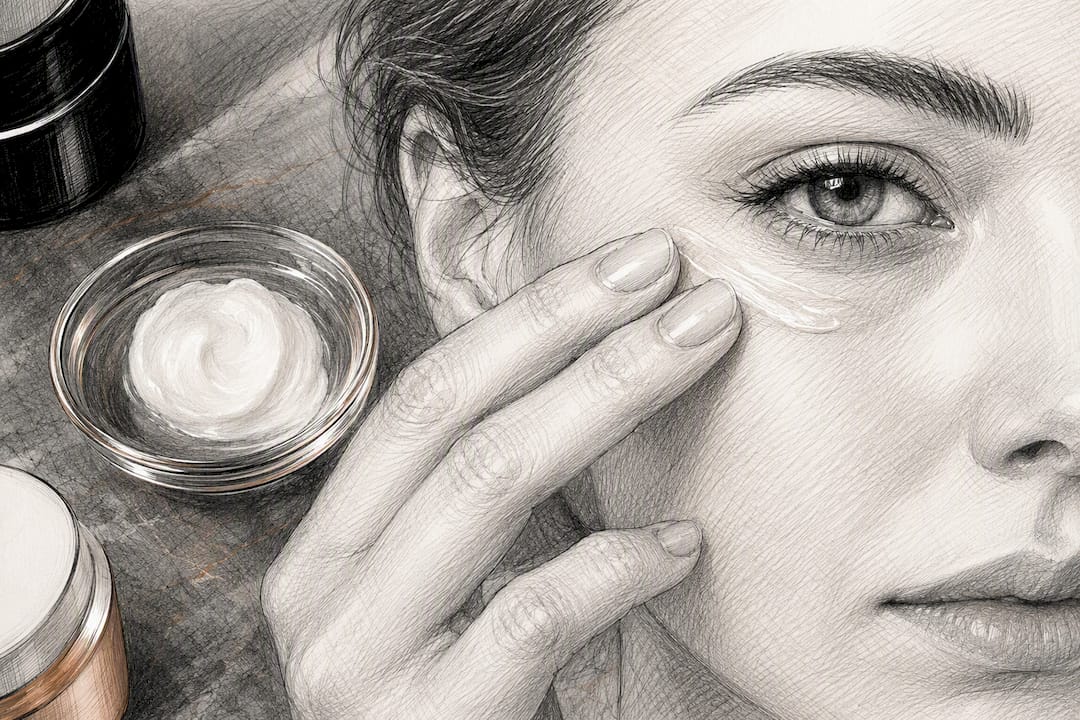
- Apply a rice-grain amount of serum to the orbital bone using your ring finger, patting rather than rubbing.
- Wait 30 to 60 seconds for the serum to absorb before moving on.
- Follow with a pea-sized amount of cream (split between both eyes), again patting into the bone, avoiding the lash line.
- Let both products set for a minute before applying make-up to avoid pilling.
- If introducing a retinoid at the eye, use it only at night, start two to three times weekly, and increase gradually.
For more detail on sequencing actives elsewhere in your routine, see our guide on how to layer skincare products. If retinol is new to your eye routine specifically, our piece on layering retinol safely covers frequency and irritation risk in more depth.
Pro Tip: Never apply eye products right up to the lash line. Staying on the orbital bone (the bony ridge surrounding the eye) avoids migration into the eye itself and reduces stinging, especially with active ingredients like caffeine or retinoids.
How long until you see results from eye serum or cream?
Hydration-focused improvements from a cream show up within days, since occlusive ingredients work almost immediately to reduce water loss. Structural changes take longer.
One 32-subject trial of a multi-peptide eye serum found statistically significant reductions in wrinkle depth and measurable gains in firmness by day 28 of twice-daily use, according to the Journal of Cosmetic Dermatology.
That four-week mark is a realistic benchmark for peptide-driven change, though satisfaction varies by individual and results need ongoing use to maintain. Age, application consistency, and your skin’s starting condition all shift that timeline. Someone using a serum sporadically, or starting from significant sun damage, should expect slower progress than someone with a consistent twice-daily habit and mild baseline concerns.
What our clinicians want you to know before you start
Small missteps around the eye cause most of the irritation we see in virtual consultations, and most are avoidable with a few adjustments to technique.
- Apply only to the orbital bone, never closer to the lash line, to prevent stinging and product migration into the eye.
- Use less than you think you need. Over-application under the eye causes pilling and disrupts make-up more than it improves skin.
- Introduce new actives, particularly retinoids, slowly and monitor for redness or flaking before increasing frequency, as detailed in our guide on layering active skincare correctly.
- Book a virtual consultation if you’re considering prescription-strength options or concerns persist beyond eight weeks.
- Seek in-person assessment for sudden swelling, visible asymmetry, or a hollow that looks structural rather than surface-level, since these can indicate causes topical care won’t resolve.
Why we build eye routines around the serum first
When we assess the eye area in virtual consultations, we’re working through a short checklist: is this dryness, laxity, pigmentation, or shadowing? That distinction decides everything that follows. Most people assume their under-eye problem is one thing when it’s actually two or three overlapping issues, which is exactly why a single “best eye cream” rarely satisfies anyone for long.
Our starting point is almost always a targeted serum, because active concentration solves the visible complaints people come to us with first: puffiness, dullness, early fine lines. Barrier support gets added once we understand the baseline. Where the concern looks structural rather than textural, that’s when we point clients towards clinician-led options rather than more product.
— Jess
Ready to build your eye routine properly?
Guessing at ingredient percentages from a shelf display is how most people end up with three half-used eye products and no clear improvement. Virtual consultations can pair you with a clinician who matches actives and formulations to your actual skin, not a generic “for dark circles” label on a box. If you already know you need a hydrating option, the NEOSTRATA collection includes eye creams built for barrier support, and our PCA Clearskin serum is worth a look if targeted actives are the priority. Start with a virtual consultation on Them-ethod to get a routine mapped to your skin rather than to a search result.
Sources
- Eye serum vs. eye cream, explained by dermatologists — TODAY
- Clinical evidence of the efficacy and safety of a new multi‐peptide topical eye serum — Journal of Cosmetic Dermatology
- PubMed clinical data referenced for caffeine effects on under-eye puffiness
- Eye serum or eye cream? Here’s how to choose the right one for you — NewBeauty