



Top anti-aging tips: your 2026 evidence-based guide
TL;DR:
- Consistent, science-backed skincare routines combining SPF 30+, retinoids, and barrier-supportive moisturizers are essential for slowing skin aging. Lifestyle factors such as diet, exercise, sleep, and social connections profoundly influence cellular health and overall aging. Simplifying skincare to key essentials and maintaining long-term consistency yields better results than overusing products or chasing trends.
The top anti-aging tips are evidence-based practices that combine targeted skincare, lifestyle habits, and nutritional support to slow visible skin ageing and preserve cellular health. For anyone over 30, the most impactful strategies are not found in expensive product collections but in consistent, science-backed routines built around broad-spectrum SPF 30+ sunscreen, retinoids, ceramide-rich moisturisers, and a Mediterranean-style diet. Dermatologists and longevity researchers agree: the gap between ageing well and ageing prematurely is largely determined by daily choices, not genetics alone.

1. Daily sunscreen: the cornerstone of anti-aging skincare
Broad-spectrum sunscreen SPF 30+ is the single most effective tool in any guide to anti-aging skincare. Up to 80% of visible skin ageing signs, including pigmentation, fine lines, and collagen degradation, are caused by cumulative UV exposure. That means the majority of what we call “ageing skin” is technically photoageing, and it is largely preventable.
Choosing the right formulation matters. Physical filters such as zinc oxide and titanium dioxide sit on the skin’s surface and deflect UV rays, making them well suited to sensitive and rosacea-prone skin. Chemical filters like avobenzone and octinoxate absorb UV energy and tend to feel lighter under make-up. For mature skin, a hybrid formula combining both filter types often delivers the best balance of protection and wearability.
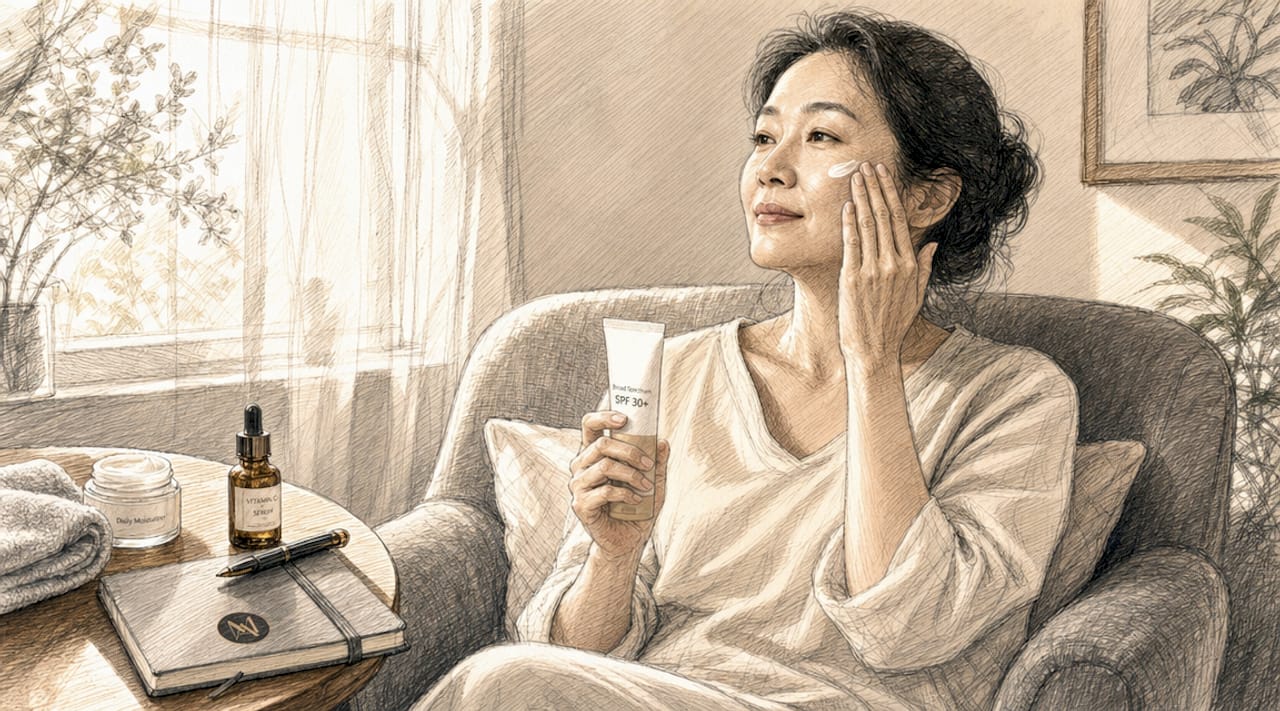
Application technique is where most people fall short. Generous, consistent application means using a nickel-sized amount for the face alone, and reapplying every two hours when outdoors. Underapplication reduces effective SPF dramatically, even with a high-factor product.
- Apply sunscreen as the final step of your morning routine, after moisturiser and before make-up
- Use a dedicated SPF product rather than relying on SPF in foundation, which is rarely applied in sufficient quantity
- Extend application to the neck, décolletage, and hands, areas that betray age as readily as the face
- Reapply mid-afternoon if you spend time near windows, as UVA rays penetrate glass
Pro Tip: Layer a vitamin C serum beneath your sunscreen each morning. Vitamin C neutralises free radicals that UV rays generate, and the combination of antioxidant plus SPF offers measurably stronger protection than either used alone. Look for stable formulations such as L-ascorbic acid at 10 to 20%, or the gentler ascorbyl glucoside if your skin is reactive. For a deeper look at SPF and skin ageing, Them-ethod’s journal covers selection and application in detail.
2. Retinoids: the gold-standard active for skin renewal
Retinoids are the most clinically validated anti-aging skincare ingredient available, with decades of peer-reviewed evidence confirming their ability to stimulate collagen production, accelerate cell turnover, and improve skin texture. The category includes prescription tretinoin, over-the-counter retinaldehyde, and encapsulated retinol, each varying in potency and conversion steps to retinoic acid in the skin.
Retinoids stimulate collagen and improve texture, but they must be introduced gradually to avoid barrier damage. Starting too aggressively is the most common mistake, and the resulting irritation, redness, and peeling can actually worsen the appearance of fine lines in the short term. The goal is tolerance-building, not speed.
A practical introduction protocol:
- Begin with a low-concentration retinol (0.1 to 0.3%) or retinaldehyde two nights per week
- Apply to dry skin, at least 20 minutes after cleansing, to reduce irritation
- Use the “buffering” method: apply a thin layer of moisturiser first, then the retinoid on top
- Increase frequency to three nights per week after four to six weeks, if skin tolerates it well
- Upgrade concentration only after your skin has fully adjusted to the current level
Visible improvements typically require 8 to 12 weeks of consistent use. Structural dermal remodelling is gradual, and patience is non-negotiable. Exfoliation complements retinoid use but should be scheduled on separate nights. Chemical exfoliants such as glycolic acid (an AHA), lactic acid, or polyhydroxy acids (PHAs) are preferable to physical scrubs for mature skin, as they work more evenly and carry less risk of micro-tears. For a thorough breakdown of safe exfoliation methods, Them-ethod’s journal is a useful reference.
Pro Tip: If you experience persistent redness or flaking beyond the first two weeks, switch to retinaldehyde rather than retinol. Retinaldehyde converts to retinoic acid in a single step rather than two, making it more efficient than retinol at lower concentrations while remaining gentler than prescription tretinoin.
3. Moisturising and barrier restoration for mature skin
Ageing skin loses ceramides, natural moisturising factors, and lipids at an accelerating rate from the mid-30s onwards. This decline weakens the skin barrier, increases transepidermal water loss, and makes skin more reactive to environmental stressors. Restoring and maintaining that barrier is one of the most effective anti-aging strategies available, and it costs far less than most people expect.
Gentle, pH-balanced cleansers and ceramide-rich moisturisers are the clinical standard for protecting ageing skin. Harsh foaming cleansers strip the acid mantle, disrupt the microbiome, and leave skin tight and vulnerable. A cream or lotion cleanser with a pH between 4.5 and 5.5 cleanses effectively without compromising barrier integrity. Revision Skincare’s gentle cleansing lotion is one example of a formulation designed specifically for this purpose.
Key ingredients to look for in a moisturiser for mature skin:
- Ceramides (ceramide NP, AP, EOP): replenish the lipid matrix and reduce water loss
- Glycerin: a humectant that draws moisture from the environment into the skin
- Hyaluronic acid: holds up to 1,000 times its weight in water, plumping fine lines temporarily
- Squalane: a lightweight emollient derived from olives or sugarcane that mimics the skin’s own sebum
Apply moisturiser to slightly damp skin immediately after cleansing to lock in hydration. At night, a richer occlusive layer over your moisturiser, using ingredients like shea butter or petrolatum, creates a seal that supports overnight repair. Avoid alcohol-heavy toners and fragrance-laden products, as both are common triggers for barrier disruption in skin over 30.
4. Lifestyle factors that shape how you age
Medical experts identify lifestyle as the foundation of anti-aging and longevity, with diet, exercise, sleep, social connection, and stress management each contributing independently to how quickly the body and skin age. Topical skincare addresses the surface; lifestyle determines what is happening beneath it.
A Mediterranean-style diet rich in fruits, vegetables, nuts, and olive oil reduces systemic inflammation, which is a primary driver of accelerated cellular ageing. Chronic low-grade inflammation, sometimes called “inflammageing,” degrades collagen, impairs skin repair, and shortens telomeres. Replacing ultra-processed foods with whole, colourful plant foods is one of the most evidence-backed rejuvenation techniques available.
150 minutes of moderate aerobic exercise per week is considered one of the most effective medical interventions for systemic anti-ageing. Exercise improves circulation, which delivers oxygen and nutrients to skin cells, reduces cortisol, and supports mitochondrial health. Resistance training adds the benefit of preserving muscle mass, which declines with age and contributes to the hollowing and sagging of facial contours.
Sleep is where cellular repair happens. During deep sleep, the glymphatic system clears metabolic waste from the brain, growth hormone is released, and skin undergoes its most intensive repair cycle. Consistently sleeping fewer than seven hours accelerates visible ageing, increases cortisol, and impairs collagen synthesis.
“The number one factor in longer, happier lives is strong social connection.” This finding, drawn from decades of longevity research, is often overlooked in skincare conversations. Social isolation is linked to increased inflammation and accelerated ageing at the cellular level. Prioritising relationships is, quite literally, an anti-aging strategy.
Stress management rounds out the picture. Chronic psychological stress elevates cortisol, which breaks down collagen and disrupts the skin barrier. Practices such as breathwork, regular time outdoors, and intentional rest are not indulgences. They are physiologically active interventions.
5. Natural supplements and remedies with anti-aging potential
Supplements work best as complements to a strong skincare and lifestyle foundation, not as replacements. Several natural compounds show genuine promise in peer-reviewed research, and understanding which ones are worth your attention saves both money and disappointment.
Spermidine, curcumin, quercetin, and fisetin are among the most studied natural anti-aging compounds. Spermidine, found in wheat germ, aged cheese, and mushrooms, activates autophagy, the cellular process that clears damaged proteins and organelles. Curcumin, the active compound in turmeric, reduces inflammatory markers. Quercetin and fisetin, found in apples, onions, and strawberries, show senolytic properties, meaning they help clear senescent “zombie” cells that accumulate with age and drive inflammation.
- Topical vitamin C: stable formulations (L-ascorbic acid or ascorbyl glucoside) brighten pigmentation, protect against oxidative stress, and support collagen synthesis
- Niacinamide: reduces pore appearance, improves uneven skin tone, and strengthens the barrier
- Hydrolyzed collagen: provides modest improvements in skin elasticity and hydration after 8 to 12 weeks, though it should complement rather than replace topical care
- Omega-3 fatty acids: reduce systemic inflammation and support the skin’s lipid barrier from within
The key principle with supplements is expectation management. None of these compounds will replace sunscreen or retinoids. Used consistently alongside a solid routine, however, they can meaningfully support skin health and cellular resilience over time.
Key takeaways
The most effective approach to anti-aging combines daily broad-spectrum SPF, consistent retinoid use, barrier-supportive moisturising, and lifestyle habits that reduce systemic inflammation.
| Point | Details |
|---|---|
| Sunscreen is non-negotiable | Broad-spectrum SPF 30+ prevents up to 80% of visible UV-induced skin ageing when applied correctly. |
| Retinoids require patience | Visible results take 8 to 12 weeks; introduce gradually using the buffering method to protect the barrier. |
| Barrier health drives results | Ceramide-rich moisturisers and gentle cleansers prevent transepidermal water loss and reduce reactivity. |
| Lifestyle is foundational | Diet, exercise, sleep, and social connection each independently influence how quickly skin and cells age. |
| Supplements are adjuncts | Spermidine, vitamin C, and hydrolyzed collagen support anti-aging outcomes but do not replace core skincare. |
Why I think simplicity wins every time
I have worked with hundreds of clients who arrive with bathroom shelves full of serums, actives, and devices, and skin that is more irritated and uneven than when they started. The instinct to do more is understandable. The beauty industry profits from it. But the evidence, and my own clinical observations, consistently point in the opposite direction.
Minimalist routines anchored on essentials like sunscreen, retinoids, and moisturisers outperform multi-serum layering for one simple reason: they allow the skin to function without constant disruption. Every time you introduce a new active, you are asking your barrier to adapt. Stack too many at once, and the barrier never fully recovers.
The clients I see making the most consistent progress are not using the most products. They are using the right products, applied correctly, every single day. Consistency beats novelty. A retinoid used three nights a week for two years will do more for your skin than a rotating cast of trendy actives used sporadically.
I also want to be honest about the lifestyle piece, because it is the part most people want to skip. No serum compensates for chronic sleep deprivation, a diet high in refined sugar, or unmanaged stress. These are not soft recommendations. They are physiological realities. If you want to know where to start, I would point you to a step-by-step anti-ageing regimen that integrates both skincare and lifestyle in a practical, sustainable way.
The best anti-aging routine is the one you will actually follow.
— Jess
How Them-ethod supports your anti-aging routine
At Them-ethod, we have curated a selection of clinically effective products that align directly with the strategies covered in this guide. For retinoid beginners and those looking to upgrade their active ingredient routine, PCA Retinol Night 0.5% offers a well-tolerated, professionally formulated option designed for gradual, effective use. For broader skin renewal and hydration support, the NEOSTRATA collection delivers science-backed results across multiple skin concerns. Every product we stock is selected for clinical efficacy, not marketing appeal. If you are unsure where to begin, our virtual skin consultations connect you with top clinicians who can build a personalised protocol around your specific skin goals.
FAQ
What is the single most effective anti-aging skincare step?
Daily broad-spectrum sunscreen SPF 30+ is the most evidence-backed single step, preventing up to 80% of visible UV-induced skin ageing including pigmentation, wrinkles, and collagen loss.
How long before retinoids show results?
Retinoid improvements typically require 8 to 12 weeks of consistent use, as structural dermal remodelling is a gradual process that cannot be accelerated by increasing concentration too quickly.
Can diet really affect how my skin ages?
A Mediterranean-style diet rich in fruits, vegetables, nuts, and olive oil reduces systemic inflammation, which directly degrades collagen and accelerates visible skin ageing over time.
Do collagen supplements actually work?
Hydrolyzed collagen supplements provide modest improvements in skin elasticity and hydration after 8 to 12 weeks, but they are most effective when used alongside a solid topical skincare routine rather than as a standalone solution.
How do I track whether my anti-aging routine is working?
Consistent progress photography and a skincare journal are the most reliable methods. For structured guidance on monitoring routine progress, tracking key metrics like texture, tone, and hydration over 12-week cycles gives a clear picture of what is and is not working.