





SkinPen microneedling: 3M channels, safer results
TL;DR:
- SkinPen is the only FDA-cleared professional microneedling device for facial scars and skin rejuvenation.
- Proper professional microneedling uses precise, vertical needle insertion, ensuring safe, consistent results.
- At-home devices lack regulation, sterility, and accuracy, increasing risks without comparable effectiveness.
SkinPen is the only FDA-cleared microneedling device for facial acne scars, and yet the market remains flooded with at-home rollers and unregulated pens that promise identical outcomes. The gap between clinical reality and consumer expectation has never been wider. This guide cuts through the noise with evidence-based clarity, covering exactly how SkinPen works, who it benefits, what the science actually supports, and why professional oversight is not optional — it is the foundation of safe, lasting results. Whether you are exploring microneedling for the first time or reconsidering your current approach, what follows will give you the depth and confidence to make a genuinely informed decision.
Table of Contents
- What is SkinPen microneedling?
- Who is SkinPen right for? Indications, skin types and contraindications
- Protocols, results and scientific evidence
- SkinPen versus at-home and consumer devices
- Why professional guidance and evidence matter with microneedling
- Discover proven skincare solutions with The M-ethod
- Frequently asked questions
Key Takeaways
| Point | Details |
|---|---|
| FDA-cleared precision | SkinPen is the only microneedling device with FDA clearance, offering proven safety and effectiveness. |
| Broad skin suitability | SkinPen safely treats acne scars and wrinkles for all skin types, with minimal downtime. |
| Professional results | Clinically managed protocols and equipment deliver far better outcomes than consumer devices. |
| Evidence-backed improvements | Combining SkinPen with advanced therapies, like fillers, produces superior results for tough skin issues. |
| Personalised consultation | Virtual or clinical assessment ensures optimal treatment choice and minimises risks. |
What is SkinPen microneedling?
SkinPen is a motorised microneedling device that uses 14 sterile, single-use needles to create controlled micro-injuries in the skin. Unlike manual dermal rollers, which drag needles across the surface at an angle, SkinPen delivers perfectly vertical needle movement. This distinction matters enormously. Vertical penetration creates clean, precise channels without tearing surrounding tissue, which translates directly into faster healing and more predictable outcomes.
The mechanism itself is elegantly simple. By puncturing the skin at a controlled depth, SkinPen triggers the body’s natural wound-healing cascade. Collagen and elastin production accelerates, new skin cells migrate to the treated area, and the overall texture, tone, and firmness of the skin improves progressively. The device creates approximately 3 million micro-channels per treatment session, stimulating a significant and measurable biological response.
Key features that set SkinPen apart from consumer alternatives:
- Adjustable needle depth from 0.25 mm to 2.5 mm, allowing clinicians to target different skin layers
- Sterile, single-use needle cartridges that eliminate cross-contamination risk
- Motorised vertical motion that protects surrounding tissue
- FDA clearance backed by clinical validation studies
- Consistent speed and pressure controlled by the device, not the practitioner’s hand
| Feature | SkinPen (professional) | Manual roller (consumer) |
|---|---|---|
| Needle motion | Vertical | Rolling/diagonal |
| Sterility | Single-use cartridge | Reusable (contamination risk) |
| Depth control | Precise, adjustable | Inconsistent |
| FDA clearance | Yes | No |
| Healing time | Typically 24-72 hours | Variable, often longer |
At-home pens sold online may appear similar in design, but they lack the motor precision, clinical-grade needles, and regulatory validation that define a professional device. The depth settings on consumer devices are rarely accurate, and the absence of sterile cartridges creates a genuine infection risk with repeated use.
Pro Tip: Always ask your clinician about needle depth settings before your session. Shallower depths suit sensitive or thinner skin, whilst deeper settings are reserved for established scarring. This is not a one-size-fits-all parameter.
Who is SkinPen right for? Indications, skin types and contraindications
Not every skin concern requires microneedling, and not every person is a suitable candidate. Understanding the FDA-cleared indications gives you a reliable framework: SkinPen is approved for facial acne scars, facial wrinkles, and abdominal scars, with a safety profile validated across all Fitzpatrick skin types. That last point is clinically significant. Many energy-based devices carry real risks of post-inflammatory hyperpigmentation (PIH) in darker skin tones, but SkinPen’s mechanical action does not generate heat, reducing that risk considerably.
That said, darker Fitzpatrick types (III to VI) still warrant careful assessment. PIH can occur, particularly if post-treatment protocols are not followed precisely. This is exactly why a professional consultation before treatment is not a formality — it is a clinical safeguard.
Ideal candidates for SkinPen include those with:
- Moderate to severe acne scarring
- Fine lines and early to moderate wrinkles
- Uneven skin texture or enlarged pores
- Post-surgical or stretch mark scarring
- Skin laxity that benefits from collagen stimulation
Contraindications that require caution or exclusion:
According to established safety protocols, SkinPen should not be used in cases of active skin infection, current isotretinoin use, pregnancy or nursing, a history of keloid scarring, or known metal allergies. Blood-thinning medications and certain autoimmune conditions also warrant discussion with your clinician.
| Indication | FDA-cleared | Notes |
|---|---|---|
| Facial acne scars | Yes | All skin types |
| Facial wrinkles | Yes | Superficial to moderate |
| Abdominal scars | Yes | Including stretch marks |
| Rosacea/redness | Off-label | Clinician discretion |
| Hyperpigmentation | Off-label | Combined protocols advised |
Age is another consideration. Younger patients with active acne should wait until breakouts are controlled before beginning a course of treatment. Older patients may benefit from combining SkinPen with complementary injectables such as Profhilo or polynucleotides for more pronounced skin renewal.
Pro Tip: If you are unsure whether you are a good candidate, a virtual skincare consultation with a qualified clinician is the most efficient first step. It removes guesswork and ensures your protocol is designed around your actual skin, not a generic template.
Protocols, results and scientific evidence
Understanding who can benefit, let’s look at what you can realistically expect from SkinPen treatments, from your first session through to long-term maintenance.

A standard SkinPen protocol involves three to six sessions spaced four to six weeks apart, with maintenance treatments every six to twelve months thereafter. Each session begins with the application of a topical anaesthetic cream, left on for approximately 30 to 45 minutes. The treatment itself takes 20 to 30 minutes depending on the area, and downtime is typically limited to 24 to 72 hours of redness and mild swelling.
What to expect, step by step:
- Pre-treatment skin preparation, including SPF and targeted topicals in the weeks prior
- Topical anaesthetic application on the day
- SkinPen treatment across targeted zones at clinician-selected depths
- Immediate application of soothing serums or growth factors
- Post-treatment care: gentle cleansing, SPF, and avoidance of active ingredients for several days
The science behind the outcomes is solid. A systematic review of microneedling safety found minimal adverse events across studies, with the majority resolving within seven days. Transient erythema (redness) and oedema (swelling) are the most commonly reported effects, and serious complications are rare when treatment is performed by a trained clinician.
For those considering combination approaches, the evidence offers useful nuance. Research published in PRS Global Open found that combining microneedling with dermal fillers produces meaningfully better outcomes than microneedling alone, whilst PRP (platelet-rich plasma) showed less consistent benefit, particularly for skin laxity in older women.
| Treatment approach | Best for | Evidence strength |
|---|---|---|
| SkinPen alone | Acne scars, texture | Strong |
| SkinPen + fillers | Volume loss, deep lines | Strong |
| SkinPen + PRP | Wound healing, hair | Moderate |
| SkinPen + topicals | Pigmentation, maintenance | Good |
“Microneedling stimulates the skin’s own repair mechanisms, making it one of the most biologically intelligent treatments available for scarring and ageing skin.”
Pro Tip: Incorporating a post-procedure skincare protocol with growth factors or hyaluronic acid immediately after treatment can significantly enhance results. The micro-channels created during the session temporarily increase product absorption, making this a clinically strategic window. For those specifically addressing scarring with SkinPen, deeper needle settings and a longer course of sessions are typically recommended.
SkinPen versus at-home and consumer devices
To finish the core guide, let’s put professional SkinPen in context: how does it truly compare to at-home microneedling?
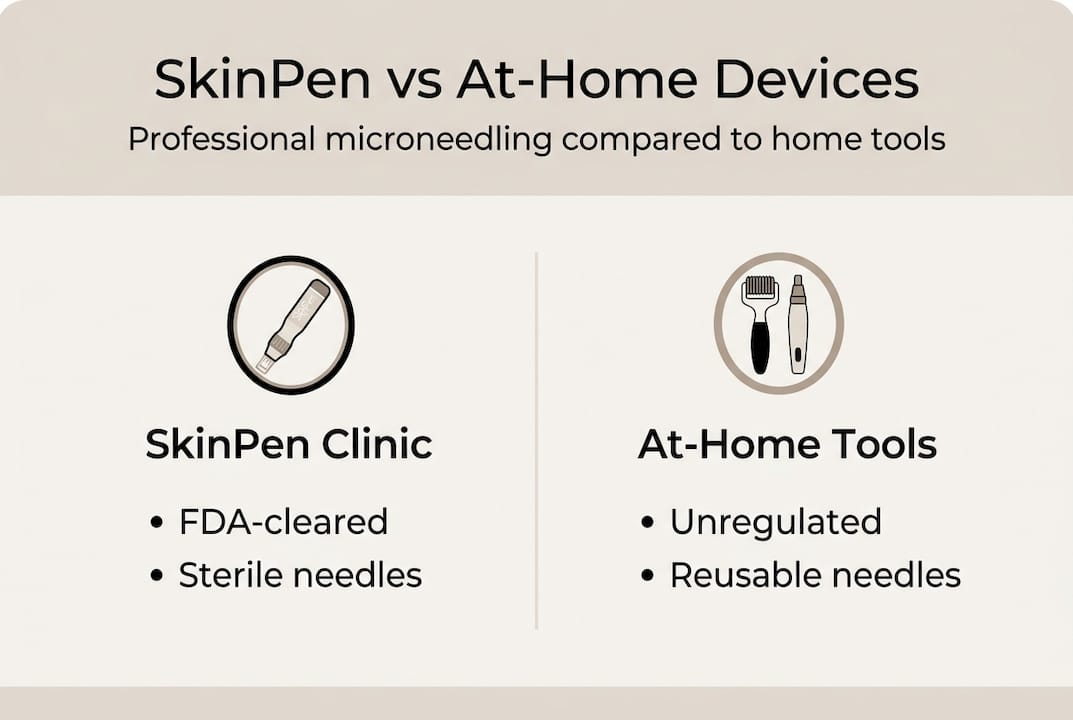
The honest answer is that professional FDA-cleared devices and consumer alternatives are not comparable in any clinically meaningful way. SkinPen’s vertical needling creates clean, controlled channels with minimal tissue trauma. At-home pens and rollers move at angles, dragging rather than puncturing, which increases the risk of micro-tears, uneven results, and infection, particularly when devices are reused without proper sterilisation.
Why at-home devices fall short:
- No regulatory validation or clinical safety data
- Inconsistent needle depth leads to unpredictable results
- Reusable needles become blunt and harbour bacteria
- No professional assessment of skin readiness or contraindications
- Higher risk of post-inflammatory hyperpigmentation if used incorrectly
| Criterion | SkinPen | At-home device |
|---|---|---|
| Regulatory status | FDA-cleared | Unregulated |
| Needle sterility | Single-use cartridge | Reusable |
| Depth accuracy | Clinically precise | Approximate |
| Infection risk | Minimal | Elevated |
| Clinical evidence | Validated studies | None |
| Outcome predictability | High | Low |
The appeal of at-home devices is understandable. They are affordable, convenient, and marketed with confidence. But the clinical differences in microneedling between professional and consumer approaches are not cosmetic distinctions — they are safety distinctions. Scarring and infection from poorly executed at-home treatments are real, documented outcomes.
For those who want to support their skin between professional sessions, the focus should be on evidence-based professional-grade skincare rather than attempting to replicate clinical procedures at home. The two approaches are complementary, not interchangeable.
Why professional guidance and evidence matter with microneedling
We have seen a sharp rise in patients arriving for consultations having already attempted microneedling at home, sometimes with visible damage. This is not a criticism of curiosity — it reflects a genuine gap between how these devices are marketed and what the clinical evidence actually supports.
The uncomfortable truth is that microneedling done incorrectly does not simply fail to work. It can actively harm the skin. Infection, scarring, and worsened pigmentation are all possible outcomes when treatment is performed without proper assessment, sterile technique, or post-care guidance. The SkinPen safety protocols that exist in clinical settings are not bureaucratic formalities. They are the reason outcomes are predictable and complications are rare.
We also know, from research into virtual consultations, that assessing candidacy remotely is both practical and effective. A virtual consultation with a trained clinician can identify contraindications, set realistic expectations, and design a protocol tailored to your specific skin before you ever set foot in a clinic. That is not a barrier to treatment — it is the smartest possible starting point.
Discover proven skincare solutions with The M-ethod
If SkinPen microneedling is on your radar, the next step is ensuring your full skincare protocol supports the results you are working towards. At The M-ethod, we offer FDA-approved SkinPen treatments in London and Athens, alongside virtual skincare consultations with expert clinicians who can assess your candidacy and design a bespoke plan. Between sessions, targeted products such as the PCA Clearskin acne serum and the NEOSTRATA healthy skin range help maintain and amplify your results. Precision skincare, professionally guided, is what we do.
Frequently asked questions
Is SkinPen microneedling safe for dark skin tones?
SkinPen is FDA-cleared for all skin types, including deeper Fitzpatrick tones, though a higher risk of transient pigmentation means expert guidance and a tailored post-treatment protocol are strongly advised.
How soon will I see results after SkinPen microneedling?
Initial improvements in texture are often visible within two to four weeks, but collagen production continues for several months after each session, meaning results build progressively across a full course of treatment.
What should I avoid after a SkinPen session?
Avoid active ingredients such as retinoids and acids, direct sun exposure, and intense exercise for at least 48 to 72 hours; post-treatment care should focus on gentle cleansing, hydration, and broad-spectrum SPF.
Can SkinPen treat deep wrinkles or severe acne scars?
SkinPen delivers meaningful improvement for moderate scarring and wrinkles, but combining with fillers or other adjunct therapies is often recommended for deeper or more established concerns.
Are at-home microneedling devices as effective as SkinPen?
At-home devices are not equivalent to SkinPen in precision, sterility, or safety, and FDA-cleared professional devices consistently outperform consumer alternatives in both efficacy and risk management.