




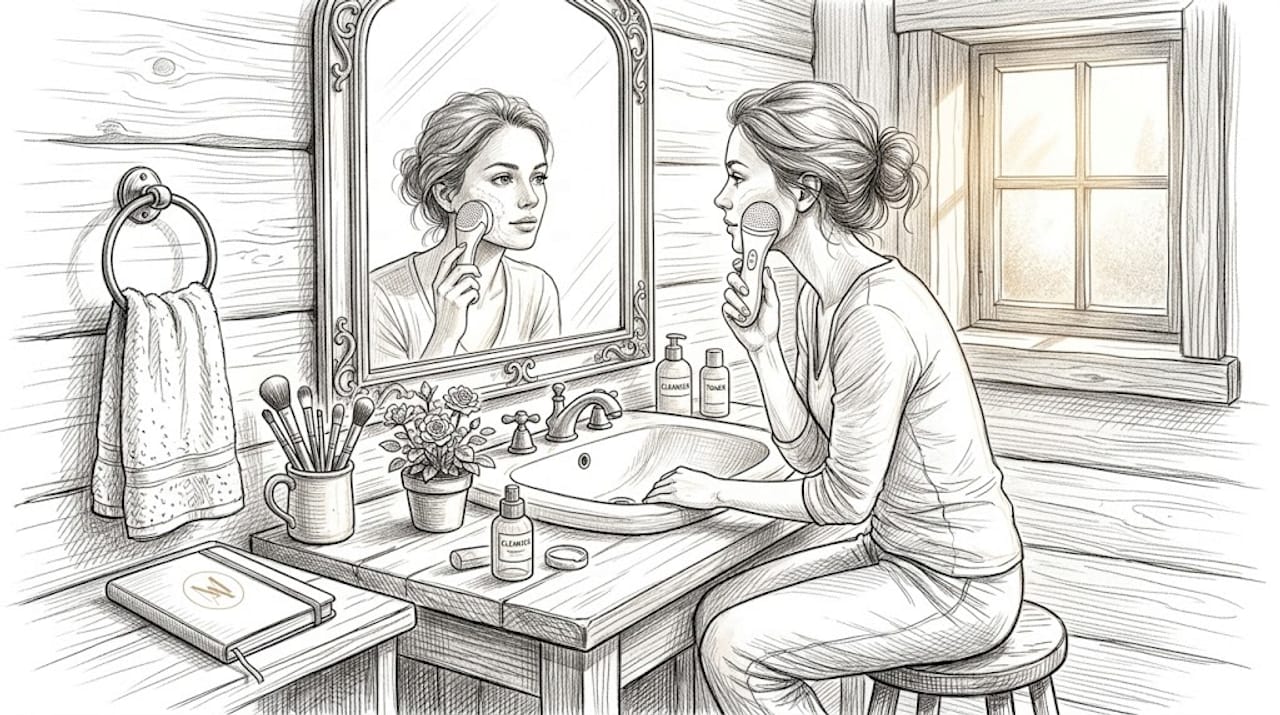
How to use skincare devices for real results
TL;DR:
- Proper preparation and technique are crucial for effective at-home skincare device use, ensuring visible, lasting results. Consistency, correct layering, and adherence to safety guidelines maximize device benefits while minimizing skin risks. Focusing on one device at a time over several weeks delivers measurable improvements rooted in understanding individual treatment protocols.
At-home skincare devices have never been more capable, yet the gap between owning one and actually using it correctly is wider than most people realise. Knowing how to use skincare devices properly is the difference between visible, lasting improvement and a drawer full of expensive gadgets that simply do not deliver. Whether you are working with a microcurrent wand, a red light therapy panel, or a microneedling roller, technique matters as much as the technology itself. This guide covers everything from preparation to product layering so you can start seeing results you can actually trust.
Table of Contents
- Key takeaways
- How to use skincare devices: preparation first
- Device-specific techniques for effective use
- Building devices into your skincare routine
- Common mistakes and how to avoid them
- My honest take on skincare devices
- Complement your devices with the right products
- FAQ
Key takeaways
| Point | Details |
|---|---|
| Preparation is non-negotiable | Always cleanse and sanitise before using any device to prevent irritation and bacterial transfer. |
| Technique drives results | Correct angle, speed, and gel application determine how much benefit your device actually delivers. |
| Layering order matters | Use devices after cleansing and before serums unless your device specifically requires a conductive medium. |
| Consistency beats intensity | An optimal frequency of 3 to 5 sessions per week outperforms sporadic high-intensity use every time. |
| Know your contraindications | Certain devices, particularly microneedling tools, carry real safety risks that require attention before you begin. |
How to use skincare devices: preparation first
No device in the world performs at its best on unprepared skin. Before you even switch anything on, this pre-treatment window is where results are won or lost.
Start with a thorough cleanse using a gentle, pH-balanced cleanser. Residual SPF, makeup, and sebum act as a physical barrier that reduces device contact and, in the case of microneedling or dermaplaning, can introduce bacteria directly into the skin. Pat skin completely dry unless your device specifically calls for damp or lubricated skin.
Sanitising your device is equally non-negotiable. Wipe electrodes, roller heads, and treatment surfaces with 70% isopropyl alcohol before each session and allow them to dry fully before contact with skin. This single habit eliminates the most common cause of post-device breakouts.
When preparing for specific treatments, pay attention to the following:
- Microcurrent devices require a water-based conductive gel applied generously before use. Without it, you risk uneven current distribution and a less comfortable experience.
- Dermaplaning tools need completely dry skin with no oils or serums present. Any slip increases the chance of nicking.
- Red light therapy panels generally require bare, clean skin with no active products applied, as some ingredients degrade under light exposure.
- Microneedling devices call for clean, dry skin and fresh, sterile needle cartridges for every single session without exception.
Pro Tip: Read the full manufacturer instructions before your first session, not during it. The most common preparation errors come from users who assume one device behaves like another.
Understanding product layering order before you begin will also help you plan where your device sits within your full routine, which the next section addresses in detail.
Device-specific techniques for effective use
Each device category has its own logic. Using them well means understanding not just what they do, but how they interact with your skin tissue in real time.
Microcurrent devices
Microcurrent technology delivers low-level electrical currents to stimulate the facial muscles and support collagen production. For it to work properly, apply conductive gel across the treatment area before you begin. The key technique points are:
- Divide the face into sections (forehead, cheeks, jawline, neck) and work one at a time.
- Glide the device slowly upwards and outwards in the direction of lymphatic drainage, never pulling downward.
- Keep movements measured, approximately three seconds per stroke, to allow the current to penetrate effectively.
- Use the built-in timer if your device has one. Slow upward glides consistently improve efficacy compared to rushed passes.
- A standard session lasts between 3 and 10 minutes depending on the device and your skin’s tolerance.
After treatment, remove any remaining gel and follow with your usual serum and moisturiser. Apply SPF if treating in the morning.
Pro Tip: Do not reapply gel mid-session by adding it on top of dry gel residue. Remove the old layer, reapply fresh product, and continue. This keeps conductivity consistent across the full session.
Red light therapy
Red light therapy protocols typically recommend 2 to 3 sessions per week at approximately 20 minutes per session. The most common user errors here are poor device selection and inadequate session length.
Always choose an FDA-cleared device with verified wavelengths in the 630 to 850 nanometre range. Devices outside this specification may not deliver therapeutic benefit. Wear eye protection throughout every session, as retinal damage is a documented risk with direct light exposure.
| Device type | Recommended frequency | Session length | Key safety note |
|---|---|---|---|
| Red light therapy panel | 2 to 3 times per week | 20 minutes | Use certified eye protection |
| Microcurrent wand | 4 to 5 times per week initially | 3 to 10 minutes | Requires conductive gel throughout |
| Dermaplaning tool | Once per week | 10 to 15 minutes | Dry skin only, 45-degree blade angle |
| Microneedling device | Once per week at most | 10 to 20 minutes | Sterile cartridge per session, avoid contraindications |
Microneedling devices
Microneedling creates controlled micro-injuries in the skin to stimulate collagen and elastin production. At home, this means using a derma roller or stamp device with fine needles at lower depths than clinical tools, typically 0.2 to 0.5mm. FDA guidance places significant emphasis on trained use, proper hygiene, and contraindication awareness. Never use a microneedling device over active acne, open wounds, rosacea, or eczema flares.
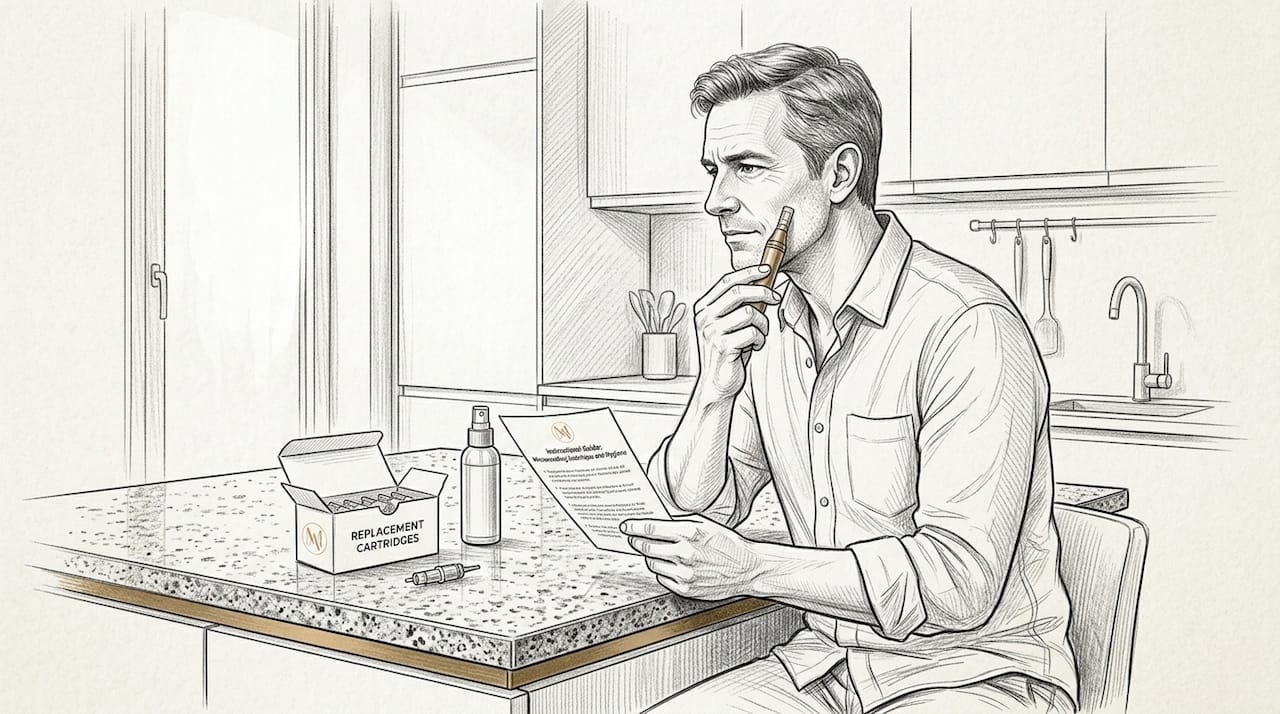
Replace needle cartridges after every single use. Improper needle hygiene is the primary route to infection and serious skin complications. For guidance on clinically proven devices, including professional-grade options, we recommend reviewing our curated device resource.
Dermaplaning
Hold the tool at approximately a 45-degree angle to the skin. Use short, gentle, upward strokes across the cheeks, forehead, and chin. If you feel pain, you are applying too much pressure. Avoid the eye area, nostril edges, and any active breakouts entirely. After treatment, the skin will be significantly more absorbent, so apply a calming serum and avoid exfoliating acids for at least 48 hours.
Building devices into your skincare routine
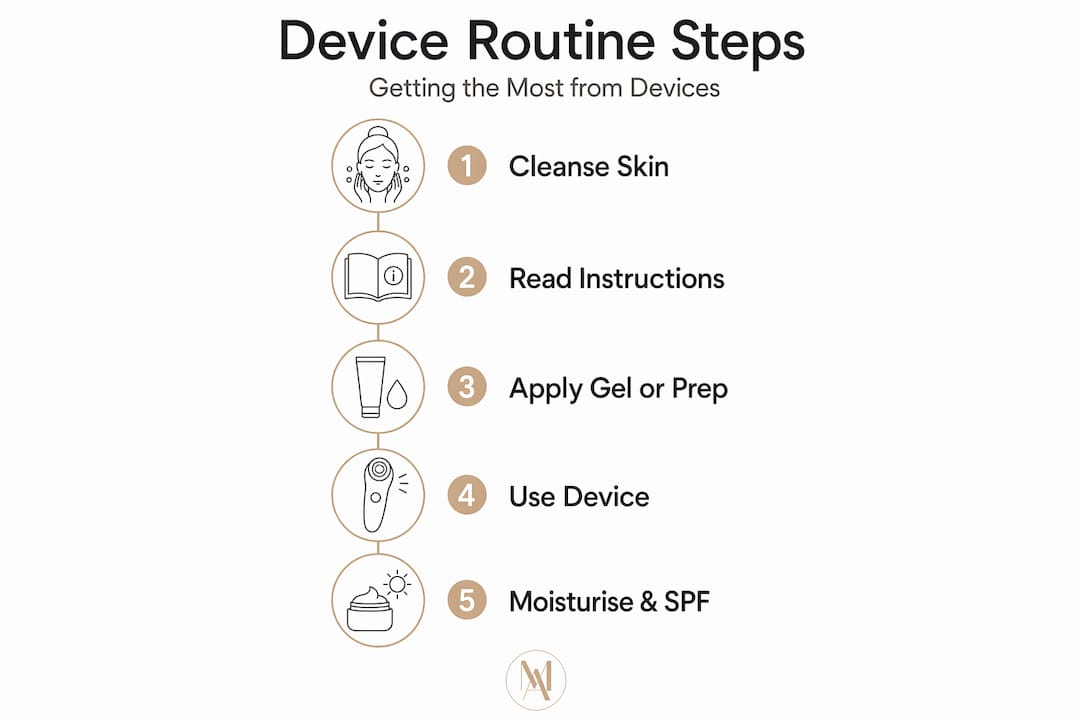
Knowing when in your routine to use a device is just as important as using it correctly. Layering skincare with devices follows a clear logic: devices work on clean, bare skin unless a specific medium is required.
The correct general order is:
- Cleanse thoroughly and pat dry.
- Apply any device-specific medium (conductive gel for microcurrent, for example).
- Use your treatment device as directed.
- Remove any medium residue with a clean cloth.
- Apply active serums (vitamin C, retinol, niacinamide) to freshly treated skin.
- Follow with moisturiser to lock in hydration and support barrier recovery.
- Apply SPF if treating during the day.
One mistake we see consistently is applying serums or oils before device use. Heavy emollients create a physical barrier that reduces device contact efficiency, and in the case of dermaplaning or microneedling, they introduce unwanted variables into the treatment surface. The post-device skin state is actually when your serums and actives work hardest, because permeability is temporarily increased.
Avoid stacking multiple devices in a single session. Combining powered devices in one routine risks overstimulating the skin and compromising the barrier. One to two devices per session is a sensible, protective limit.
Common mistakes and how to avoid them
Even well-intentioned routines can cause harm when the fundamentals are skipped. These are the mistakes we see most often, and what you should do instead.
- Using devices on unclean skin. This introduces sebum, bacteria, and product residue into the treatment zone, raising infection risk considerably.
- Overusing devices. More sessions do not accelerate results. Clinical studies show that skin texture and wrinkle improvements occur with consistent, measured use over four or more weeks, not from daily overuse.
- Ignoring contraindications. Microneedling and red light therapy both carry specific contraindications. Pregnancy, active infections, photosensitising medications, and autoimmune skin conditions all require professional consultation before device use.
- Forgetting SPF post-treatment. All treatment devices increase photosensitivity to some degree. Skipping sun protection the morning after a session significantly increases the risk of post-inflammatory hyperpigmentation.
- Not cleaning devices between uses. A contaminated roller or electrode is not just less effective. It is actively working against your skin.
If you experience persistent redness, swelling, or discomfort beyond 24 hours post-treatment, reduce session frequency and consult a dermatologist before continuing. Mild transient redness is a normal response; prolonged inflammation is not.
Skin reactions from devices are almost always tied to technique, frequency, or product incompatibility rather than the device itself. Slow down, read the manual, and address one variable at a time when troubleshooting.
My honest take on skincare devices
I have worked with clients and clinicians in the skincare space long enough to say something that does not get enough airtime: most people are not doing too little with their devices. They are doing too much, too inconsistently, and with the wrong products around them.
The concept of an initial “bootcamp” phase followed by a maintenance rhythm makes complete physiological sense. Your skin needs stimulus to respond, but it also needs recovery time to produce collagen, remodel tissue, and strengthen the barrier. When you treat three times a week for three months before dropping to maintenance, you are working with your skin biology, not against it.
What I have seen backfire most often is the impulse to combine every device you own in one ambitious session. A phased approach with one or two devices per routine, planned around your skin’s current condition, will always outperform a ten-step device stack.
My genuine advice is this: pick one device, learn it properly, and give it eight weeks before drawing conclusions. Results from well-designed at-home devices are real and measurable. But they belong to the consistent, patient user, not the enthusiastic one who swaps devices every fortnight.
— Jess
Complement your devices with the right products
Devices work at their best when the products around them are doing their job properly. At Them-ethod, we have selected products specifically suited to skin that is being actively treated. If you are dealing with congestion, breakouts, or post-device sensitivity, the PCA Skin ClearSkin serum is a clinically formulated option designed to support skin health without interfering with device protocols. For those focused on broader skin quality improvement, the NeoStrata collection offers science-backed formulations that work in synergy with treatment-based routines. Finding the right product to sit alongside your device is not an afterthought. It is part of the protocol.
FAQ
How often should I use an at-home skincare device?
Most devices perform best with 3 to 5 sessions per week during an initial period, transitioning to a maintenance frequency once results stabilise. Always follow the manufacturer’s specific guidance for your device.
Can I use multiple devices in the same session?
Using more than one or two powered devices in a single session risks overstimulating the skin and weakening the barrier. A phased approach, spacing different devices across your weekly routine, is both safer and more effective.
Do I need to apply anything before using a microcurrent device?
Yes. Microcurrent devices require a water-based conductive gel applied to the skin before treatment. Without it, current distribution is uneven and the experience is less comfortable.
Is red light therapy safe to use at home?
Red light therapy is safe when using an FDA-cleared device at the correct wavelengths and with proper eye protection. Always consult a dermatologist before starting if you are on photosensitising medications or have a relevant skin condition.
When should I see results from skincare devices?
A randomised controlled trial found measurable improvements in wrinkle depth and skin texture after four weeks of consistent device use, with continued improvement over longer periods. Patience and regularity are the two factors that determine whether results actually arrive.