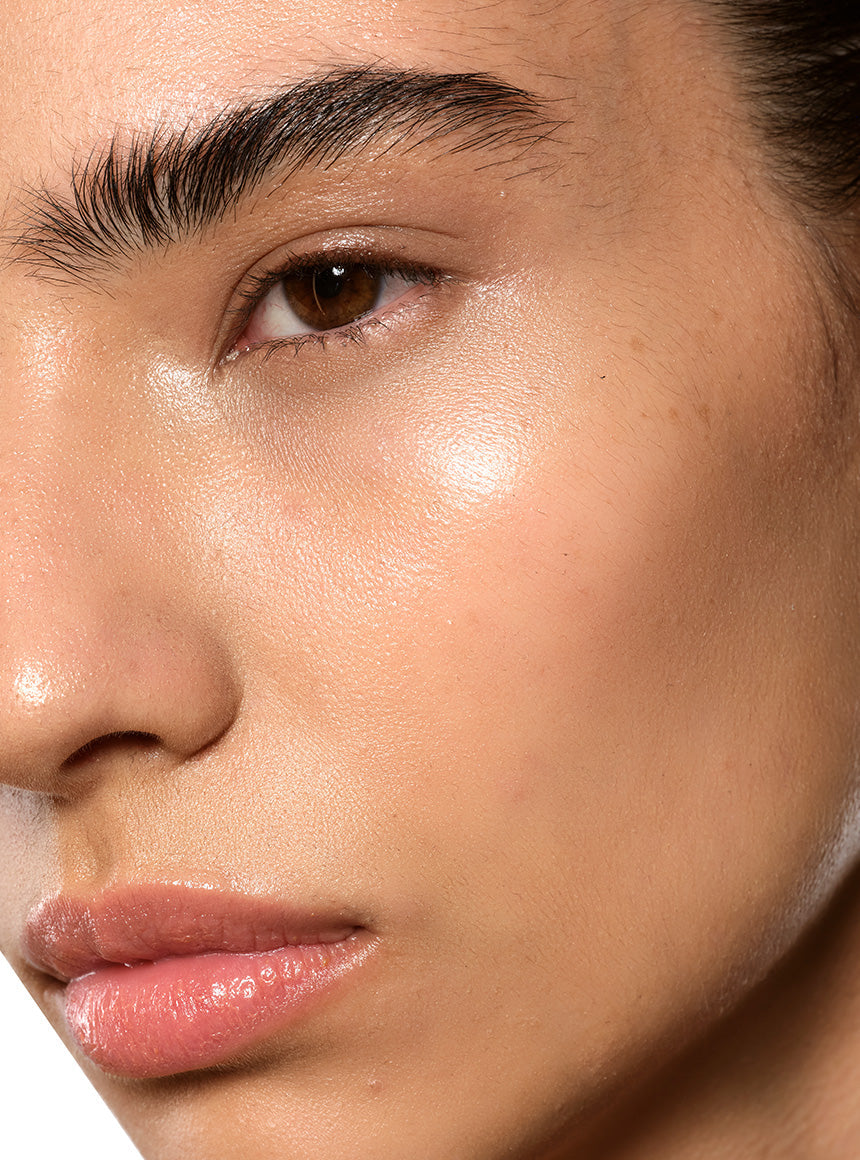





5 advantages of personalised skincare for targeted results
TL;DR:
- Personalised skincare offers targeted solutions tailored to individual skin biology and concerns.
- AI and clinician guidance enable faster, more effective, and adaptable skin improvements.
- Genuine personalisation requires expert involvement, clinical validation, and ongoing adjustment.
5 advantages of personalised skincare for targeted results
If you have ever spent a small fortune on a much-hyped moisturiser only to see zero change in your skin, you already understand the core problem with generic skincare. One-size-fits-all formulas are designed for the average consumer, not for your unique biology, lifestyle, and environment. Personalised skincare changes that entirely. It draws on clinical data, expert analysis, and increasingly sophisticated technology to build a routine that works specifically for your skin, not somebody else’s. In this article, we explore five key advantages of personalised skincare and why it consistently delivers results that standard shelf products simply cannot match.
Table of Contents
- Personalised treatment addresses your unique skin concerns
- Data-driven precision means faster, visible results
- Improved adherence and safety under expert supervision
- Limitations and what to watch for
- Why the real benefit of personalised skincare is misunderstood
- Take the next step with an expert-led personalised routine
- Frequently asked questions
Key Takeaways
| Point | Details |
|---|---|
| Targeted improvements | Personalised skincare addresses your unique needs, achieving measurable gains in elasticity, hydration, and pigmentation. |
| Smarter, faster results | AI and technology adjust routines in real time, eliminating guesswork so you see visible changes sooner. |
| Safety with experts | Clinician guidance increases safety and adherence, giving you peace of mind alongside results. |
| Watch for pitfalls | Not all personalisation is genuine; favour brands with proven data, expert input, and transparent practices. |
Personalised treatment addresses your unique skin concerns
Having introduced the challenges of generic skincare, let us now see how personalisation delivers clinical improvements tailored to you.
Generic skincare products are formulated for broad market appeal. That means they must be mild enough not to irritate the most sensitive skin while being effective enough to satisfy consumers with more resilient skin. The result is a compromise that rarely performs optimally for anyone. Your skin is shaped by factors that mass-market brands cannot account for: your genetics, your stress levels, your diet, the climate you live in, and even your hormonal cycle. These variables shift how your skin produces sebum, retains hydration, and responds to active ingredients.
Personalised skincare, by contrast, starts with a thorough assessment. Whether that assessment is conducted by a clinician, a dermatologist, or a data-capture tool, it gathers information that allows your formula to be built around your actual needs. The result is a product that works with your skin biology rather than against it. When you explore personalising skincare for results, you quickly realise that even small adjustments to ingredient concentrations can produce meaningful, measurable change.
The clinical evidence here is compelling. A 28-day bespoke cosmetic study on compromised skin demonstrated that a tailored formulation improved sebum regulation by over 100%, increased elasticity from 25% to 44%, reduced hyperpigmentation from 7.2% to 2.3%, improved hydration across multiple sites, and reduced erythema by 8%. These are not marginal gains. They represent a profound shift in skin health achieved in under a month.
What makes personalised skincare particularly powerful is its capacity to evolve. Your skin in your thirties is not your skin in your forties. Seasons change, stress levels fluctuate, and post-pregnancy hormones alter sebum production dramatically. A genuinely personalised routine adapts alongside you. The formula you begin with is a starting point, not a fixed prescription.
Key benefits of this adaptive approach include:
- Targeted sebum control that responds to your specific oil production patterns
- Pigmentation correction calibrated to the depth and type of your discolouration
- Hydration support matched to your skin barrier’s actual needs
- Inflammation reduction guided by your individual sensitivity profile
- Collagen support timed to your skin’s current elasticity measurements
Pro Tip: Keep a simple skin diary when you begin a personalised routine. Note texture, brightness, and any reactions every week. This gives your clinician or AI platform the feedback it needs to refine your formula and accelerate your results. Understanding why personalised skincare works becomes far clearer once you see your own measurable progress documented over time.
Data-driven precision means faster, visible results
Now that we have outlined the clinical improvements, let us examine how technology powers bespoke routines for better outcomes.
One of the most transformative shifts in skincare over the past decade is the arrival of artificial intelligence as a genuine clinical tool. AI does not replace expert judgement; it supercharges it. By analysing thousands of data points simultaneously, AI platforms can identify ingredient combinations that match your environmental exposure, genetic predispositions, and current skin state with a degree of accuracy that no traditional trial-and-error approach can replicate.
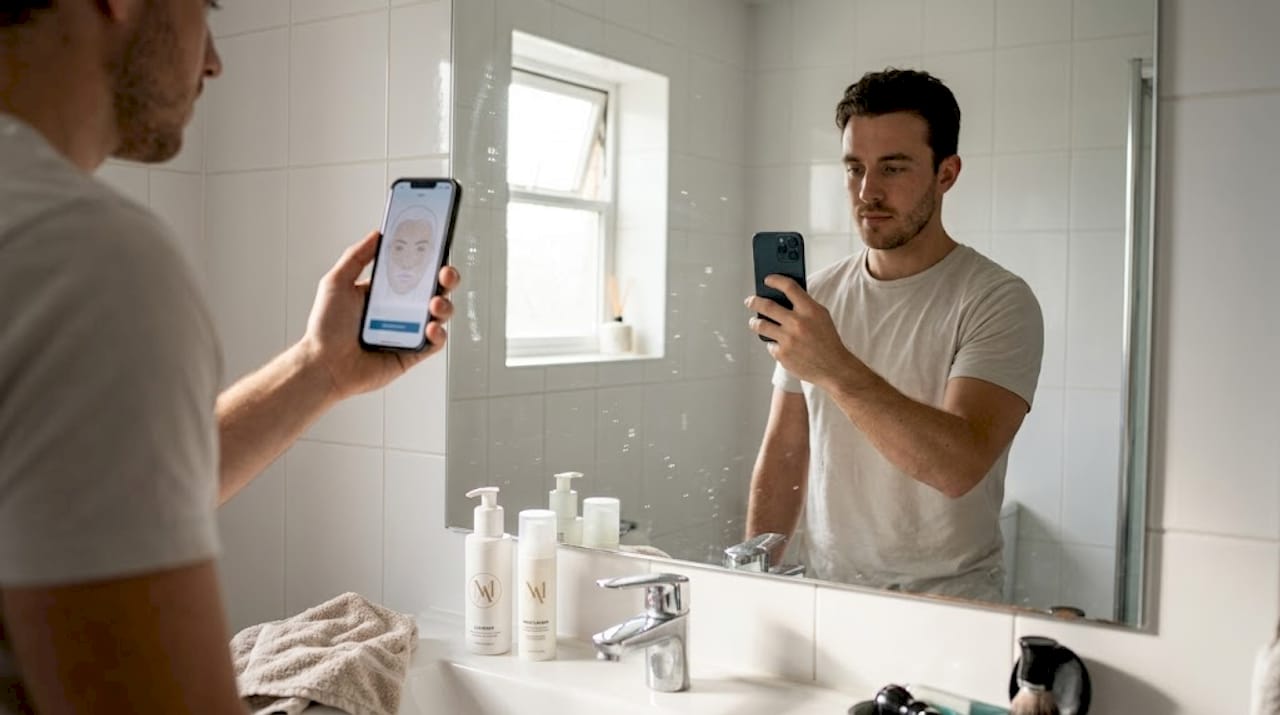
AI-driven skincare precision enables real-time adjustments based on genetics, skin type, lifestyle factors, and environmental variables. Practical examples include prescribing antioxidant-rich formulations for those living in high-pollution urban environments, and recommending targeted retinoids for clients experiencing early signs of photoageing. The AI does not guess; it calculates.
This data-driven model has four sequential advantages worth noting:
- Assessment: Your skin profile is built from biometric, environmental, and lifestyle data rather than a brief in-store consultation.
- Matching: Ingredients are selected based on evidence of efficacy for your specific concern, not broad-spectrum popularity.
- Monitoring: Your skin’s response is tracked over time, allowing the formula to be refined before problems become entrenched.
- Optimisation: As external factors change, such as a change in climate or a new hormonal phase, your routine adapts accordingly.
The table below illustrates how AI-driven personalisation compares to traditional self-selection:
| Factor | Standard off-the-shelf | AI-personalised skincare |
|---|---|---|
| Ingredient selection | Broad and generic | Matched to your biometrics |
| Adaptation over time | None | Continuous and responsive |
| Risk of adverse reactions | Moderate to high | Significantly reduced |
| Speed of visible results | Varies, often slow | Typically faster and measurable |
| Waste from ineffective products | High | Minimal |
The efficiency gains are real. When your routine is built around evidence rather than assumption, you spend less time and money cycling through products that do not perform. You also reduce the risk of sensitising your skin with unnecessary ingredients. For those managing concerns such as acne, rosacea, or post-inflammatory hyperpigmentation, this targeted approach is not a luxury. It is the most logical path to recovery. For a broader look at how AI in skincare is reshaping modern routines, the evidence is growing rapidly.
Pro Tip: Take consistent before-and-after photographs in the same natural light every two weeks. Objective photographic evidence removes the subjectivity from your assessment and gives your clinician precise visual data to inform their recommendations.
Improved adherence and safety under expert supervision
While precision and personalisation are essential, expert guidance ensures these solutions are safe and sustainable.
Personalised skincare is not only about the formula. It is about the relationship between you, your skin, and the expert guiding your progress. Clinician-led routines carry a meaningful safety advantage over self-directed regimens, particularly when prescription-strength actives such as tretinoin, hydroquinone, or azelaic acid are involved. These ingredients produce exceptional results in the right concentrations, but they can cause significant irritation, purging, or post-inflammatory hyperpigmentation when used incorrectly.
Expert oversight changes the dynamic entirely. When a qualified clinician reviews your skin assessments and monitors your reactions, they can intervene before minor irritation becomes a serious setback. They can also sequence your routine intelligently, introducing actives gradually and ensuring that ingredients are compatible with one another. This is sometimes referred to as the prescribe-then-monitor model, and it is leading the charge in modern clinical skincare.
“The personalised skincare market is projected to reach $72.23 billion by 2035, driven by AI transformation and growing consumer demand for clinician-guided solutions that deliver genuine, measurable outcomes.”
This market growth is not simply a commercial trend. It reflects a fundamental shift in consumer awareness. People are no longer satisfied with generic promises. They want evidence. They want a professional to stand behind the recommendation. They want to know that what they are applying to their skin has been selected for them specifically, not for a statistical average.
The benefits of clinician-guided personalised skincare include:
- Reduced risk of contra-indicated combinations that can compromise the skin barrier
- Professional monitoring of active ingredient tolerance, particularly for retinoids and exfoliating acids
- Informed sequencing of products to maximise efficacy at each stage of your routine
- Ongoing reassessment as your skin responds and your concerns evolve
- Access to prescription-strength actives that are unavailable over the counter
Higher adherence rates are another significant advantage. Research consistently shows that people are more likely to stick to a routine they understand and believe in. When a clinician explains why each product has been chosen and what measurable outcome it is targeting, you are far more invested in the process. Understanding what dermatologists prefer in a personalised programme offers further clarity on why professional guidance elevates outcomes so significantly.
Limitations and what to watch for
Every approach has trade-offs; understanding risks ensures you benefit from personalised skincare safely.
Personalised skincare is a powerful model, but it is not without limitations. Approaching it with clear eyes is essential if you want to make genuinely informed decisions. The most significant concern is validation. Not all personalised products are clinically validated; some rely more on marketing language than on actual data. Certain brands use questionnaires so superficial that the resulting formula is barely distinguishable from a generic product with a custom label. Others leverage AI branding without disclosing how their algorithms work or what data sets they draw upon.
Cost is another real consideration. Bespoke formulations and expert consultations carry a premium. For many consumers, this is justified by the reduction in wasted spending on ineffective products over time. But it is worth scrutinising what you are paying for. A higher price tag does not automatically guarantee clinical rigour.
The comparison below helps clarify the distinction between genuine personalisation and marketing-led personalisation:
| Feature | Genuine personalised skincare | Marketing-led personalisation |
|---|---|---|
| Data collection | Biometric or clinician assessment | Basic online questionnaire |
| Formula differentiation | Meaningfully varied per client | Slight variations on standard base |
| Expert involvement | Qualified clinician or dermatologist | None or minimal |
| Clinical evidence | Published or documented outcomes | Anecdotal or absent |
| Adaptability | Responsive to skin changes | Static after initial purchase |
AI-powered platforms introduce their own set of considerations. Algorithmic bias is a real risk; if the training data used to build the AI skews towards a narrow demographic, the recommendations for those outside that demographic may be less reliable. Privacy is also a concern. Biometric and genetic data collected by skincare platforms is sensitive, and consumers should understand how it is stored and used before submitting it.
The key red flags to watch for include:
- No mention of clinical testing or published outcomes on the brand’s platform
- Vague ingredient lists that do not correspond to your stated concerns
- No expert involvement at any stage of the recommendation process
- Opaque AI claims without any explanation of methodology
- Pressure to purchase before any meaningful skin assessment has taken place
Reading more about validation and the risks associated with poorly evidenced personalisation will help you ask the right questions before committing to any service. The best providers welcome scrutiny because they have the data to back their claims.
Why the real benefit of personalised skincare is misunderstood
Most conversations about personalised skincare focus on the ingredient list. Which actives are included, which concentrations are used, and whether retinol or niacinamide is featured. This narrow focus misses the deeper value entirely.
The genuine advantage of a truly personalised routine is not the formula you receive on day one. It is the system of continuous refinement that follows. Your skin changes constantly, responding to internal and external pressures that shift month by month. A routine that cannot adapt to those changes will eventually plateau, no matter how well it was initially calibrated. The science behind personalised skincare confirms that responsive, evidence-led adjustment is what separates lasting skin transformation from temporary improvement.
We also think the market hype around personalisation has diluted its real meaning. Many brands use the word loosely, attaching it to experiences that involve nothing more than selecting your skin type from a dropdown menu. True personalisation is iterative. It involves expert review, honest biometric feedback, and a willingness to adjust the strategy when the data says something is not working. That process is genuinely valuable, and it is what we believe in at The M-ethod Skin.
Take the next step with an expert-led personalised routine
If what you have read resonates, the logical next step is experiencing what a genuinely expert-guided routine can achieve for your specific skin. At The M-ethod Skin, we work with clinicians who design routines around real data and real outcomes, not assumptions. Whether your primary concern is acne, pigmentation, or premature ageing, our approach is grounded in clinical evidence and ongoing expert review.
Explore our targeted acne solution to see how bespoke actives perform in practice, or read through our personalised skincare testimonials from clients who have seen measurable, lasting change. Real results, backed by real expertise, are within reach.
Frequently asked questions
How quickly can I see results with personalised skincare?
Noticeable improvements can often appear in as little as 28 days, with measurable gains in elasticity from 25% to 44%, reduced hyperpigmentation, and improved hydration documented in clinical case studies.
Is personalised skincare more expensive than standard products?
It typically carries a higher upfront cost due to expert oversight and tailored formulation, but the reduction in wasted spending on ineffective products often offsets the difference over time.
Are all personalised skincare services clinically validated?
No. Some services rely on superficial questionnaires and marketing claims rather than genuine clinical data, so it is important to seek out brands with published outcomes and qualified expert involvement.
How does AI personalise my skincare routine?
AI analyses your genetics, skin type, lifestyle, and environment to match you with precisely targeted ingredients, then updates those recommendations as your skin and circumstances evolve.