




Why choose virtual skin consultations in 2026
TL;DR:
- Virtual skin consultations, or teledermatology, provide personalized expert assessments remotely through video or photo submissions, offering faster access and cost savings. They show substantial diagnostic agreement with in-person care, especially when hybrid models and high-quality images are used, but complex diagnostics still require in-person evaluations. Preparing well with high-resolution images, detailed history, and specific questions maximizes consultation effectiveness and client engagement.
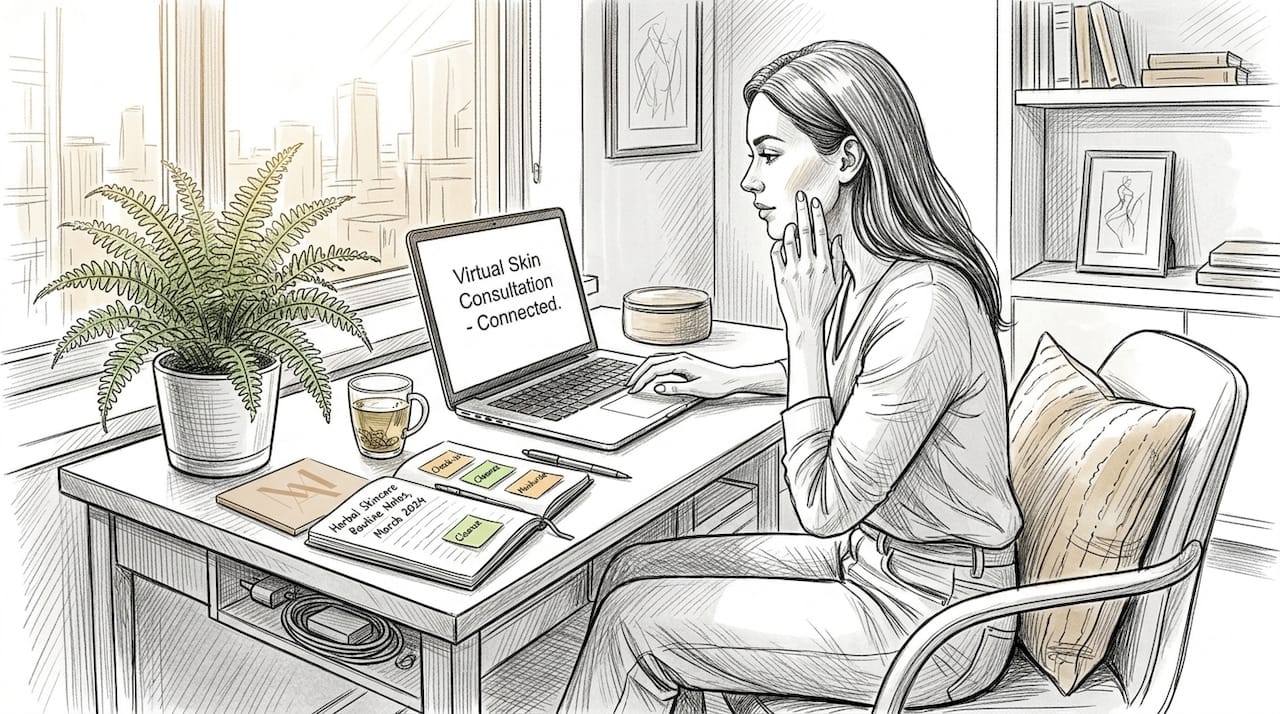
Virtual skin consultations, known clinically as teledermatology, are defined as remote dermatological assessments conducted via live video, store-and-forward photo submission, or hybrid models combining both. They deliver personalised expert skincare advice without requiring you to leave home. The reasons to choose virtual skin consultations have never been more compelling: access to board-certified clinicians is faster, costs are lower, and AI-assisted tools are making remote assessments more accurate than ever. At Them-ethod, we have seen first-hand how this model transforms the way clients manage concerns from acne and pigmentation to collagen loss and redness.
What are the main benefits of virtual skin consultations?
The advantages of teledermatology extend well beyond simple convenience. They represent a structural shift in how expert skincare advice reaches people who need it.
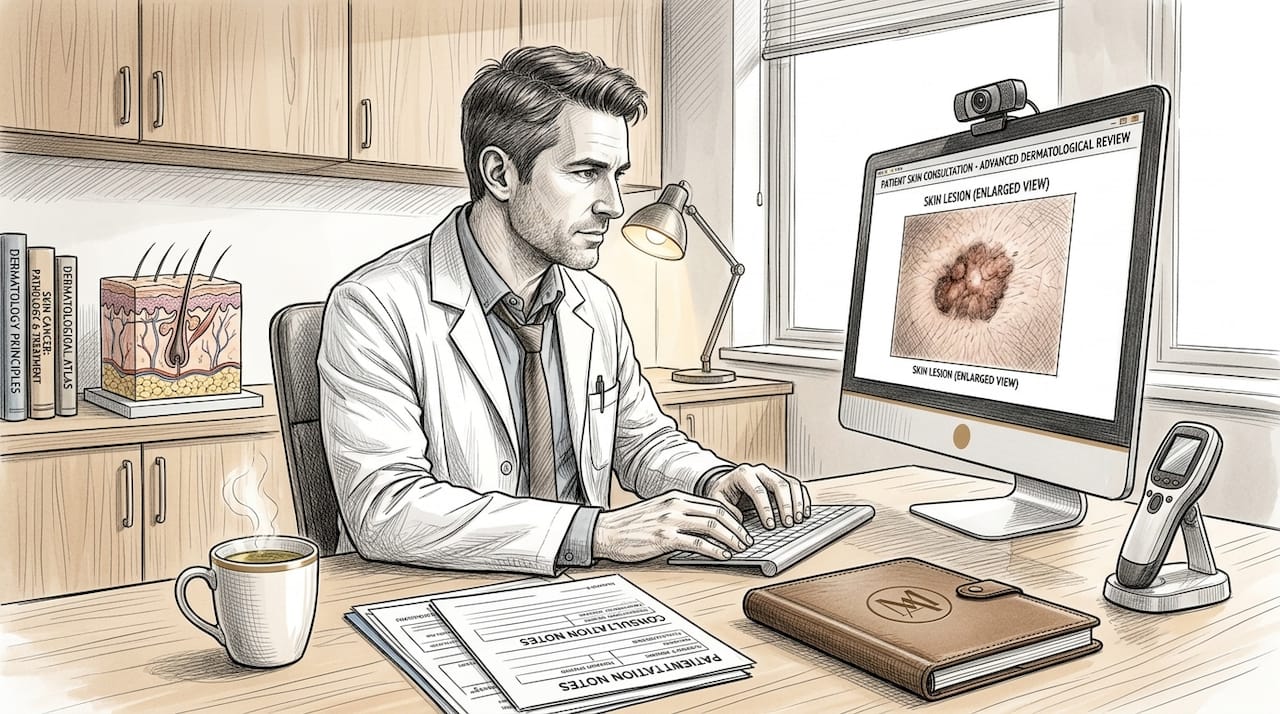
Cost savings are significant and measurable. A 2026 systematic review found an average saving of US$81.31 per patient per virtual consultation, with cost reductions ranging from 6.27% to 45.33% depending on the healthcare setting. That figure does not account for indirect savings such as travel, parking, and time off work, all of which teledermatology reduces substantially. For clients managing ongoing skin concerns, those savings accumulate quickly across multiple appointments.
Access to expertise is faster. Virtual dermatology appointments are often available within a week, compared to the four to six weeks typical of in-person specialist appointments. For someone dealing with a new rash, a flare-up of rosacea, or a question about a pigmentation protocol, that wait time difference is clinically meaningful.
The core benefits of choosing online skin consultations include:
- Scheduling flexibility: appointments fit around work, travel, and family commitments without the rigidity of clinic hours
- Privacy and comfort: discussing sensitive skin concerns such as body acne or hormonal pigmentation from your own space reduces anxiety and increases candour
- Reduced follow-up burden: analysis of over 163,000 encounters showed a 23% reduction in 30-day follow-ups after telemedicine visits compared to in-person care, meaning virtual consultations often resolve concerns more efficiently
- Continuity of care: medication renewals, product adjustments, and routine check-ins are particularly well-suited to virtual formats
- International access: clients outside major cities or abroad can access London-based clinical expertise without travelling
Pro Tip: Book your virtual consultation in natural daylight and have your current skincare products nearby. Clinicians can assess your skin more accurately and tailor product recommendations to what you are already using.
How reliable are virtual consultations for diagnosing skin concerns?
Diagnostic accuracy is the most common concern people raise about online skin consultations, and the research provides a nuanced but reassuring picture.
Teledermatology shows moderate diagnostic concordance with in-person care, with a Cohen’s kappa average of 0.57 across studies. A kappa of 0.57 indicates substantial agreement, comparable to inter-clinician variability seen between two in-person dermatologists reviewing the same case. This means virtual assessments are not a compromise. They are a clinically credible alternative for a wide range of skin conditions.
The table below summarises what the evidence shows across key performance areas:
| Performance area | Evidence summary |
|---|---|
| Diagnostic concordance | Cohen’s kappa of 0.57 on average, indicating substantial agreement with in-person assessment |
| Patient willingness | 26.57% of patients willing to fully replace face-to-face visits with virtual care |
| Cost efficiency | Average saving of US$81.31 per patient; telemedicine episode charges around $96.60 vs $509.21 in-person |
| Follow-up reduction | 23% fewer 30-day follow-up visits after telemedicine compared to in-person encounters |
| Preferred model | Hybrid consultations combining live video and store-and-forward photos rated most accurate by dermatologists |
Hybrid models, which combine a live video call with pre-submitted high-resolution photographs, are viewed by dermatologists as the most accurate virtual care approach. AI-assisted triage tools are now integrated into many platforms, helping clinicians prioritise cases and flag lesions that warrant urgent in-person review. This combination of human expertise and technology is what makes modern teledermatology genuinely effective rather than merely convenient.
Pro Tip: If your concern involves a changing mole, a lesion with irregular borders, or a rapidly spreading rash, request an in-person assessment. Virtual consultations excel at managing known conditions, routine skincare, and follow-up care. They are not a substitute for urgent dermatological examination.
What practical steps prepare you for a virtual skin consultation?
Preparation determines the quality of your virtual consultation. A well-prepared appointment produces a more accurate assessment and a more targeted treatment plan. Follow these steps to get the most from your session:
- Capture high-quality images before your appointment. European expert consensus identifies image quality as the primary variable in accurate teledermatological assessment, more so than verbal descriptions alone. Use natural daylight, a neutral background, and photograph the affected area from multiple angles including close-up and contextual shots.
- Document your current skincare routine in writing. List every product you use, including cleansers, actives such as retinol or vitamin C, SPF, and any prescription treatments. This allows your clinician to identify interactions, gaps, and redundancies immediately.
- Note the timeline and triggers of your concern. When did it start? What makes it better or worse? Has it changed in size, colour, or texture? This clinical history is as important as the images themselves.
- Check your platform requirements in advance. Confirm whether your consultation uses a dedicated telehealth platform, a video call service, or a store-and-forward photo submission system. Test your camera and internet connection at least 24 hours before your appointment.
- Prepare specific questions. Virtual appointments are time-efficient, which means clarity from you produces better outcomes. Write down your top three concerns and the outcomes you want, whether that is a diagnosis, a product recommendation, or a prescription referral.
- Know when to escalate to in-person care. Complex dermatological assessments, including full-body skin checks, biopsies, and conditions requiring dermoscopy, require physical examination. Virtual consultations are best suited to follow-ups, medication renewals, and mild to moderate conditions.
For a thorough overview of consultation models and what to expect, the complete guide to virtual consultations at Them-ethod covers each format in detail.
How do virtual and in-person skin consultations compare?
Choosing between virtual and in-person care is not an either-or decision. It is a question of matching the right format to the right clinical need.
| Factor | Virtual consultation | In-person consultation |
|---|---|---|
| Cost per episode | Approximately $96.60 on average | Approximately $509.21 on average |
| Wait time | Often within one week | Typically four to six weeks |
| Follow-up visits | 23% fewer within 30 days | Standard follow-up schedule |
| Best suited for | Routine care, follow-ups, mild conditions, product advice | Complex diagnosis, biopsies, full-body checks |
| Accessibility | Available internationally, no travel required | Geographically limited |
| AI integration | Increasingly standard in 2025 and 2026 | Limited to in-clinic diagnostic tools |
The cost difference between virtual and in-person episodes is striking. At roughly one-fifth of the cost, telemedicine delivers comparable outcomes for a significant proportion of dermatological concerns. This is not a trade-off between quality and affordability. It is evidence that the right care, delivered through the right channel, produces efficient and effective results.
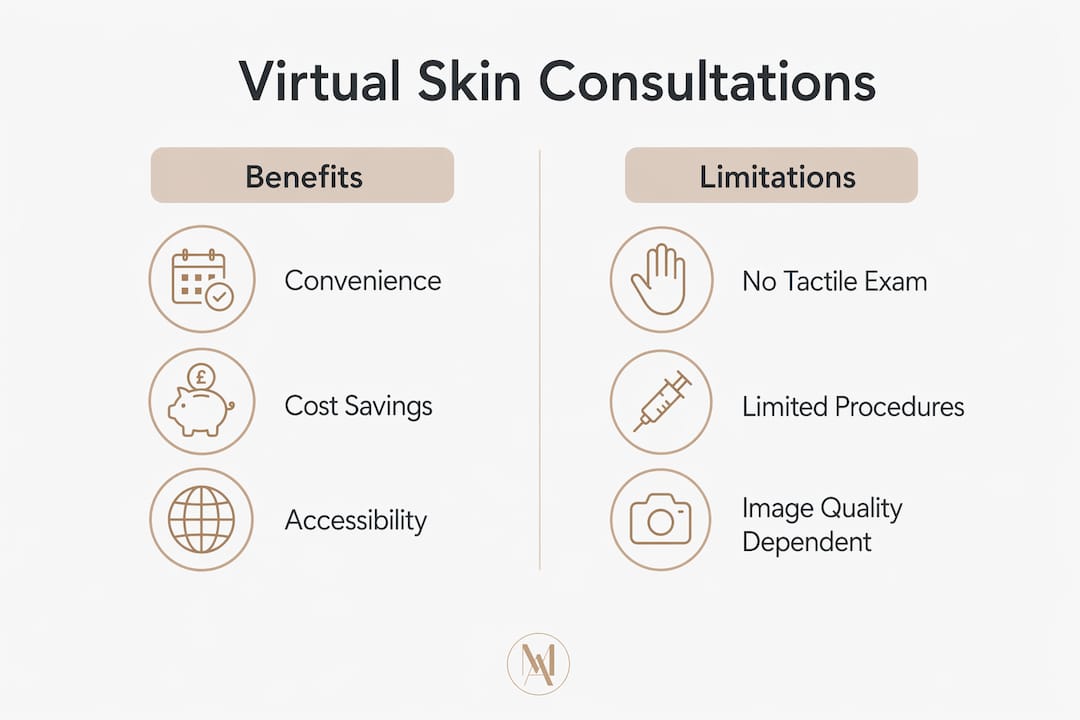
Where virtual consultations fall short is in cases requiring tactile assessment, dermoscopy, or procedures. Conditions such as suspected melanoma, severe cystic acne requiring extraction, or inflammatory skin diseases with systemic involvement still require in-clinic evaluation. The most effective approach combines both: a virtual consultation to triage, plan, and monitor, with in-person visits reserved for procedures and complex diagnostics.
Clients interested in understanding how personalised virtual skincare advice translates into real results will find that the format consistently outperforms generic online product recommendations.
Key takeaways
Virtual skin consultations deliver clinically credible, cost-efficient, and accessible expert skincare advice for the majority of routine and follow-up dermatological concerns, with hybrid models and AI integration making them more accurate than ever in 2026.
| Point | Details |
|---|---|
| Cost advantage | Virtual consultations cost approximately one-fifth of in-person episodes, with average patient savings of US$81.31. |
| Faster access | Appointments are typically available within one week, versus four to six weeks for in-person specialist care. |
| Diagnostic credibility | A Cohen’s kappa of 0.57 confirms substantial agreement between virtual and in-person assessments for most skin concerns. |
| Image quality is critical | High-resolution, well-lit photographs are the single most important factor in accurate teledermatological assessment. |
| Know the limits | Complex diagnoses, biopsies, and full-body checks still require in-person examination; virtual care excels at routine and follow-up management. |
What I have learned from watching virtual consultations transform skincare access
When I first started working closely with clients navigating virtual skin consultations, I expected the main barrier to be technology. It was not. The real barrier was expectation. Clients arrived at their first virtual appointment assuming they would receive less than they would in a clinic. What they found was often the opposite: more time with their clinician, more thorough product reviews, and more personalised follow-up than a rushed in-person appointment typically allows.
What I find most compelling about the current state of teledermatology is the hybrid model. A client submits high-quality photographs in advance, the clinician reviews them before the call, and the live consultation becomes a genuine dialogue rather than a diagnostic scramble. That structure produces better outcomes. It also produces more engaged clients, because they arrive prepared and leave with a clear plan.
The limitation I encounter most often is unrealistic expectations about what a camera can capture. Texture, warmth, and subtle colour variation are harder to assess remotely. For clients managing pigmentation, rosacea, or early signs of collagen loss, I always recommend pairing their virtual consultation with periodic in-person reviews, particularly when introducing prescription-strength actives such as tretinoin or hydroquinone. The future of virtual aesthetic consultations lies in this integration, not in replacing in-person care entirely, but in making expert guidance the default starting point for every skin concern.
— Jess
Experience bespoke virtual skincare with Them-ethod
At Them-ethod, our virtual skin consultations connect you directly with expert clinicians who specialise in prescription-strength and medical-grade skincare. Whether you are managing acne, pigmentation, redness, or the early signs of ageing, our practitioners build personalised treatment plans using clinically proven protocols and exclusive brands including Obagi. Clients consistently report that their virtual consultation with Them-ethod delivers more clarity and direction than years of trial-and-error product purchasing. Read what our clients say on our reviews page and discover why so many return for ongoing virtual care. Your bespoke skincare consultation is one appointment away.
FAQ
What is a virtual skin consultation?
A virtual skin consultation, also called teledermatology, is a remote assessment of your skin conducted via live video, photo submission, or a combination of both. A qualified clinician reviews your skin concerns, medical history, and current routine to provide a personalised diagnosis or treatment plan.
Are virtual skin consultations as accurate as in-person visits?
Research shows a Cohen’s kappa of 0.57 between virtual and in-person dermatological assessments, indicating substantial diagnostic agreement for most common skin conditions. Accuracy improves significantly when high-quality photographs are submitted in advance and a hybrid consultation model is used.
How much does a virtual skin consultation cost compared to in-person care?
Telemedicine episode charges average around $96.60 compared to $509.21 for equivalent in-person visits, representing a saving of roughly 80% per episode. Patients also save on travel, parking, and time off work, making the total cost difference even greater.
Which skin conditions are best suited to virtual consultations?
Virtual consultations are most effective for mild to moderate rashes, acne, rosacea, pigmentation concerns, eczema management, medication renewals, and routine skincare reviews. Conditions requiring physical examination, dermoscopy, or biopsy still require in-person assessment.
How do I prepare for a virtual skin consultation?
Photograph your skin concern in natural daylight from multiple angles before your appointment, list your current skincare products, and note the timeline and triggers of your concern. Testing your camera and internet connection in advance and preparing specific questions will make your session more productive.