




Redness relief for skin: what it is and how it works
Redness relief, in the clinical sense, means using medical-grade products and professional procedures to reduce persistent facial erythema — the kind that does not fade after a few minutes and is often linked to rosacea. It is not about eye drops or temporary flushing after exercise. The most effective approach combines barrier repair with targeted prescription topicals or vascular devices, guided by a clinician who understands your skin’s specific triggers and subtype.
The main categories covered in this guide are:
- Self-care and barrier repair: gentle cleansers, ceramide moisturisers, mineral SPF 30+
- Prescription topicals: brimonidine (Mirvaso) and oxymetazoline (Rhofade) for persistent facial erythema
- Energy-based devices: IPL, pulse-dye laser (PDL), and KTP laser for fixed telangiectasia
- Clinician pathway: virtual or in-clinic consultation, trigger review, and personalised treatment plan
Pro Tip: If your redness has lasted more than a few weeks and does not respond to a basic gentle routine, that is a signal to seek a clinical assessment rather than adding more products.
Key takeaways
Effective redness relief combines barrier repair, targeted prescription topicals, and vascular devices, guided by a clinician who understands your rosacea subtype and skin tone.
| Point | Details |
|---|---|
| Barrier repair comes first | Stabilise the stratum corneum with ceramides and mineral SPF before introducing any active treatment. |
| Prescription topicals work fast but are not a cure | Brimonidine and oxymetazoline reduce erythema within hours but do not alter the underlying condition. |
| Fixed vessels need devices | Telangiectasia will not clear with topicals; IPL, PDL, or KTP laser is required, matched to your skin tone. |
| Skin tone changes device risk | Fitzpatrick IV–VI skin requires adjusted device settings and an experienced clinician to minimise pigmentation risk. |
| Them-ethod offers the full pathway | Virtual consultations, prescription coordination, and in-clinic vascular treatments are available in London and Athens. |
Table of Contents
- What causes persistent facial redness, and could it be rosacea?
- How to build a daily skincare routine that reduces redness
- Prescription topicals for persistent facial erythema in the UK
- What clinic-based treatments can do for visible vessels and diffuse redness
- When should you see a clinician, and what does the pathway look like?
- Safety, skin-tone considerations, and long-term management
- The long view on redness relief: what most guides miss
- How Them-ethod supports your redness relief plan
- Sources
What causes persistent facial redness, and could it be rosacea?
Persistent facial redness has three core biological drivers: chronic vascular dilation (blood vessels that stay widened), inflammatory signalling in the dermis, and an impaired stratum corneum that cannot retain moisture or block irritants. When these overlap, the result is the kind of redness that stays through the day and worsens with specific triggers.
Rosacea, as described by the British Association of Dermatologists, presents as persistent central facial redness that may progress over time. Key signs that suggest rosacea rather than simple sensitivity include:
- Redness concentrated on the nose, cheeks, chin, and forehead that does not fully resolve
- Visible dilated blood vessels (telangiectasia)
- Burning or stinging sensations, particularly after applying products
- Inflammatory papules or pustules (often mistaken for acne)
- Ocular symptoms such as dry, gritty, or red eyes
Transient flushing, by contrast, comes and goes within minutes and is usually tied to a clear cause: heat, alcohol, spicy food, or exercise.
Trigger identification is central to long-term control. NHS guidance and expert consensus both highlight sun exposure as the most widely reported trigger, cited by around 81% of respondents in a National Rosacea Society survey. Other common triggers include hot drinks, stress, wind, and certain skincare ingredients.
Pro Tip: Keep a simple diary noting what you ate, drank, and did before each flare. Photographs taken during a flare are far more useful to a clinician than a verbal description.
How to build a daily skincare routine that reduces redness
A consistent, low-irritant routine is the foundation of any redness relief plan. It stabilises the skin barrier, reduces baseline inflammation, and makes prescription or device treatments more effective. NHS rosacea guidance recommends three non-negotiable daily steps.
Daily routine checklist:
- Cleanse with a gentle, non-soap, fragrance-free cleanser morning and evening. Avoid foaming formulas with sulphates.
- Moisturise with a barrier-repair product containing ceramides and/or glycerin. Ceramides replenish the lipid matrix of the stratum corneum, reducing water loss and sensitivity. See Them-ethod’s guide to best moisturisers for rosacea for curated options.
- Apply mineral SPF 30+ every morning. Zinc oxide and titanium dioxide sit on the skin surface rather than absorbing into it, making them better tolerated on reactive skin. For more on choosing the right formula, Them-ethod’s mineral vs chemical sunscreen guide explains the key differences.
Ingredients to seek:
- Azelaic acid (anti-inflammatory, reduces erythema and papules; see Them-ethod’s azelaic acid deep dive)
- Niacinamide (strengthens barrier, calms redness)
- Ceramides and glycerin (barrier repair)
Ingredients to avoid: alcohol denat., synthetic fragrances, menthol, harsh physical exfoliants, and high-concentration AHAs.
For acute flares, stop all active treatments temporarily, apply a cool compress for a few minutes, and avoid heat sources. A green-tinted colour-correcting primer can neutralise visible redness while the skin settles.
A 12-week open-label trial of a serum containing plant adaptogens reported statistically significant reductions in investigator-assessed erythema when used alongside a gentle skincare regimen, with mean reductions reaching approximately 33% by week 12. The study was modest in size and open-label, so it is best read as a supportive signal rather than definitive evidence.
Prescription topicals for persistent facial erythema in the UK
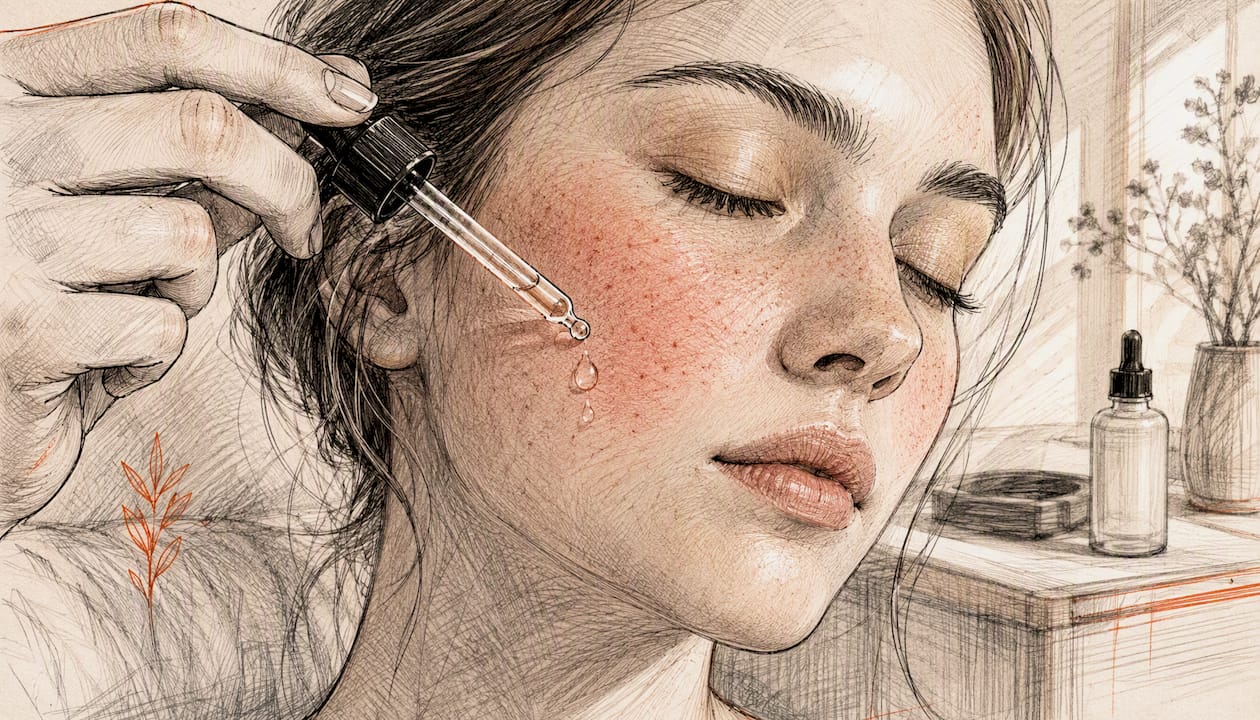
When barrier repair and trigger avoidance are not enough, prescription vasoconstrictors can provide meaningful, same-day symptom control. Two options are indicated in the UK for persistent facial erythema of rosacea.
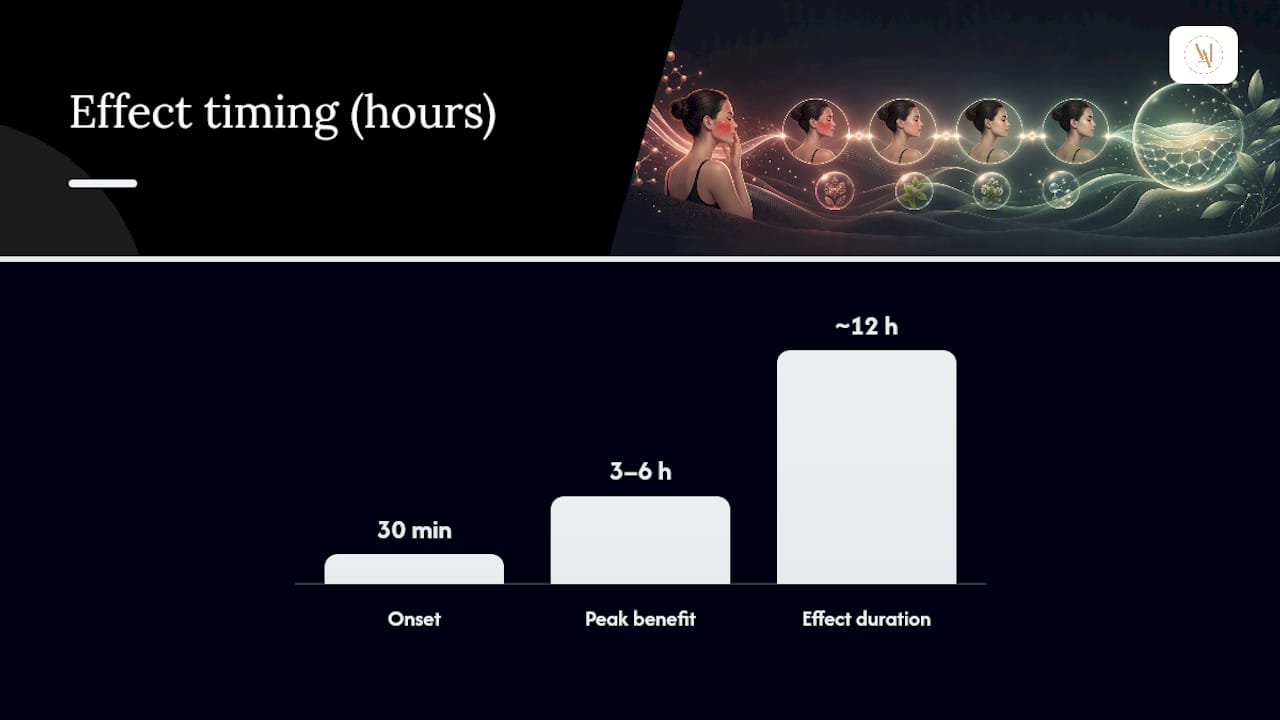
Clinical data show statistically significant superiority over vehicle as early as 30 minutes after application, with peak benefit typically between 3 and 6 hours and effects lasting up to approximately 12 hours. EMA product information for Mirvaso limits use to once daily with a maximum of 1 g per day.
A clinical review in PMC summarises both agents alongside device-based options, noting comparable onset timelines and the importance of managing rebound risk.
Rebound erythema — a paradoxical worsening of redness after stopping treatment — is a documented risk with brimonidine, occurring in a proportion of patients. The Mirvaso EMA product information notes this effect usually resolves after discontinuation. Always taper use under clinician guidance rather than stopping abruptly.
Key safety points for both agents:
- Patch test on a small area for 24 hours before first full application
- Apply once daily at most; do not increase frequency to extend effect
- Use alongside barrier repair moisturiser and mineral SPF, not as a standalone treatment
- Stop and consult your clinician if redness worsens, spreads, or is accompanied by stinging or contact dermatitis
Pro Tip: Prescription vasoconstrictors manage symptoms on the days you use them. They do not alter the underlying condition. Fixed telangiectasia will not clear with topicals alone and usually requires an energy-based device.
What clinic-based treatments can do for visible vessels and diffuse redness
Energy-based devices address what topicals cannot: fixed telangiectasia and the chronic vascular changes that underlie long-term facial erythema. Mayo Clinic notes that lasers often work better than creams for visible blood vessels, while also reducing long-term background redness.
The main modalities:
- KTP laser (532 nm): targets oxyhaemoglobin in superficial vessels; well suited to discrete telangiectasia
- Pulse-dye laser (PDL, 585–595 nm): effective for both telangiectasia and diffuse erythema; a common first choice for rosacea
- IPL (intense pulsed light): broad-spectrum light that targets both vascular and pigment components; useful for diffuse redness and background erythema
Most people need 2–4 sessions spaced 4–6 weeks apart, with photographic documentation at each visit to track progress. Combination approaches, such as IPL for background redness followed by PDL for residual vessels, often produce the best long-term results, as the PMC clinical review confirms.
Suitability considerations:
- Best candidates: stable rosacea, fixed telangiectasia, lighter Fitzpatrick skin types (I–III), not recently tanned
- Darker skin tones (Fitzpatrick IV–VI) carry a higher risk of post-inflammatory hyperpigmentation or hypopigmentation; device settings must be adjusted by an experienced clinician
- Active inflammatory rosacea (papules, pustules) should be controlled before laser treatment
Pro Tip: Ask your clinician which specific device they plan to use and why. The answer tells you a great deal about their experience with vascular conditions.
Side effects are usually transient: redness and mild swelling for 24–72 hours, occasional bruising. Rare risks include blistering or scarring, particularly when devices are used at inappropriate settings for the skin tone being treated.
When should you see a clinician, and what does the pathway look like?
Self-care is a reasonable starting point, but certain signs indicate that professional input is needed without delay. Seek a clinician if you experience:
- Redness that persists daily for more than 4–6 weeks despite a gentle routine
- Visible telangiectasia that is not improving
- Ocular symptoms (gritty, red, or light-sensitive eyes)
- Papules or pustules alongside redness
- Significant psychological distress or social withdrawal linked to your skin
A typical clinical pathway in the UK follows these steps:
- Initial assessment: full skin history, photographic documentation, Fitzpatrick skin-type grading
- Trigger review: diary analysis, lifestyle factors, current product and medication list
- Barrier stabilisation: 4–8 weeks of gentle routine before introducing actives
- Prescription trial: topical vasoconstrictor or azelaic acid under clinician supervision
- Escalation: referral for vascular laser or IPL if topicals are insufficient for telangiectasia or persistent erythema
- Review: photographic comparison, adjustment of plan
Bring to your consultation: photographs of flares (ideally taken without makeup), your trigger diary, and a full list of products and any medicines you currently use. Galderma’s expert guidance reinforces that early diagnosis and structured management significantly improve quality-of-life outcomes.
Them-ethod’s virtual consultations fit naturally at step one of this pathway, offering clinician-led assessment and prescription coordination without requiring an in-person visit.
Safety, skin-tone considerations, and long-term management
Long-term redness control requires consistency rather than intensity. The BAD guidance is clear that rosacea is a chronic condition managed over time, not resolved with a single course of treatment.
Safety essentials:
- Always patch test new prescription topicals before full application
- Choose clinicians with documented experience in vascular laser treatments, particularly if your skin tone is Fitzpatrick IV or above
- Rebound erythema with vasoconstrictors is real; use the minimum effective frequency
- Short-term side effects from devices (redness, swelling) are expected; persistent changes in pigmentation are not and warrant review
Skin-tone considerations: Brown and Black skin carries a higher risk of pigmentary changes from laser and IPL treatments. This does not mean these treatments are unavailable, but it does mean device selection, fluence settings, and clinician experience are non-negotiable factors. Cooling protocols and conservative initial settings reduce risk substantially.
Long-term management strategy:
- Maintain daily barrier repair and mineral SPF year-round
- Review and update your trigger diary every few months
- Schedule clinician reviews at least annually, or sooner if the condition changes
- Consider combination therapy (topical plus device) for the best sustained results
- Address lifestyle factors: stress management, moderating alcohol and spicy food, and protecting skin from temperature extremes
Pro Tip: Redness relief is not a destination. Think of it as an ongoing protocol, much like managing blood pressure. The goal is consistent control, not a permanent cure.
The long view on redness relief: what most guides miss
There is a tendency in skincare content to present redness relief as a product problem with a product solution. In practice, the people who see the most durable improvement are those who treat it as a clinical condition requiring a personalised plan, not a shopping list.
What strikes me most, working with clients across a range of rosacea subtypes, is how often the barrier comes last when it should come first. Prescription vasoconstrictors are genuinely useful tools, but applying them to a compromised barrier is like painting over damp walls. The skin stings, the rebound risk increases, and the results disappoint. Stabilise the barrier for four to eight weeks, then introduce actives. The difference in tolerability is significant.
The other underestimated factor is documentation. Clients who bring photographs and a trigger diary to their first consultation leave with a far more targeted plan than those who describe their skin from memory. Redness is notoriously difficult to recall accurately. A photograph taken during a flare, even on a phone, is worth more than a detailed verbal account.
Bring your photos. Be honest about the products you have tried and the triggers you suspect. That conversation is where the real work begins.
How Them-ethod supports your redness relief plan
Them-ethod offers a direct route from this guide to clinical action. Virtual skin consultations with expert clinicians cover full rosacea assessment, trigger review, and prescription coordination, all without leaving home. For those ready for device-based treatments, in-clinic vascular sessions are available in London and Athens.
The service range includes virtual consultations, prescription management, in-clinic laser and IPL sessions, and a curated selection of medical-grade skincare including NEOSTRATA redness-targeted serums and the NEOSTRATA Redness Neutralising Serum. Every recommendation is matched to your skin type, Fitzpatrick grade, and treatment history.
To begin, book a virtual consultation with the Them-ethod clinical team and bring your trigger diary and flare photographs. Your personalised plan starts there.
Sources
- DailyMed: Brimonidine topical drug information
- NHS — Rosacea
- Updates and best practices in the management of facial erythema — PMC
- Mirvaso (brimonidine) — EMA product information
- Mayo Clinic — Rosacea diagnosis and treatment
- JC Aesthetic Dermatology — Serum containing plant adaptogens in patients with rosacea
- British Association of Dermatologists — Rosacea
This article is general information, not a substitute for advice from a qualified doctor. Consult a qualified healthcare professional about your own circumstances before acting on anything here.