



Clinician Backed Steps to Combine Tretinoin and Benzoyl Peroxide Safely
Yes. Used correctly, tretinoin and benzoyl peroxide can be combined, and current guidance supports it. Modern fixed-dose formulations like Twyneo, or a split morning-and-night routine with separate products, are the two approaches dermatologists recommend. The American Academy of Dermatology’s 2024 guideline backs combination therapy, but expect some irritation and photosensitivity, and treat this as a clinician-supervised regimen rather than a DIY experiment.
TL;DR:
- Fixed-dose products like Twyneo simplify adherence, with studies showing they lead to significant lesion reductions and higher success rates at week 12.
- Combination therapy results in greater improvement in inflammatory lesions compared to tretinoin alone, with minimal increase in local irritation for most users.
- Modern formulations and microencapsulation techniques prevent benzoyl peroxide from degrading tretinoin, allowing safe, effective once-daily application.
- Typical side effects include localized dryness, redness, and photosensitivity, which can be managed with sunscreen, moisturizers, and adjusting application frequency.
- Personalized regimens, guided by clinician assessment, improve tolerability and long-term adherence, especially for sensitive skin or complex cases.
Table of Contents
- What does the research and clinical guidance actually say?
- How do these two ingredients work, and does one cancel the other out?
- What side effects should you expect, and when should you stop?
- How should you actually apply these two ingredients?
- Why did the FDA approve a fixed-dose version, and what does that mean for you?
- What does clinician-backed guidance from The M-ethod add?
- Balancing efficacy and tolerability for the long run
- Get a regimen built around your actual skin
- Sources
- FAQ
What does the research and clinical guidance actually say?
The American Academy of Dermatology’s 2024 guideline recommends multimodal topical therapy for most patients with inflammatory acne. Tretinoin and benzoyl peroxide tackle acne from different angles, and the AAD’s own guidance states this combination approach outperforms either ingredient used alone.
The clinical trial data backs this up at product level. Twyneo, the FDA-approved fixed-dose cream combining tretinoin and benzoyl peroxide, went through two Phase 3 trials involving several hundred subjects. Both showed statistically significant improvement over vehicle on co-primary endpoints, meaning the treated group cleared meaningfully more lesions than the placebo group by week 12.
What the trials found, in brief:
- Significant reductions in both inflammatory and non-inflammatory lesion counts after treatment
- IGA (Investigator’s Global Assessment) success rates that surpassed vehicle by a meaningful margin
- Adverse events were mostly local: application-site discomfort and dryness were the most commonly reported side effects
Pro Tip: If your dermatologist mentions “co-primary endpoints,” it simply means the drug had to succeed on two separate measures, lesion count and overall clinical assessment, not just one. That’s a higher bar than most acne trials set.
Separately, randomised trials comparing tretinoin alone against tretinoin combined with benzoyl peroxide found the combination reduced inflammatory lesions more effectively than tretinoin monotherapy, without a meaningful jump in irritation for most participants.
How do these two ingredients work, and does one cancel the other out?
Tretinoin, a retinoid, speeds up skin cell turnover and unclogs follicles from the inside. Benzoyl peroxide works differently: it’s an oxidising antiseptic that reduces Cutibacterium acnes bacteria and breaks down dead skin cells on the surface. Together they hit acne’s bacterial and follicular causes at once, which is why guidelines favour pairing them over relying on a single ingredient.
The oxidation worry isn’t nonsense, though. Older formulations genuinely raised a fair question: could benzoyl peroxide chemically degrade tretinoin before it reached the skin? Laboratory work has since shown that optimised tretinoin gel formulations resist this degradation even with benzoyl peroxide present. Twyneo’s manufacturer went further, using microencapsulation, essentially housing each active ingredient in its own tiny shell, so they don’t come into direct contact until they’re on the skin.
That leaves two sensible paths:
- Fixed-dose products (microencapsulated) suit most people wanting one simple daily step
- Split AM/PM routines with standalone products suit sensitive skin or those already using a specific tretinoin strength their prescriber wants to keep unchanged
What side effects should you expect, and when should you stop?
Local irritation is the norm, not the exception, especially in the first few weeks. Prescribing information for fixed-dose tretinoin and benzoyl peroxide products lists application-site pain, dryness, scaling, and erythema as the most frequently reported effects during trials. Mayo Clinic’s patient guidance echoes this, flagging dryness and redness as expected, manageable reactions rather than reasons to panic.
Photosensitivity is the other consistent warning. Retinoids thin the outer skin layer slightly, leaving you more vulnerable to UV damage, so:
- Apply a broad-spectrum SPF 30 or higher every morning, regardless of weather
- Wear a hat or seek shade during peak UV hours if you’re outdoors for long stretches
- Avoid tanning beds entirely while on treatment
- Reapply sunscreen if you’re sweating heavily or swimming
If irritation escalates rather than settles, reduce application frequency before abandoning treatment altogether. Mayo Clinic and FDA labelling both suggest cutting back to every other night, adding a bland moisturiser, and giving your skin barrier time to adjust. But some reactions do warrant stopping immediately: swelling of the face or throat, difficulty breathing, hives, or widespread blistering are signs of a hypersensitivity reaction, not routine irritation. Seek urgent medical care if these appear.
Pro Tip: Peeling that looks alarming in week two is usually just your skin adjusting, not a sign the treatment has failed. True red flags involve breathing difficulty or facial swelling, not flaking.
How should you actually apply these two ingredients?
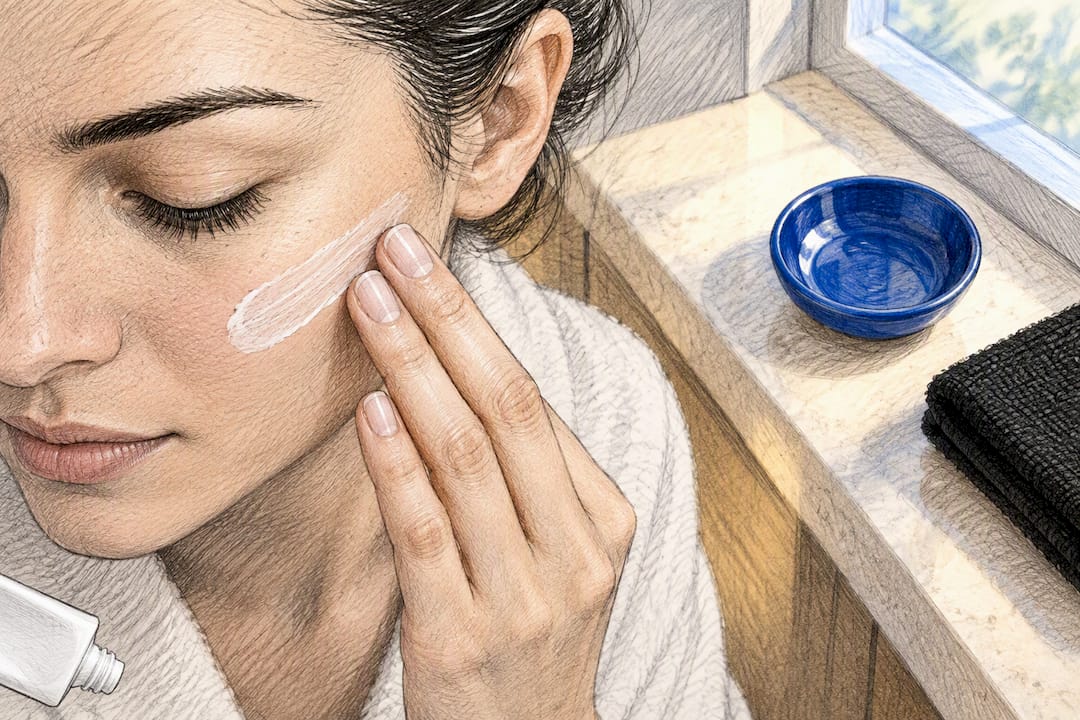
Option A: Fixed-dose cream, once daily. Products like Twyneo are applied as a thin layer to clean, dry skin once a day, typically in the evening. This is the lowest-effort option and tends to suit people who struggle to remember multi-step routines. Adherence is one of the strongest predictors of acne treatment success, and a single daily step removes a lot of the room for error.
Option B: Separate products, split by time of day. Apply benzoyl peroxide in the morning after cleansing, then tretinoin at night. Wash your hands after each application and keep both products away from your eyes, mouth, and any broken skin.
If you’re starting tretinoin for the first time, ease in gradually:
- Apply every second or third night for the first two to four weeks
- Increase to nightly use once your skin tolerates it without excessive flaking
- Apply moisturiser either before tretinoin (if irritation is significant) or shortly after, depending on what your skin needs
- Skip harsh physical exfoliants and hold off on waxing treated areas, since both increase irritation risk
Our stepwise tretinoin ramp-up guide covers this build-up in more detail if you want a week-by-week breakdown. If irritation persists beyond four weeks despite these adjustments, that’s the point to contact your prescriber for a regimen review rather than pushing through alone.
Pro Tip: Moisturiser timing is more flexible than most guides suggest. If your skin stings within minutes of applying tretinoin, apply a thin layer of moisturiser first, then tretinoin over the top. This “buffering” technique doesn’t meaningfully reduce efficacy.

Why did the FDA approve a fixed-dose version, and what does that mean for you?
The FDA’s review of Twyneo centred on two controlled trials that demonstrated statistical superiority over vehicle on both co-primary endpoints, lesion count reduction and IGA success, at week 12. That evidence, combined with the microencapsulation technology solving the historic stability question, is what secured approval.
For patients, the practical upshot is:
- One product, one daily application, instead of managing two separate tubes and two schedules
- Reduced risk of applying both actives at concentrations or timings that increase irritation unnecessarily
- A formulation specifically engineered so the actives don’t degrade each other before absorption
Cost and insurance coverage vary by prescriber and pharmacy, and not every patient needs a fixed-dose product. Clinician judgement matters here: someone already stable on a specific tretinoin strength may do better staying on separate products than switching formulations.
What does clinician-backed guidance from The M-ethod add?
Personalising a regimen matters more than picking the “correct” product off a shelf. At The M-ethod, virtual consultations focus on tailoring ramp-up schedules and product strength to your actual skin, not a generic protocol.
- Bespoke start-up plans that account for your skin type, sensitivity, and acne severity
- Follow-up built into the process, so adjustments happen before minor irritation becomes a reason to quit
- Guidance on choosing between fixed-dose convenience and separate-product flexibility
If you’re unsure which path suits you, a consultation with a clinician settles it faster than trial and error.
Balancing efficacy and tolerability for the long run
The evidence is genuinely strong here, but strong evidence doesn’t help if you stop using the product after three weeks because your face feels raw. That’s the part conventional advice underplays: the “best” regimen is the one you’ll still be using in month four, not the one with the most impressive trial data.
Fixed-dose creams win on adherence for most people. Split routines win for those with genuinely reactive skin who need more control over timing and concentration. Neither is universally superior, tolerability decides it.
— Jess
Get a regimen built around your actual skin
Reading about tretinoin and benzoyl peroxide is one thing. Getting a prescription strength and ramp-up schedule matched to your skin, rather than a generic internet protocol, is another. Them-ethod’s online skin consultation with Dr Mandy gives you exactly that: a clinician reviewing your skin history before recommending fixed-dose or split-regimen treatment, plus follow-up as your skin adjusts. That one-on-one clinical input is the advantage over generic online guides, someone qualified is actually looking at your case, not a general template.
Beyond prescriptions, Them-ethod’s in-clinic treatments in London and Athens, including Profhilo and microneedling, support skin recovery alongside topical acne treatment for those who want a broader approach. Book a consultation to get a plan built around your skin rather than a search result.
Sources
- American Academy of Dermatology 2024 guideline (PubMed)
- TWYNEO prescribing information (DailyMed)
- Twyneo NDA multidisciplinary review (FDA accessdata)
This article is general information, not a substitute for advice from a qualified doctor. Consult a qualified healthcare professional about your own circumstances before acting on anything here.
FAQ
Can I combine tretinoin and benzoyl peroxide?
Yes, using either a fixed-dose product like Twyneo or a split AM/PM routine with separate items. The AAD’s guidance supports combining these ingredients as standard multimodal acne therapy.
Is it okay to use benzoyl peroxide in the morning and tretinoin at night?
Yes, this is one of the two recommended approaches. Applying benzoyl peroxide in the morning and tretinoin at night avoids direct product mixing and works well for people with sensitive skin who want more control over each ingredient’s timing.
What cancels out tretinoin?
Older, unstabilised formulations of benzoyl peroxide could oxidise tretinoin on contact, reducing its effectiveness. Modern optimised gel formulations and microencapsulated products largely resolve this, so this concern applies far less to current products than it did historically.
Which is stronger, tretinoin or benzoyl peroxide?
They’re not directly comparable since they work through different mechanisms rather than competing on strength. Tretinoin drives cell turnover and unclogs pores, while benzoyl peroxide targets acne-causing bacteria, and clinical trials show combining them outperforms either used alone.