





6 Step Keratosis Pilaris Treatment That Works in 12 Weeks
Keratosis pilaris responds best to a two-part approach: a keratolytic ingredient (lactic acid, salicylic acid or urea) paired with consistent daily moisturising. This combination smooths the small, rough bumps and reduces the redness that surrounds them, but it manages the condition rather than curing it. Most people see visible change within four to twelve weeks, provided they stick with the routine, and bumps typically return within weeks of stopping treatment altogether.
TL;DR:
- Lactic acid shows the highest reduction in keratosis pilaris lesions but may cause more irritation, especially for sensitive skin.
- Combining keratolytics with consistent moisturising is essential, with noticeable improvements typically seen after four to twelve weeks.
- When bumps persist after three months of treatment, clinicians may recommend retinoids or light-based procedures, though these are often less cost-effective.
- Building a gentle, stepwise routine and avoiding overuse or mixing strong actives prevents barrier damage and setbacks.
- Professional guidance helps tailor treatment plans, especially for sensitive skin or when OTC options alone do not yield results.
Table of Contents
- Keratosis pilaris treatment options: lactic acid, salicylic acid and urea compared
- How do you build a safe keratosis pilaris skincare routine?
- When should you escalate to retinoids, steroids or in-clinic procedures?
- Self-care habits that make your keratosis pilaris treatment work harder
- How long does keratosis pilaris treatment take to work?
- Getting personalised keratosis pilaris treatment from a clinician
- Why the standard keratosis pilaris advice undersells maintenance
- Where Them-ethod fits into your treatment plan
- Sources
Keratosis pilaris treatment options: lactic acid, salicylic acid and urea compared
Choosing the right keratolytic comes down to your skin’s tolerance and how dry or inflamed the affected patches look. The strongest clinical evidence we have compares two of the most common options directly, and the results are worth knowing before you buy anything.
A 12 week randomised trial pitted 10% lactic acid against 5% salicylic acid and found 10% lactic acid reduced lesions by a mean of 66%, versus 52% for salicylic acid. Both groups also saw improved skin hydration, and both experienced only mild local irritation. That gap matters, but it isn’t the whole story: salicylic acid tends to feel gentler on reactive skin, and dermatologists frequently reach for it when a patient can’t tolerate lactic acid’s sting or scent.
Statistic Callout: In a survey of board-certified dermatologists, 43.63% named lactic acid their first-line KP treatment, 20.72% chose salicylic acid, and only 8.76% turned to laser therapy as a primary option — a clear signal that topical keratolytics remain the clinical standard, not procedures.
Urea sits in a slightly different category. At concentrations of 10–20%, it works as both a humectant and a mild keratolytic, which makes it the better pick when dryness (xerosis) is driving the roughness as much as the keratin plugs themselves.
A few practical distinctions worth knowing before you shop:
- Lactic acid (over-the-counter strengths typically 5–12%) delivers the strongest lesion reduction in trial data but carries a higher irritation risk for sensitive skin.
- Salicylic acid (commonly 2–5% OTC) penetrates oil-rich follicles well and suits oilier or acne-prone skin types.
- Urea (10–20%) hydrates while gently softening keratin, making it the pragmatic starting point for very dry or reactive skin.
- Prescription strengths of any of these three ingredients exist for recalcitrant cases and are usually introduced under clinical supervision.
A 2025 review of the evidence base concluded that AHAs, BHAs and urea are all reasonable first-line choices, though it flagged a real limitation: most KP-specific trials are small and short, so claims of one ingredient being definitively superior should be read with some caution. Watch for stinging that doesn’t settle after a few uses, persistent redness, or flaking that looks more like irritation than exfoliation. That’s your cue to dial back frequency rather than push through.
How do you build a safe keratosis pilaris skincare routine?
Getting the sequencing right prevents the two most common mistakes we see: giving up too early because nothing seems to happen, or overdoing it and triggering a barrier flare that sets progress back weeks.
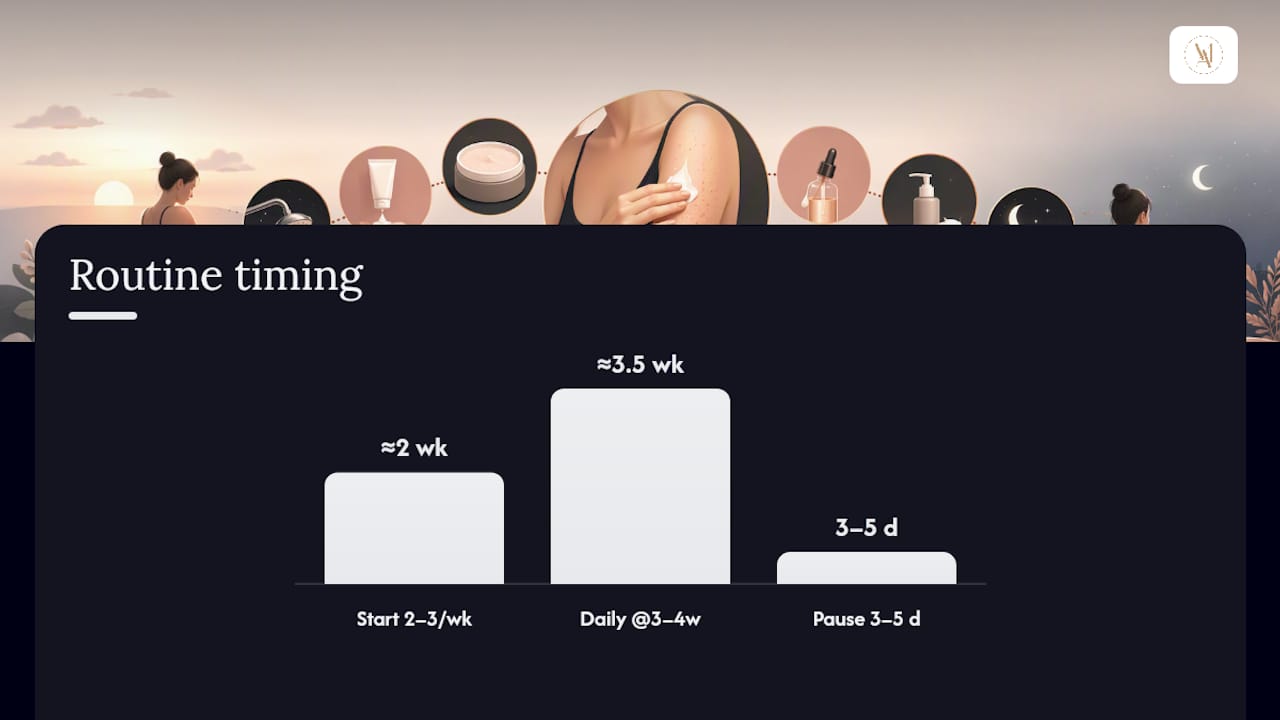
- Start slow. Apply your chosen keratolytic two to three times weekly for the first fortnight, rather than daily.
- Increase gradually. If skin tolerates it well, build towards daily use over three to four weeks.
- Moisturise on damp skin. Apply a cream-based moisturiser straight after showering, while skin is still slightly damp, to lock in hydration.
- Choose the right texture. Favour thicker creams containing urea, ceramides or humectants over thin lotions, which tend to evaporate before they do much good.
- Patch test anything new. Apply a small amount to the inner forearm for two to three nights before using it more widely.
- Never layer strong actives blindly. Combining lactic acid, salicylic acid and a retinoid in the same routine without guidance is a common route to a compromised barrier.
Pro Tip: If skin starts stinging, flaking excessively or looking shiny and tight, stop actives for three to five days and switch to a bland, fragrance-free moisturiser only. A short barrier-repair routine resets the skin before you reintroduce your keratolytic at a lower frequency.
Harvard Health’s guidance echoes this stepwise approach, recommending exfoliation no more than two to three times a week and moisturiser applied daily, ideally straight after bathing.
When should you escalate to retinoids, steroids or in-clinic procedures?
If a keratolytic and moisturiser routine hasn’t shifted texture after eight to twelve weeks of consistent use, or if bumps are inflamed and cosmetically distressing, it’s reasonable to look at second-line options.
- Topical retinoids (tretinoin, adapalene) accelerate cell turnover and can improve texture further, but they take longer to show benefit than keratolytics, often six to eight weeks, and tend to cause more initial dryness and peeling. Clinicians usually introduce them at a low frequency, two to three nights a week, alongside heavier moisturisation.
- Topical steroids have a narrow, short-term role. They calm the inflammation around individual bumps but do nothing for the keratin plugs themselves, so most clinicians limit use to a week or two during a flare rather than as ongoing therapy.
- Procedural options, including pulsed dye laser, Nd:YAG, fractional resurfacing and microneedling, target persistent redness or stubborn texture that hasn’t responded to topicals. The evidence here is thinner: small case series and pilot studies show variable improvement, and results don’t always hold up long-term.
- Cost is a real factor. Laser sessions run into hundreds of pounds each and often need repeat treatments, which is part of why only 8.76% of dermatologists use them as a primary approach.
Topical keratolytics flatten the bumps effectively, but they rarely touch the redness surrounding them, since that redness comes from small blood vessels rather than keratin buildup. That’s the gap laser and light-based treatments are designed to close, though they remain a second-line option rather than a starting point.
Self-care habits that make your keratosis pilaris treatment work harder
The products matter, but daily habits either support them or quietly undo them. A handful of small changes make a genuine difference:
- Keep showers short and lukewarm. Long, hot showers strip natural oils and worsen dryness. Aim for under fifteen minutes.
- Use a mild, non-foaming cleanser. Harsh, sulphate-heavy washes disrupt the skin barrier further; a gentle cleansing lotion or gentle cream cleanser is a better fit for KP-prone skin.
- Skip loofahs and abrasive scrubs entirely. Chemical exfoliants do the job more safely; physical scrubbing can inflame the follicles further.
- Choose loose, breathable fabrics. Tight synthetic clothing increases friction over affected areas, particularly on the arms and thighs.
- Run a humidifier during dry months. Indoor heating strips moisture from the air and, in turn, your skin.
- Moisturise more than once a day if skin feels tight. Consistency beats intensity here.
None of this requires a complicated routine, just repetition. The habits work quietly in the background while your keratolytic does the heavier lifting.
How long does keratosis pilaris treatment take to work?
Patience is the hardest part of treating KP, mostly because expectations are usually set too high. Most people notice the first meaningful softening of texture between four and eight weeks into consistent use, with fuller improvement continuing to the twelve-week mark and sometimes beyond.
Statistic Callout: In the lactic acid versus salicylic acid trial, improvements measured at 12 weeks were still holding at a four-week follow-up check, suggesting gains are reasonably stable while treatment continues, though not permanent once it stops.
Recurrence after stopping is common and expected. Because KP is driven by an underlying tendency to overproduce keratin, often with a genetic component, treatment manages the visible symptoms rather than switching that tendency off. A reduced-frequency maintenance regimen, perhaps two applications a week instead of daily, tends to hold results better than stopping outright.
Texture (the bumps themselves) usually responds faster and more predictably than redness, which can linger even after skin feels smoother to the touch. If bumps become painful, infected-looking, or the appearance is affecting your confidence significantly, that’s a reasonable point to book a dermatology assessment rather than persisting alone.
Getting personalised keratosis pilaris treatment from a clinician
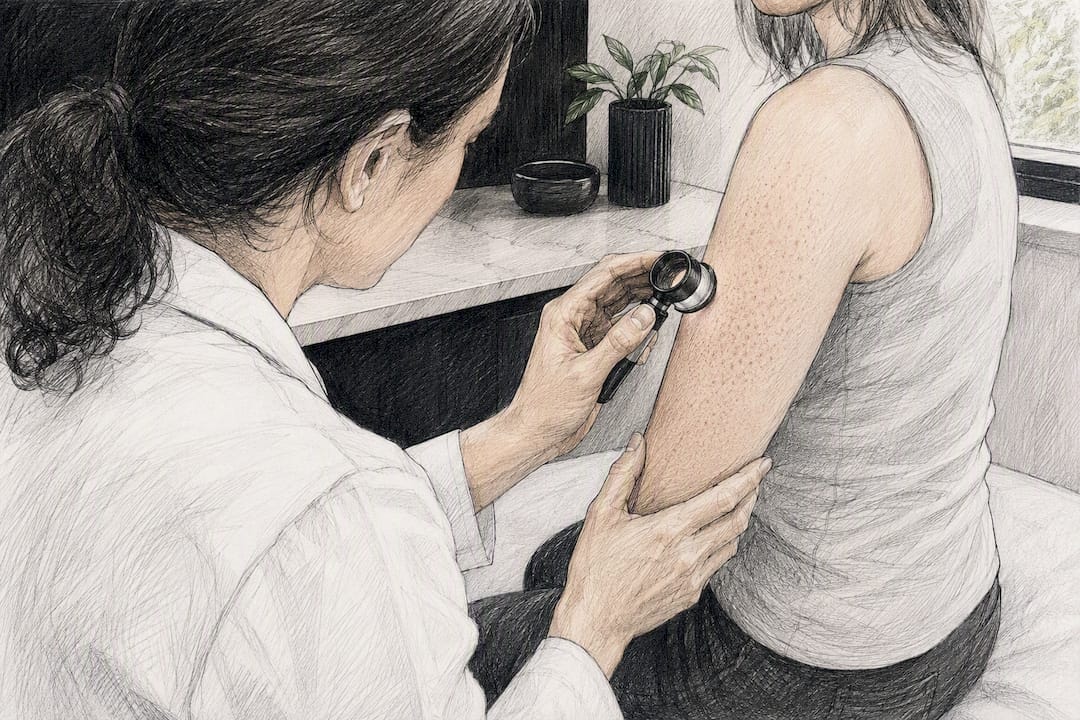
Over-the-counter routines cover most cases well, but some skin needs a more tailored hand, particularly when sensitivity, prescription-strength options, or ingredient sequencing come into play. This is where professional input earns its place.
A clinician-led consultation typically helps with:
- Choosing the right concentration. Not everyone tolerates 12% lactic acid; a clinician can recommend a gentler starting percentage or a prescription-strength option if OTC hasn’t worked.
- Sequencing multiple actives safely. If you’re already using a retinoid for another concern, a clinician maps out how a keratolytic fits alongside it without compromising your barrier.
- Managing sensitive or reactive skin. Formulation choice (cream versus gel, added ceramides versus fragrance-free) often makes the difference between compliance and abandoning a routine after a week.
Before a virtual or in-clinic consultation, it helps to bring a list of products you’re currently using, how long you’ve been treating the area, and photos of the skin in natural light. That gives the clinician a clear starting point rather than working from description alone.
Why the standard keratosis pilaris advice undersells maintenance
Most advice on this condition front-loads the treatment phase and says almost nothing about what happens after. That’s a mistake, because the research is fairly consistent on one point: consistency and a maintenance plan predict long-term improvement far better than which specific acid you pick in week one.
The conventional advice also tends to oversell procedures. For most people, a well-chosen keratolytic and a properly timed moisturiser will outperform an expensive procedure that’s difficult to access and doesn’t guarantee durable results.
What we’d prioritise first is unglamorous but effective: pick one keratolytic suited to your tolerance, apply moisturiser to damp skin daily, and give it the full twelve weeks before judging it. Reach for prescription-strength options or in-clinic care when OTC genuinely stalls, not because a bigger intervention feels more serious.
— Jess
Where Them-ethod fits into your treatment plan
If your current routine has plateaued or you’re not confident choosing between lactic acid, salicylic acid and urea, Them-ethod gives you a way to skip the guesswork. Rather than trial-and-error shopping through supermarket shelves, you get access to prescription-strength and dermatologist-recommended formulations, including curated AHA and BHA options through the Neostrata range, alongside virtual consultations with clinicians who can match concentration and formulation to your actual skin, not a generic skin type.
This suits readers who’ve tried a basic drugstore keratolytic without much change, or whose skin reacts to standard OTC strengths and needs a more considered approach. A virtual consultation lets a clinician review your history, recommend sequencing if you’re using other actives, and, where appropriate, guide you towards prescription options such as targeted serums formulated for reactive, textured skin. Book a virtual skin consultation through Them-ethod to get a plan built around your skin rather than an average.
This article is general information, not a substitute for advice from a qualified doctor. Consult a qualified healthcare professional about your own circumstances before acting on anything here.
Sources
- Comparative trial of lactic acid and salicylic acid in keratosis pilaris (Kootiratrakarn et al.)
- Keratosis pilaris treatment practices of board-certified dermatologists (survey)
- Keratosis pilaris: treatment and self-care — Harvard Health
- Review: effectiveness of topical keratolytics in keratosis pilaris


%20paired%20with%20consistent%20daily%20moisturising.%20This%20combination%20smooths%20the%20smal...)