




Examples of anti-aging ingredients: your 2026 guide
TL;DR:
- Effective anti-aging skincare relies on proven ingredients like retinoids, sunscreen, vitamin C, niacinamide, peptides, and hyaluronic acid that promote skin renewal and protect against damage. Consistent use over 8 to 12 weeks is necessary for visible results, with routine layering and proper packaging enhancing efficacy. Prioritizing these evidence-backed essentials over trendy actives produces reliable and lasting anti-aging benefits.
Anti-aging ingredients are scientifically validated compounds that visibly reduce signs of ageing by promoting skin renewal, protecting against environmental damage, and improving hydration. The most effective examples of anti-aging ingredients include retinoids, broad-spectrum sunscreen, vitamin C, niacinamide, peptides, and hyaluronic acid. These are not marketing inventions. They are the compounds dermatologists consistently recommend because the clinical evidence supports them. If you are between 30 and 60 and want results you can actually see, science-backed skincare is where to start.
What are the best examples of anti-aging ingredients?
Dermatologists follow a clear hierarchy when building an anti-aging ingredients list. Sunscreen and retinoids sit at the top. Antioxidants like vitamin C and barrier supporters like niacinamide follow. The logic is simple: prioritise evidence, not trends. Below are the core active compounds that earn their place in any effective routine.
1. Retinoids
Retinoids are the gold standard in anti-aging skincare, endorsed by over 96% of dermatologists for their ability to accelerate cell turnover and stimulate collagen production. That level of professional consensus is rare. Retinoids work by binding to receptors in skin cells, signalling them to renew faster and produce more structural protein. The result is visibly smoother texture, reduced fine lines, and improved skin tone over time.
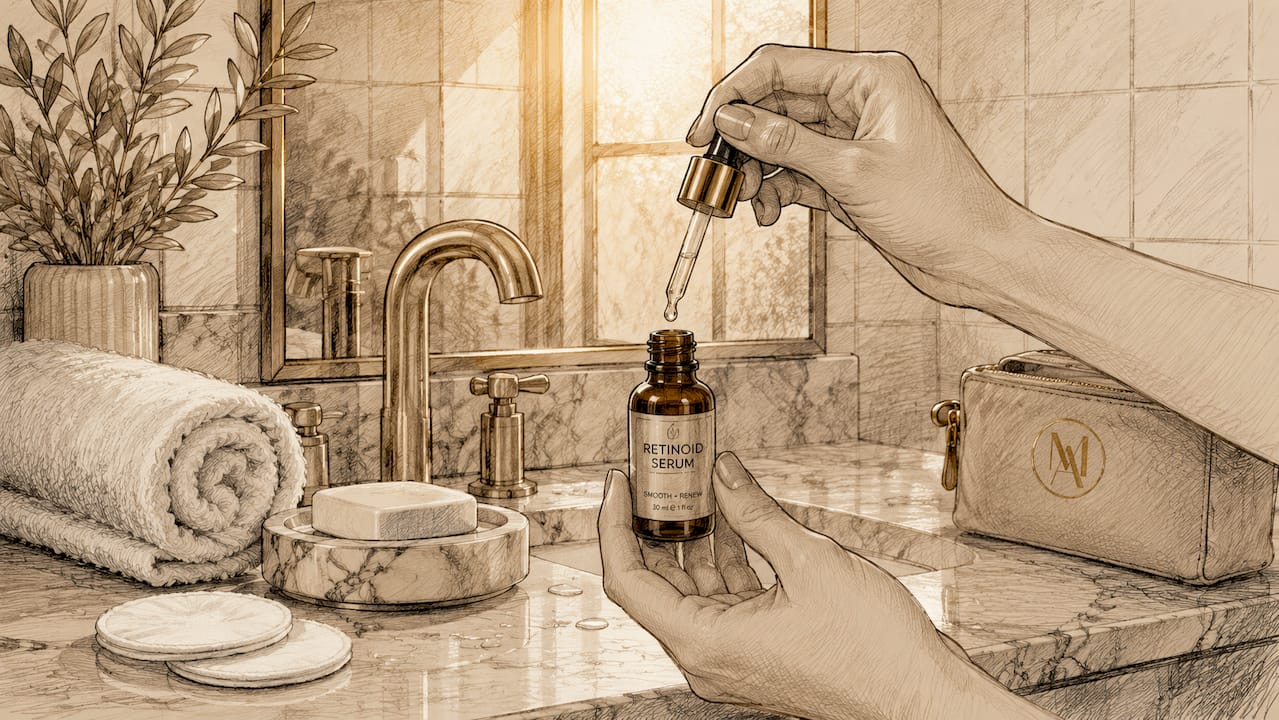
Prescription-strength tretinoin delivers the strongest results, but over-the-counter retinol and retinaldehyde are effective starting points for those new to the ingredient. Retinoid esters such as retinyl palmitate offer a gentler alternative for sensitive skin or post-procedure recovery. Visible improvements typically take 8 to 12 weeks of consistent daily use. Patience is not optional with retinoids. It is part of the process.
Pro Tip: Start retinoids two to three nights per week and build to nightly use over four to six weeks. This reduces the risk of dryness and peeling without compromising long-term results.
2. Broad-spectrum sunscreen
UV radiation drives up to 80% of visible skin ageing. That single fact makes broad-spectrum sunscreen the most important item in any anti-aging routine. It is not a supplement to other actives. It is the foundation. Without it, every other ingredient you apply is working against a tide of daily UV damage.
A broad-spectrum SPF 30 or higher protects against both UVA rays, which cause deep structural ageing, and UVB rays, which cause burning. 96.8% of dermatologists endorse sunscreen for preventing fine lines. No other single product comes close to that level of professional agreement. Apply it every morning, including on overcast days and when working near windows. For more on how UV protection fits into a complete routine, the role of sunscreen in anti-aging is worth reading in full.
3. Vitamin C (L-ascorbic acid)
Vitamin C is the most scientifically supported topical antioxidant available. It is recommended by 88.7% of dermatologists for treating fine lines and by 87.1% for addressing dark spots. Those figures reflect decades of clinical research, not marketing. Vitamin C neutralises free radicals generated by UV exposure and pollution, and it inhibits melanin production, which is why it brightens uneven skin tone.
L-ascorbic acid is the active form, and it degrades rapidly when exposed to light, heat, or air. Packaging matters enormously here. Choose products in dark, airtight, or pump-style bottles to preserve potency. A vitamin C serum applied in the morning under sunscreen creates a powerful antioxidant shield. For a detailed look at how it addresses pigmentation specifically, see vitamin C for pigmentation.
4. Niacinamide
Niacinamide is one of the most versatile compounds on any anti-aging ingredients list. It reduces hyperpigmentation and redness, improves skin elasticity, and strengthens the skin barrier. Randomised trials show significant improvements in pigmentation and elasticity after 8–12 weeks of consistent topical use. That timeline aligns with retinoids, which makes niacinamide an ideal pairing for a simplified routine.
At concentrations of 4–5%, niacinamide is well tolerated by most skin types, including sensitive and rosacea-prone skin. It does not cause the purging or irritation associated with retinoids, making it a reliable first active for those new to evidence-based skincare. The role of niacinamide in skin care covers its mechanisms in greater depth.
5. Peptides
Peptides are short chains of amino acids that signal skin cells to produce collagen and elastin. Their efficacy is supported primarily by laboratory studies, and their real-world capacity to stimulate collagen is less established than retinoids. That does not make them useless. It means they work best as a supporting ingredient rather than a primary active. Peptides improve hydration and firmness noticeably, particularly in mature skin that has lost elasticity.
Copper peptides and palmitoyl pentapeptide-4 (Matrixyl) are among the most studied. They are well tolerated and can be layered with most other actives without irritation. For a clinical breakdown of how peptides function in anti-aging routines, the role of peptides in anti-aging provides a thorough overview.
6. Hyaluronic acid
Hyaluronic acid is a naturally occurring molecule in skin that holds water. A single gram can hold up to a litre of water, which explains its reputation as a hydration powerhouse. As skin ages, hyaluronic acid levels decline, leading to a loss of plumpness and the appearance of deeper lines. Topical application replenishes surface hydration and temporarily plumps fine lines.
It is one of the most universally tolerated ingredients in skincare. It suits all skin types, including oily and acne-prone skin, and it layers well beneath heavier actives. Use it on slightly damp skin and follow immediately with a moisturiser to seal in hydration. Hyaluronic acid does not reverse ageing on its own, but it creates the optimal skin environment for other actives to work.
How do exfoliating acids and barrier ingredients support anti-aging?
Exfoliating acids and barrier-supporting compounds are the second tier of an effective anti-aging routine. They do not replace retinoids or sunscreen, but they address texture, tone, and resilience in ways that primary actives cannot fully cover.
- Glycolic acid (AHA): Derived from sugar cane, glycolic acid dissolves the bonds between dead skin cells, revealing brighter, smoother skin beneath. Studies show it reduces dark spots and improves overall texture with regular use. It suits normal to dry skin types and works best in the evening.
- Lactic acid (AHA): A gentler alternative to glycolic acid, lactic acid exfoliates while also hydrating. It is better suited to sensitive or dry skin and causes less irritation at equivalent concentrations.
- Salicylic acid (BHA): Oil-soluble and pore-penetrating, salicylic acid clears congestion and reduces inflammation. It is particularly effective for skin that experiences adult acne alongside ageing concerns, addressing both simultaneously.
- Ceramides: These lipid molecules form the skin barrier and decline with age. Ceramide-rich moisturisers restore barrier integrity, reduce water loss, and improve the skin’s ability to tolerate active ingredients like retinoids and acids.
- Botanical and fermentation-derived ingredients: Ingredients such as green tea extract, resveratrol, and fermented actives carry antioxidant properties. Their evidence base is less extensive than retinoids or vitamin C, but they contribute meaningfully as supporting compounds in well-formulated products.
What affects how well anti-aging ingredients work?
The ingredient itself is only part of the equation. Formulation, packaging, skin type, and how you combine actives all determine whether you see results or experience irritation.
| Factor | What it means in practice |
|---|---|
| Packaging stability | Vitamin C degrades in clear or open-top packaging. Choose dark, airtight, or pump bottles. |
| Skin tolerance | Retinoids cause irritation in many people initially. Retinoid esters are a lower-irritancy alternative. |
| Layering order | Apply water-based serums first, then oils, then moisturiser. Avoid mixing acids and retinoids on the same evening until skin is accustomed. |
| Time to results | Consistent use over 8–12 weeks is more important than product cost for achieving visible improvements. |
| Skin context | Post-procedure or postpartum skin requires gentler formulations. Classical retinoids are inappropriate in these periods. Retinoid esters offer alternatives with lower irritancy profiles. |
Sensitive skin types benefit from introducing one new active at a time, waiting four to six weeks before adding another. This approach makes it easier to identify what is working and what is causing a reaction. Overloading skin with multiple acids, retinoids, and antioxidants simultaneously is one of the most common mistakes people make.
Pro Tip: If you experience redness or peeling with a retinoid, apply your moisturiser first and then the retinoid on top. This “buffering” technique reduces irritation without eliminating efficacy.
How to build an effective anti-aging routine with these ingredients
A well-structured routine does not need to be complicated. Consistency and correct sequencing matter far more than the number of products you use.
- Morning: sunscreen first, always. Apply a broad-spectrum SPF 30 or higher as the final step of your morning routine. Add a vitamin C serum beneath it for antioxidant protection against UV and pollution.
- Evening: retinoid as your primary active. Apply a retinoid to clean, dry skin. Start two to three nights per week and increase frequency gradually. Do not combine with AHAs or BHAs on the same evening until your skin has adjusted.
- Add niacinamide as a daily staple. Use it morning or evening. It pairs well with most actives and supports the skin barrier while other ingredients do their work.
- Introduce hyaluronic acid for hydration. Apply it to damp skin before your moisturiser, morning and evening. It prepares skin to absorb subsequent products more effectively.
- Layer exfoliating acids on alternate evenings. Once your skin tolerates retinoids well, introduce glycolic or lactic acid on the evenings you skip retinoid use. This maintains exfoliation without stacking irritants.
- Add peptides and ceramides as finishing layers. Use peptide serums or ceramide-rich moisturisers to support firmness and barrier repair. These work well as the final step in an evening routine.
- Review and adjust every 12 weeks. Skin changes with seasons, age, and lifestyle. Reassess your routine quarterly and adapt based on what your skin is telling you. A step-by-step anti-ageing regimen can help you structure this process.
Key takeaways
The most effective anti-aging routine is built on a small number of well-evidenced ingredients used consistently, not a large collection of trendy actives.
| Point | Details |
|---|---|
| Sunscreen is non-negotiable | UV radiation causes up to 80% of visible ageing. Apply broad-spectrum SPF 30 or higher every morning. |
| Retinoids lead the charge | With over 96% dermatologist endorsement, retinoids are the most evidence-backed anti-aging active available. |
| Vitamin C needs stable packaging | L-ascorbic acid degrades quickly. Store in dark, airtight, or pump bottles to maintain efficacy. |
| Results require patience | Visible improvements from retinoids and niacinamide take 8–12 weeks of consistent daily use. |
| Simplicity outperforms complexity | Layering too many actives causes irritation. Start with sunscreen and a retinoid, then build gradually. |
What I have learnt from years of watching people build anti-aging routines
The most common mistake I see is not choosing the wrong ingredient. It is abandoning the right one too soon. People try a retinoid for three weeks, experience some dryness, and conclude it does not work for them. In reality, they stopped just before their skin adapted.
The second mistake is chasing novelty. Every season brings a new extract or peptide complex with impressive marketing behind it. Some of these compounds are genuinely interesting. Most are not yet supported by the kind of clinical evidence that retinoids and vitamin C have accumulated over decades. I am not dismissive of newer ingredients. I simply think they belong in a routine that already has the fundamentals in place.
What actually works is boring in the best possible way. Sunscreen every morning without exception. A retinoid at night, introduced slowly. Vitamin C in a stable formulation. Niacinamide for barrier support. That is a complete routine for most people aged 30–60. Everything else is optional. The evidence-based anti-aging guide we put together at Them-ethod reflects exactly this philosophy.
Individual variability is real. Some people tolerate tretinoin from week one. Others need six months on retinol before stepping up. Neither experience is wrong. The goal is to find the version of this routine that your skin accepts and then commit to it long enough to see what it can actually do.
— Jess
Clinically formulated products for your anti-aging routine
At Them-ethod, we curate products that meet the same evidence standards we write about. Our range includes dermatologist-approved formulations featuring retinoids, antioxidants, and barrier-supporting actives, selected for both efficacy and tolerability. The NeoStrata collection is a strong starting point for those seeking scientifically formulated anti-aging products, with options suited to a range of skin types and concerns. For skin that combines ageing with blemish-prone tendencies, the PCA Skin ClearSkin serum addresses both simultaneously with active ingredients that do not compromise the skin barrier. Our virtual consultations with senior clinicians are available for those who want a personalised assessment before committing to a routine.
FAQ
What are the most effective anti-aging ingredients?
Retinoids, broad-spectrum sunscreen, vitamin C, niacinamide, and hyaluronic acid are the most evidence-backed anti-aging compounds. Dermatologists endorse retinoids and sunscreen above all others for their proven ability to stimulate collagen and prevent UV damage.
How long do anti-aging ingredients take to work?
Visible results from retinoids and niacinamide typically take 8–12 weeks of consistent daily use. Setting realistic expectations and committing to that timeline is more important than switching products frequently.
Can I use retinoids and vitamin C together?
Yes, but not always at the same time. Apply vitamin C in the morning and retinoids in the evening to avoid potential irritation and to maximise the stability of both ingredients.
Are natural anti-aging agents as effective as synthetic ones?
Some natural compounds, such as vitamin C and niacinamide, have strong clinical backing. Others, including many botanical extracts, have a less established evidence base. Efficacy depends on the compound and concentration, not whether it is natural or synthetic.
What anti-aging ingredients suit sensitive skin?
Niacinamide, hyaluronic acid, ceramides, and retinoid esters are well tolerated by sensitive skin. Classical retinoids and high-concentration AHAs can cause irritation and should be introduced very gradually or avoided in post-procedure and postpartum periods.