




Signs of healthy skin: 7 science-backed indicators
TL;DR:
- Healthy skin shows an even tone, good texture, proper hydration, firmness, and a natural radiance.
- It also reflects barrier function through minimal breakouts; routines must adapt over time for optimal results.
Most of us have stood in front of a mirror wondering whether our skin is actually healthy or simply having a good day. Clear skin is not always healthy skin, and healthy skin is not always blemish-free. The signs of healthy skin go well beyond surface appearance, reflecting what is happening at a cellular, microbial, and structural level beneath the surface. At Them-ethod, we believe understanding these five core indicators gives you a far more reliable framework than chasing any single aesthetic goal. Here is what to look for.
Table of Contents
- Key takeaways
- 1. Even skin tone as a primary sign of healthy skin
- 2. Smooth texture: what it reveals about skin condition
- 3. Proper hydration: the balance between dryness and oiliness
- 4. Firmness and elasticity: indicators of youthfulness and health
- 5. Natural radiance: the glow that comes from within
- 6. Minimal breakouts and skin clarity as signs of balance
- My honest take on reading your skin’s signals
- Explore Them-ethod’s science-backed solutions for healthy skin
- FAQ
Key takeaways
| Point | Details |
|---|---|
| Even tone signals balance | Uniform skin colour without redness or dark patches indicates healthy melanin regulation and low inflammation. |
| Hydration reflects barrier function | Well-hydrated skin supports microbiome diversity, which is a measurable marker of skin health. |
| Texture reveals cellular turnover | Smooth skin without rough patches or flakiness shows that your skin is renewing itself at a healthy rate. |
| Firmness indicates collagen health | Good elasticity and bounce-back reflect adequate collagen and elastin levels, both of which decline with age. |
| Breakouts signal barrier imbalance | Frequent breakouts often point to a disrupted skin barrier or hormonal fluctuation, not just poor hygiene. |
1. Even skin tone as a primary sign of healthy skin
An even skin tone is one of the clearest healthy skin characteristics you can observe without any specialist tools. What we mean by this is uniform colour across the face and body, with no persistent redness, blotchiness, or areas of hyperpigmentation. When melanin production is well regulated and inflammation is low, the skin presents with a consistent hue. Disruptions to either of these processes tend to show up as uneven patches or dark spots.
Biologically, uneven tone is often a sign of post-inflammatory hyperpigmentation, sun damage, or an impaired skin barrier. Regular use of broad-spectrum SPF is the single most impactful step for maintaining tone balance over time. Brightening actives such as vitamin C, niacinamide, and alpha-arbutin help suppress excess melanin and support a clearer, more uniform complexion.
- Apply SPF 30 or higher every morning, including on overcast days
- Introduce a targeted brightening serum with vitamin C or niacinamide
- Avoid picking at blemishes, which worsens post-inflammatory pigmentation
- Reapply SPF every two hours when outdoors
Pro Tip: If you are dealing with stubborn discolouration, explore the Skinbetter Science Even Tone Serum for a clinically grounded approach to achieving a more uniform complexion.
An even tone is not only an aesthetic goal. It is an indicator that the skin’s underlying processes are functioning as they should, from regulated melanocyte activity to a well-supported inflammatory response.
2. Smooth texture: what it reveals about skin condition
Run your fingertips lightly across your cheek. Healthy skin feels smooth, with a fine-grained surface and no obvious rough patches, bumps, or flaky areas. This tactile indicator directly reflects how efficiently your skin is renewing itself through the natural process of cellular turnover. When that process slows or becomes disrupted, dead cells accumulate on the surface, creating roughness and uneven texture.
Hydration plays an equally significant role here. Dehydrated skin loses its plumpness at the surface level, causing fine lines to appear more pronounced and the overall texture to feel less refined. Equally, persistent flaky or rough skin can signal internal issues such as nutritional deficiencies or thyroid dysfunction, not purely a topical problem.
- Incorporate a gentle chemical exfoliant (AHA or BHA) 2 to 3 times per week
- Follow exfoliation with a hydrating serum or moisturiser to replenish the barrier
- Avoid mechanical scrubs on sensitive or compromised skin
- Monitor texture changes across seasons, as skin behaves differently in cold, dry air
Pro Tip: Over-exfoliation damages the skin’s microbiome, triggers inflammation, and can make texture worse, not better. Less is genuinely more here. If your skin feels tight or reactive after exfoliating, scale back immediately.
The connection between texture and skin barrier function is worth taking seriously. Objective dermatological markers such as transepidermal water loss and skin pH levels confirm that a compromised surface barrier shows up texturally before it becomes a visible skin condition.

3. Proper hydration: the balance between dryness and oiliness
Hydration sits at the centre of almost every healthy skin characteristic worth discussing. Well-hydrated skin looks plump and slightly luminous. It feels soft to the touch without feeling greasy, and it recovers quickly when you gently press it. The balance between dryness and excess oiliness is the sweet spot that most skincare routines are trying to reach.
What makes hydration particularly interesting from a scientific standpoint is its relationship with the skin microbiome. Skin moisture positively correlates with microbial richness, meaning well-hydrated skin supports a more diverse and resilient microbial community. A richer microbiome in turn reinforces the skin’s barrier and helps regulate pH. The two are deeply connected, and neglecting hydration disrupts both.
To maintain balanced hydration, consider these steps:
- Cleanse with a non-stripping, pH-balanced formula that preserves the skin barrier
- Apply a humectant such as hyaluronic acid to damp skin to draw moisture into the dermis
- Seal with an occlusive or emollient moisturiser to prevent moisture loss
- Drink consistently throughout the day, as internal hydration supports skin function
- Switch from gel-based to cream-based moisturisers in autumn and winter, when ambient humidity drops
The Restorative Hydration Cream by Calecim Professional is one product we regularly recommend for clients needing to restore moisture balance and strengthen the skin barrier. And if you want a deeper understanding of how the microbiome connects to all of this, our guide on the skin biome offers clear, expert-led reading.
4. Firmness and elasticity: indicators of youthfulness and health
Skin elasticity refers to your skin’s ability to return to its original position after being stretched or pressed. Firmness relates to the structural density of the skin. Both are direct indicators of collagen and elastin health, and both are among the most telling indicators of good skin from a dermatological standpoint.
A simple at-home test: gently pinch the skin on the back of your hand, hold for two seconds, then release. Skin with good elasticity springs back almost immediately. Collagen and elastin decline naturally with age, but the rate of that decline is significantly influenced by UV exposure, sleep quality, diet, and the skincare you use.
Key factors that influence skin firmness and elasticity include:
- UV damage accelerates collagen breakdown faster than almost any other external factor
- Sleep quality matters considerably. Poor sleep raises cortisol, which interferes with overnight skin repair and reduces collagen production
- Retinoids are the most evidence-backed topical ingredient for stimulating collagen and improving elasticity
- Injectables such as Profhilo and polynucleotides, both offered at The M-ethod, work by deeply stimulating the skin’s own collagen and elastin network
Maintaining firmness is not simply about vanity. It reflects the functional resilience of your skin, its ability to protect, repair, and regenerate effectively.
5. Natural radiance: the glow that comes from within
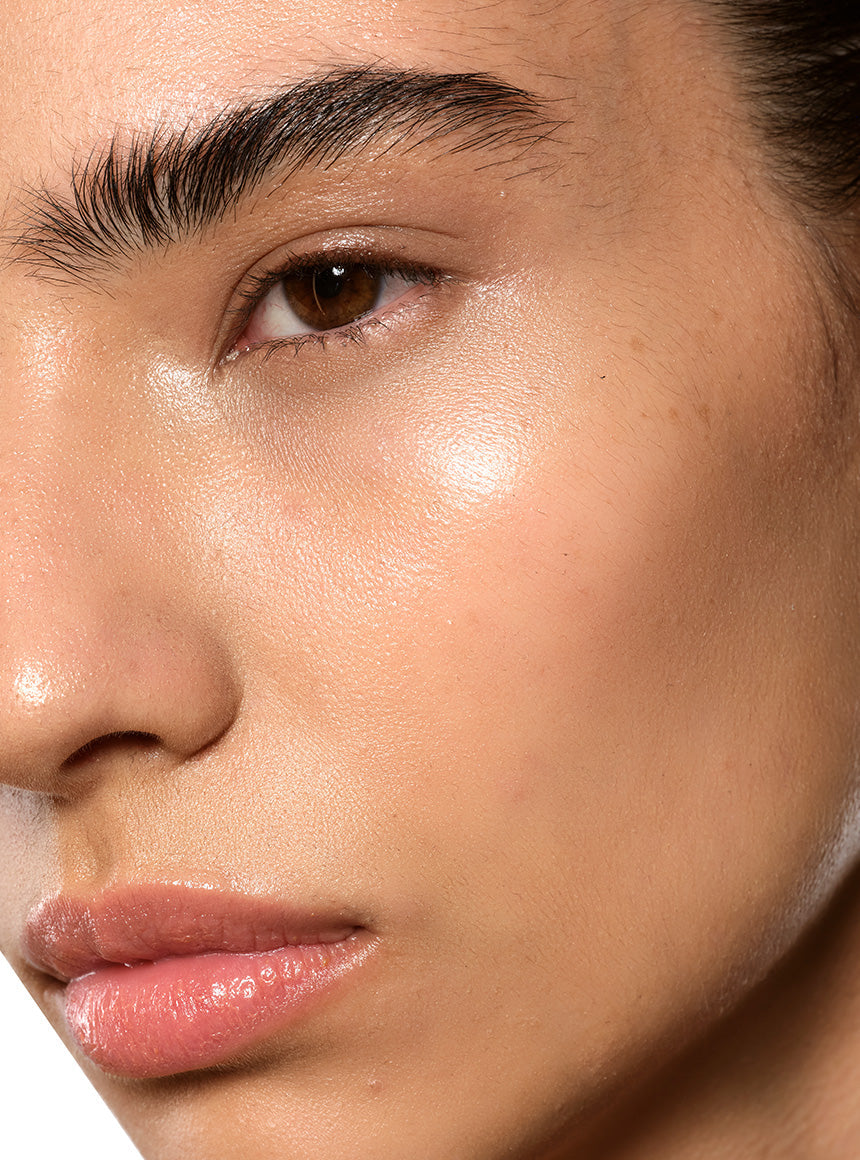
A natural glow is one of those qualities that is immediately recognisable but harder to define precisely. It is not the same as shine from excess sebum. True radiance is the result of even light reflection from a smooth, well-hydrated surface, combined with good peripheral circulation and cellular vitality just beneath the skin.
When circulation is healthy, skin looks alive. When the skin is dehydrated, congested, or inflamed, it looks flat and dull regardless of how much highlighter you apply. Sleep is one of the most underrated contributors here. Disrupted sleep increases cortisol and inflammation, both of which interfere with the skin’s overnight repair cycle and directly affect morning brightness.
Practical steps to support natural radiance:
- Prioritise seven to nine hours of consistent, quality sleep
- Use antioxidant-rich products with vitamin C or niacinamide to protect against oxidative dull-making
- Consider gentle facial massage to support microcirculation
- Avoid heavy alcohol consumption and smoking, both of which reduce skin oxygenation
Radiance is a symptom of healthy skin, not a goal to manufacture with product layering alone.
6. Minimal breakouts and skin clarity as signs of balance
Breakouts are commonly attributed to poor hygiene, but that framing is too simplistic. Frequent breakouts signal an imbalanced skin barrier, clogged pores, hormonal fluctuation, or internal inflammation. They are your skin communicating that something needs attention, whether that is your cleansing routine, your diet, your stress levels, or the products you are using.
Clear skin, characterised by minimal active breakouts and few clogged pores, shows that the skin barrier is functioning properly, sebum production is regulated, and the resident microbiome is not being disrupted. This is one of the most visible symptoms of healthy skin for many people, and one of the most motivating to work towards.
Key habits that support skin clarity:
- Cleanse morning and evening with a gentle facial cleanser that removes impurities without stripping the barrier
- Avoid touching your face throughout the day, which transfers bacteria and disrupts the microbiome
- Change pillowcases at least twice a week to reduce bacterial transfer during sleep
- Introduce salicylic acid or niacinamide to your routine if congestion is a persistent issue
Equally, avoid the common mistake of layering aggressive actives in a bid to force clarity. The skin’s barrier, once stripped, struggles to maintain the balance that keeps breakouts at bay. Gentle, consistent care outperforms aggressive treatment almost every time.
My honest take on reading your skin’s signals
I have worked with clients across a wide range of skin types, and the pattern I see most often is people trying to fix their skin with a single product or a static routine that they hold onto regardless of how their skin is responding. What I have learned is that skin health is genuinely dynamic. Routines need to adapt with seasons, hormonal cycles, stress levels, and lifestyle changes. That is not a flaw in your skincare. It is just how skin works.
The biggest misconception I encounter is the belief that if a product is not working within two weeks, it is ineffective. Collagen-stimulating ingredients and barrier-repair formulas often take six to twelve weeks to show measurable results. Patience, observation, and adaptation are the real skills here.
I also tell clients to stop evaluating their skin only in harsh bathroom lighting. Natural light, particularly morning light, gives a far more accurate read on tone, texture, and radiance. Your skin’s signals are there if you know what to look for.
— Jess
Explore Them-ethod’s science-backed solutions for healthy skin
At Them-ethod, every product we carry is selected for its clinical evidence and real-world efficacy. If breakouts are your primary concern, the PCA Clearskin serum is a dermatologist-trusted formula that targets acne-causing bacteria while supporting the skin’s barrier, making it one of our most recommended products for maintaining clarity without disruption.
For those focused on tone, firmness, and overall skin vitality, the NEOSTRATA collection brings together science-led formulas designed to address pigmentation, support collagen, and resurface the skin with clinically validated ingredients. Both ranges reflect Them-ethod’s commitment to results that are measurable, not just marketable. If you would like personalised guidance on which products suit your skin’s specific profile, our virtual consultations connect you directly with expert clinicians.
FAQ
What are the main signs of healthy skin?
Healthy skin is defined by five core characteristics: even tone, smooth texture, proper hydration, firm elasticity, and natural radiance. Minimal breakouts are also a strong indicator of a well-functioning skin barrier.
Can healthy skin still have occasional breakouts?
Yes. Occasional breakouts do not automatically mean unhealthy skin. Breakouts often reflect temporary hormonal fluctuation, stress, or environmental shifts rather than a chronically imbalanced skin barrier.
How does hydration affect skin health indicators?
Proper hydration supports every visible sign of healthy skin, from plumpness and radiance to texture and elasticity. Higher skin moisture correlates with greater microbiome diversity, which strengthens the skin barrier and improves its resilience.
Why does my skin look different across seasons?
Skin adapts continuously to environmental changes in temperature and humidity. Cold, dry air accelerates moisture loss, while heat and humidity increase sebum production. Adjusting your routine seasonally is a sound, science-backed practice.
Is over-exfoliating harmful to healthy skin?
Absolutely. Aggressive exfoliation disrupts the skin’s microbiome, raises transepidermal water loss, and triggers inflammation. Exfoliating two to three times per week with a gentle chemical exfoliant is sufficient for most skin types.