






Sensitive skin explained: causes, types and tailored care
Sensitive skin is frequently misunderstood as something you can simply see in the mirror. In reality, unpleasant sensations occur even when skin looks completely normal, making it one of the most underdiagnosed and mismanaged skin concerns. Burning, tingling, and tightness can strike without a single visible sign of redness or irritation. This guide covers the real causes, the distinct subtypes, how professionals diagnose it, and the expert-approved strategies that actually make a difference.
Table of Contents
- What does having sensitive skin mean?
- How common is sensitive skin?
- The science behind sensitivity: why does it happen?
- The many faces of sensitive skin: objective vs subjective and common subtypes
- Diagnosing sensitive skin: how is it identified?
- Managing sensitive skin: expert strategies for daily care
- Personalised solutions for sensitive skin at The M-ethod
- Frequently asked questions
Key Takeaways
| Point | Details |
|---|---|
| Sensitive skin is common | About half the population experiences sensitive skin symptoms, especially women. |
| No single definition | Sensitive skin ranges from invisible sensations to visible redness, often relying on personal experience for identification. |
| Several subtypes exist | Sensitive skin includes barrier, neurological, and inflammatory subtypes, each with unique triggers. |
| Diagnosis needs context | Professional assessment and specific tests help tailor the best skincare strategy for your sensitive skin. |
| Management is about prevention | Gentle, fragrance-free products and expert guidance offer the best protection and comfort for sensitive skin. |
What does having sensitive skin mean?
Sensitive skin is not simply a skin type in the way oily or dry skin is. Sensitive skin is defined as a syndrome characterised by unpleasant sensations such as burning, tingling, itching, or pain in response to stimuli that would not normally cause discomfort. Crucially, these sensations often occur without any visible redness, rash, or inflammation, which is precisely why it is so frequently dismissed or misunderstood.
Because the symptoms are largely subjective, meaning they rely on what you feel rather than what a clinician can observe, diagnosis depends heavily on self-reporting. This does not make the condition any less real. It simply means that your lived experience of your skin is the most important diagnostic tool available.
“Sensitive skin is a syndrome characterised by unpleasant sensations in response to stimuli that should not provoke such feelings.” — Cleveland Clinic
Key symptoms that may indicate sensitive skin include:
- Burning or stinging after applying skincare products
- Itching or tightness without visible cause
- Tingling sensations triggered by temperature changes
- Pain or discomfort from fabrics, water, or environmental factors
If any of these sound familiar, exploring a sensitive skin product list tailored to reactive skin is a sensible starting point.
How common is sensitive skin?
You are far from alone. 50 to 70% of women self-report sensitive skin globally, with rates reaching up to 60% in certain populations. These figures come from a large-scale international study spanning over 20,000 women across multiple continents, making it one of the most robust datasets available on the subject.
Prevalence snapshot:
| Region | Reported prevalence | Notable factor |
|---|---|---|
| Europe | 50–60% | Climate and product usage |
| Asia | Up to 60% | Genetic skin barrier differences |
| North America | 44–56% | Environmental pollution |
| Latin America | 40–55% | UV exposure and humidity |
Prevalence also shifts with age and hormonal status. Women experiencing irregular menstrual cycles report higher rates of skin sensitivity, suggesting that hormonal fluctuations directly influence how reactive your skin becomes. This is not a cosmetic inconvenience. Persistent sensitivity affects confidence, daily routines, and overall quality of life in measurable ways.
Reviewing best practices for sensitive skin can help you build a routine that accounts for these fluctuations rather than working against them.
The science behind sensitivity: why does it happen?
Sensitive skin is not simply about having thin or delicate skin. Sensitive skin involves a weakened skin barrier, altered nerve function, and neurogenic inflammation, meaning the nervous system itself becomes part of the problem.

When the skin barrier is compromised, it loses its ability to keep irritants, allergens, and environmental aggressors out. Transepidermal water loss (TEWL), which refers to water escaping through the skin’s surface, increases, leaving skin dehydrated and more permeable. At the same time, nerve fibres called C-fibres become hyperreactive, and a receptor known as TRPV1 (the same receptor that responds to heat and capsaicin) amplifies sensations that would otherwise go unnoticed.
Key biological subtypes have now been identified, each with distinct triggers and mechanisms:
| Subtype | Primary mechanism | Common triggers |
|---|---|---|
| Barrier-sensitive | Elevated TEWL, disrupted pH | Harsh cleansers, cold weather |
| Neurosensitive | C-fibre hyperreactivity, TRPV1 | Spicy food, heat, stress |
| Inflammatory-sensitive | Immune activation, cytokine release | Fragrances, UV exposure |
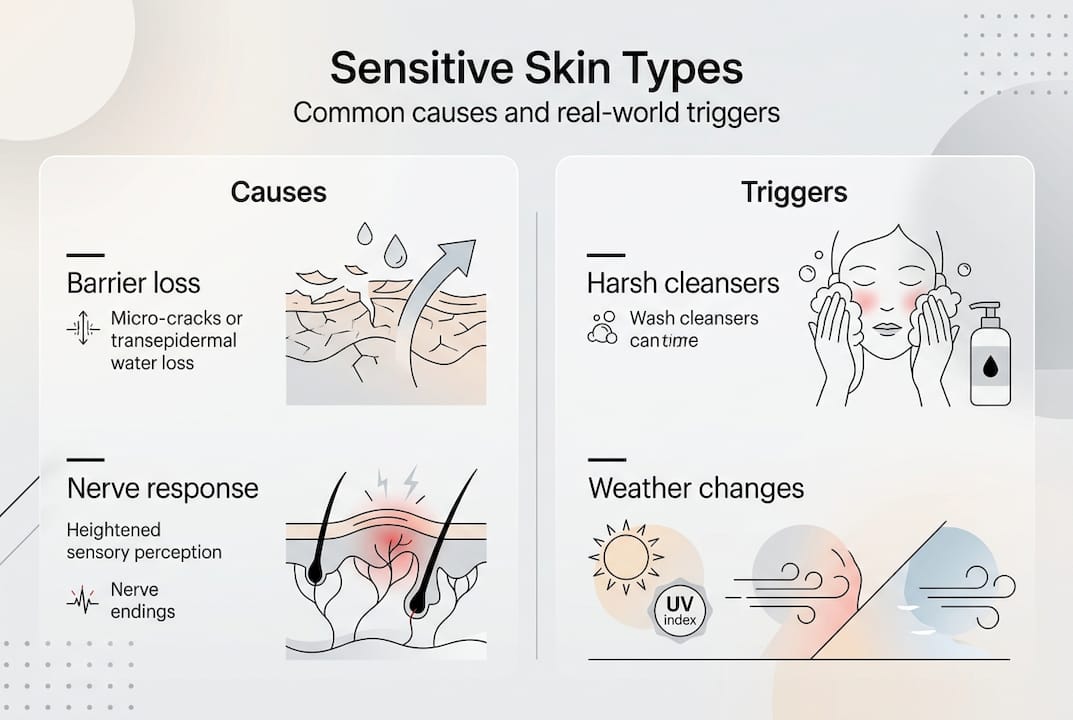
Genetics, hormones, age, and cumulative environmental exposure all influence which subtype you fall into, and many people present with overlapping characteristics.
Pro Tip: If your skin reacts strongly to temperature changes or spicy food as well as topical products, you may have a neurosensitive component. An expert guide to sensitive skin can help you identify your specific pattern.
The many faces of sensitive skin: objective vs subjective and common subtypes
One of the most important distinctions in sensitive skin is whether your symptoms are objective or subjective. This is not just academic. It directly determines which treatments will work for you.
Objective sensitive skin presents with visible signs: redness, flushing, rashes, or broken capillaries. It is frequently associated with conditions such as rosacea, eczema, or contact dermatitis. A clinician can observe and measure these signs directly.
Subjective sensitive skin is the more elusive form. Your skin may look perfectly normal to everyone around you, yet you experience genuine discomfort, stinging, or burning from products that most people tolerate without issue. This form is particularly common and particularly underserved by mainstream skincare.
The three primary subtypes break down as follows:
- Barrier-sensitive skin: The outer protective layer is compromised, allowing irritants to penetrate more easily. Skin often feels tight, dry, or raw.
- Neurosensitive skin: The nerve endings in the skin are hyperreactive. Sensations are amplified, and triggers can include temperature, stress, and even certain foods.
- Inflammatory-sensitive skin: The immune response is easily activated, leading to redness, swelling, or prolonged reactions to minor stimuli.
Identifying your subtype is not a luxury. It is the foundation of effective care. Without it, you risk using products that address the wrong mechanism entirely. Seeking professional sensitive skin treatment ensures your regimen is built around your actual biology.
Diagnosing sensitive skin: how is it identified?
Diagnosis is rarely straightforward, but it is far more structured than most people realise. Diagnosis combines patient history and physical examination with objective tests where appropriate, including the lactic acid sting test, TEWL measurements, skin pH readings, and standardised questionnaires.
Here is how a thorough assessment typically unfolds:
- Patient history: Your clinician will ask about your symptoms, how long you have experienced them, which products or environments trigger reactions, and whether you have any known skin conditions.
- Physical examination: The skin is assessed for visible signs of barrier disruption, redness, or dermatological conditions that may be contributing to sensitivity.
- Lactic acid sting test: A mild lactic acid solution is applied to the nasolabial folds (the creases beside your nose). Stinging within 30 seconds suggests neurosensitivity.
- TEWL measurement: A device measures how much water is evaporating from your skin’s surface, indicating barrier integrity.
- Patch testing: Specific allergens are applied to the skin under occlusion to identify contact sensitivities or allergies.
Self-report questionnaires, such as the Sensitive Scale-10, help standardise assessments and track changes over time. Professional diagnosis of sensitive skin is particularly valuable when symptoms are persistent, worsening, or not responding to standard gentle skincare.
Managing sensitive skin: expert strategies for daily care
The good news is that sensitive skin, regardless of subtype, responds well to a consistent, targeted approach. Management centres on gentle skincare, barrier repair, avoidance of known irritants, and personalising your routine to your specific triggers.
Here is what the evidence and clinical experience consistently support:
- Fragrance-free and alcohol-free formulations only. Fragrance is one of the most common sensitising agents in skincare, and even natural fragrances can trigger reactions in reactive skin.
- Barrier-repairing moisturisers. Look for ingredients such as ceramides, niacinamide, and hyaluronic acid, which reinforce the skin’s protective layer without provoking inflammation.
- Patch-test every new product. Apply a small amount to the inner arm or behind the ear for 24 to 48 hours before using it on your face.
- Daily SPF is non-negotiable. UV exposure is a significant trigger for inflammatory-sensitive skin and worsens barrier dysfunction over time. Use a mineral-based SPF if chemical filters cause stinging.
- Simplify your routine. Fewer products mean fewer potential triggers. A cleanser, moisturiser, and SPF is often enough to start.
- Avoid extremes. Very hot water, saunas, and sudden temperature changes can activate neurosensitive pathways and worsen symptoms.
Pro Tip: Introduce one new product at a time and wait at least two weeks before adding another. This is the only reliable way to identify what your skin is actually reacting to.
If your symptoms persist despite a simplified routine, or if you suspect an underlying condition such as rosacea or eczema is driving your sensitivity, professional input is essential. Exploring essential items for sensitive skin alongside professional care guidance gives you both the right products and the right strategy.
Personalised solutions for sensitive skin at The M-ethod
At The M-ethod, we work with sensitive, barrier-impaired, and reactive skin every day. Our curated range of dermatologist-recommended products is selected specifically for clinical efficacy and tolerability, not just marketing claims. Whether you are managing neurosensitivity, barrier dysfunction, or inflammatory reactivity, we can help you build a regimen that is genuinely suited to your skin’s biology. The PCA Clearskin serum and Intensive Eye Therapy by NeoStrata are among the formulations we recommend for sensitive and reactive skin types. For a fully personalised approach, explore our premium sensitive skin solutions and book a virtual consultation with one of our expert clinicians.
Frequently asked questions
What are the most common triggers for sensitive skin?
Typical triggers include fragranced skincare and harsh cleansers, as well as sudden temperature changes, stress, UV exposure, and certain fabrics. Identifying your personal triggers is the first step towards managing reactions effectively.
Can you have oily and sensitive skin at once?
Absolutely. Oily-sensitive skin is a recognised combination where sebum production is high but the skin still reacts strongly to products or environmental factors. It requires lightweight, non-comedogenic formulations that are also free from common sensitisers.
How can I tell if my skincare product is causing sensitivity?
If you notice stinging, burning, or redness after application, the product is likely the culprit and should be discontinued immediately. Sensitive skin reacts to products that most people tolerate without issue, so your discomfort is a valid and reliable signal.
Is sensitive skin a lifelong condition?
Not necessarily. Sensitive skin fluctuates with hormonal changes, age, and environmental exposure, meaning it can improve significantly with the right care and lifestyle adjustments. Some people find their sensitivity reduces considerably after addressing an underlying condition or switching to a gentler routine.
Are there tests for sensitive skin?
Yes. Lactic acid, TEWL, and patch testing are the most commonly used objective tools to confirm sensitive skin and identify its subtype. These tests are typically carried out by a dermatologist or trained skincare clinician.


