





Debunking Nicotinic Acid: Clinician Backed Niacinamide and Vitamin C
Niacinamide and vitamin C can be used together safely, and for most skin types, doing so works better than using either alone. The old warning about them cancelling each other out or forming an irritant called nicotinic acid comes from outdated lab conditions that don’t reflect modern formulations. Dermatologists now widely support combining them, provided you patch test new products and pick stable, well-formulated versions of each.
TL;DR:
- Combining niacinamide and vitamin C can effectively reduce markers of melanin production, supporting their role as complementary anti-pigmentation agents.
- Modern formulations prevent the outdated concern of niacinamide converting into nicotinic acid, making safe, well-formulated products suitable for most skin types.
- Applying vitamin C first in the morning and niacinamide in the evening can optimize absorption and minimize reactivity, especially for sensitive skin.
- Patch testing is essential for sensitive skin or conditions like rosacea or eczema, starting with small amounts and gradually increasing as tolerated.
- A routine should be tailored individually, focusing on tolerance and specific skin needs, with professional guidance preferred over general advice.
Table of Contents
- What does niacinamide do, and what does vitamin C do?
- Where did the nicotinic acid myth come from, and does modern research support combining them?
- How do you layer niacinamide and vitamin C for the best results?
- Who needs to be careful, and how should you patch test first?
- What does a simple AM and PM routine actually look like?
- Why does clinical experience matter more than internet advice here?
- Get a routine built around your skin, not a generic guide
- Sources
What does niacinamide do, and what does vitamin C do?
The two ingredients earn their reputation by working on pigmentation and skin health from completely different angles, which is exactly why pairing them makes sense rather than being redundant.
Niacinamide, a form of vitamin B3, works mainly on the skin’s structure and behaviour:
- Strengthens the skin barrier and improves moisture retention
- Calms visible redness and reactivity over time
- Regulates sebum production, useful for oily and combination skin
- Reduces the transfer of melanosomes (the pigment-carrying structures) to surface skin cells, which limits how dark spots appear
Vitamin C, meanwhile, acts more like an active defence and repair agent:
- Neutralises free radical damage from UV and pollution exposure
- Inhibits tyrosinase, the enzyme responsible for triggering melanin production
- Supports collagen synthesis, which affects firmness and fine lines
- Brightens overall tone through its antioxidant activity, according to the Cleveland Clinic
Here’s the part most routines miss: vitamin C stops melanin from being made in the first place by blocking tyrosinase, while niacinamide stops the melanin that is made from being shuttled up to where you can see it. One ingredient works upstream, the other downstream. Used together, they interrupt the pigmentation process at two separate points instead of one, which is the real reason dermatologists increasingly recommend the pairing for dark spots and uneven tone.
Where did the nicotinic acid myth come from, and does modern research support combining them?
The nicotinic acid scare dates back decades and traces to laboratory experiments, not real-world skincare use. Researchers found that under specific conditions, high heat, particular pH levels, and pure reagent-grade niacinamide, the compound could convert into nicotinic acid, which causes flushing and irritation. That finding got repeated across skincare forums for years, often stripped of the context that made it true.

Your bathroom shelf isn’t a chemistry lab. Commercial serums are formulated, stabilised, and packaged specifically to avoid that kind of degradation, and applying two products at room temperature to your face doesn’t replicate lab-grade thermal stress. Dermatologists quoted in a Healthline review now describe the original concern as outdated, and most consumers using standard formulations will never encounter the reaction at all.
Modern research goes further than simply dismissing the myth. It shows the combination working.
A mixture combining niacinamide with vitamin C reduced markers of melanin production in UV-B exposed models, supporting the idea that the two ingredients act as complementary anti-pigmentation agents rather than competing ones.
The study, which tested a mix of niacinamide (0.55 mM), vitamin C (0.25 mM), and PDRN, recorded decreased tyrosinase activity and lower melanin content in the models tested. That’s a meaningful signal, though it’s worth being precise about what it shows: this was an animal and in vitro study, not a large-scale human clinical trial, so the results describe a mechanism rather than a guaranteed outcome on your own skin. It’s still one of the clearer pieces of evidence that the “they cancel each other out” myth has it backwards.
How do you layer niacinamide and vitamin C for the best results?
Getting the order right matters more than most people think, mostly because it affects absorption rather than chemical safety.
- Cleanse first. Start with a clean, dry face so both actives penetrate properly.
- Apply the thinner product first. If you’re using two serums, apply vitamin C before niacinamide unless the product label says otherwise, since vitamin C typically has a lower, more water-like viscosity.
- Wait before the next layer. Give the first serum one to two minutes to absorb, or until it feels tack-free, according to guidance from Cosmopolitan.
- Follow with moisturiser and, in the morning, sunscreen. Antioxidants work best alongside sun protection, not instead of it.
On timing: vitamin C’s antioxidant role makes it a natural morning ingredient, since that’s when your skin faces the most environmental stress. Niacinamide is flexible and works well morning or night. If your skin tends to react to layering multiple actives, you can split the two: vitamin C in the morning, niacinamide in the evening, so neither ever competes with the other for absorption.
Formulation choice matters as much as order. Pure L-ascorbic acid is the most researched form of vitamin C but also the least stable and the most likely to irritate. Derivatives such as magnesium ascorbyl phosphate (MAP) or ascorbyl glucoside are gentler and hold up better in formulation, which the Cleveland Clinic notes makes them a sound choice for combination products or sensitive skin. If you’d rather skip the layering calculations altogether, single formulas that already pair a stable vitamin C derivative with niacinamide at a balanced pH are worth seeking out. Check the ingredient list for the derivative name and look for opaque, airtight packaging, a sign the brand has taken oxidation seriously.
Pro Tip: If your skin tends to feel tight or reactive when layering actives, try mixing a drop of each serum in your palm before application instead of applying them in sequence, as long as neither product instructs against it. This can reduce the friction of repeated layering on drier skin types.
Who needs to be careful, and how should you patch test first?
Most skin types tolerate this combination well, but sensitive, rosacea-prone, or eczema-affected skin needs a more careful introduction.
Patch test before adding any new product or combination, even if you’ve used each ingredient separately before:
- Apply a small amount to your inner forearm or behind your ear
- Leave it for 24 hours without washing the area
- Watch for redness, swelling, or persistent stinging, not just a brief tingle
- If nothing happens, introduce the product to your face at a low frequency first
A little tingling on first use is common and usually harmless. Persistent redness, burning, or peeling is not, and it’s a sign to stop and reassess. If you have rosacea or eczema, start with lower concentrations, use niacinamide as a buffer alongside vitamin C rather than in a strong duo, and reduce frequency to every other day if irritation appears. For skin that reacts to almost everything, a virtual consultation with a clinician before introducing new actives is a sensible step rather than an overcautious one.
What does a simple AM and PM routine actually look like?
Theory is only useful once it turns into a routine you’ll actually follow.
- Morning: Cleanse, apply a vitamin C serum, follow with niacinamide once absorbed (optional depending on your skin’s needs), then moisturise and finish with sunscreen.
- Evening: Cleanse, apply a niacinamide-focused serum to support barrier repair overnight, then moisturise.
- Split-use alternative: Vitamin C in the morning only, niacinamide in the evening only, for those who want full potency from each without any overlap.
- Sensitive-skin alternative: Use a single combined formula every other night, or alternate a niacinamide night with a vitamin C night, giving your skin recovery time between actives.
A couple of housekeeping details make a real difference here. Store vitamin C exactly as the label instructs. Most formulations degrade with light and heat exposure, which is why a serum that’s turned brown or orange has likely oxidised and lost potency. And whatever routine you land on, sunscreen isn’t optional. Antioxidants like vitamin C work by defending against damage, not by replacing sun protection, so skipping SPF undercuts the whole point of using it. Readers layering in other actives, like retinol, will want to check how the full sequence changes when a third ingredient enters the routine.
Why does clinical experience matter more than internet advice here?
The gap between what people read online and what actually happens in a consultation room is bigger than most realise. Forums repeat the nicotinic acid myth long after dermatology has moved past it, while the more useful question, how much of each active, in what formulation, and how your specific skin responds, rarely gets addressed with any precision.
In virtual consultations, clinicians typically start conservatively: testing tolerance, monitoring for a couple of weeks, then adjusting concentration or frequency based on how the skin actually responds rather than following a generic schedule. That escalation matters more once in-clinic procedures like microneedling enter the picture, since the skin’s healing state changes what it can tolerate topically, and a routine that worked fine before a treatment can suddenly feel too much. If you’re already using prescription-strength actives, that’s precisely the moment to get individual guidance rather than trust a one-size routine.
— Jess
Get a routine built around your skin, not a generic guide
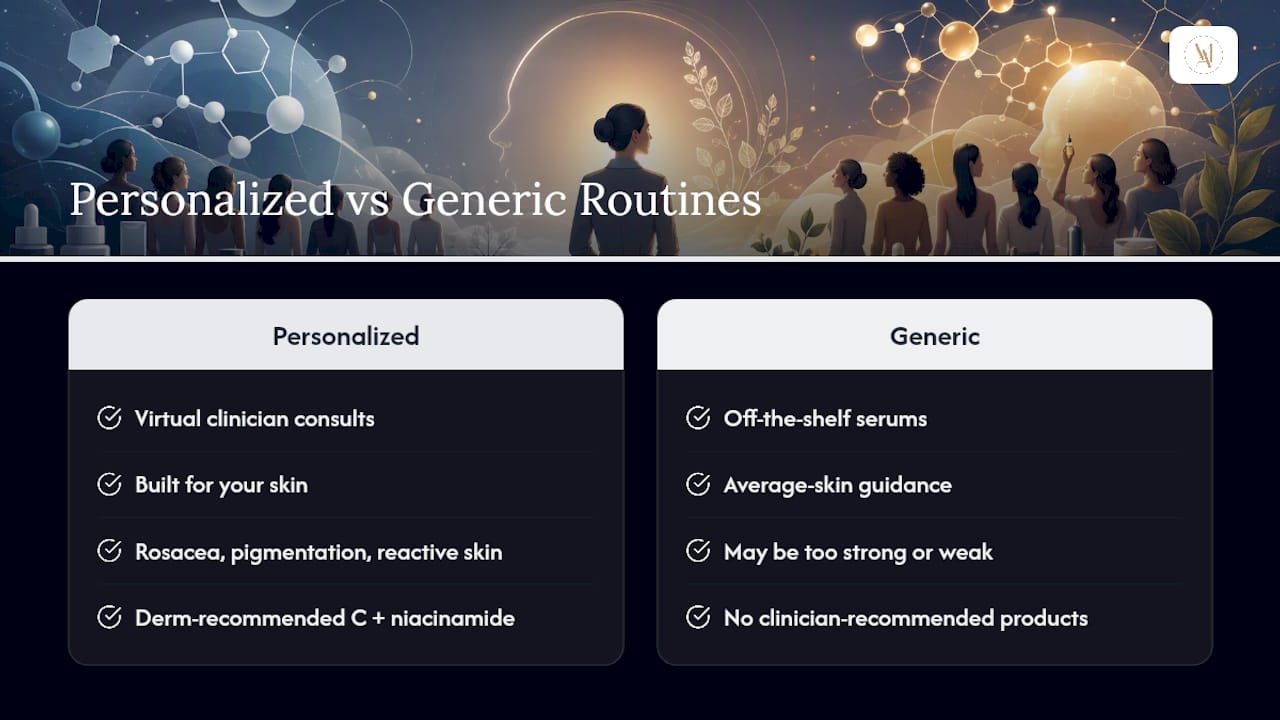
There are other routes to figuring out your own combination: trial and error with off-the-shelf serums, or relying on generic advice built for average skin rather than yours. Them-ethod takes a different approach. Through virtual skin consultations with expert clinicians, you get a routine built around your actual skin type, sensitivity, and goals, rather than a standard concentration that may be too strong or too weak for what you’re dealing with. That matters most for anyone managing rosacea, active pigmentation, or a history of reacting to layered actives, where the right formulation and sequencing genuinely change the outcome. Them-ethod also stocks stable, dermatologist-recommended vitamin C and niacinamide formulations, including finishing products like the PCA Collagen Hydrator to round out a barrier-supporting routine. If you want a plan built for your skin rather than an average one, book a virtual consultation and start there.
This article is general information, not a substitute for advice from a qualified doctor. Consult a qualified healthcare professional about your own circumstances before acting on anything here.
Sources
- The Combination of Niacinamide, Vitamin C, and PDRN Mitigates Melanogenesis by Modulating Nicotinamide Nucleotide Transhydrogenase
- Niacinamide and Vitamin C: Can You Combine Them? | Healthline