





Epigenetic skincare science: what it is and how it works
TL;DR:
- Epigenetic skincare modifies gene expression in skin cells to reverse biological aging without changing DNA.
- Clinical evidence shows it improves hydration, firmness, and reduces wrinkle depth by targeting molecular pathways.
Epigenetic skincare science is defined as the application of compounds and protocols that modify gene expression in skin cells without altering the underlying DNA sequence. The field targets molecular pathways, particularly DNA methylation, to influence how skin-related genes behave, rather than simply addressing visible symptoms after damage has occurred. Clinical results from this approach include measurable improvements in hydration, firmness, and wrinkle depth. Epigenetic clocks, which translate DNA methylation patterns into a precise biological skin age, now serve as validated biomarkers for tracking whether treatments are genuinely reversing skin ageing at the molecular level. This is the science that separates genuine age reversal from surface-level skincare.
What is epigenetic skincare science and how do the mechanisms work?
Epigenetic mechanisms control which genes are switched on or off in skin cells at any given time. DNA methylation is the most studied of these mechanisms. It involves the addition of a methyl group to a specific point on the DNA strand, which silences or activates genes such as COL1A1, the gene responsible for type I collagen production. When COL1A1 is progressively silenced through age-related methylation changes, collagen synthesis declines and the skin loses structural integrity.
Epigenetic clocks translate these methylation patterns into a biological age score that correlates strongly with clinical photoageing and systemic health. This score often diverges significantly from chronological age. A person who is 45 years old chronologically may carry a skin biological age of 55 or 38, depending on their exposome and lifestyle history. That gap is where epigenetic skincare intervenes.
Environmental and lifestyle factors drive a substantial portion of epigenetic change in skin:
- UV radiation accelerates methylation drift in genes governing DNA repair and pigmentation.
- Chronic sleep deprivation disrupts circadian rhythm, which regulates epigenetic maintenance enzymes.
- Dietary patterns influence the availability of methyl donors such as folate and B12, directly affecting methylation capacity.
- Chronic stress elevates cortisol, which alters histone modification patterns and promotes inflammatory gene expression.
- Air pollution introduces oxidative stress that compounds methylation errors over time.
The most significant finding in this field is that epigenetic ageing is plastic and reversible. Transient reprogramming and clinical procedures such as fractional lasers can partially reset epigenetic clocks without altering cell identity. This shifts the entire framework of skincare from managing damage to genuinely reversing biological age.
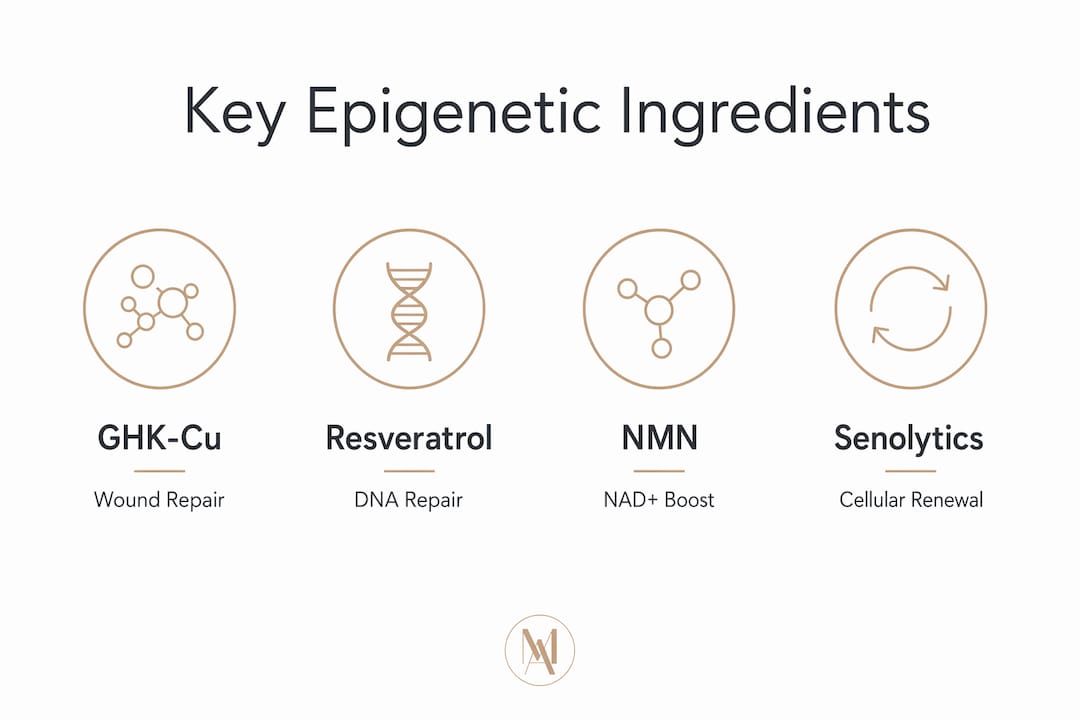
What are the key epigenetic ingredients and their clinical effects?
Epigenetic modulators fall into several distinct categories, each acting on a different molecular target. Understanding these categories helps you evaluate product claims with precision rather than relying on marketing language.
| Ingredient class | Mechanism | Measured clinical outcome |
|---|---|---|
| Polyphenols (e.g. Resveratrol) | Activates sirtuins, enhancing collagen synthesis pathways | Increased skin density by 10.7%, significant elasticity gains |
| NAD+ precursors (e.g. NMN) | Supports cellular energy and reduces epigenetic age | Epigenetic age reduction of up to 12 years |
| Senolytic peptides | Clears senescent cells, reduces skin inflammation | Reduced transepidermal water loss by 17.33% |
| Peptide OS-01 | Targets DNA repair and hydration pathways | Hydration +32.49%, firmness +10.19%, elasticity +25.58% |
| GHK-Cu peptide | Modulates gene expression in fibroblasts | Wrinkle volume reduced by up to 55.8%, depth by 32.8% |
These figures come from mid-2025 clinical evaluations and represent a new standard of evidence in skincare. The GHK-Cu results are particularly significant. A 55.8% reduction in wrinkle volume is not a cosmetic claim. It is a measurable structural change driven by gene expression modulation in dermal fibroblasts.
Resveratrol activates the sirtuin family of proteins, which regulate gene expression, DNA repair, and cellular stress responses. Sirtuins are directly linked to longevity pathways, and their activation through polyphenol application represents one of the clearest connections between topical skincare and molecular age management. NAD+ precursors such as NMN support the same sirtuin pathways by replenishing the cellular fuel these enzymes require to function. Products containing NAD+ precursors are therefore addressing a root cause of epigenetic decline rather than a downstream symptom.

How does epigenetic skincare differ from traditional approaches?
Traditional skincare operates downstream. It addresses the visible results of skin ageing, such as wrinkles, dryness, and loss of firmness, after the underlying biological damage has already occurred. A moisturiser replenishes surface hydration. A retinoid accelerates cell turnover. Both are valuable, but neither targets the gene regulatory machinery that determines how quickly skin ages in the first place.
Epigenetic skincare acts upstream of skin degradation. By modulating DNA methylation patterns and histone modifications, these treatments influence whether collagen genes are expressed, whether inflammatory pathways are activated, and whether senescent cells accumulate. The goal is prevention at the source, not repair after the fact.
The distinction matters practically. A traditional retinol treatment stimulates cell turnover and increases collagen production through retinoic acid receptor signalling. An epigenetic approach using a senolytic peptide clears the senescent cells that were suppressing collagen production in the first place. Both improve the skin. Only one addresses the biological programme driving the decline.
Pro Tip: Seek products that combine a traditional active, such as retinol or vitamin C, with an epigenetic modulator like a sirtuin-activating polyphenol. The combination addresses both the symptom and the upstream cause, producing results neither ingredient achieves alone.
Multi-modal protocols that integrate lifestyle changes with topical agents consistently produce the strongest longevity outcomes. Clinical procedures including fractional lasers and microneedling also carry epigenetic effects, resetting methylation patterns in treated tissue. This is why in-clinic treatments at practices like Them-ethod, which offer SkinPen microneedling and advanced injectables, complement a home skincare routine in ways that topical products alone cannot replicate.
How do you apply epigenetic skincare science to your daily routine?
Applying this science practically requires a structured approach. The following steps translate the research into decisions you can make at the product selection stage.
-
Verify ingredient validation. Look for products whose active ingredients have been tested against epigenetic biomarkers, specifically DNA methylation clocks, not just visual skin assessments. The clinical peptide data for compounds like GHK-Cu and OS-01 meet this standard.
-
Prioritise multi-target formulations. Long-term skin longevity requires addressing DNA methylation, histone modification, and RNA regulation together. Single-ingredient products targeting one pathway produce limited results. Seek formulations that combine polyphenols, peptides, and NAD+ precursors.
-
Integrate lifestyle measures. Diet quality, sleep duration, and stress management directly influence your skin’s epigenetic age. Topical treatments work significantly better when the systemic epigenetic environment supports them. Prioritise sleep consistency and dietary methyl donors such as leafy greens, eggs, and legumes.
-
Scrutinise marketing language. The term “epigenetic” is now widely used in beauty marketing, often without clinical support. Seek products that cite specific biomarker data, name the molecular target, and reference peer-reviewed studies. Experts in the field caution consumers to validate claims against DNA methylation clock data rather than accept general anti-ageing language.
-
Consider in-clinic procedures as part of the protocol. Fractional lasers and microneedling reset epigenetic markers in treated tissue. They are not optional extras for those serious about biological age reversal. They are a core component of any evidence-based epigenetic protocol.
The skincare trends shaping 2026 reflect this shift clearly. Personalised epigenetic protocols, validated by biological age testing, are replacing one-size-fits-all anti-ageing regimens across the premium skincare sector.
Key takeaways
Epigenetic skincare science works by modifying gene expression in skin cells through DNA methylation, histone modification, and RNA regulation, producing measurable biological age reversal rather than surface-level cosmetic improvement.
| Point | Details |
|---|---|
| DNA methylation drives skin ageing | Methylation changes silence collagen genes like COL1A1, making them a primary target for epigenetic treatments. |
| Epigenetic clocks measure real progress | Biological age scores from methylation data are more accurate than visual assessments for tracking treatment outcomes. |
| Key modulators have clinical proof | GHK-Cu reduces wrinkle volume by up to 55.8%; NAD+ precursors can reduce epigenetic age by up to 12 years. |
| Epigenetic treatments act upstream | They prevent collagen loss at the gene level, whereas traditional skincare addresses visible symptoms after damage occurs. |
| Lifestyle amplifies topical results | Diet, sleep, and stress management directly influence epigenetic age and determine how effectively topical treatments perform. |
Why epigenetic science is the shift skincare has needed
I have watched the skincare industry cycle through dozens of “breakthroughs” over the years. Most of them were incremental improvements dressed up as revolutions. Epigenetic science is genuinely different, and I say that with the scepticism of someone who has seen a lot of overpromising.
What separates this field is the quality of the measurement. When a clinical study shows that a peptide reduces your biological skin age by a measurable number of years on a validated methylation clock, that is a different category of evidence from a consumer panel saying their skin “looks more radiant.” The science has given us a real unit of measurement for skin ageing, and that changes everything about how we evaluate products and protocols.
The part that excites me most is the plasticity finding. Skin ageing is not a fixed programme. It is a dynamic, modifiable process. That means the choices you make today, in terms of ingredients, lifestyle, and in-clinic treatments, genuinely alter the biological trajectory of your skin. That is not marketing language. It is what the epigenetic clock research now shows clearly.
My advice: stay close to the clinical data, demand biomarker-level evidence from the products you invest in, and treat in-clinic procedures as part of your epigenetic protocol rather than an occasional indulgence. The readers who will benefit most from this science are those who approach it with the same rigour the researchers do.
— Jess
Clinically grounded skincare from Them-ethod
At Them-ethod, we curate products that meet the evidence standards this science demands. The PCA Clearskin Acne Treatment Serum supports skin health at a cellular level, addressing the inflammatory pathways that epigenetic research has linked to accelerated skin ageing. The NEOSTRATA collection applies scientifically validated formulations that support skin renewal through multiple molecular targets. For those focused on molecular age reversal at night, the PCA Retinol Night 0.5% works alongside epigenetic modulators to support collagen gene expression during the skin’s natural repair cycle. Our virtual consultations with senior clinicians help you build a protocol that is validated, personalised, and genuinely effective.
FAQ
What is epigenetic skincare science in simple terms?
Epigenetic skincare science uses ingredients and treatments that change how your skin genes behave, without altering the DNA itself. The goal is to switch on youth-supporting genes and switch off ageing pathways at the molecular level.
What are the most effective epigenetic ingredients?
GHK-Cu, Resveratrol, NAD+ precursors such as NMN, and senolytic peptides are the best-evidenced epigenetic ingredients in skincare. Clinical studies show GHK-Cu reduces wrinkle volume by up to 55.8% and NAD+ precursors can reduce biological skin age by up to 12 years.
How do epigenetic clocks work in skincare?
Epigenetic clocks measure DNA methylation patterns across specific sites in the genome to calculate a biological age score. In skincare, they serve as objective biomarkers to confirm whether a treatment is genuinely reversing skin ageing rather than simply improving appearance.
Can lifestyle changes improve epigenetic skin age?
Yes. Diet quality, sleep consistency, and stress management directly influence epigenetic ageing in skin. Lifestyle measures amplify the effects of topical epigenetic treatments and should be treated as part of the same protocol.
Is epigenetic skincare different from anti-ageing skincare?
Epigenetic skincare targets gene expression upstream of skin damage, preventing collagen loss before it occurs. Traditional anti-ageing skincare addresses visible symptoms such as wrinkles and dryness after the underlying biological decline has already taken place.