




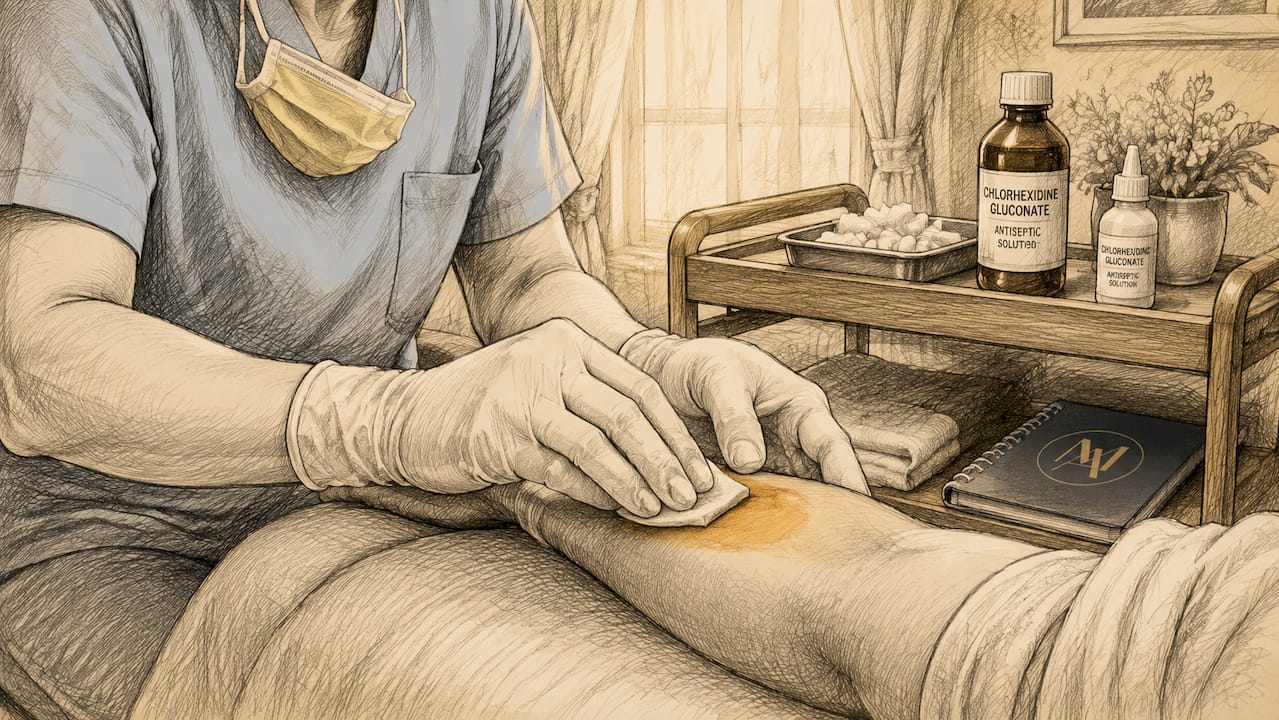
Pre-treatment skin preparation: the clinical guide
Pre-treatment skin preparation is the deliberate antiseptic cleansing and conditioning of a patient’s skin before any invasive procedure, with the primary goal of reducing microbial load to its lowest achievable level. The clinical term for this process is surgical skin antisepsis, and it sits at the heart of infection control in both surgical and aesthetic settings. Most surgical site infections (SSIs) originate from the patient’s own skin flora, which means that no amount of operative skill compensates for inadequate preparation beforehand. Guidelines from NICE, the WHO, and OneTogether UK all recognise antiseptic skin prep as a foundational step in SSI prevention, with chlorhexidine gluconate (CHG) and povidone iodine (PI) as the two primary agents in clinical use.
The benefits of rigorous skin preparation are well established:
- Reduces transient and resident microorganisms on the skin surface
- Lowers the risk of SSIs arising from the patient’s own flora
- Improves procedural outcomes and supports faster, more predictable healing
- Enhances patient safety by creating an aseptic operative field
- Supports compliance with NICE, WHO, and OneTogether UK infection control standards
Which antiseptic agents are used in surgical skin preparation?
Chlorhexidine gluconate and povidone iodine have been the cornerstones of preoperative skin antisepsis for more than 50 years. Both are available in aqueous and alcohol-based formulations, and the choice between them depends on the procedure type, anatomical site, and individual patient factors.
Chlorhexidine gluconate (CHG) binds to the skin’s outer layer and continues to suppress microbial growth after application, a property known as residual activity. This persistence makes it particularly valuable in surgical settings where the operative field must remain as clean as possible throughout a procedure. CHG is, however, inactivated by residual soaps and body oils, which is why patient education on thorough rinsing before application is clinically significant.
Povidone iodine (PI) offers a broad antimicrobial spectrum covering bacteria, fungi, viruses, and spores. It is often preferred in mucous membrane areas or where CHG is contraindicated. Alcohol-based PI formulations provide faster kill rates than aqueous versions, though they lack the residual binding effect of CHG.
Alcohol-based solutions combined with either CHG or PI deliver rapid bactericidal action alongside lasting residual effect. Alcohol alone is bactericidal but lacks persistence; the combination addresses both speed and duration of antimicrobial cover. NICE and international guidelines recommend alcohol-based antiseptics as the preferred choice for surgical site preparation unless a contraindication exists.
| Antiseptic agent | Efficacy spectrum | Residual activity | Key contraindications | Usage notes |
|---|---|---|---|---|
| CHG (aqueous) | Bacteria, some fungi | High | Ears, eyes, mucous membranes | Inactivated by soaps and lotions |
| CHG + alcohol | Bacteria, fungi, viruses | High | Ears, eyes, mucous membranes | Preferred for most surgical sites |
| PI (aqueous) | Bacteria, fungi, viruses, spores | Low | Thyroid conditions, neonates | Suitable for mucous membranes |
| PI + alcohol | Bacteria, fungi, viruses, spores | Moderate | Thyroid conditions, neonates | Faster kill rate than aqueous PI |
| Alcohol alone | Bacteria, fungi, viruses | None | Open wounds, mucous membranes | Not sufficient as a standalone prep agent |
Additional agents such as octenidine dihydrochloride are used in some European clinical settings, particularly for patients with CHG or iodine sensitivities, though they are less commonly specified in current UK national guidelines.
What are the recommended steps and timing for surgical skin prep?
Timing and technique are as consequential as the choice of antiseptic. The CDC advises that patients bathe or shower with an antiseptic agent the night before surgery and again on the morning of the procedure, reducing both transient and resident microorganisms before they even arrive at the facility. This two-stage approach gives the antiseptic maximum opportunity to lower the baseline microbial count.
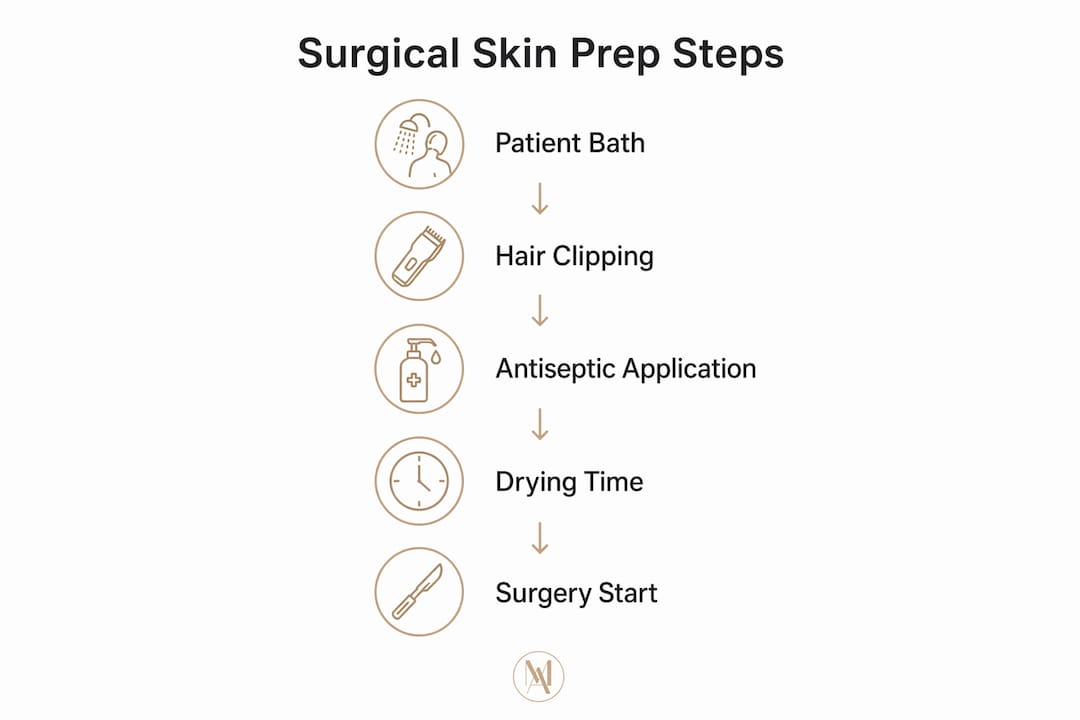
Hair removal, when clinically necessary, should be performed by clipping immediately before surgery rather than shaving. Shaving increases SSI risk by creating micro-abrasions that allow bacteria to colonise the skin surface. UK guidelines are consistent on this point: clippers, not razors.
The intraoperative preparation sequence follows a strict aseptic technique. Surgical staff apply the antiseptic using sterile gloves, beginning at the planned incision site and working outward in widening circles. Each sponge or applicator is discarded after contact with peripheral skin to prevent recontamination of the central field. Manufacturer instructions on contact time must be followed; for most alcohol-based preparations, this means allowing the solution to dry fully before draping, which typically takes around two to three minutes depending on the product.
Key procedural steps and timing recommendations:
- Patient showers with antiseptic the night before and morning of surgery
- No application of body lotions, oils, or incompatible soaps after antiseptic bathing
- Hair removal by clipping only, immediately before the procedure
- Surgical team applies antiseptic using sterile gloves and aseptic technique
- Application proceeds from the incision site outward in widening circles
- Each applicator is discarded after peripheral contact to avoid contamination
- Antiseptic solution is allowed to dry fully before surgical draping
- Preparation is performed by trained team members following facility and manufacturer protocols
Pro Tip: Instruct patients explicitly to avoid applying any moisturiser, deodorant, or body oil after their antiseptic shower. Even small residues of these products can inactivate CHG and compromise the entire preparation.
What does the clinical evidence say about skin prep effectiveness?
The evidence base for antiseptic skin preparation is substantial, though not without nuance. A Cochrane meta-analysis examining CHG versus PI highlighted the limitations of many existing studies and called for large, well-designed randomised controlled trials to determine which agent most effectively reduces SSI risk. The NEWSkin Prep prospective randomised controlled trial was subsequently undertaken to address precisely this gap, with an accompanying cost-effectiveness analysis finding no definitive economic evidence to favour CHG-alcohol over PI-alcohol, though minor evidence suggested CHG-alcohol may have a marginal advantage.
What the evidence does confirm clearly is that antiseptic preparation reduces microbial burden at the operative site. Since skin cannot be fully sterilised, the goal is to reduce the microbial load to an irreducible minimum. The WHO’s guidance on SSI prevention, the NICE guidelines, and the OneTogether UK framework all endorse preoperative skin antisepsis as a standard of care, with particular emphasis on alcohol-based formulations combined with CHG or PI.
Key evidence-backed points:
- CHG combined with alcohol is most frequently cited as the most efficacious preparation in multiple studies, though the NEWSkin Prep trial found no statistically definitive superiority
- Alcohol-based antiseptics provide rapid bactericidal action and are preferred by NICE and international bodies unless contraindicated
- Aqueous PI remains a clinically appropriate alternative, particularly for anatomical sites where alcohol-based solutions are unsuitable
- Preoperative antiseptic bathing by patients reduces baseline skin flora before the operative field is established
- Residual activity of CHG provides ongoing microbial suppression during the procedure itself
The costs associated with SSIs substantially outweigh the costs of the skin preparation protocol itself, including surgical time, preparation agents, and waste disposal, as noted in the NEWSkin Prep economic analysis.
The evidence also points to gaps: most trials focus on general surgery and orthopaedics, with fewer high-quality studies examining antiseptic efficacy in aesthetic procedures, dermatological interventions, or minimally invasive treatments. Clinicians working in these areas often extrapolate from surgical evidence while adapting protocols to their specific context.
Special considerations and patient instructions for skin preparation
Not every patient arrives at a procedure with the same skin profile, and a one-size-fits-all approach to preparation carries real risks. Allergies and sensitivities to antiseptic agents are among the most clinically significant variables. CHG sensitivity, though not common, can produce contact dermatitis or, in rare cases, anaphylaxis. Iodine allergy or thyroid conditions may preclude the use of PI formulations. Clinicians must document these sensitivities before selecting a preparation agent.

Patients with darker skin tones, classified as Fitzpatrick types IV through VI, require particular attention. Pre-treatment regimens using tyrosinase inhibitors in the weeks before invasive procedures can meaningfully reduce the risk of post-inflammatory hyperpigmentation. This is especially relevant in aesthetic procedures such as laser treatments, microneedling, and chemical peels, where the inflammatory response is part of the mechanism of action.
Chlorhexidine gluconate is inactivated by many soaps and lotions, so patients must rinse thoroughly before CHG application and avoid applying any body lotion afterwards. This is a frequently overlooked instruction that can undermine an otherwise well-executed preparation protocol.
Common patient questions and considerations:
- Can I use my regular soap before the antiseptic shower? No. Patients should rinse off all soap and shampoo fully before applying CHG, as residues neutralise its bacteriostatic effect.
- Is hair removal always necessary? Only when clinically indicated. When required, clipping is the recommended method; shaving is discouraged due to increased infection risk.
- What if I have sensitive or reactive skin? Patients should inform their clinical team of any known allergies, skin conditions, or previous reactions to antiseptic agents before the procedure.
- Can I apply moisturiser after my antiseptic shower? No. Body lotions and oils inactivate CHG and should be avoided entirely after the pre-procedure wash.
- How long before surgery should I shower with antiseptic? The night before and again on the morning of the procedure, following the clinical team’s specific instructions.
- What about darker skin tones and pigmentation risk? Patients with Fitzpatrick skin types IV–VI should discuss preconditioning regimens with their clinician well in advance of the procedure date.
How does home-care before treatment shape your clinical outcomes?
The shift in clinical thinking over the past decade has been notable: home-care in the days leading up to a procedure is now recognised as a genuine extension of the clinical intervention itself. Unprepared or compromised skin leads to prolonged inflammation, delayed healing, and a higher risk of pigmentary changes. Stable, well-hydrated skin responds more predictably and heals more uniformly, which directly affects patient satisfaction.
Retinoids, alpha-hydroxy acids (AHAs), beta-hydroxy acids (BHAs), and potent exfoliants should be paused 3–5 days before aesthetic or surgical procedures. These actives compromise the skin barrier, increasing sensitivity and the risk of adverse reactions during and after treatment. For procedures like chemical peels or microneedling, this washout period is particularly consequential.
Hydration and barrier support in the days before a procedure are equally important. Patients should focus on gentle, fragrance-free cleansers and moisturisers that reinforce the skin barrier without introducing irritants. Avoiding sun exposure, alcohol-based toners, and physical exfoliants in the pre-procedure window gives the skin the best possible baseline. Integrating Dead Sea minerals into a pre-treatment wellness routine, for example, can support skin hydration and mineral balance in the days before a procedure.
Pro Tip: Encourage patients to book a pre-treatment consultation at least one to two weeks before their procedure. This gives enough time to address any active skin concerns, introduce preconditioning agents for higher Fitzpatrick skin types, and confirm the washout period for any prescription actives.
At Them-ethod, we see this consistently: patients who follow a structured pre-treatment home-care protocol, guided by a clinician, recover faster and achieve more uniform results. The clinical team’s role does not begin in the treatment room. It begins the moment the patient starts preparing their skin. For those undergoing aesthetic procedures, post-procedure skincare is the natural continuation of the same disciplined approach.
Key takeaways
Pre-treatment skin preparation, grounded in antiseptic protocols and patient-specific guidance, is the single most modifiable factor in reducing surgical site infection risk before any invasive procedure.
| Point | Details |
|---|---|
| SSIs originate from the patient’s own skin | Antiseptic preparation reduces microbial load to its lowest achievable level, not to zero. |
| CHG and PI are the primary antiseptics | Both are used for over 50 years; alcohol-based combinations are preferred by NICE unless contraindicated. |
| Timing and technique determine efficacy | Patients should shower with antiseptic the night before and morning of surgery; clipping replaces shaving. |
| Patient-specific factors require tailored protocols | Darker skin tones, allergies, and active skincare use all require individual clinical assessment before preparation. |
| Home-care is part of the clinical protocol | Pausing retinoids, AHAs, BHAs, and potent exfoliants 3–5 days before procedures and supporting the skin barrier directly improves outcomes. |
Why skin preparation deserves more clinical attention than it typically receives
There is a tendency in clinical settings to treat skin preparation as a procedural formality, a box to tick before the “real” work begins. That framing underestimates what preparation actually does. The evidence from the NEWSkin Prep trial and the broader body of literature on CHG and PI makes clear that the choice of antiseptic agent, the timing of application, and the patient’s own skin condition entering the procedure all have measurable consequences for outcomes.
What strikes me most is how often the patient’s home-care in the days before a procedure is treated as irrelevant to the clinical result. The recognition that a compromised skin barrier, whether from overuse of retinoids or simple dehydration, directly affects how skin responds to antiseptic agents and recovers from procedures is still not universally embedded in pre-treatment protocols. Clinicians who work in aesthetic medicine have been ahead of the curve here, building washout periods and preconditioning regimens into their patient pathways as standard practice.
The gap between surgical and aesthetic pre-treatment thinking is narrowing, and that is a positive development. Surgical teams are increasingly attentive to the patient’s baseline skin health, not just the antiseptic applied in theatre. Aesthetic practitioners are adopting more rigorous antiseptic protocols for minimally invasive treatments. The convergence of these two traditions, guided by bodies like NICE and OneTogether UK, points toward a more integrated model of pre-treatment care where the patient’s preparation at home and the clinician’s preparation in the treatment room are understood as a single, continuous process.
Training and compliance monitoring remain the weak link. Guidelines exist; adherence is inconsistent. The most sophisticated antiseptic protocol in the world produces no benefit if it is applied incorrectly, or if the patient arrives with a skin barrier undermined by incompatible products. That is where investment in patient education and clinician training pays the clearest dividends.