

The role of peptides in anti-aging: a clinical guide
TL;DR:
- Peptides serve as biological signals that stimulate collagen production, repair tissue, and reduce inflammation. Combining oral and topical peptide therapies over 8 to 12 weeks yields the most significant skin rejuvenation results, especially with clinically validated complexes like GHK-Cu and Matrixyl 3000. Consistent use and strategic pairing with treatments like microneedling enhance their anti-aging effectiveness and long-term benefits.
Peptides are short-chain amino acids that act as biological signalling molecules, directing the skin to produce collagen, repair tissue, and reduce inflammation. Their role in anti-aging skincare is now supported by a growing body of clinical research, with advanced dual-peptide complexes such as Matrixyl 3000 demonstrating 22 to 28% wrinkle reduction over 8 to 12 weeks in controlled trials. GHK-Cu, another well-studied peptide, regulates up to 30% of human genes, shifting cells towards a youthful, regenerative state. Understanding how these molecules work gives you a meaningful advantage when choosing treatments that genuinely deliver results.
How do peptides support skin rejuvenation and counteract ageing?
Peptides function as chemical messengers between skin cells. When applied topically or taken orally, they bind to receptors on fibroblasts, the cells responsible for producing collagen and elastin, and instruct them to increase output. This signalling mechanism is what separates peptides from simple moisturisers, which only address surface hydration.
The structural proteins most affected are collagen types I and III, which give skin its firmness and resilience, and elastin, which governs its ability to spring back after movement. As we age, fibroblast activity declines and the skin’s repair capacity slows. Peptides counteract this by reactivating the pathways that drive collagen synthesis, effectively mimicking the signals the skin used to generate on its own.
Beyond collagen stimulation, peptides also modulate inflammatory pathways. Chronic low-grade inflammation, sometimes called “inflammageing,” accelerates the breakdown of the extracellular matrix. Certain peptides suppress pro-inflammatory cytokines such as IL-6 and TNF-alpha, while simultaneously inhibiting matrix metalloproteinase-1 (MMP-1), the enzyme primarily responsible for collagen degradation. This dual action, building collagen while protecting it from breakdown, is what makes peptide therapy for wrinkles particularly effective.
GHK-Cu takes this further still. GHK-Cu links copper ions to the collagen assembly process and modulates over 4,000 human genes to enhance repair and reduce inflammation. This broad gene regulatory capacity is why it is considered a gold-standard peptide rather than a single-function ingredient.
- Fibroblast activation increases collagen I and III synthesis
- MMP-1 inhibition slows collagen degradation
- Cytokine suppression reduces inflammageing
- Copper-binding peptides like GHK-Cu support wound healing and tissue remodelling
- Lysyl oxidase activation improves cross-linking of collagen fibres for greater structural integrity
Pro Tip: If you are using a peptide serum, apply it immediately after cleansing on damp skin. Peptides penetrate more effectively when the skin barrier is temporarily more permeable, before heavier occlusives are layered on top.
What does clinical research reveal about oral versus topical peptide efficacy?
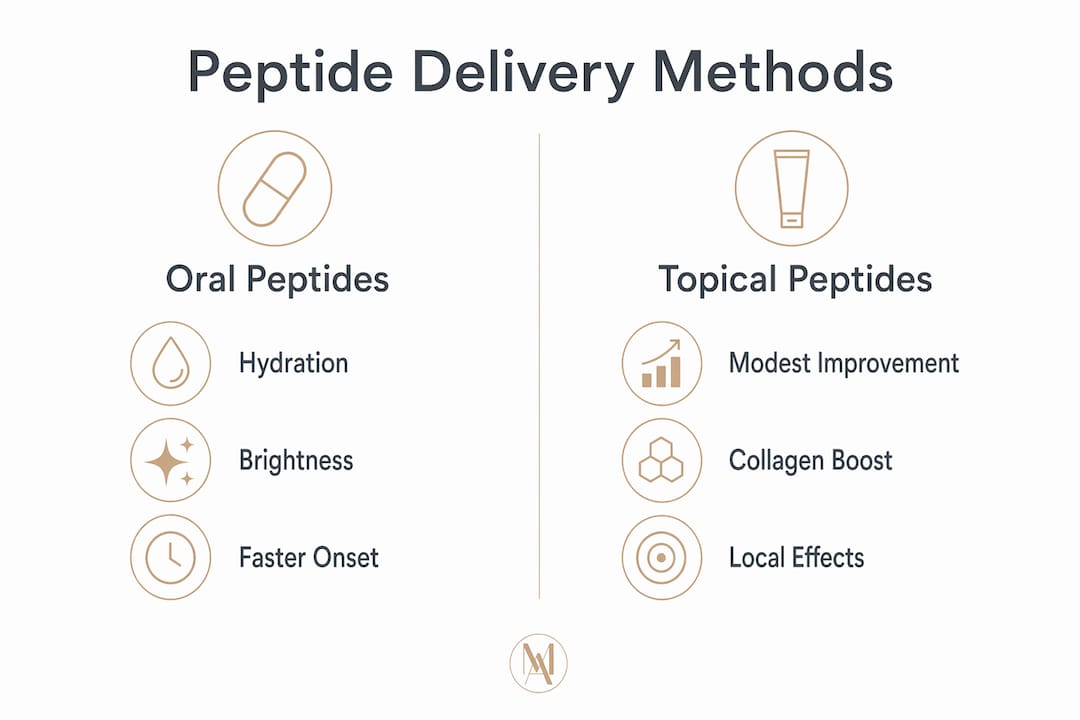
The most clinically meaningful finding from recent research is that combining oral and topical peptides produces superior outcomes to either approach alone. Experts recommend evidence-based integrated approaches that mirror the skin’s natural peptide biology, rather than relying on a single delivery route.
Oral peptides, particularly bioactive collagen peptides, show strong results for hydration and brightness. A daily 10g dose of oral collagen peptides over 12 weeks raises regenerative biomarkers and improves both skin elasticity and wrinkle depth. This dosage has become the standard clinical benchmark, and it is worth noting that lower doses used in many consumer supplements may not replicate these outcomes.
Topical peptides, by contrast, show more modest but well-documented improvements. Oral and topical peptides for skin ageing show that oral tripeptides significantly improve hydration and brightness, while topical formulations reduce wrinkle depth over 8 to 12 weeks. Effects on elasticity and skin density are less consistent across studies, which reflects genuine variability in formulation quality and skin penetration.
| Delivery method | Primary benefit | Onset timeline | Key limitation |
|---|---|---|---|
| Oral collagen peptides | Hydration, brightness, elasticity | 8 to 12 weeks | Dosage consistency required |
| Topical peptide serums | Wrinkle depth reduction | 8 to 12 weeks | Penetration varies by formulation |
| Combined oral and topical | Collagen synthesis, firmness, hydration | 8 to 12 weeks | Requires sustained commitment |
One important caveat: heterogeneity across clinical studies remains a genuine limitation. Differences in peptide molecular weight, formulation vehicle, and participant skin type make direct comparisons difficult. The safety profile across all delivery methods is consistently favourable, with no serious adverse events reported in major trials. This tolerability makes peptides one of the most accessible anti-aging actives for long-term use.
What are the most studied anti-aging peptides and how do they differ?
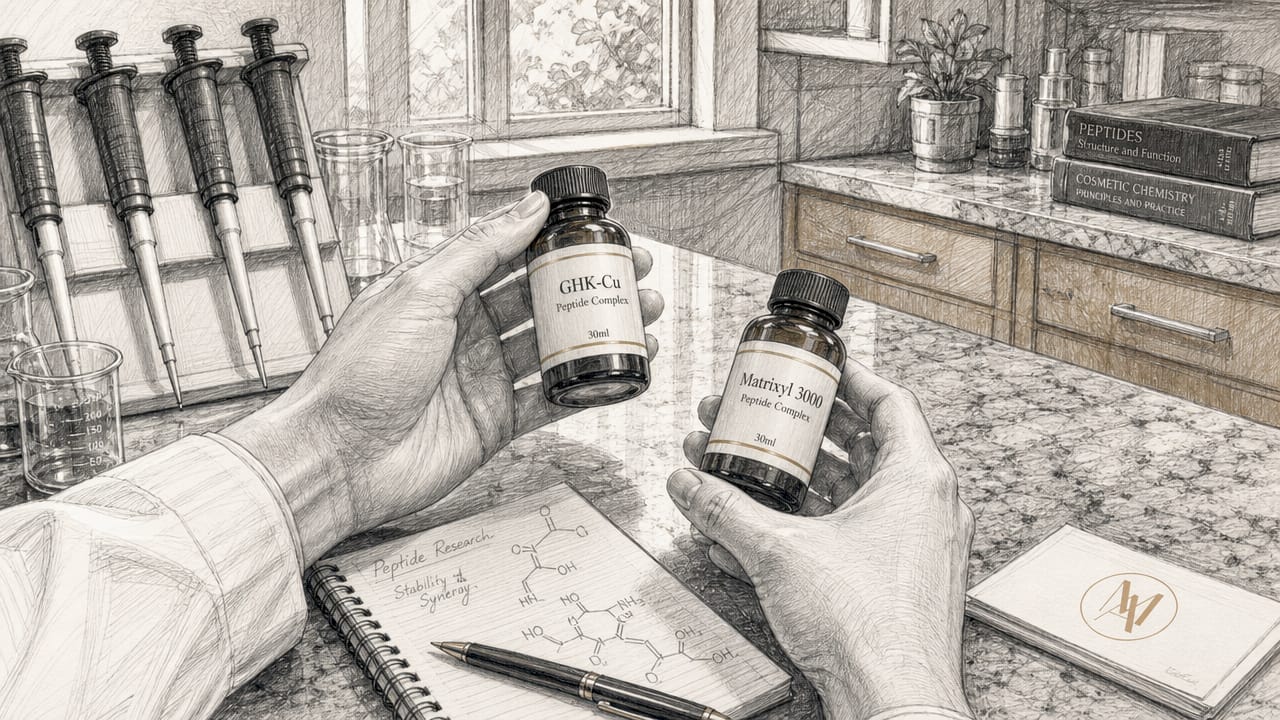
Two peptide complexes dominate the clinical literature: GHK-Cu and Matrixyl 3000. They work through distinct mechanisms, and understanding the difference helps you select formulations with purpose rather than relying on marketing claims.
GHK-Cu: the gene-regulatory peptide
GHK-Cu (copper peptide glycyl-L-histidyl-L-lysine) is naturally present in human plasma, but GHK-Cu plasma levels decline by 60% between the ages of 20 and 60. This decline correlates directly with reduced wound healing capacity and accelerated skin ageing, which is why topical application has become a focus of post-procedure skincare protocols. Clinics increasingly use GHK-Cu after microneedling and laser treatments to accelerate recovery and amplify regenerative outcomes.
What makes GHK-Cu exceptional is the breadth of its biological activity. Rather than targeting a single pathway, it modulates thousands of genes simultaneously, shifting the skin’s overall gene expression profile towards a younger, more repair-oriented state. This is not a surface-level effect. It represents a fundamental shift in how skin cells behave.
Matrixyl 3000: the dual-pathway complex
Matrixyl 3000 combines two peptides, Pal-GHK and Pal-GQPR, in a single formulation. Pal-GHK promotes collagen synthesis while Pal-GQPR reduces IL-6, TNF-alpha, and MMP-1 to protect existing collagen from degradation. This dual-pathway logic is biologically sound: you stimulate new collagen production while simultaneously slowing its breakdown.
The clinical data for Matrixyl 3000 shows that dual-peptide combinations increase collagen accumulation 35 to 40% more than individual peptides used alone, with wrinkle reduction of 22 to 28% over 8 to 12 weeks. That is a meaningful improvement, though it requires consistent use over two to three months before visible results appear. Formulations are proprietary, so the exact concentrations used in consumer products vary and are not always disclosed.
| Peptide | Primary mechanism | Key benefit | Best suited for |
|---|---|---|---|
| GHK-Cu | Gene modulation, copper-binding | Wound healing, broad regeneration | Post-procedure recovery, advanced ageing |
| Matrixyl 3000 (Pal-GHK + Pal-GQPR) | Collagen stimulation + MMP-1 inhibition | Wrinkle depth reduction | Preventative and corrective anti-ageing |
Pro Tip: GHK-Cu is particularly well suited to use after in-clinic treatments such as SkinPen microneedling. The micro-channels created during the procedure significantly improve peptide penetration depth, amplifying the regenerative signal.
How can you effectively incorporate peptides into your anti-aging routine?
Building an effective peptide routine requires more than purchasing a well-reviewed serum. Formulation quality, application order, and consistency all determine whether you see clinical-grade results or modest improvements.
-
Choose the right formulation for your goal. For wrinkle reduction and firming, a topical serum containing GHK-Cu or Matrixyl 3000 is the most direct route. Products such as Medik8 Liquid Peptides or Oxy-R Peptides deliver concentrated peptide complexes in stable, skin-compatible vehicles. For hydration and systemic support, a daily oral collagen peptide supplement at the clinically validated 10g dose is the evidence-based choice.
-
Commit to a minimum of 8 to 12 weeks. Peptides do not produce overnight results. Collagen synthesis is a slow biological process, and the structural improvements that peptides drive take time to become visible. Stopping a routine at four weeks because you have not seen dramatic change is the most common reason people underestimate peptide efficacy.
-
Pair peptides with microneedling or laser for amplified results. In-clinic procedures create controlled micro-injury that upregulates the skin’s repair response. Applying a GHK-Cu serum in the days following treatment takes advantage of this heightened biological activity. The combination produces measurably better outcomes than either approach used independently.
-
Avoid mixing peptides with high-concentration vitamin C or AHAs in the same step. Acidic environments can destabilise certain peptide bonds, reducing their efficacy. Apply vitamin C in the morning and peptides in the evening, or use a formulation specifically designed to combine these actives without pH conflict, such as the Obagi Professional-C Peptide Complex, which is engineered for precisely this purpose.
-
Do not expect peptides to replace medical-grade treatments for significant laxity. Peptides are powerful preventative and corrective tools, but they work at the cellular level over months. For structural concerns such as significant volume loss or deep folds, injectables and energy-based treatments remain the most effective interventions. Peptides work best as part of a layered approach, not as a standalone solution for advanced ageing.
Key takeaways
Peptides deliver their most significant anti-aging results when clinically validated complexes like GHK-Cu and Matrixyl 3000 are used consistently across both topical and oral delivery routes for a minimum of 8 to 12 weeks.
| Point | Details |
|---|---|
| Peptides as signalling molecules | They activate fibroblasts to produce collagen and elastin, not just hydrate the surface. |
| GHK-Cu gene modulation | GHK-Cu regulates over 4,000 genes, making it the most biologically broad anti-ageing peptide available. |
| Dual-peptide superiority | Matrixyl 3000 increases collagen accumulation 35 to 40% more than single peptides used alone. |
| Oral and topical synergy | Combining a 10g daily oral collagen peptide dose with topical serums produces the best clinical outcomes. |
| Consistency is non-negotiable | Visible results require 8 to 12 weeks of sustained use; early discontinuation is the primary cause of perceived failure. |
Why I think we underestimate peptides by expecting too much, too fast
After years of working with clients across a wide range of skin concerns, the pattern I see most often is this: someone invests in a genuinely good peptide product, uses it for three or four weeks, and concludes it is not working. They move on to something more dramatic, often an aggressive retinoid or an in-clinic procedure, without ever giving the peptide the time it biologically requires.
The science is clear. Collagen synthesis is not a rapid process. The improvements that peptides drive are real and measurable, but they accumulate over months, not days. GHK-Cu does not produce the visible peeling or redness that signals “something is happening” the way a retinoid does. That absence of drama is often misread as absence of effect.
What I find genuinely exciting about the current research is the oral and topical combination data. Most people treat skincare as an entirely topical exercise, but the evidence from recent meta-analyses suggests that oral collagen peptides create a systemic environment that makes topical application more effective. These two routes are not competing. They are complementary, and using both is the closest thing we currently have to a clinically validated, non-invasive anti-ageing protocol.
My honest recommendation is to treat peptides as infrastructure, not intervention. They build the biological conditions for healthy skin over time. Pair them with polynucleotide treatments or microneedling when you want to accelerate results, but do not abandon them between procedures. The cumulative effect is where the real value lies.
— Jess
Explore clinically validated peptide formulations at Them-ethod
Them-ethod curates a carefully selected range of peptide-based skincare products, chosen for their clinical backing and formulation integrity. The PCA Skin Clearskin serum combines peptide complexes with targeted actives for skin that is both clearer and more resilient over time. For a broader collection of scientifically developed formulations, the Neostrata collection offers peptide-rich treatments designed to address wrinkle depth, firmness, and hydration in a single routine. Every product stocked by Them-ethod is selected with clinical evidence in mind, so you can invest with confidence rather than guesswork.
FAQ
What is the role of peptides in anti-aging skincare?
Peptides act as signalling molecules that instruct fibroblasts to produce collagen and elastin, reduce inflammation, and inhibit collagen-degrading enzymes. This combination of effects directly addresses the primary biological causes of skin ageing.
How long do peptides take to show visible results?
Clinical trials consistently show that meaningful improvements in wrinkle depth, hydration, and firmness require 8 to 12 weeks of consistent use. Results from dual-peptide complexes like Matrixyl 3000 are measurable at this point but continue to improve with sustained application.
Are oral collagen peptides worth taking alongside topical serums?
Yes. A daily dose of 10g of oral bioactive collagen peptides raises regenerative biomarkers and improves skin elasticity, and the combination of oral and topical delivery produces superior outcomes to either route used alone.
Is GHK-Cu safe for daily use?
GHK-Cu has a well-established safety profile across decades of clinical research. It is well tolerated in both topical formulations and post-procedure protocols, with no serious adverse events reported in major studies.
Can peptides replace injectables or in-clinic treatments?
Peptides are highly effective for prevention and gradual correction, but they do not replicate the structural changes achievable with injectables or energy-based treatments for significant laxity or volume loss. They work best as part of a layered skincare strategy.