



Jawline Ache Is a Common HIFU Side Effect. Ask Your Clinician
Most HIFU side effects are mild, temporary, and gone within days: expect redness, swelling, and a deep jawline ache, not lasting damage. If pain worsens, numbness spreads, or you notice blistering, contact your clinic promptly.
TL;DR:
- Most mild side effects, such as redness and swelling, resolve within 24 to 48 hours, while the characteristic jawline ache can last several days but is not dangerous.
- Serious complications occur in about 0.2% of cases, with burns, nerve irritation, and pigmentation changes being the most notable but infrequent risks.
- Proper technician training, real-time tissue visualization, and correct transducer depth are critical to minimizing adverse events and ensuring safe treatment outcomes.
- Patients with active infections, recent fillers, pregnancy, or implants should delay treatment until their conditions resolve or are appropriately assessed.
- Recovery is quick, with most patients returning to normal activities immediately and skin protection from sun exposure essential during healing.
Table of Contents
- What are the typical HIFU side effects and how long do they last?
- Rare but serious HIFU complications explained
- Why do HIFU side effects happen? The role of depth, energy and technique
- Who should avoid or delay HIFU treatment?
- Aftercare and warning signs to watch for after HIFU
- A clinician’s view on why technique decides the outcome
- Book a HIFU consultation with The M-ethod Skin
- Sources
- FAQ
What are the typical HIFU side effects and how long do they last?
The standard reaction to high-intensity focused ultrasound is unremarkable, and that’s the point worth sitting with. You’re not looking at a dramatic recovery. You’re looking at redness, mild swelling, tenderness, and occasional tingling or minor bruising around the treated area.
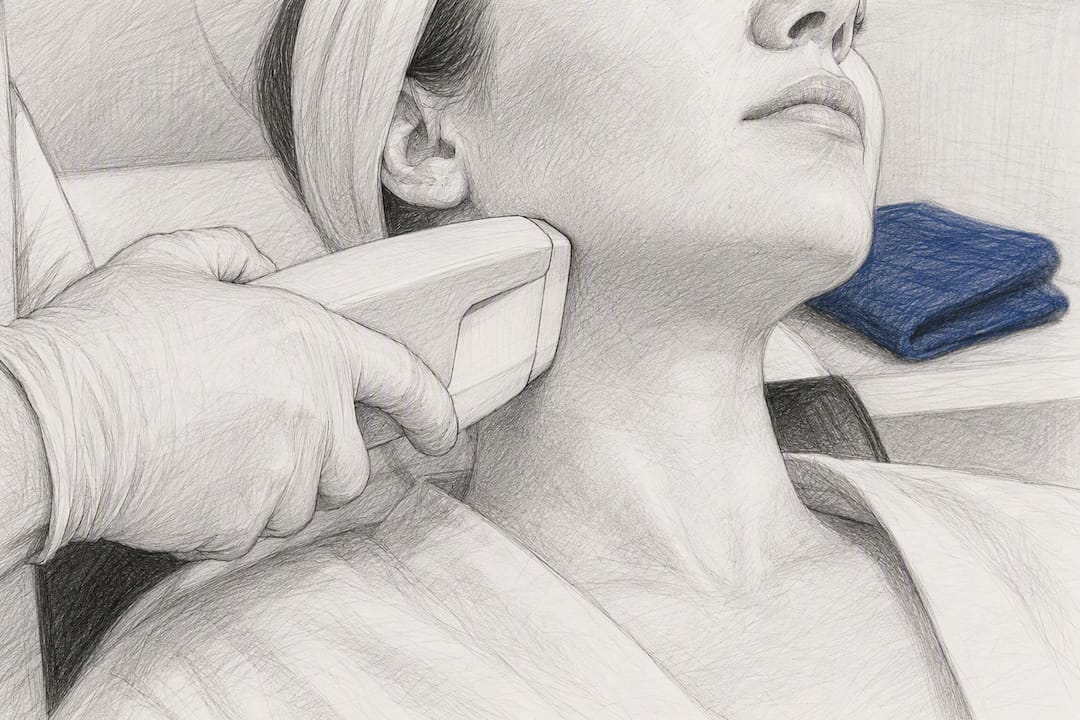
The jawline ache deserves a specific mention because it catches people off guard. Many patients describe a dull, deep sensation along the jaw for several days after treatment, distinct from surface pain. This isn’t a complication. It’s the sensation of energy reaching the SMAS layer, the deeper connective tissue HIFU is specifically designed to heat.
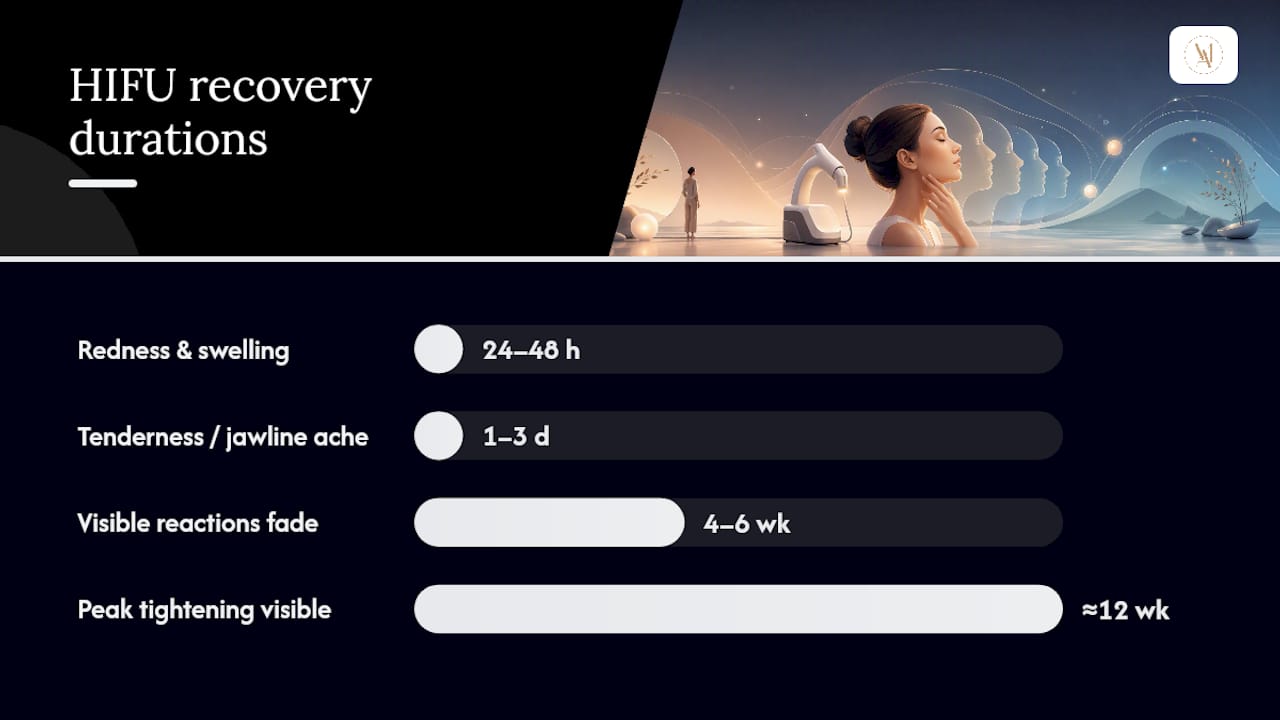
Clinical reviews up to mid‑2025 report that fewer than 5% of patients experience anything beyond transient, mild effects, and most redness and swelling resolves within 24 to 48 hours. The Mayo Clinic confirms this pattern, noting that patients typically resume normal activity immediately, with no dressing or downtime required.
Recovery unfolds in a fairly predictable sequence:
- Hours after treatment: redness and warmth in the treated zone, sometimes mild swelling.
- First 1 to 3 days: tenderness, occasional tingling, the characteristic jawline ache, minor bruising in some patients.
- First 4 to 6 weeks: visible reactions fade completely while collagen remodelling begins beneath the surface.
- Around 12 weeks: peak tightening results become visible as new collagen matures.
One consumer survey found that roughly 25% of participants reported some pain during or shortly after the procedure, though it typically eased without any intervention. Makeup is generally fine within hours, and most people return to work or social plans the same day. Our HIFU treatment guide covers what to expect from the lifting and tightening process in more depth.
Rare but serious HIFU complications explained
Serious HIFU complications are uncommon, and the data backs this up clearly. Research on microfocused ultrasound with visualisation (MFU‑V) puts the aggregated incidence of reported adverse events at around 0.2%, with nerve-related effects and surface injuries each occurring at rates well under 0.4%.
That said, when complications do occur, they’re worth understanding:
- Burns or surface thermal injury, usually from excess energy or a poorly positioned transducer.
- Nerve irritation or temporary paresis (weakness), typically presenting as slight facial asymmetry that resolves over weeks.
- Fat atrophy or induration, small firm areas beneath the skin where energy has concentrated unevenly.
- Persistent hyperpigmentation, more often seen in darker skin tones.
- Nodules or, rarely, scarring at the treatment site.
Management ranges from simple clinic review and symptomatic care to a short course of steroids for nerve-related swelling. Genuine red flags include blistering, worsening or spreading numbness, new facial weakness, or pain that intensifies rather than fades. Any of these warrants urgent contact with your clinic rather than a wait-and-see approach.
Why do HIFU side effects happen? The role of depth, energy and technique
HIFU works by focusing ultrasound energy to a precise point beneath the skin, heating tissue to roughly 60 to 70°C at that focal point to trigger collagen production, while leaving the surface largely untouched. Complications tend to arise when that focal point ends up somewhere it shouldn’t.
Transducer depth is central to this. A nationwide survey analysing HIFU adverse events found that deeper transducers, particularly the 4.5mm depth, were implicated in a disproportionate number of complications, including burns and neuropathy. Proximity to bone can also reflect ultrasound energy back into tissue in unpredictable ways, concentrating heat where it wasn’t intended.
Operator skill matters as much as the device. Industry guidance from the AIUM makes clear that unexpected adverse events are usually down to incorrect technique or targeting rather than device failure. One persistent myth doesn’t help: practitioners sometimes assume stronger energy settings mean better results, when in reality this simply raises the risk of pigmentation changes, induration, and nerve irritation without improving outcomes.
Pro Tip: At consultation, ask whether the practitioner uses real-time visualisation to see tissue layers before firing the device, rather than working from anatomical landmarks alone. This single question tells you a great deal about how carefully your treatment will be planned.
Worth asking before you book:
- How is the practitioner trained, and how many HIFU treatments have they performed?
- Does the device offer visualisation, and will they show you a sample before-and-after?
- How do they decide on depth and energy settings for your specific facial anatomy?
Who should avoid or delay HIFU treatment?
Certain conditions make HIFU inappropriate, at least until they’re resolved. Others simply call for a more careful, individual conversation with your practitioner.
- Active infection or inflammation in the treatment area, or any open wounds.
- Recent dermal filler in the same zone, since ultrasound energy can disperse the product unpredictably.
- Pregnancy, as a precautionary standard across most energy-based facial treatments.
- Implanted electronic devices or metal plates near the treatment site.
- Very thin facial fat, recent facial surgery, or a history of poor wound healing or keloid scarring warrant a case-by-case discussion rather than automatic exclusion.
- Darker skin types carry a somewhat higher risk of post-treatment pigmentation changes and should be assessed individually.
Bring a full medical history and current medication list to your consultation. It’s the fastest way for a practitioner to flag anything relevant before treatment begins.
Aftercare and warning signs to watch for after HIFU
Aftercare for HIFU is refreshingly simple, largely because there’s no wound to manage.
- Keep it gentle: cool the area if needed, use a mild cleanser, and skip abrasive exfoliants or facials for two weeks.
- Protect from the sun: SPF 30 to 50 daily is non-negotiable while the skin recovers, even on cloudy days.
- Manage discomfort simply: paracetamol or ibuprofen usually covers any lingering ache. Don’t start steroids or antibiotics without checking with your clinic first.
Watch the clock as much as the symptoms. Blistering or severe pain needs immediate clinic contact. Spreading redness or worsening numbness within 24 to 72 hours should prompt a call the same day. Tenderness or altered sensation persisting beyond two weeks warrants a follow-up review, even if it feels minor.
Pro Tip: Photograph the treated area on day one and day three. Subtle changes in swelling or colour are much easier to judge against a photo than against memory alone.
Most reputable clinics will schedule a follow-up check regardless of how recovery is going, with longer-term reviews available if any nerve-related or pigment concerns arise.
A clinician’s view on why technique decides the outcome
Correct technique and honest patient selection are what keep HIFU complications rare, not luck. When practitioners choose depth and energy settings based on your actual anatomy rather than a standard protocol, most of the risk profile simply disappears. That’s not a marketing line. It’s what the adverse event data on transducer depth and operator error consistently shows.
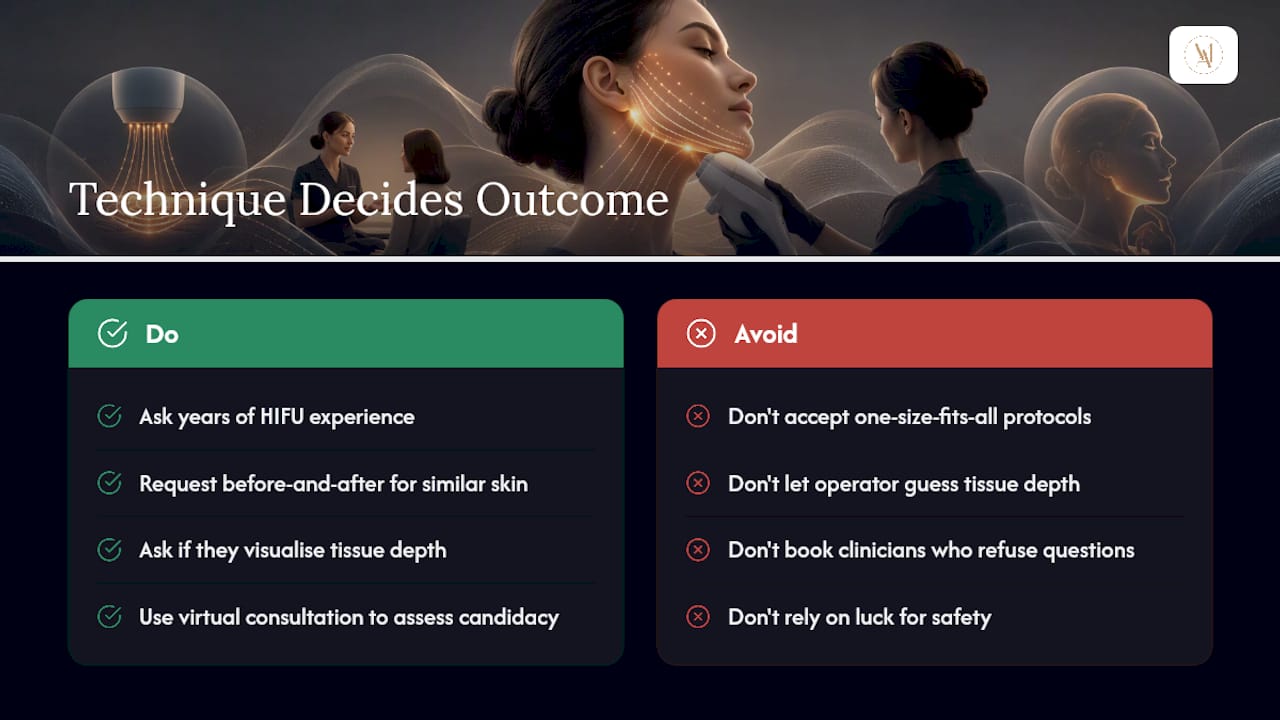
If you’re weighing up a consultation, ask direct questions: How many years has the practitioner been performing HIFU? Can they show real before-and-after results from patients with skin similar to yours? Do they use visualisation to check tissue depth before treating, or work from experience alone? A practitioner who welcomes these questions is usually one worth booking with.
HIFU can be offered alongside virtual consultations, allowing candidacy assessment and discussion of expectations before treatment. This approach to energy-based treatments involves a clear rationale for every setting, rather than applying a default protocol to all clients. If you’re unsure whether HIFU suits your skin, our guide on whether HIFU facial treatment is right for you is a good place to start.
— Jess
Book a HIFU consultation with The M-ethod Skin
If the safety profile above has answered your questions, the next sensible step is a proper consultation rather than a straight booking. The M-ethod Skin offers HIFU treatment in clinic in London and Athens, alongside virtual skin consultations for readers who want expert input on candidacy before committing to anything. That matters here specifically because, as this guide has shown, outcomes depend heavily on how well settings are matched to your individual anatomy and skin type.
A consultation lets us review your medical history, discuss realistic timelines, and tailor energy and depth to reduce your personal risk profile rather than applying a generic approach. If you’re also managing pigmentation or texture concerns alongside skin laxity, our clinicians can advise on complementary options such as PCA Clearskin as part of a broader routine. Book a virtual or in-clinic consultation to discuss whether HIFU is appropriate for your skin.
This article is general information, not a substitute for advice from a qualified doctor. Consult a qualified healthcare professional about your own circumstances before acting on anything here.
Sources
- PubMed entry summarising mid‑2025 clinical reviews
- Mayo Clinic — high‑intensity focused ultrasound overview
- Review of the safety profile for microfocused ultrasound with visualisation (MFU‑V)
- AIUM statement on the safety of cosmetic ultrasound
FAQ
Is HIFU safe for facial skin tightening?
Yes, for most people. Clinical reviews report that fewer than 5% of patients experience anything beyond mild, transient side effects, and serious complications are rare when performed by a trained practitioner.
What are the most common HIFU side effects?
Redness, mild swelling, tenderness, and a deep ache along the jawline are the most frequently reported reactions, and these typically resolve within 24 to 48 hours.
How common are serious HIFU complications?
Genuinely rare. Market experience data on microfocused ultrasound with visualisation puts serious adverse event incidence at around 0.2%, with nerve-related effects occurring even less often.
Can HIFU cause nerve damage?
Temporary nerve irritation or mild weakness can occur, usually linked to incorrect depth or energy settings, and typically resolves over several weeks. Persistent motor changes are not normal and need urgent clinic review.
How soon can I return to normal activities after HIFU?
Most patients resume work and daily routines immediately, with makeup wearable within hours, though strict sun protection is essential while the skin settles.
Who should avoid having HIFU treatment?
People with active infection, open wounds, recent filler in the area, or who are pregnant should avoid HIFU, and those with implanted electronic devices or very thin facial fat need an individual assessment first.