




Why maintenance skincare matters long-term
TL;DR:
- Maintaining a consistent skincare routine supports skin barrier health, slows aging, and preserves skin resilience. Lifestyle factors like diet, sleep, and stress management actively influence long-term skin health and complement topical routines. A simple, daily regimen of pH-balanced cleanser, moisturizer, and SPF is more effective than complex routines for long-term results.
Maintenance skincare is the practice of consistently supporting and protecting the skin’s barrier to prevent damage, slow biological ageing, and preserve overall skin health. In the industry, this approach is increasingly framed as skin longevity, a term that shifts the focus from reactive anti-ageing treatments to proactive, continuous care. Why maintenance skincare matters long-term comes down to one biological truth: skin is a dynamic organ that degrades without daily support. The good news is that a simple, consistent routine, built around a cleanser, moisturiser, and SPF, delivers measurable results at every age.
Why maintenance skincare matters long-term: the biological case
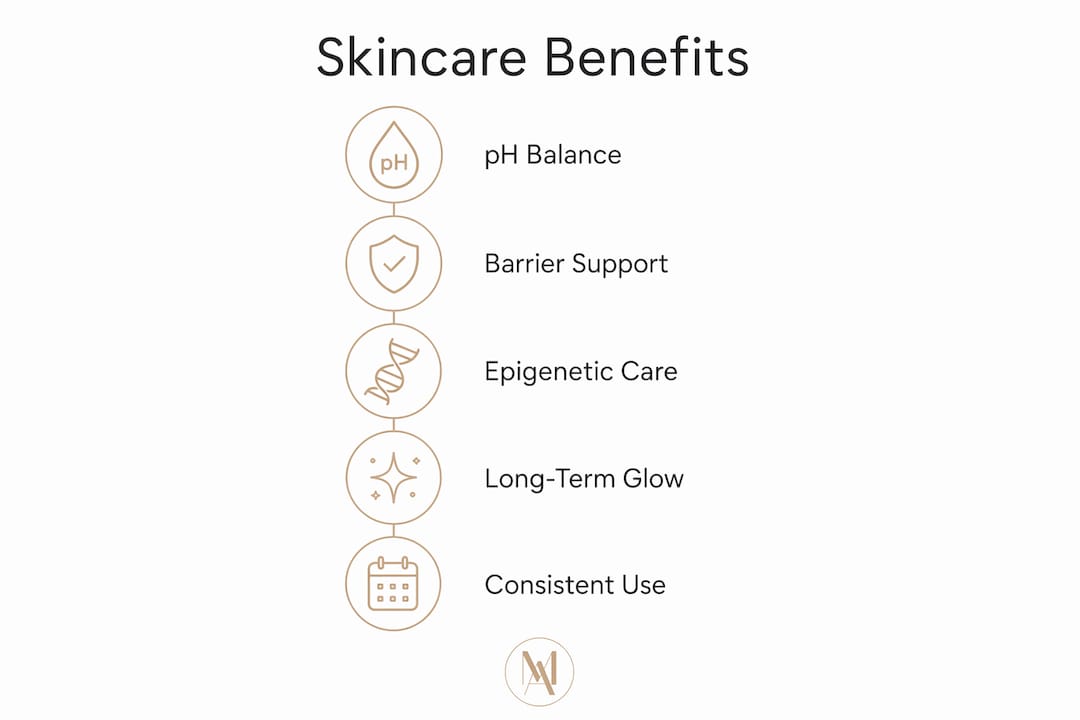
Skin barrier function is the foundation of long-term skin health. The barrier, made up of lipids, proteins, and the stratum corneum, controls water retention and blocks environmental aggressors. As skin ages, this structure weakens. Transepidermal water loss (TEWL) increases, collagen degrades faster, and the skin’s surface pH rises above its naturally acidic level.

Clinical research confirms that barrier-supportive routines directly decrease TEWL and reduce inflammation, two key markers of ageing skin. This means that a daily cleanser, moisturiser, and SPF are not optional extras. They are the minimum biological requirement for slowing structural decline.
The role of each product is distinct and non-interchangeable:
- Cleanser removes pollutants and excess sebum without stripping the acid mantle. A pH-balanced formula preserves the skin’s natural microbiome.
- Moisturiser replenishes lipids and humectants, reducing TEWL and maintaining suppleness.
- SPF blocks UV-induced collagen degradation and prevents photoageing, which accounts for the majority of visible skin ageing.
Pro Tip: Choose a cleanser with a pH between 4.5 and 5.5. Most bar soaps sit at pH 9 or above, which disrupts the acid mantle every time you wash.
Recent 2026 research adds another dimension to this picture. Epigenetic modulation through certain topicals, including serums containing dihydromyricetin (DHM), can measurably reduce the skin’s biological age as assessed by DNA methylation clocks. This means that consistent topical care does not merely slow visible ageing. It can actively reverse some of the underlying biological markers of skin age.
| Routine component | Primary biological function | Long-term benefit |
|---|---|---|
| pH-balanced cleanser | Preserves acid mantle and microbiome | Reduces sensitivity and barrier erosion |
| Moisturiser | Replenishes lipids, reduces TEWL | Maintains skin suppleness and resilience |
| Broad-spectrum SPF | Blocks UV-induced collagen breakdown | Prevents photoageing and pigmentation |
| Active serums (e.g., DHM) | Epigenetic modulation | Reduces biological skin age |
Does lifestyle affect long-term skin health as much as products?
Topical products alone cannot sustain skin health indefinitely. Integrative dermatology experts now argue that lifestyle factors controlling chronic low-grade inflammation are as critical as any serum or moisturiser. Inflammation silently degrades collagen, disrupts the skin microbiome, and accelerates cellular ageing.
The four lifestyle pillars that most directly affect skin resilience are:
- Diet: Antioxidant-rich foods, omega-3 fatty acids, and polyphenols reduce oxidative stress in skin cells. Processed sugars trigger glycation, which stiffens collagen fibres and accelerates wrinkling.
- Sleep: During deep sleep, the body releases growth hormone and repairs cellular damage. Chronic sleep deprivation elevates cortisol, which breaks down collagen and impairs barrier recovery.
- Stress management: Sustained psychological stress raises cortisol and triggers neurogenic inflammation, both of which degrade the skin matrix over time.
- Exercise: Regular moderate exercise improves circulation, delivering oxygen and nutrients to skin cells. It also supports mitochondrial health, which is central to cellular energy and repair.
Systemic supplements are gaining clinical credibility alongside these habits. 2026 studies show that oral nutrients such as piceatannol, alongside topical bioesters, improve stratum corneum hydration and skin structure within 30 to 60 days of consistent use. For a detailed breakdown of which supplements have the strongest clinical evidence, Them-ethod’s guide to clinically proven supplements for skin health is a useful starting point.
Multi-layered approaches combining topical and systemic interventions represent the direction dermatology is moving. Treating skin from the inside and outside simultaneously produces more durable results than either approach alone.
Common misconceptions that undermine a maintenance routine
Several widely held beliefs actively damage skin over time. Addressing them directly is part of building a genuinely effective long-term routine.
Misconception 1: Skin needs to “breathe” without products. Skin does not breathe in the way lungs do. Skipping moisturiser or SPF does not free the skin. It exposes the barrier to TEWL, UV damage, and microbial imbalance. Consistent maintenance acts as an insurance policy against tissue atrophy and declining resilience between any corrective treatments you may have.
Misconception 2: More products mean better results. Minimalist routines with gentle, pH-balanced products consistently outperform over-layered regimens in preserving barrier health. Stacking multiple actives without understanding their interactions, particularly acids alongside retinoids, can compromise the barrier and trigger chronic sensitivity.
Misconception 3: Any cleanser will do. Ageing skin loses its ability to maintain a slightly acidic surface pH. Chronic use of non-pH-balanced cleansers accelerates microbial imbalance and barrier erosion, driving dryness and fragility silently over months and years. This “pH gap” is one of the most overlooked drivers of accelerated skin ageing.
- Audit your current cleanser. Check the pH or look for “pH-balanced” on the label.
- Remove any active you cannot explain a clear purpose for.
- Add SPF as a non-negotiable final step every morning, regardless of weather.
- Introduce new actives one at a time, with at least two weeks between additions.
Pro Tip: If your skin feels tight after cleansing, your cleanser is too alkaline. Switch to a gentle, pH-balanced formula and reassess your barrier health after four weeks.
How to build a maintenance skincare routine that lasts
A sustainable maintenance routine does not need to be complex. It needs to be consistent and correctly matched to your skin’s current state. Skin changes with age, season, hormonal shifts, and environment, so the routine must adapt alongside it.
The non-negotiable daily framework looks like this:
- Morning: pH-balanced cleanser, antioxidant serum (vitamin C or niacinamide), moisturiser, broad-spectrum SPF 30 or higher.
- Evening: pH-balanced cleanser, targeted active (retinoid, AHA, or peptide serum depending on concern), moisturiser.
- Weekly: A gentle exfoliant to support cell turnover without over-stripping.
Consistency matters more than perfection. A simple three-step routine used every day outperforms an elaborate ten-step routine used sporadically. The role of sunscreen in this framework deserves particular emphasis. UV exposure is the single largest external driver of collagen breakdown and pigmentation, and daily SPF use is the most evidence-backed anti-ageing intervention available.
As skin ages, the routine should evolve. Skin in your 30s benefits from antioxidants and light retinoids. Skin in your 40s and beyond needs richer barrier support, peptides, and potentially prescription-strength actives. Them-ethod’s evidence-based anti-ageing guide covers how to adapt your routine at each stage with clinical precision.
The goal is not to chase trends. The goal is to maintain the skin you have, protect it from further damage, and support its natural repair mechanisms every single day.
Key takeaways
Maintenance skincare is the most cost-effective, evidence-backed strategy for preserving skin health and appearance over a lifetime.
| Point | Details |
|---|---|
| Barrier support is non-negotiable | Daily cleanser, moisturiser, and SPF reduce TEWL and slow structural skin decline. |
| pH balance matters more than most realise | Non-pH-balanced cleansers silently erode the skin barrier and accelerate ageing over time. |
| Lifestyle amplifies topical results | Diet, sleep, stress management, and exercise modulate inflammation and collagen health. |
| Simplicity outperforms complexity | Minimalist, consistent routines preserve barrier function better than over-layered regimens. |
| Prevention costs less than correction | Consistent maintenance reduces the need for intensive corrective procedures later. |
Why I think we underestimate what maintenance actually does
People come to us after years of neglect, or after spending thousands on corrective treatments, and ask why their skin still looks tired. The answer is almost always the same: there was no maintenance in between. Corrective treatments, whether that is microneedling, chemical peels, or injectables, produce results that degrade without daily support. Skin does not hold gains passively. It requires continuous input.
What I have observed over years of working with clients is that the ones with the best long-term skin outcomes are rarely the ones who had the most procedures. They are the ones who built a simple, consistent routine and stuck with it. A daily SPF, a gentle cleanser, a good moisturiser, and one or two well-chosen actives. That is genuinely enough for most people.
The framing of skincare as a beauty ritual misses the point. Skin is your largest organ. It regulates temperature, protects against infection, and signals internal health. Treating its maintenance as a wellness practice, rather than a vanity exercise, changes how seriously people take it. And that shift in mindset produces better skin, full stop.
The cost argument is also worth making plainly. A consistent maintenance routine costs a fraction of the corrective treatments that become necessary when maintenance is skipped. Prevention is not just more effective. It is significantly more affordable over a lifetime.
— Jess
Them-ethod’s approach to maintenance skincare
At Them-ethod, we believe that the best skincare routine is one you will actually use every day. Our curated range includes clinically validated products designed for consistent, long-term use, from gentle pH-balanced cleansers to prescription-strength actives. For those managing acne-prone or congested skin, the PCA Clearskin Acne Treatment Serum offers targeted support without compromising the barrier. For science-backed formulations addressing hydration, texture, and skin renewal, the NeoStrata collection delivers measurable results with regular use. If you are unsure where to start, our virtual skin consultations connect you with top clinicians who can build a personalised maintenance plan matched to your skin’s specific needs.
FAQ
What is a maintenance skincare routine?
A maintenance skincare routine is a daily regimen of cleanser, moisturiser, and SPF designed to protect the skin barrier, prevent TEWL, and slow biological ageing. It forms the foundation of long-term skin health.
How long does it take to see results from consistent skincare?
Clinical studies show measurable improvements in skin hydration and structure within 30 to 60 days of consistent use of appropriate topical and oral interventions. Visible changes in texture and tone typically follow within six to twelve weeks.
Why does pH balance matter in a cleanser?
Ageing skin struggles to maintain its naturally acidic surface pH. Using non-pH-balanced cleansers accelerates barrier erosion and microbial imbalance, which drives dryness and sensitivity over time.
Can lifestyle habits replace topical skincare?
Lifestyle habits and topical products work synergistically. Neither replaces the other. Diet, sleep, and stress management reduce internal inflammation, while topical products directly support barrier function and collagen production.
Is a simple routine as effective as a complex one?
Dermatological research confirms that minimalist, consistent routines with gentle, pH-balanced products outperform sporadic or over-layered regimens in preserving barrier health and reducing long-term skin sensitivity.