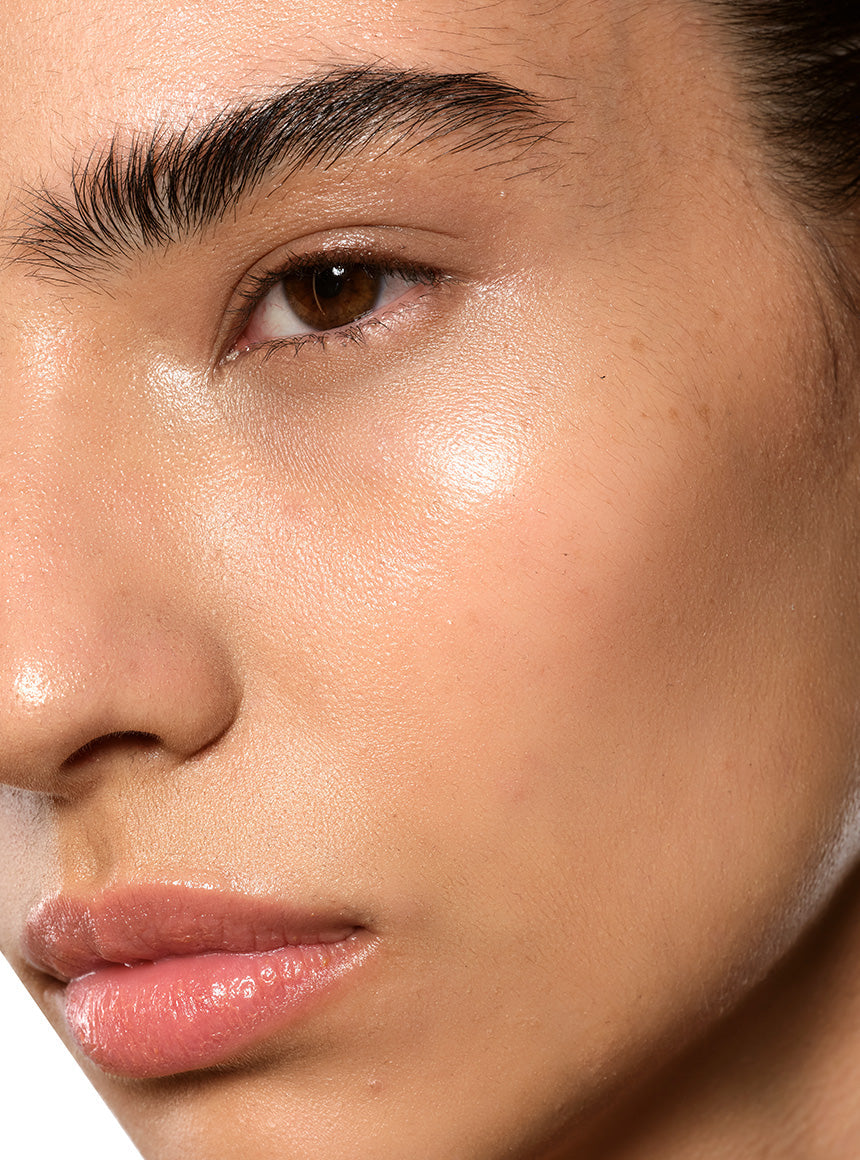




Article: Microneedling for Acne Scars: What to Expect and How to Start
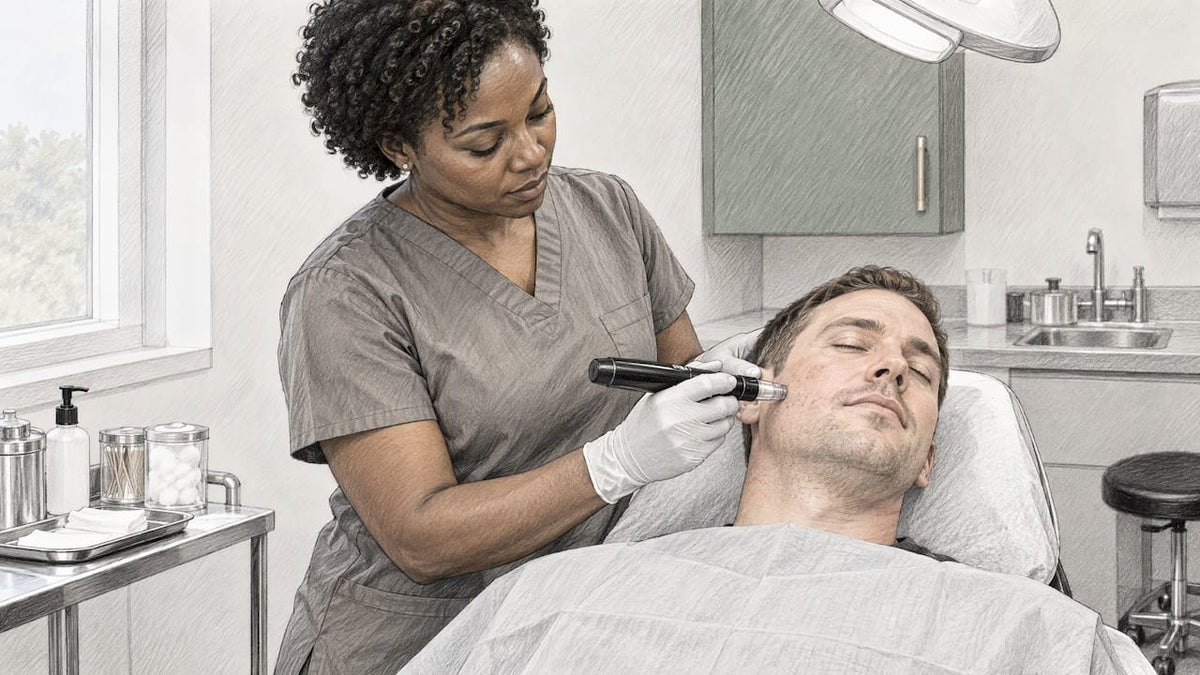
Microneedling for Acne Scars: What to Expect and How to Start
Microneedling is one of the best-studied in-clinic treatments for atrophic (indented) acne scars. It works by triggering your skin’s own collagen repair, and the strongest results come from a medically supervised course of several sessions, planned around your scar type and skin tone. At The M-ethod Skin, Dr Mandy Mak, a UK-trained doctor, offers SkinPen microneedling in London and Athens, and you can start with an online skin consultation before you travel or book.
TL;DR
- Microneedling creates controlled micro-injuries that prompt new collagen and elastin, which gradually lifts indented acne scars.
- Rolling and boxcar scars tend to respond best; ice-pick scars are more stubborn and need a realistic plan.
- Typical courses run 3 to 5 sessions, 2 to 4 weeks apart, with texture continuing to improve for months afterwards.
- Recovery is usually a couple of days of redness and swelling, but some conditions and medicines mean you should wait or avoid treatment.
- Device choice, needle hygiene and aftercare matter as much as the technique, so choose a clinician-led treatment.
Table of Contents
- How microneedling improves acne scars
- Which acne scars respond best
- How much improvement can you realistically expect?
- How many sessions, how far apart, and when results show
- What a session and recovery look like
- Who should wait or avoid microneedling
- Choosing a safe, properly equipped treatment
- Starting your acne scar plan with us
- Our perspective on microneedling for acne scars
- FAQ
- Sources
How microneedling improves acne scars
An atrophic acne scar is a small depression left when inflammation destroys collagen beneath the skin. Microneedling uses fine sterile needles to make thousands of tiny punctures in the skin. A 2021 systematic review explains that these micropunctures create a controlled injury without disrupting the surface layer of skin. That sets off a wound-healing cascade, releases growth factors and increases dermal collagen and elastin, which remodels and thickens the skin.
This is why you will also see it called collagen induction therapy. The American Academy of Dermatology (AAD) describes it as minimally invasive and safe for all skin tones, working by stimulating collagen production.
There is also biopsy evidence behind this. In a small 2015 study of 10 patients who had six sessions at two-week intervals, tissue analysis showed a statistically significant rise in collagen types I, III and VII, including newly formed collagen.

Which acne scars respond best
Not every scar is the same shape, and shape predicts response. The three common atrophic types are:
- Rolling scars: broad, shallow dips with sloping edges, giving skin a wavy look.
- Boxcar scars: wider round or oval depressions with sharp, defined edges.
- Ice-pick scars: narrow, deep, V-shaped marks that look like small punctures.
A 2020 clinician review of 58 studies covering 1,845 patients found boxcar and rolling scars showed the greatest improvement after microneedling, while ice-pick scars were often more resistant. The 2015 study above reported the same pattern: good to very good response in rolling and boxcar scars, moderate improvement in ice-pick scars, and a weaker response in deep atrophic scars.
That does not mean ice-pick scars cannot improve. It means the plan should be set honestly at the start, which is the job of a proper assessment. Your skin tone, scar depth and how long you have had the scars all shape the plan. The review in the same research notes that satisfaction was high: 50 to 100% of patients were satisfied and 94% would recommend the treatment.
What about post-acne marks rather than scars?
Many people searching for acne scars actually have flat, dark post-inflammatory hyperpigmentation (PIH), the brown or red-brown marks left after a spot. These are a pigment issue, not an indentation, and they are assessed differently. The same 2020 review notes that microneedling is often considered for darker skin types (Fitzpatrick IV to VI) because of its relatively low risk of causing PIH compared with some lasers. A 2022 meta-analysis of 12 studies and 414 participants also found that pooled PIH outcomes favoured microneedling, with no secondary scarring or infection reported.
If pigmentation is your main concern, say so at the consultation. If melasma is involved, our article on microneedling for melasma covers that separately.
How much improvement can you realistically expect?
Results vary, and honest numbers help you judge a plan:
- In a study using an automated device, four sessions 30 days apart improved facial acne scars by 0.91 of a grade on the Goodman and Baron scale at three months. Rolling scars improved by 1.06 grades.
- A 2019 prospective study of 45 patients with dark skin, who had four sessions of subcision plus microneedling four weeks apart, found at least one grade of improvement in 95.6% of patients. Of those, 17.8% perceived 75 to 100% improvement.
- The AAD says studies it cites found a dermatologist-led course can fade acne scars by 50% to 70%.
Treat these as ranges rather than promises. Scar age, depth, skin type and how closely you follow aftercare all play a part. The FDA also notes that outcomes can differ between people, that more than one procedure may be needed, and that maintenance treatments may be useful over time. In practice, that means thinking of microneedling as a programme, not a one-off.
How many sessions, how far apart, and when results show
The research points to a consistent pattern:
| Source | Sessions | Interval |
|---|---|---|
| AAD guidance | 3 to 5 | Every 2 to 4 weeks |
| Systematic review of 9 trials | 3 to 8 | 2 to 4 weeks |
The same review reports needle depths across the trials from 0.8 to 3.55 mm, with 1.5 mm the most common. Depth is a clinical decision. It depends on the area of the face and the scar, and it is one reason a trained practitioner adjusts settings during a session rather than using one fixed setting everywhere.
Timing matters too. According to the AAD, you may see improvement within a few weeks, but it usually takes several months for full results to show. That is because new collagen is laid down slowly. The systematic review cites work suggesting optimal results can take 8 to 12 months. So do not judge the outcome after one session. Photograph your skin in the same light at the start and compare at intervals.
Our clinician view on a 3 to 5 session course is set out in Clinician Picks: Microneedling (3 to 5 sessions) or Microdermabrasion.
What a session and recovery look like
A clinic session usually follows this order:
- Assessment: the clinician checks your scar types, skin tone, active acne, medicines and health history.
- Cleansing and numbing: the skin is cleansed and a topical anaesthetic is typically applied.
- Treatment: the device is passed over the treatment area using a sterile, single-use needle cartridge.
- Soothing and sun protection: a gentle, sterile product is applied, followed by clear aftercare instructions.
On recovery, the 2015 study reported facial swelling and slight pain after each procedure that settled within 24 hours, mild redness on day two that cleared in one to two days, and a return to normal daily activity two days after treatment. Larger trials describe similar mild effects. Bruising and swollen lymph nodes were the most common events in the automated-device study, with no serious adverse events.
The FDA lists the common effects as bleeding, bruising, redness, tightness, itching and peeling, which typically resolve without treatment after a few days or weeks. If you have an event or occasion coming up, our guide to microneedling downtime and the 48 hour redness peak helps you plan around it.
Aftercare in the first week
Post-treatment skin is more sensitive to sun and to products containing retinol, glycolic acid, menthol, capsaicin or alcohol, according to the FDA’s consumer update. Practical steps:
- Use a gentle cleanser and a plain moisturiser as directed by your clinician.
- Wear a broad-spectrum sunscreen daily and avoid tanning or planned strong sun exposure.
- Pause active ingredients until your clinician says it is time to restart them.
- Do not pick at flaking skin.
Who should wait or avoid microneedling
This is the part to read carefully. The FDA’s microneedling device page lists conditions and situations in which treatment is not advised, including:
- bleeding or clotting disorders, or anticoagulant therapy
- a weakened immune system, or uncontrolled diabetes
- active skin infection, active facial rash or cold sores
- eczema, psoriasis, vitiligo or autoimmune disease in the area
- current or recent isotretinoin use (within six months, per the FDA)
- a history of keloid scars
- pregnancy or breastfeeding
- chemotherapy, radiation or steroid treatment, or a malignancy
- allergy to stainless steel or to anaesthetics
- tanning, or planned sun exposure within two weeks after treatment
The AAD adds slow or poor healing, skin-cancer treatment in the area, and says to wait until a tan, sunburn, infection, or painful, pus-filled or deep pimples have cleared. It advises waiting at least one month after the last isotretinoin pill, whereas the FDA says six months, so tell your clinician exactly when you stopped and follow the more cautious guidance. The FDA also advises providers to consider antiviral prophylaxis for people with a herpes simplex history, so mention any cold-sore history.
The FDA flags that some authorised devices were not studied in darker skin types. If you have a deeper skin tone, ask your clinician how they adjust treatment to keep pigmentation risk low. Less common risks the FDA names include dark or light spots, cold-sore flare-ups, swollen lymph nodes and infection. This is exactly why a full health history comes before any needling, and why we ask for it at the consultation.
Choosing a safe, properly equipped treatment
Device and hygiene standards separate a medical treatment from a risky one. The FDA has authorised microneedling devices to improve the appearance of facial acne scars in patients aged 22 or older, and instructs providers to use only FDA-authorised devices, never reuse or share needle cartridges, and follow cleaning instructions. A 2022 safety chapter adds that needles deeper than 3 mm can cause nerve damage, particularly in thin skin, and that only sterile products made for intradermal use should be applied during the procedure.
Before booking anywhere, these questions are worth asking:
- Is the device FDA-authorised, and which one is it?
- Is a new needle cartridge used for every patient and every session?
- How is the device cleaned between patients?
- What aftercare will I receive, and who do I contact if something looks wrong?
- Who assesses my scars and health history, and what are their qualifications?
The AAD says that seeing a board-certified dermatologist leads to more significant, longer-lasting improvement than DIY microneedling or non-medical spa treatments. Our approach follows the same principle: a doctor-led assessment, a medical device and a structured plan. Our SkinPen treatment is performed by Dr Mandy Mak, a UK-trained doctor, and our article on medical microneedling with SkinPen explains the treatment in more detail.
Starting your acne scar plan with us
If you are in the United States and considering treatment abroad, the simplest first step is an online skin consultation with Dr Mandy. It lets you talk through your scar types, skin tone, medicines and goals before you plan travel. Many of our patients are international, including Greek expats and people combining treatment with a trip to London or Athens.
When you are ready to book, our SkinPen microneedling page covers the treatment in London and Athens, and the full clinic treatment collection shows what else we offer. Prices are not published online, so the consultation or booking page is the route to a quote.
Between sessions, the right home routine supports the skin you are rebuilding. Our skincare range includes sunscreens, moisturisers, serums and cleansers, and prescription skincare options such as tretinoin or hydroquinone can be discussed during your consultation.
Our perspective on microneedling for acne scars
Acne scarring is rarely about one thing. We see texture, colour and sometimes active breakouts all sharing the same face, and that is why we begin with a conversation rather than a device. Microneedling is a strong tool for the indented scars it was studied in, and the evidence on collagen is encouraging. But the best results come when the plan is built around you.
That means choosing the right depth for each area, spacing sessions so skin can rebuild, protecting your skin with sun care between visits, and being clear about the timeline. Collagen takes months, not days, and a course of sessions followed by patience tends to serve people far better than chasing one aggressive treatment.
For international patients, we make it simple: start online with an assessment, then plan your visit to London or Athens with a clear idea of what to expect. Our SkinPen treatment sits within a wider clinic offering, so if your skin needs pigment support, a prescription skincare plan or a different approach alongside microneedling, you do not have to go elsewhere.
Jess
FAQ
Does microneedling remove acne scars completely?
Microneedling is designed to improve the look and feel of scars by building new collagen, and many people see a clear change in texture. Results vary with scar type and depth, with rolling and boxcar scars generally responding best. Your clinician can tell you what is realistic for your skin after an assessment.
How many microneedling sessions do I need for acne scars?
The AAD says a dermatologist may perform 3 to 5 treatments spaced every 2 to 4 weeks. Published trials range from 3 to 8 sessions. Skin keeps improving for months after the final session as collagen matures.
Is microneedling painful, and how long is the downtime?
A topical anaesthetic is typically used, so most people feel pressure and mild stinging. Redness and swelling commonly settle within one to two days, and in one study patients were back to normal activity two days after treatment. Your skin will be more sun-sensitive for a while, so daily sunscreen matters.
Is microneedling safe for darker skin tones?
The AAD describes microneedling as safe for all skin tones, and clinicians often favour it for Fitzpatrick IV to VI skin because it carries a relatively low pigmentation risk compared with some lasers. Pigment changes can still occur, so ask your clinician how they adjust treatment for your skin tone and what aftercare protects it.
Can I have microneedling if I recently took isotretinoin?
You will need to wait. The AAD advises at least one month after the last pill, while the FDA’s device page lists use within six months as a reason to avoid treatment. Tell your clinician exactly when you stopped, and follow their guidance and your prescriber’s.
Sources
- Microneedling in the treatment of atrophic scars: a systematic review (2021)
- Microneedling for the Treatment of Scars: An Update for Clinicians (2020)
- Microneedling Therapy for Atrophic Acne Scars: An Objective Evaluation (2015)
- American Academy of Dermatology: Microneedling can fade scars, uneven skin tone, and more
- Safety and Effectiveness of an Automated Microneedling Device (2020)
- Microneedling Monotherapy for Acne Scar: Systematic Review and Meta-analysis (2022)
- Subcision and Microneedling in dark skin, JCAD (2019)
- FDA: Microneedling Devices, Getting to the Point on Benefits, Risks and Safety
- FDA: Microneedling Devices
- Maximizing Safety with Microneedling (2022)