



The role of LED therapy in your skincare regimen
TL;DR:
- LED therapy supports skin repair by stimulating mitochondrial function through specific wavelengths, doses, and device quality. Clinical benefits are gradual, requiring consistent use over weeks, especially for acne and anti-aging concerns. Choosing validated professional devices and personalizing protocols enhances efficacy and safety, rather than relying solely on colour-based marketing claims.
LED therapy is everywhere right now, from clinical treatment rooms to bathroom shelves, yet most people using it are not getting the results they expect. The role of LED therapy in skincare is frequently oversimplified: marketing reduces it to “red light for ageing, blue light for acne,” when in reality, effectiveness depends on precise wavelengths, energy dosage, device quality, and how well the protocol is matched to your skin. In this guide, we break down the biological mechanisms, review the clinical evidence honestly, and show you how to use LED therapy in a way that actually moves the needle for your skin.
Table of Contents
- Understanding the science behind LED therapy in skincare
- Clinical evidence for LED therapy benefits and limitations
- Choosing the right LED device and setting realistic expectations
- Safe use and personalising LED therapy protocols
- Comparing professional and consumer LED devices: what’s the difference?
- Rethinking LED therapy: beyond colour to personalised bioenergetics
- Explore clinically validated skincare products and LED solutions at The M-ethod
- Frequently asked questions
Understanding the science behind LED therapy in skincare
Photobiomodulation (PBM) is the biological process at the heart of LED light therapy. Light at specific wavelengths penetrates the skin and is absorbed by mitochondrial enzymes, particularly cytochrome c oxidase, which sits within the electron transport chain. This absorption increases the production of adenosine triphosphate (ATP), the cell’s primary energy currency, and modulates reactive oxygen species (ROS) along with key inflammatory cytokines. The result is a measurable shift in cellular behaviour: better repair signalling, reduced local inflammation, and improved collagen synthesis over time.
What makes LED therapy genuinely interesting is that it does not resurface or ablate the skin the way lasers or chemical peels do. Instead, as PBM research confirms, it acts as a bioenergetic signalling process that supports the skin’s own maintenance and repair pathways. Think of it less as a dramatic intervention and more as a consistent prompt to cellular machinery that would otherwise slow down with age, stress, or inflammation.
The critical variables that determine whether any biological effect occurs are:
- Wavelength: Different wavelengths penetrate to different skin depths. Red light (630–660 nm) reaches the dermis; near-infrared (810–850 nm) penetrates deeper into subcutaneous tissue.
- Fluence (energy dose): The total energy delivered per unit area (measured in J/cm²) must fall within a therapeutic window. Too low, no effect. Too high, potential inhibition.
- Irradiance: The power output per unit area (mW/cm²) determines how quickly that dose is delivered.
- Treatment distance and duration: Both affect the actual dose received by the skin.
As LED photobiomodulation research makes clear, wavelength and dose are not minor technical details. They are the entire mechanism. A device that fails to specify or validate these parameters is not a medical device. It is a light source.
To understand how professional LED systems translate this science into clinical results, our overview of Dermalux LED phototherapy illustrates exactly how validated parameters are applied in practice.
Clinical evidence for LED therapy benefits and limitations
The evidence base for LED therapy has expanded considerably in recent years, though it remains more nuanced than many brands would have you believe. The clearest clinical signal comes from acne treatment and photoageing, while evidence for other conditions is still building.
For LED therapy for acne, blue light (415 nm) targets Cutibacterium acnes directly, producing reactive oxygen species that disrupt bacterial membranes. Red light reduces the accompanying inflammation. Studies show moderate efficacy for inflammatory acne when both wavelengths are combined, though it is rarely a standalone solution for moderate-to-severe presentations.
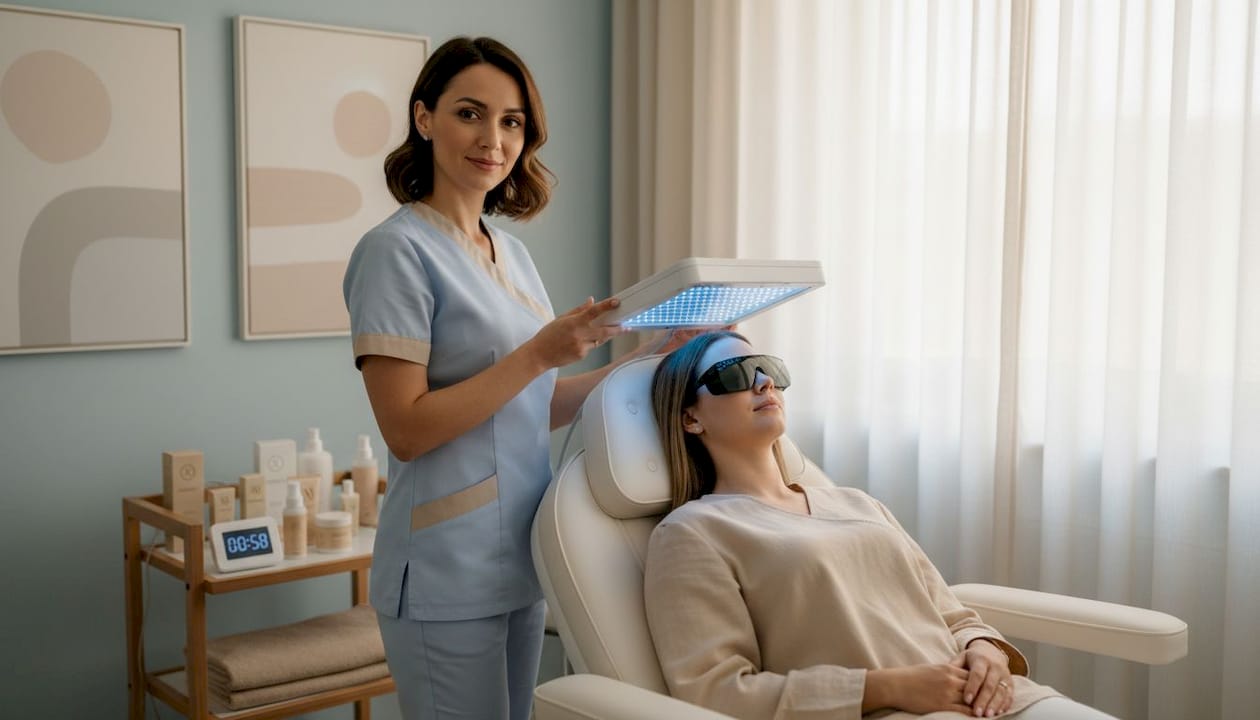
For anti-ageing, red and near-infrared wavelengths consistently produce gradual wrinkle and collagen improvement with regular use, but the word “gradual” carries real weight here. We are not talking about the kind of results you see after a single peel or laser session.
| Skin concern | Evidence level | Expected timeframe |
|---|---|---|
| Inflammatory acne | Moderate | 4–8 weeks of consistent use |
| Photoageing and wrinkles | Moderate | 8–12 weeks minimum |
| Wound healing | Preliminary | Varies |
| Rosacea and redness | Emerging | Inconclusive at present |
| Pigmentation | Limited, cautionary notes | Requires careful protocol |
The benefits of LED skincare are real, but they operate on biological timescales. This is arguably the most important expectation-setting point we can make. If you use an LED device for two weeks and see nothing, that does not mean the device failed. It may mean you have not yet reached the treatment threshold required for visible cellular remodelling.
Our breakdown of clinically proven skincare devices provides a broader view of what realistic outcomes look like across professional-grade treatments in 2026.
Choosing the right LED device and setting realistic expectations
Not all LED devices are created equal, and this is where the gap between expectation and reality tends to be widest. When evaluating any device, the following parameters are non-negotiable:
- Stated wavelength(s): Should specify exact nanometre values, not just “red” or “blue.”
- Irradiance output (mW/cm²): Must be confirmed at the recommended treatment distance, not simply at the diode surface.
- Fluence delivery per session: Ideally calculated and stated by the manufacturer.
- Clinical validation: Look for peer-reviewed studies on the specific device, not just the wavelength category.
Professional LED devices deliver validated wavelengths and fluence levels that produce more consistent clinical outcomes than consumer masks. Many consumer products do not disclose irradiance figures at all, which makes independent comparison almost impossible. As independent analysis of at-home devices has shown, consumers should prioritise devices with transparent, measurable parameters over marketing claims alone.
Setting realistic expectations matters enormously. LED therapy is a maintenance and support tool, not a dramatic corrective treatment. It works best as part of a broader regimen alongside medical-grade actives, consistent SPF use, and occasional in-clinic treatments.
Pro Tip: If a device does not publish its irradiance at the recommended treatment distance, contact the brand directly and request the data. Any reputable manufacturer should be able to provide it.
Our guide on professional skin devices explains what to look for when deciding between clinic-grade and consumer-grade technology.
Safe use and personalising LED therapy protocols
Using an LED device correctly is straightforward, but cutting corners on safety or consistency is the fastest way to undermine your results. The standard at-home protocol involves 10–20 minutes per session, three to five times per week over approximately eight weeks. That regularity is not negotiable if you want to see a biological effect.
Follow these steps to use LED therapy safely and effectively:
- Cleanse thoroughly. Always apply the device to clean, dry skin. Residual skincare products, particularly photosensitising actives like retinol or AHAs, can unpredictably alter light absorption. Apply these only after your LED session.
- Check your eye protection. Full-face masks that properly cover the eyes may be acceptable for most users, but eye protection is essential for extended near-infrared exposure. When in doubt, use the goggles provided.
- Set a timer and stay consistent. Do not exceed the recommended session duration. More is not better with photobiomodulation; exceeding therapeutic fluence can inhibit the very responses you are trying to stimulate.
- Stop immediately if you feel heat, pain, or persistent redness. These are not normal responses and indicate either device malfunction or skin sensitivity. Do not continue.
- Apply broad-spectrum SPF 50+ the following morning without exception. This is particularly critical because visible light can cause prolonged hyperpigmentation in darker skin phototypes, and any inflammatory process in the skin increases post-inflammatory pigmentation risk.
Personalisation matters more than many guides acknowledge. Fitzpatrick skin types III through VI require a more cautious approach, especially when using higher irradiance devices. If hyperpigmentation is among your concerns, our bright sky pigmentation protocol outlines a structured approach that accounts for phototype and LED use.
Pro Tip: Pair LED sessions with a peptide-rich or growth-factor serum applied immediately afterwards. The post-treatment cellular activation window may enhance ingredient absorption and amplify repair signalling.
Comparing professional and consumer LED devices: what’s the difference?
The difference between professional and consumer devices is not simply about price. It is about the reliability of the dose your skin actually receives.
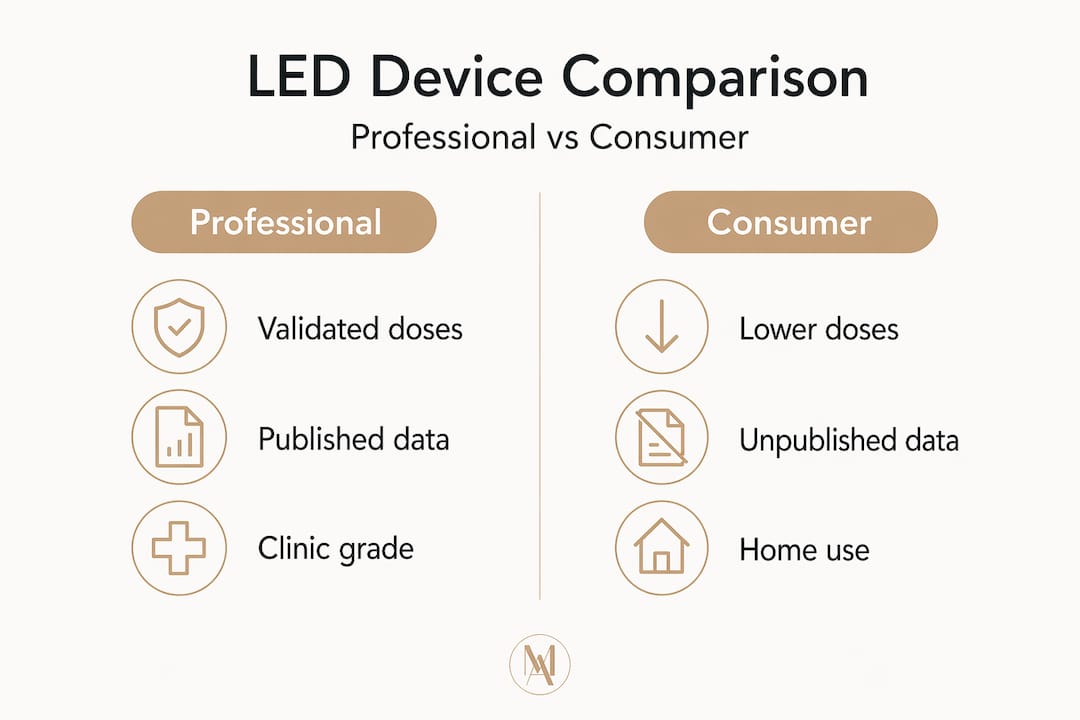
| Feature | Professional LED devices | Consumer LED devices |
|---|---|---|
| Published irradiance data | Yes, validated at treatment distance | Rarely disclosed or independently verified |
| Clinical trial evidence | Often device-specific | Usually category-level only |
| Wavelength accuracy | Precisely calibrated | Variable, may drift with use |
| Eye protection and safety features | Integrated into design and protocol | Inconsistent across products |
| Treatment flexibility | Multi-wavelength, programmable protocols | Fixed settings on most devices |
Professional devices deliver higher irradiance and fluence with standardised protocols, producing more consistent clinical outcomes than typical consumer-grade devices. This does not mean at-home devices are useless. It means you need to approach them with the right expectations and use them as part of a structured regimen rather than expecting standalone results.
Key differences worth knowing:
- Consumer devices often operate at irradiance levels 10–30 times lower than clinical systems, meaning sessions may need to be significantly longer to accumulate a therapeutic dose, if that is biologically possible at all.
- Professional systems are calibrated regularly and maintain output consistency over time. LED diodes in consumer devices can degrade with use without any visible change to the user.
- The regulatory landscape for consumer LED devices varies widely. A device marketed and sold freely may have no independent clinical validation at all.
Pro Tip: If you are using an at-home device, look for products that have received regulatory clearance (such as CE marking in the UK or FDA clearance in the US) and for which the brand can reference published clinical data, not just testimonials.
Our detailed comparison of professional versus consumer devices and clinically proven devices provides further clarity on making an informed choice.
Rethinking LED therapy: beyond colour to personalised bioenergetics
The skincare industry has done something curious with LED therapy. It has taken a genuinely sophisticated photobiological intervention and reduced it to a colour wheel. “Red for ageing, blue for acne, green for pigmentation.” This framing makes for clean marketing, but it actively misleads consumers about what drives results.
We believe the future of LED therapy lies not in wavelength branding but in individualised dosing informed by skin phototype and clinical goals. Clinical benefit depends heavily on wavelength, fluence, and device quality. Personalisation should be dose-aware and skin-type aware, not built around a colour-based shorthand that tells you almost nothing about whether a biological effect will actually occur.
What this means practically is that two people using the same red-light mask may have profoundly different outcomes, not because the device is defective, but because their skin phototypes, treatment goals, and adherence patterns differ. A person with Fitzpatrick type V skin using a high-irradiance device without SPF compliance is not engaging in red light therapy. They are taking a risk with their pigmentation. That distinction matters.
Many at-home devices lack independent validation, and we think the onus is on the industry to raise the bar, not on consumers to navigate a market filled with undisclosed parameters and unsupported claims. If you are serious about LED therapy as part of your skincare regimen, build your protocol around devices and clinical frameworks that specify fluence, not just colour.
Our skin type and pigmentation protocols reflect exactly this approach, combining evidence-based LED use with targeted topical regimens personalised to your phototype and concern.
Explore clinically validated skincare products and LED solutions at The M-ethod
Building an effective LED therapy protocol does not end with the device. The topical actives you use alongside it determine how well your skin responds and recovers. At The M-ethod, we have curated a range of professional-grade treatments that work in concert with LED regimens. For acne-prone skin, the ClearSkin serum by PCA Skin offers a validated active formula designed to complement blue and red light protocols. If collagen support and anti-ageing are your focus, our NeoStrata collection offers clinically evidenced formulations, while the intensive age-refining retinol treatment by PCA Skin pairs well with near-infrared LED regimens for photoageing. Our virtual consultations are available to help you design a personalised protocol that integrates your device use with the right clinical-grade actives.
Frequently asked questions
How long does it take to see results from LED therapy in skincare?
Visible improvements typically require consistent use over eight weeks, with sessions lasting 10–20 minutes multiple times per week. Rushing the timeline or skipping sessions significantly reduces the likelihood of seeing a measurable change.
Is red light therapy safe for all skin types?
While generally well tolerated, individuals with darker skin phototypes should apply strict photoprotection, as visible light may risk prolonged hyperpigmentation in Fitzpatrick types III to VI. A personalised protocol reviewed by a clinician is strongly advisable before starting.
Do at-home LED devices work as well as professional ones?
Professional devices deliver higher energy doses with more robust validation and standardised protocols, making them more consistently effective than most consumer products. At-home devices can support maintenance between clinic sessions, but they are rarely equivalent in clinical output.
What safety precautions should I take when using an LED mask at home?
Apply the device to clean, dry skin, follow the recommended session duration precisely, and wear eye protection if the mask does not fully shield your eyes. Stop immediately if you experience any heat, pain, or increased redness, and always follow with SPF the next morning.